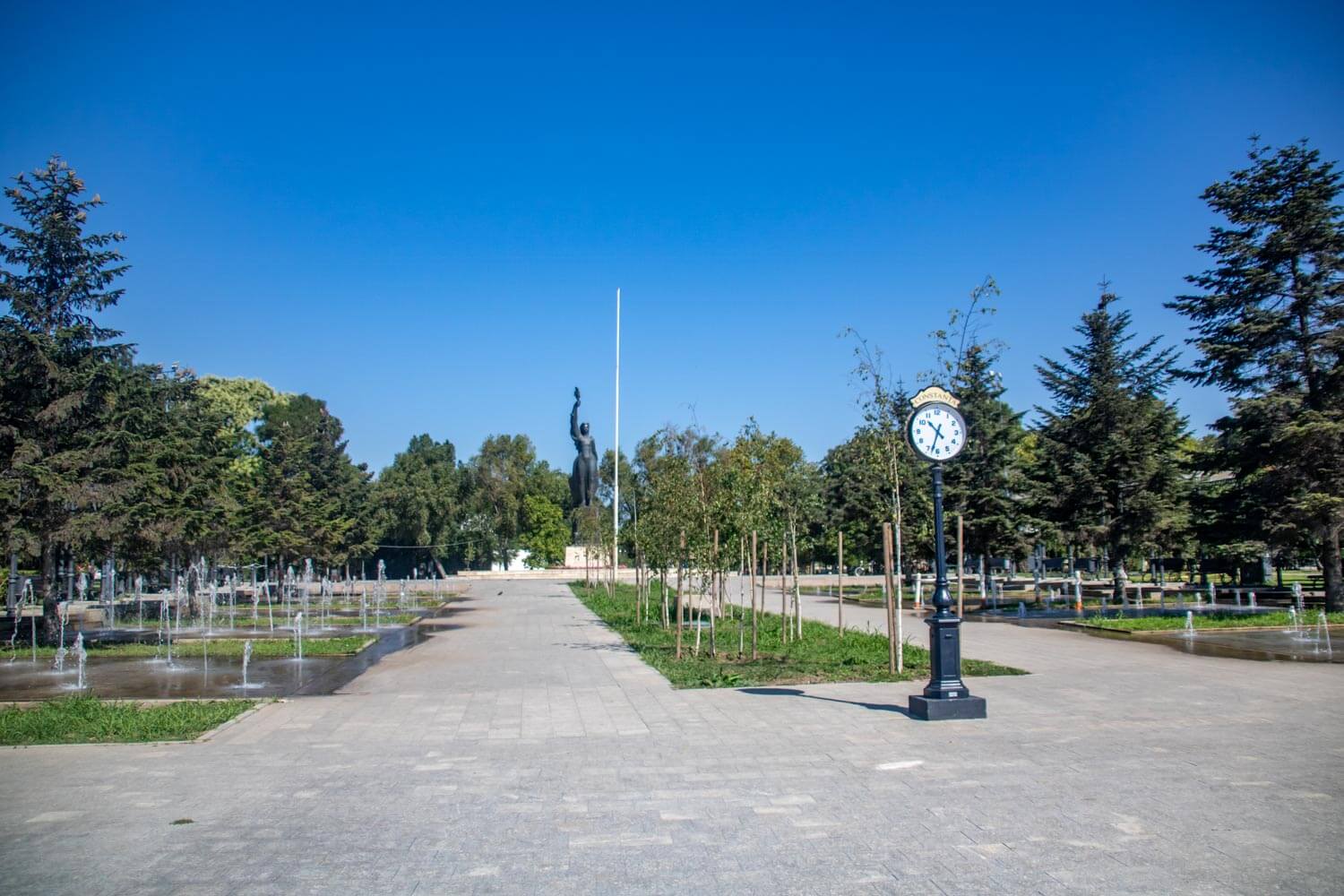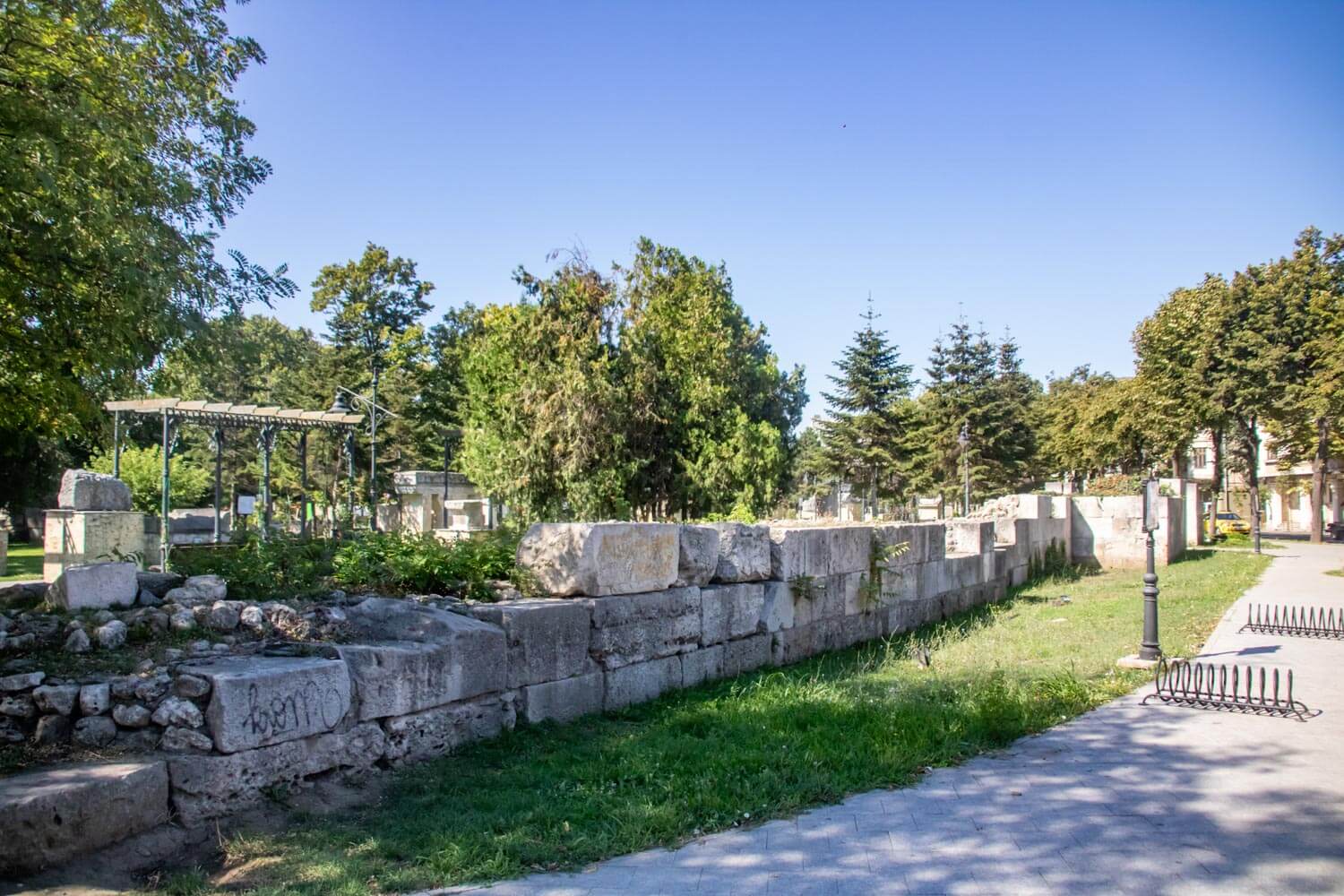

The Tomis City Wall (Zidul de incintă al Cetății Tomis) is the surviving defensive wall of the late Roman city of Tomis in Constanța. Its most accessible remains can be seen along the northern edge of City Hall Park, where excavated sections of the wall and its towers reveal part of the fortification that once enclosed the ancient city.
The wall was constructed from the late 3rd century AD, probably beginning during the reign of Emperor Diocletian and continuing under Constantine the Great in the early 4th century. Built from stone and mortar and reaching around three meters in thickness in some places, it formed a substantial new defensive boundary around Tomis at a time when cities along the lower Danube and western Black Sea were being strengthened against increasing external threats. The fortifications continued to be repaired and altered during the following centuries as Tomis developed into an important center of the late Roman and early Byzantine province of Scythia Minor.
The surviving wall followed a much longer route than the section visible in the park today. Archaeological research has traced it across the modern city from the area north of the peninsula toward Ferdinand Boulevard and onward toward the port, with towers and gates controlling the main routes into Tomis. Much of this defensive circuit now lies beneath streets and buildings, although excavations at different points have revealed additional stretches of masonry, tower foundations and entrances.
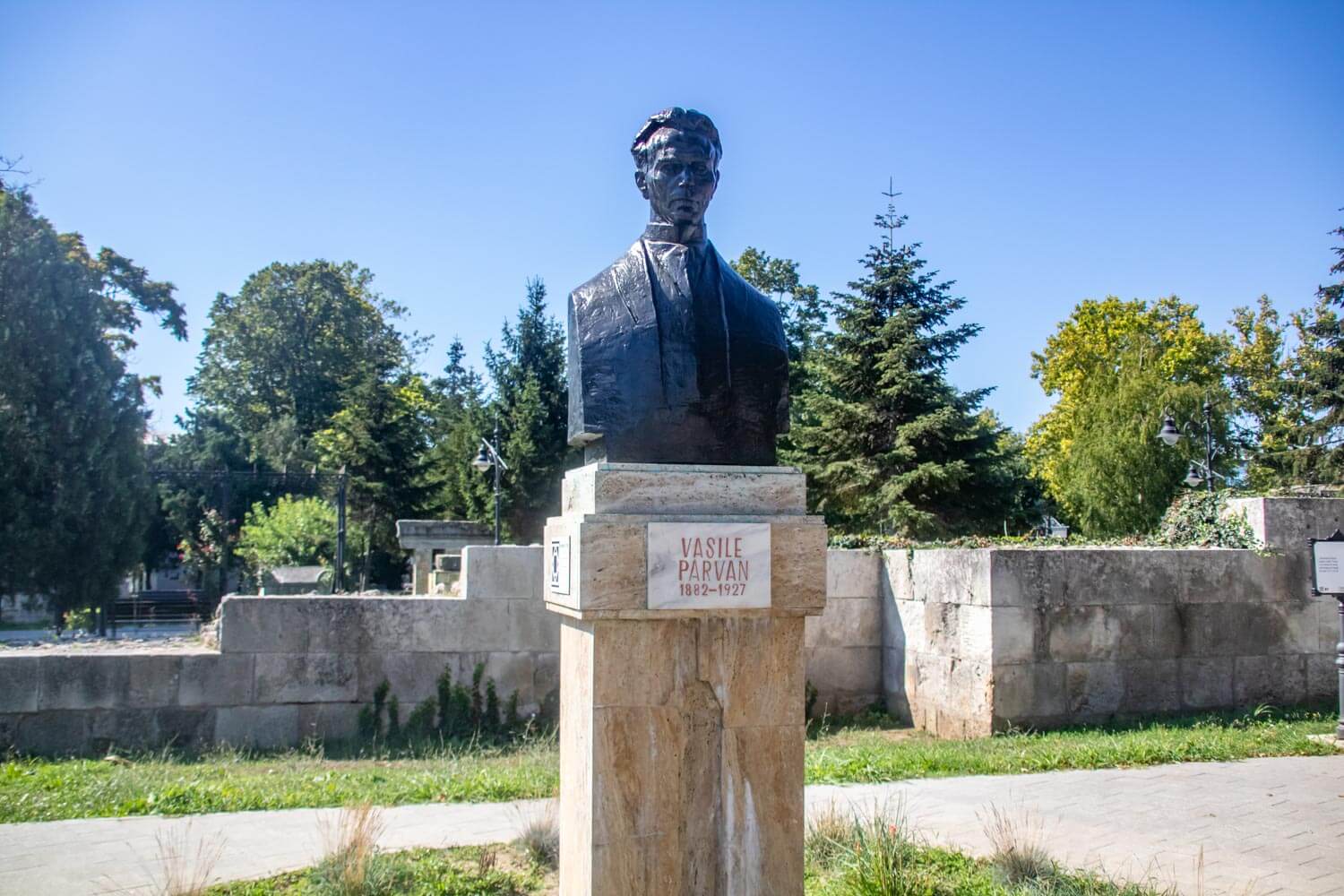
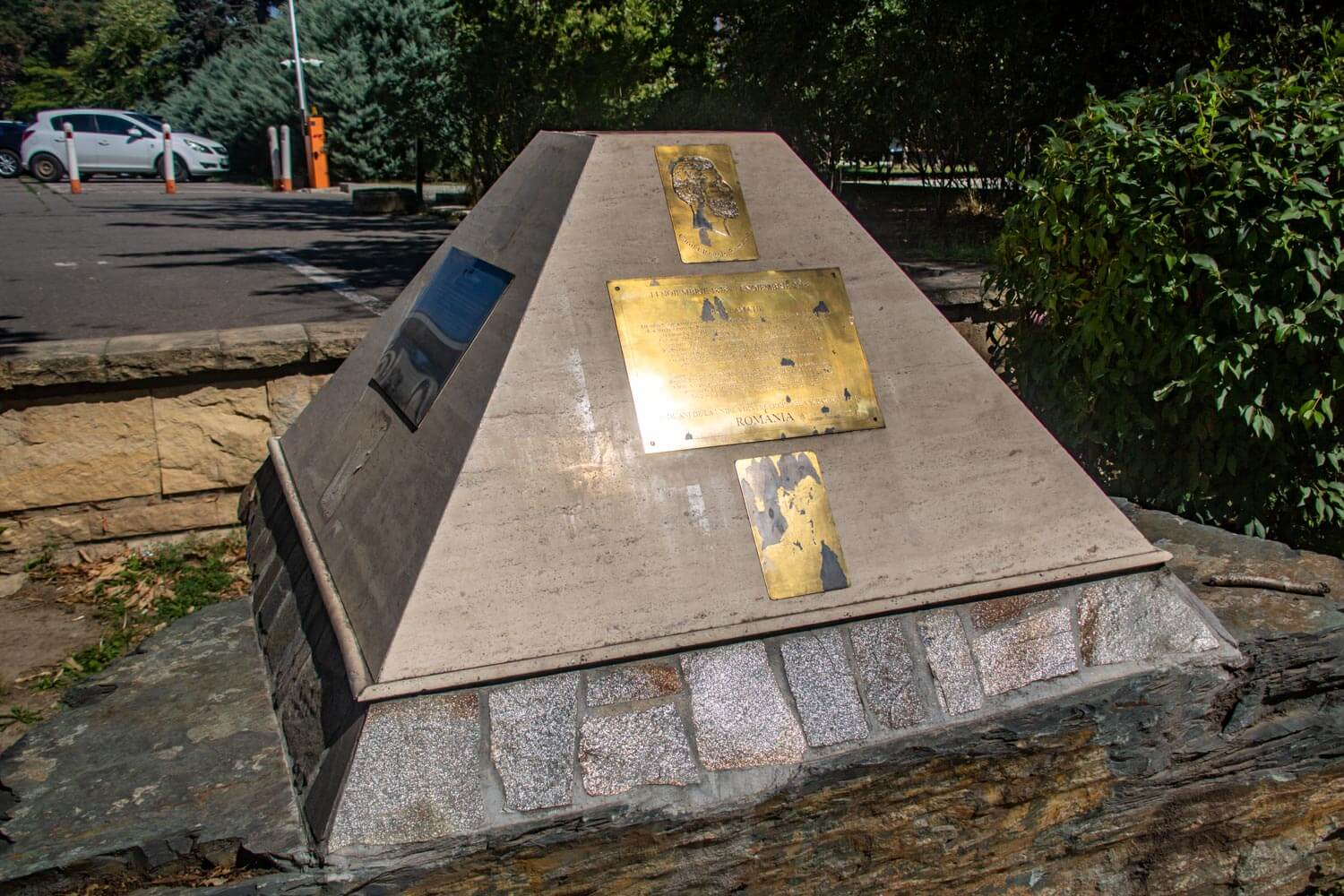
Research into the fortifications began before World War I, when archaeologist Vasile Pârvan excavated part of the wall near what is now Ferdinand Boulevard. One of the structures uncovered there became known as the Butchers’ Tower after a Greek inscription recorded that members of the butchers’ trade had contributed to its reconstruction. A bust of Pârvan now stands beside the exposed remains in the City Hall Park, recalling his role in the early archaeological study of ancient Tomis.
In City Hall Park, visitors can follow several exposed stretches of masonry along the northern side of the park, including the remains of defensive structures incorporated into the wall. The surrounding paths also contain an open-air display of archaeological stonework recovered in Constanța, with columns, funerary monuments, architectural fragments and other finds arranged through a relatively small part of the park. These objects are not all remains of the fortifications themselves, but together with the exposed wall they provide a visible introduction to the ancient city beneath modern Constanța.