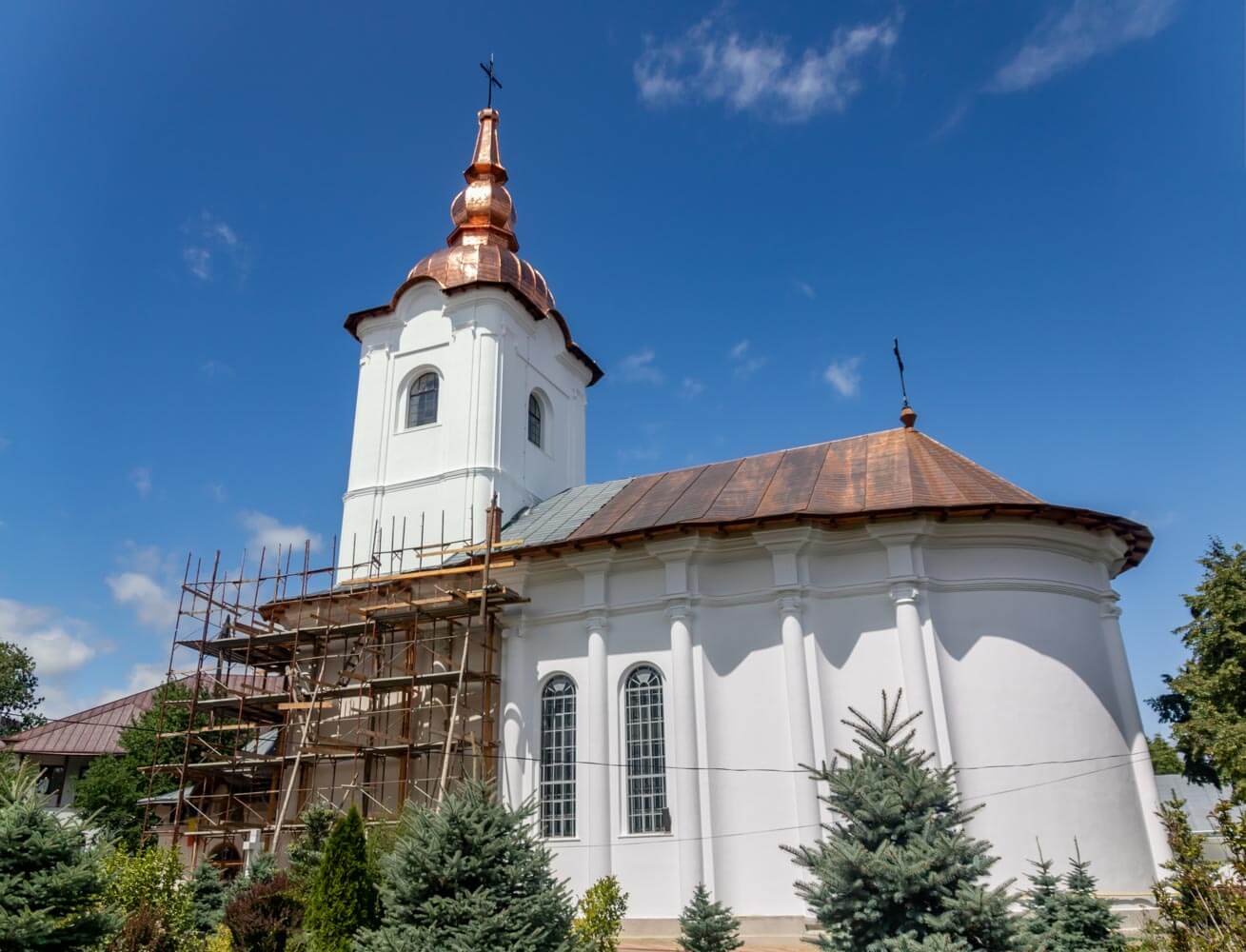
The Vovidenia Church (Biserica Vovidenia) is a 19th-century Orthodox church in Botoșani, dedicated to the Entrance of the Mother of God into the Temple. Built between 1834 and 1838 by members of the Cârstea and Varlaam families, it replaced an older wooden church on the same site and is one of the larger historic churches in the city.
The earlier church had been built by Manole Varlaam and was still standing when Botoșani was mapped in 1830. A few years later, Baron Ioan Cârstea, Gheorghe Varlaam, Grigore Varlaam and other members of the two families financed a much larger stone-and-brick replacement during the reign of Prince Mihail Sturdza. The new church followed a cruciform plan, with unusually thick walls and a tall bell tower rising above the western part of the building.
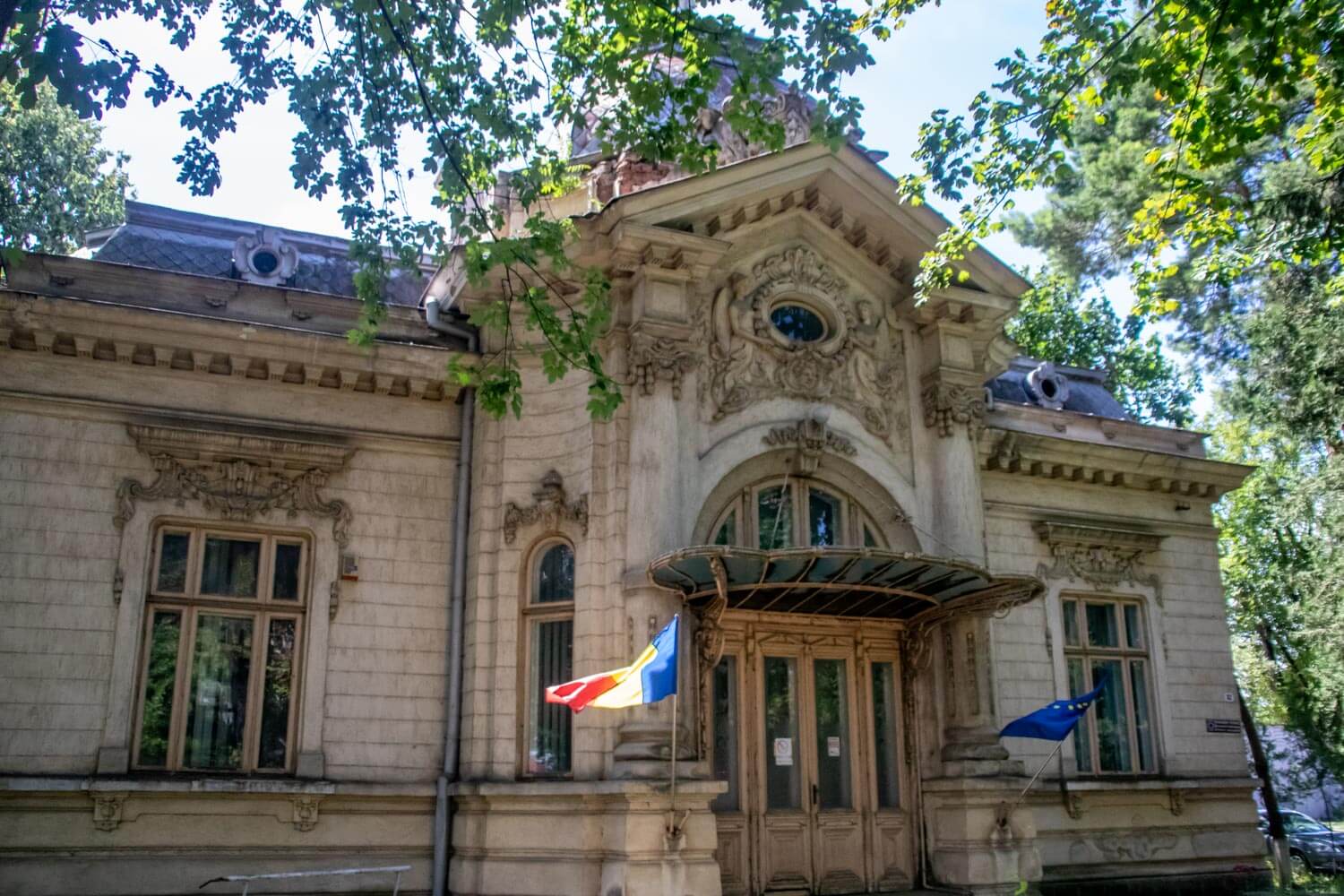
Its exterior combines the mass of the masonry with a more formal neoclassical treatment. Eighteen engaged half-columns divide the walls, their classical capitals giving the façades much of their character, while the large windows bring considerably more light into the interior than in many older Moldavian churches. The tall bell tower originally had a more elaborate roof inspired by Russian and Ukrainian forms, but the upper roof was torn away during a storm in 1940 and replaced by the simpler pyramidal form seen today.
Repairs were carried out several times during the 19th century, including work in 1873 and 1885, when the low brick porch was also painted. The church later suffered from earthquakes and from two decades of closure under the communist authorities between 1951 and 1971, after which substantial repairs and strengthening were required.
The interior has never received a complete painted decoration, which leaves the architecture and furnishings unusually prominent. The original iconostasis survives and was covered with gold leaf, while the heavy metal entrance door also dates from the original 1830s construction and retains its floral decoration and working locking mechanism. Around the beginning of the 20th century, buildings beside the church also housed Botoșani’s first school for church singers.