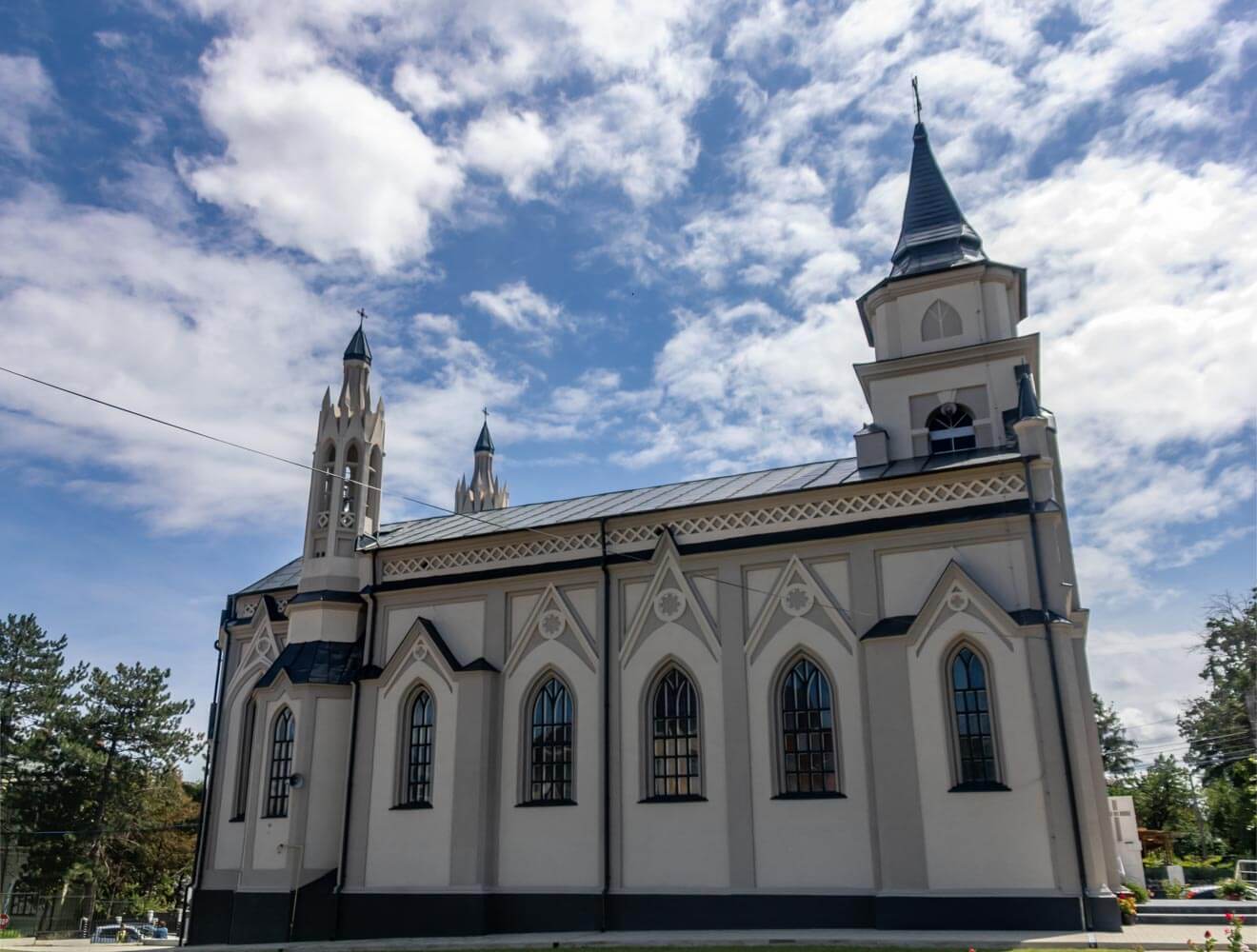
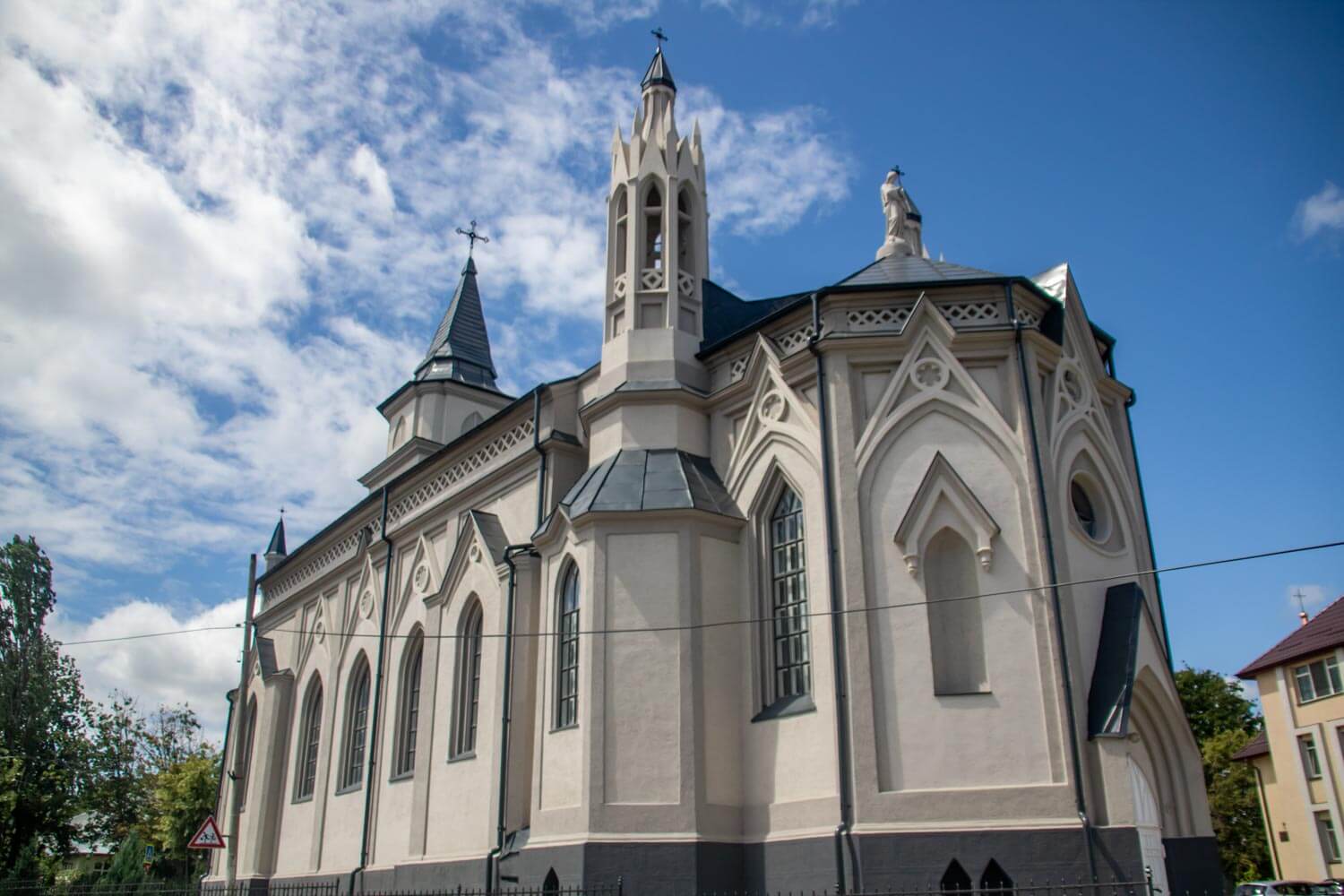
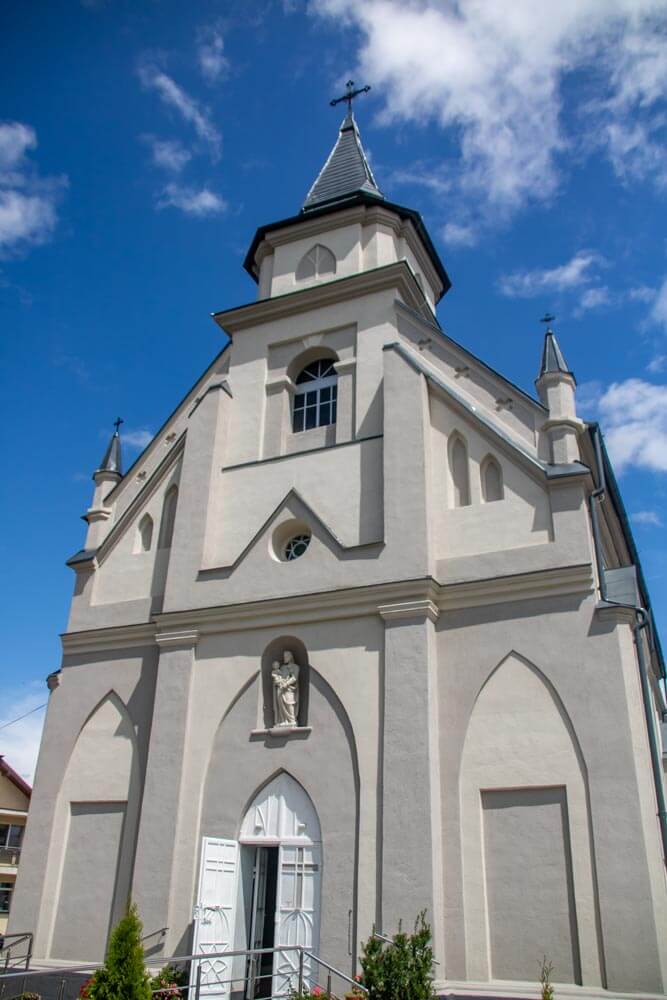
The Church of the Nativity of Saint John the Baptist (Biserica Nașterea Sfântului Ioan Botezătorul) is a 19th-century Roman Catholic church in Botoșani whose present Neo-Gothic appearance largely dates from an enlargement in 1872.
Catholics were already recorded in Botoșani in 1781, and a parish was established three years later. For decades the community relied on a chapel, with another chapel built in 1836 before the parish was formally re-established in 1843 under priest Ioan Botezătorul Dornseiffer. Construction of a permanent church followed soon afterward, and the completed building was consecrated on November 3, 1847.
When the Verești-Botoșani railway line opened in 1872, the Catholic population of the city increased with the arrival of railway employees and technical workers from Austria. The existing church soon proved too small, so two side aisles were added and the building was reshaped in a Neo-Gothic style, giving it much of the appearance it has today.
The rebuilt church is about 25 meters long and 10 meters wide, with a tall, narrow profile emphasized by pointed openings and Gothic detailing. Inside, the same style continues through three wooden altars. The main altar is dedicated to Saint John the Baptist and includes statues of Saint Anne, Saint Anthony, Saint Barbara and Saint Francis of Assisi, while the two side altars are dedicated to the Virgin Mary and Saint Joseph.
The Catholic community changed considerably during the 20th century, particularly after the repatriation of many ethnic Germans in 1940 reduced the parish population. Later industrial development brought new Catholic residents to Botoșani, and the church continues to serve the parish today. Its patronal feast is celebrated on June 24, the Nativity of Saint John the Baptist.