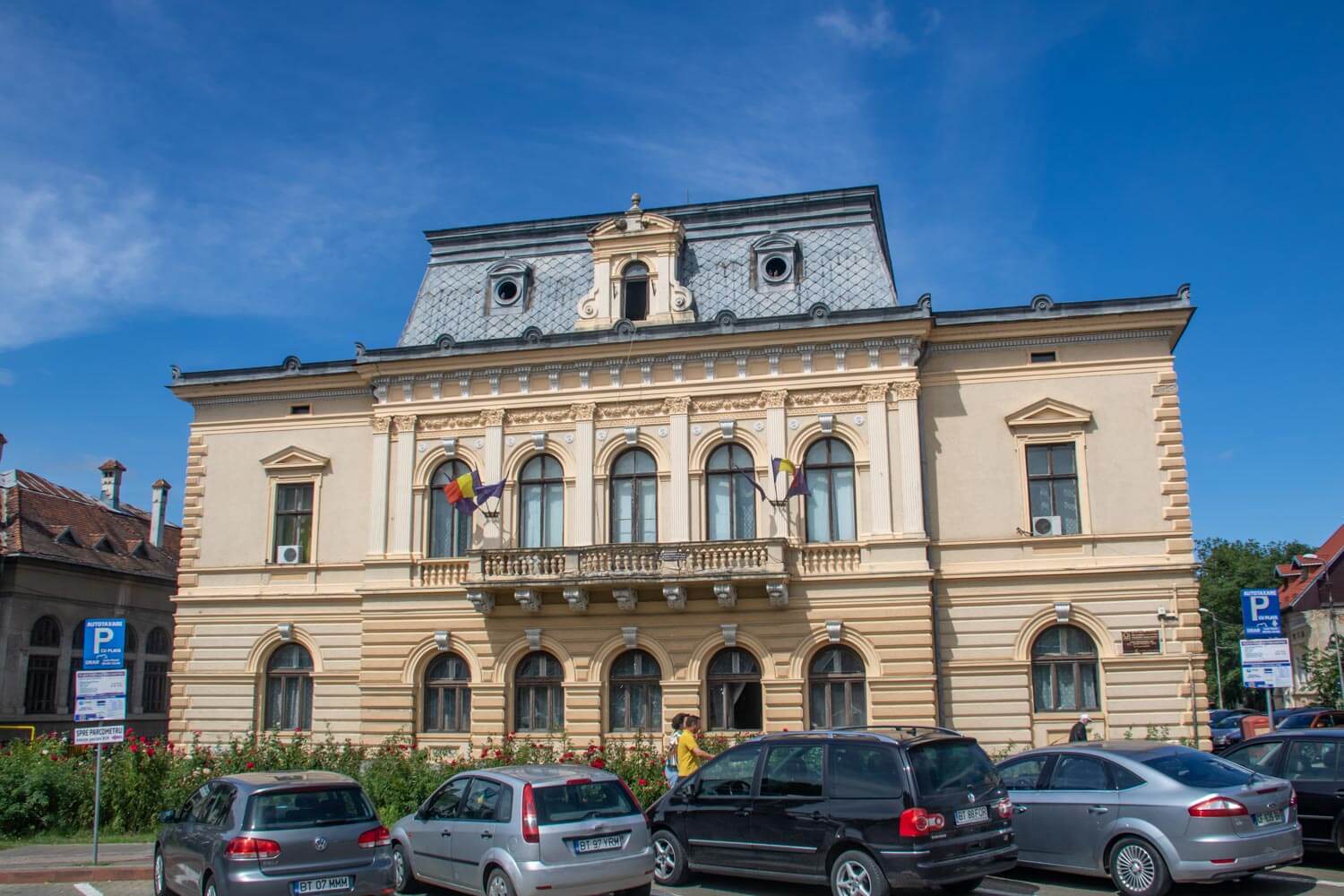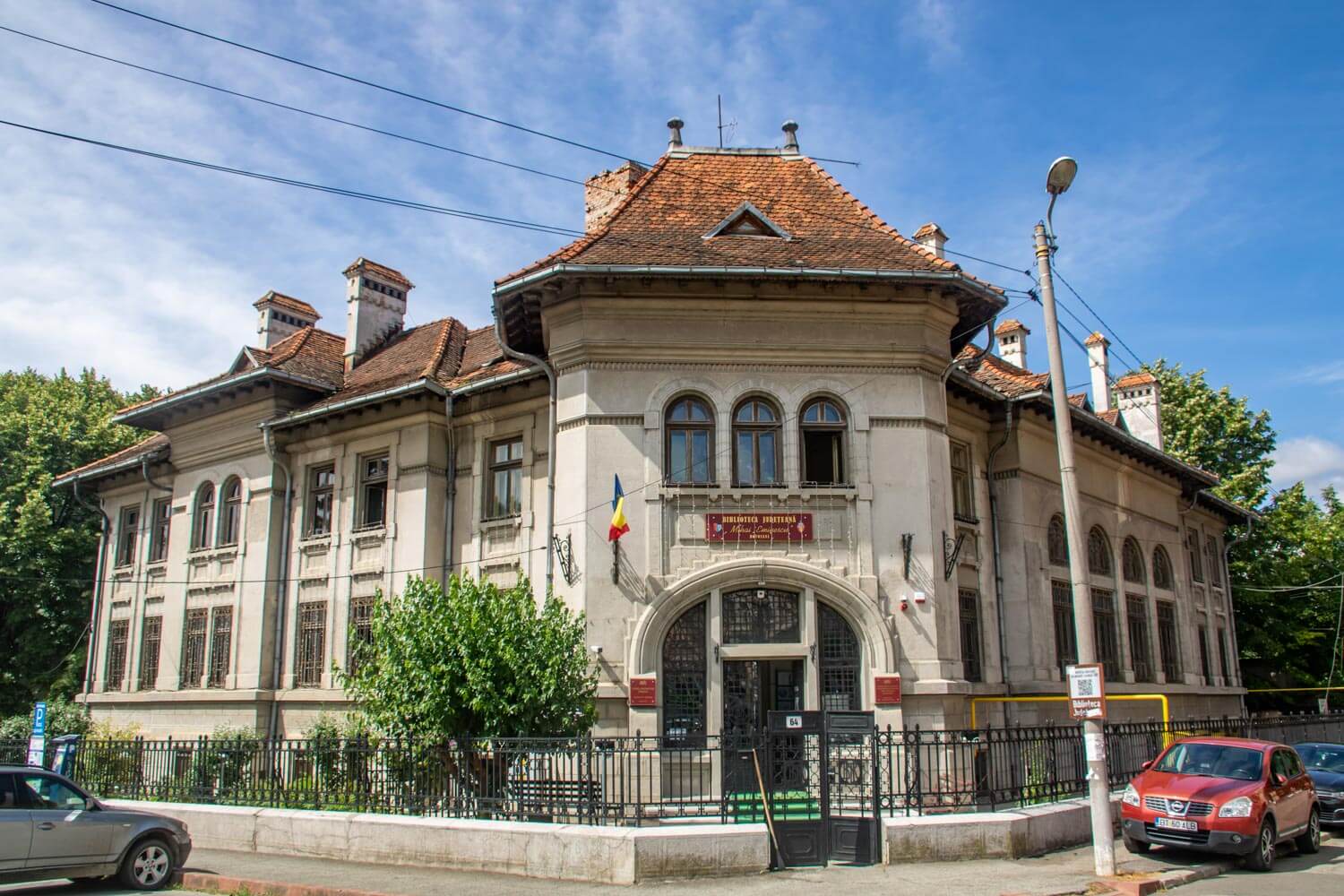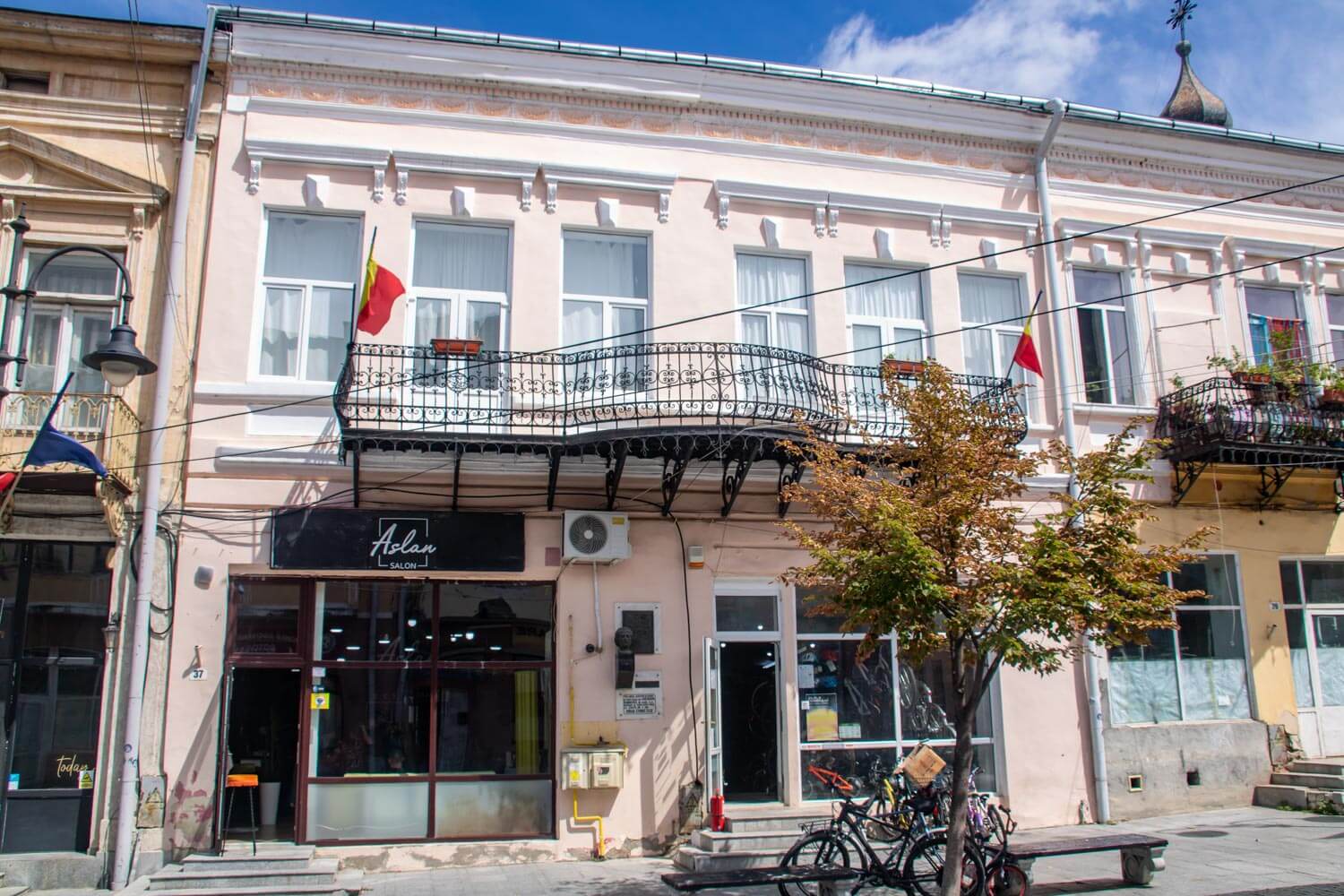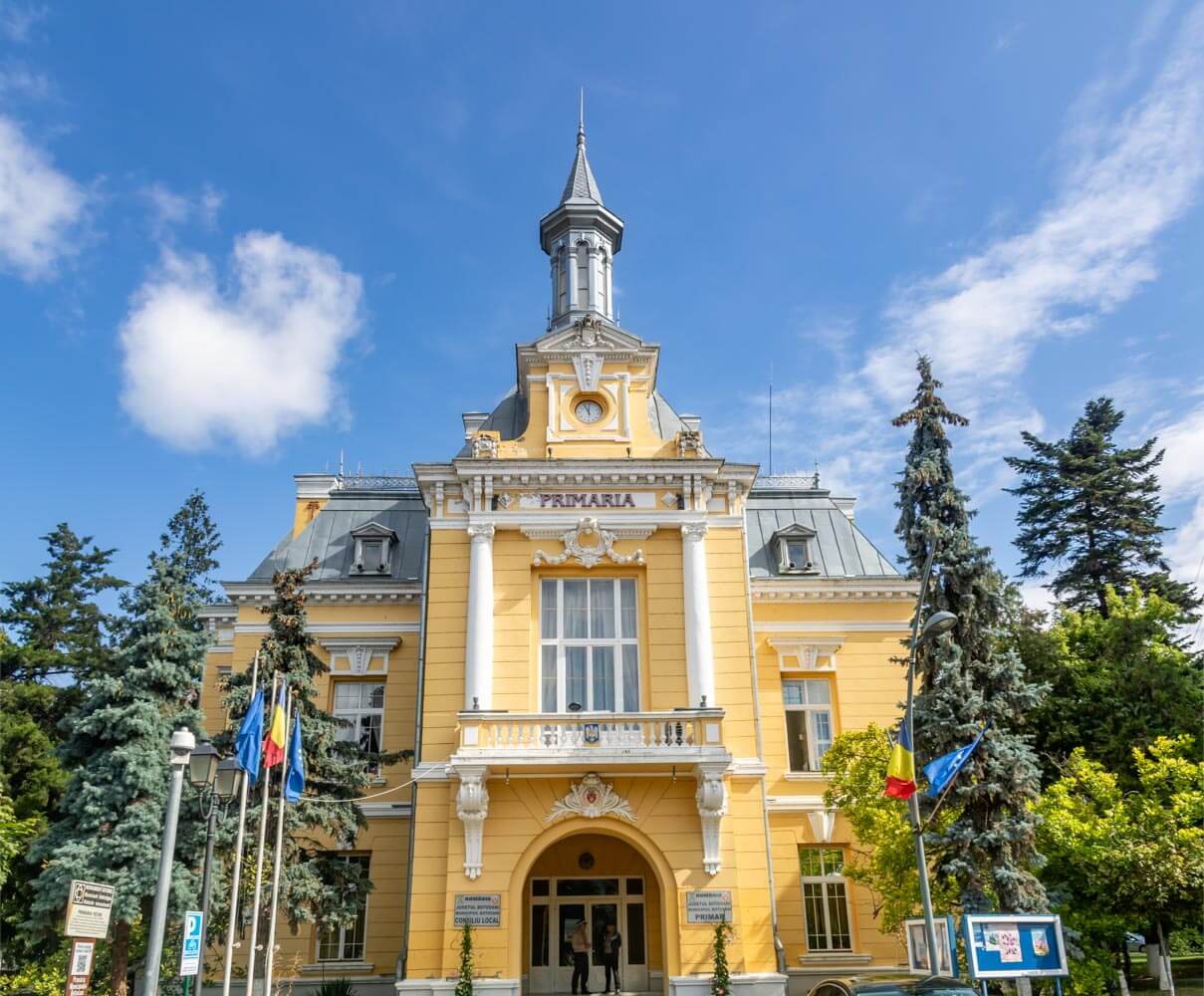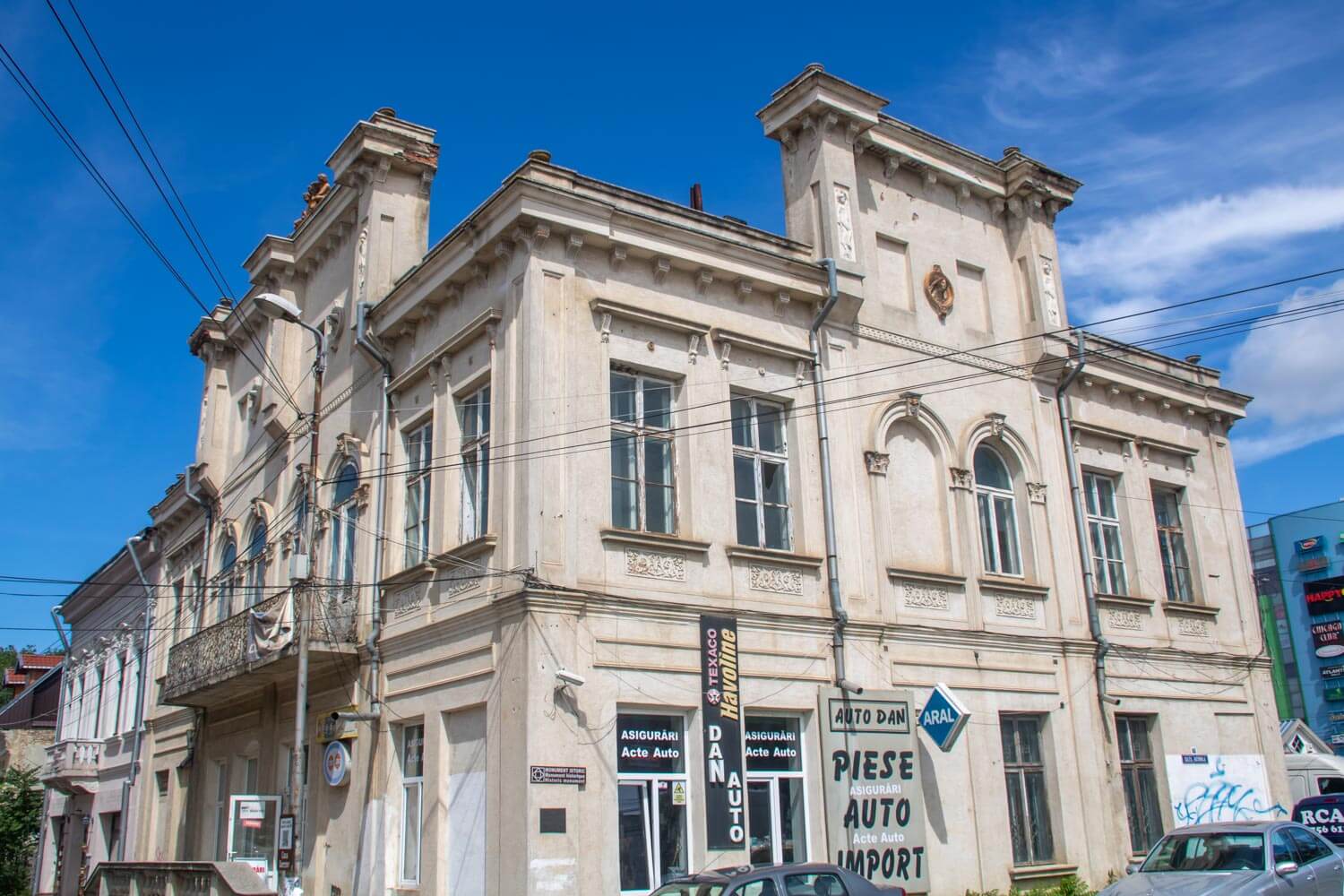
The Panu House (Casa Panu) is a historic residence on the corner of Calea Națională and 1 December 1918 Street in central Botoșani. Built around the middle of the 19th century for the merchant Hirsch Sommer, the house later became one of the city’s early theatrical venues.
The Panu House (Casa Panu) is a historic residence on the corner of Calea Națională and 1 December 1918 Street in central Botoșani. Built in the 19th century for the Jewish merchant Hirsch Sommer, the property later passed into the hands of the Panu family, whose name it retains today.
Part of Sommer’s house was adapted as a performance hall, and by the 1860s it was regularly used by visiting theater companies. Matei Millo, the Vlădicescu brothers, Costache Nottara and Mihail Pascaly all performed here, at a time when Botoșani had no permanent purpose-built theater. In the summer of 1869, Pascaly’s company appeared on the stage with Mihai Eminescu working as a prompter.
The opening of the Mihai Eminescu Theater in 1914 gradually drew performances away from the Sommer house, bringing its main period as a theatrical venue to an end. The property later became known as the Panu House.
During the communist period, the house was partly demolished in 1981 as part of a redevelopment in the center of Botoșani. Heritage specialist Eugenia Greceanu intervened to prevent its complete destruction, and the building was subsequently reconstructed using the earlier plans. Its present exterior preserves the eclectic character of the 19th-century house, with a symmetrical street façade, decorative window surrounds and a pronounced cornice.