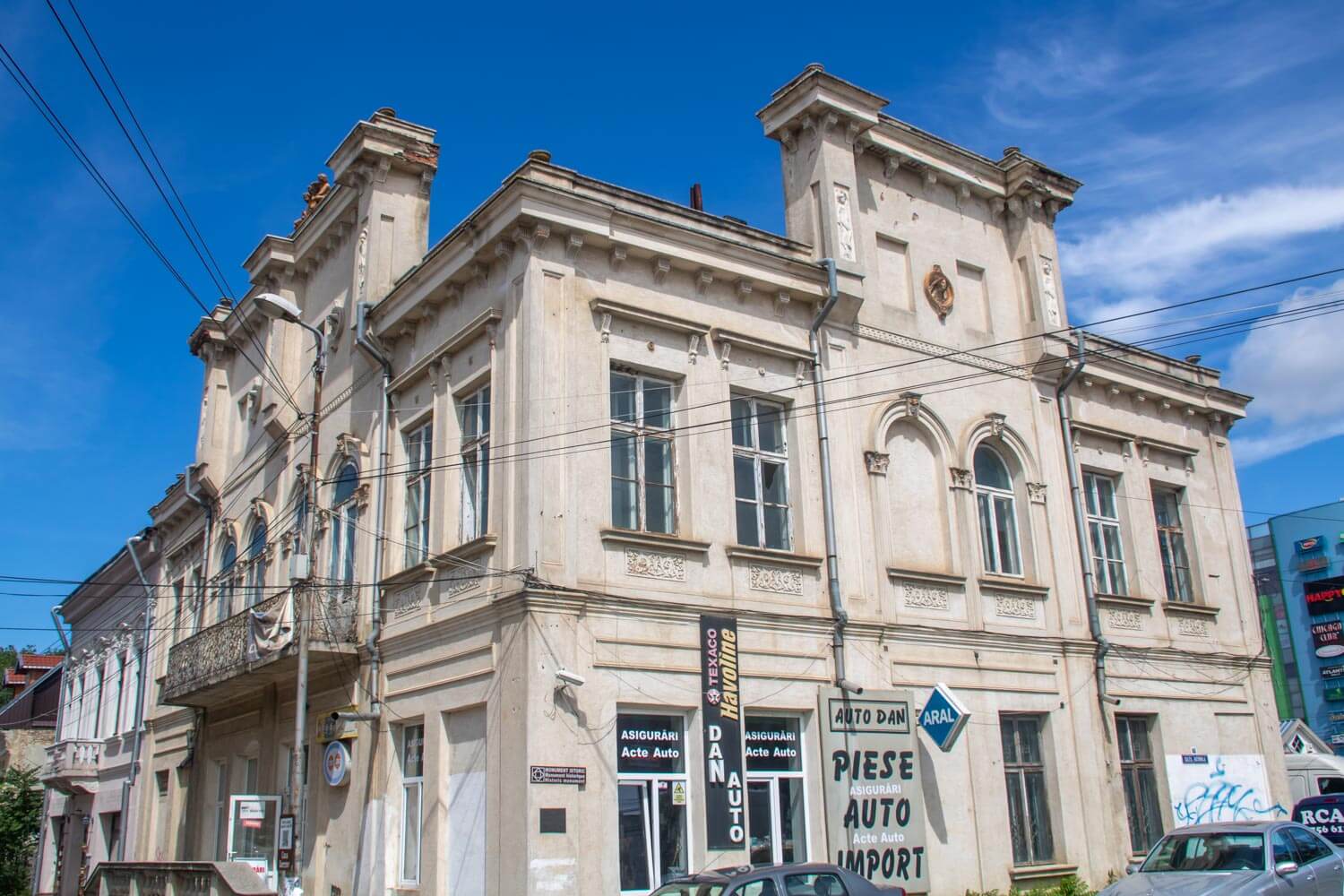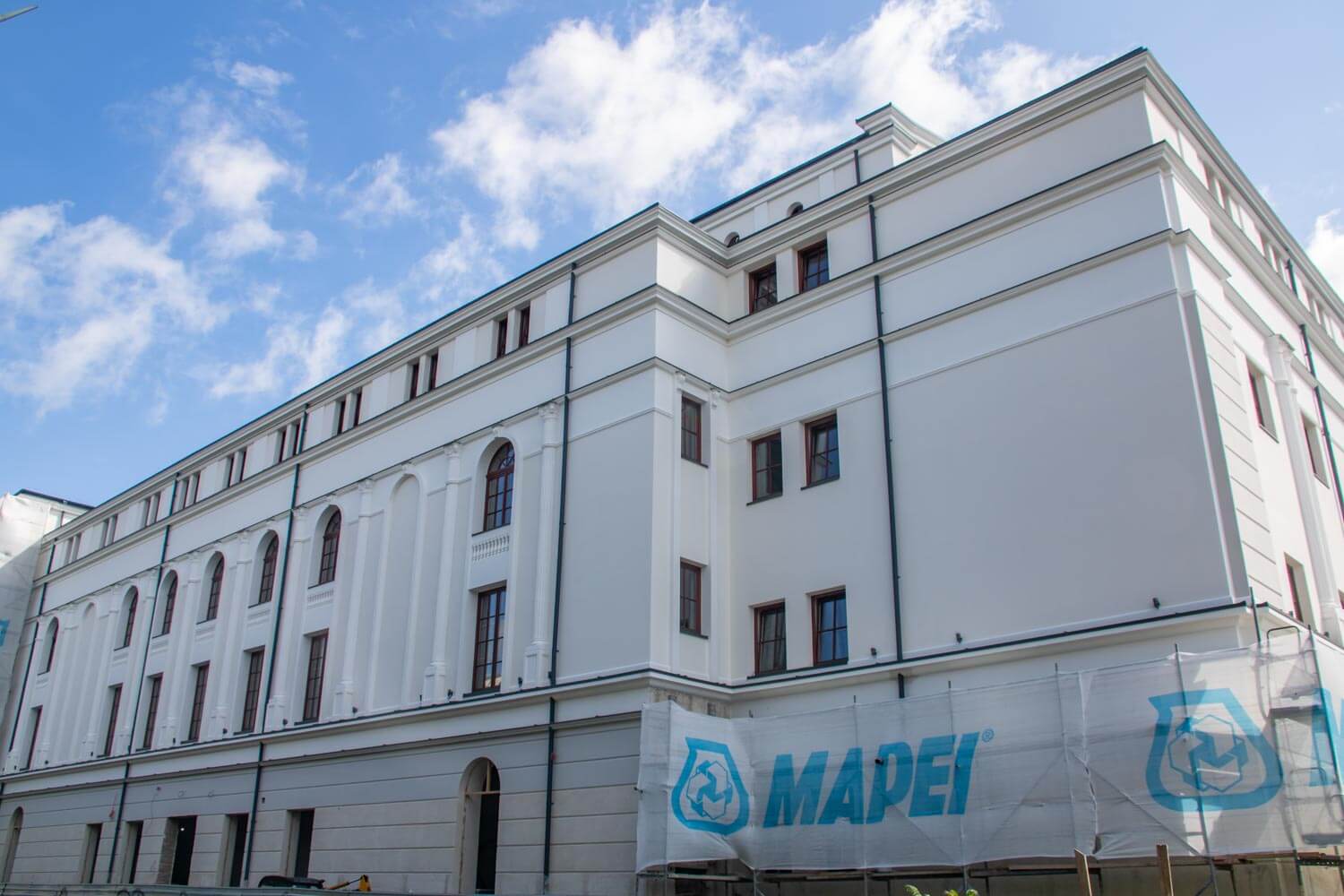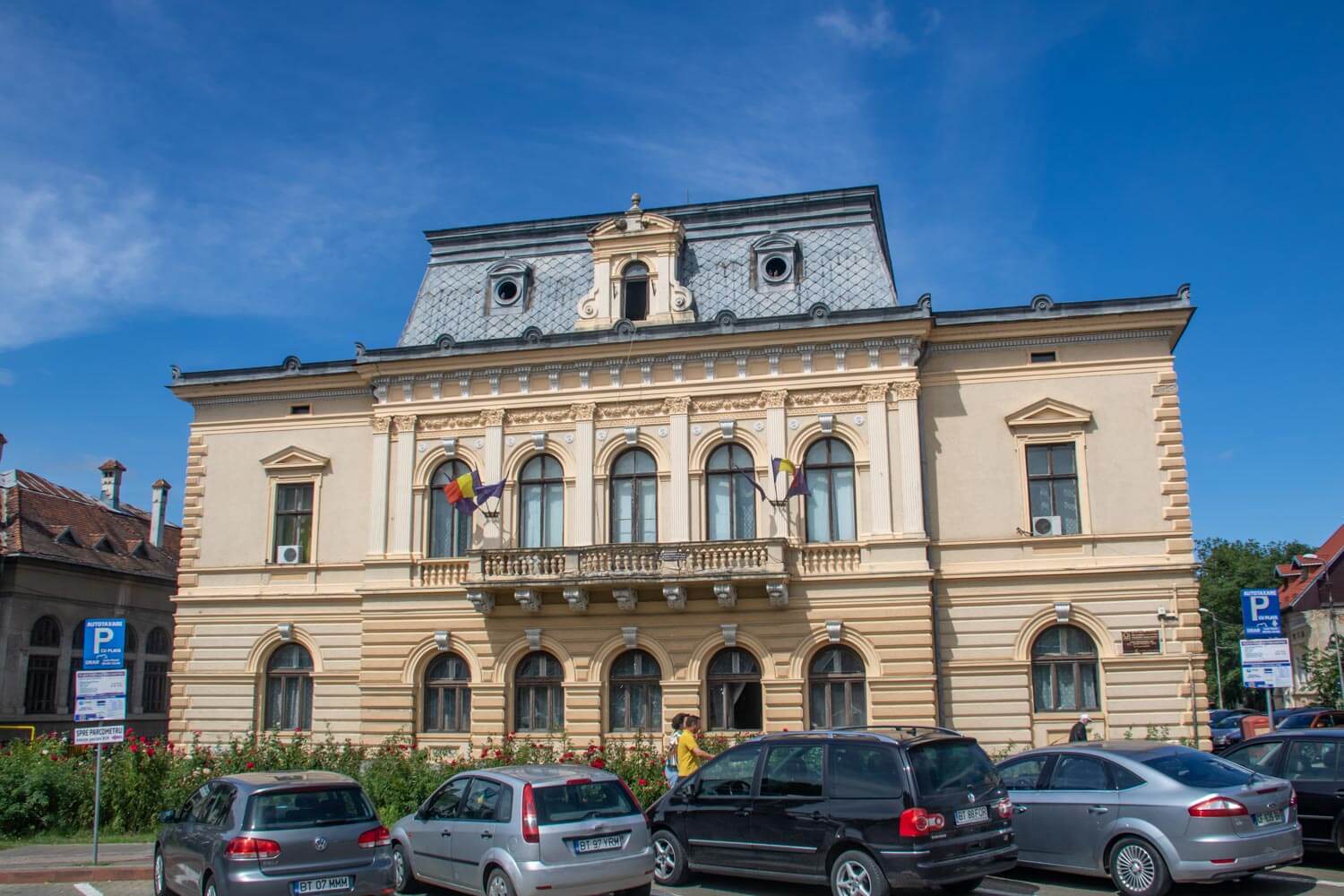
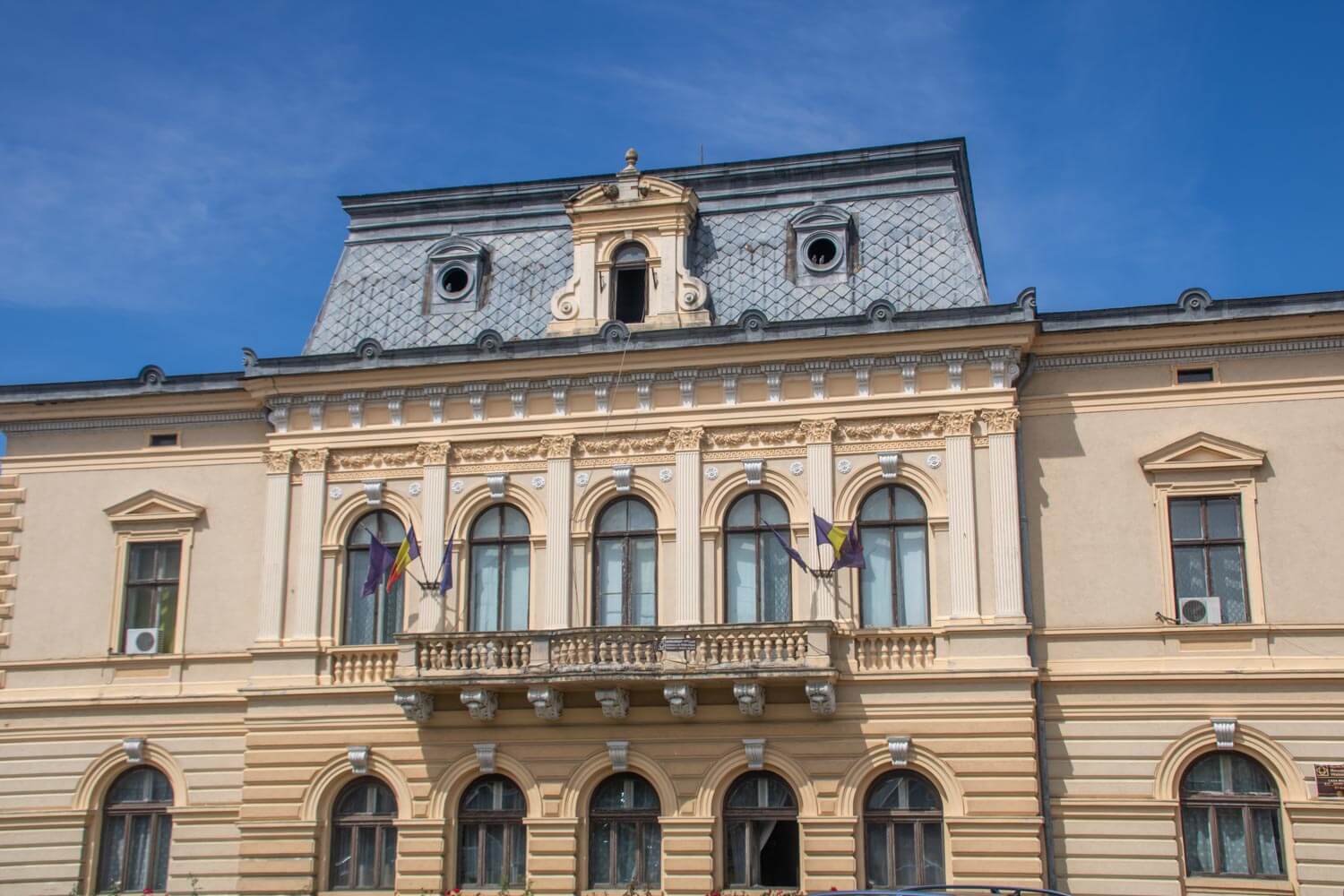
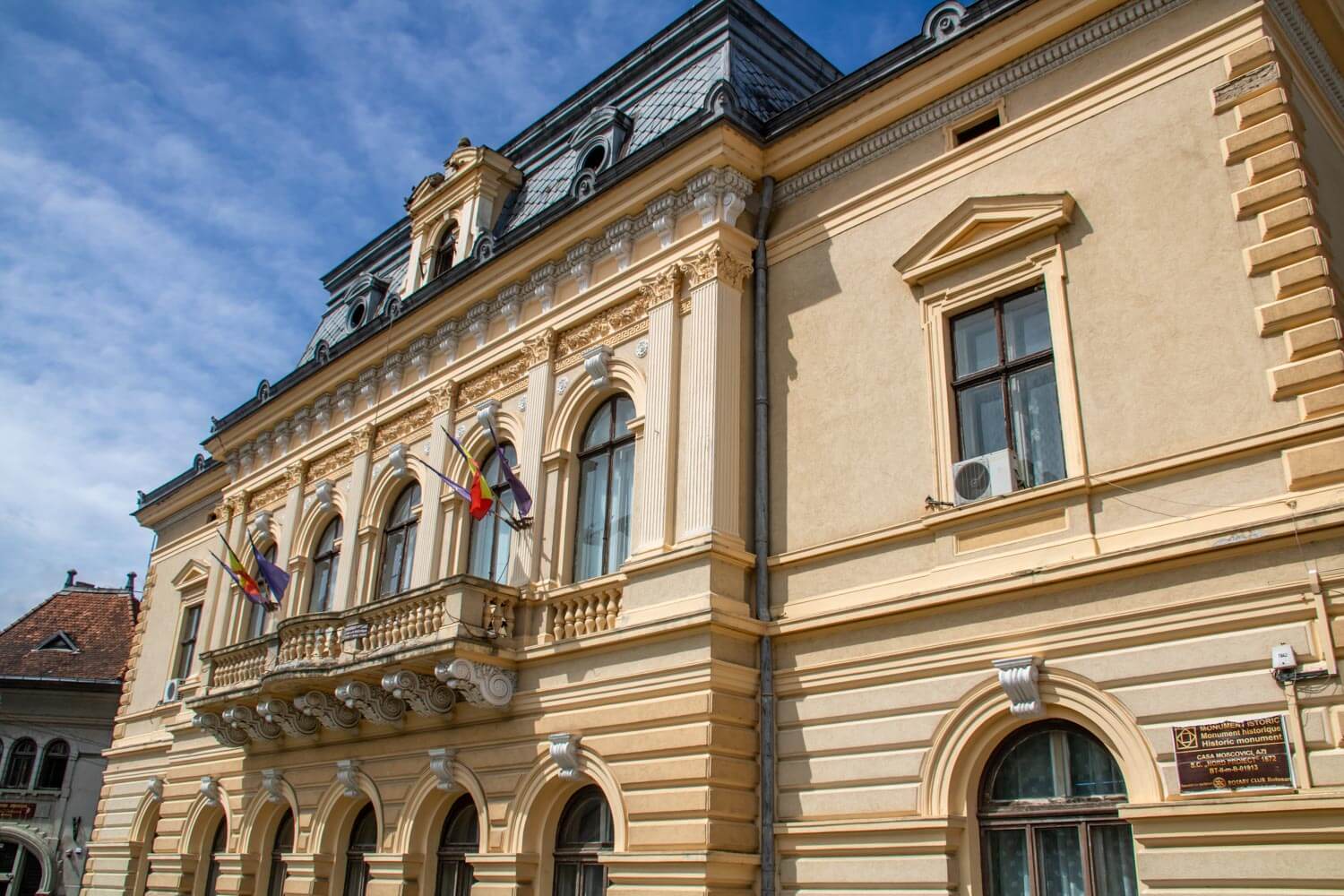
The Moscovici House (Casa Moscovici) is a historic residence on the corner of Calea Națională and 1 December 1918 Street in central Botoșani. Built before 1872 and substantially remodeled after 1888 by banker Boris Moscovici, the house acquired the eclectic Baroque-Palladian appearance it largely retains today.
Boris Moscovici belonged to a wealthy Jewish banking family with business interests in Paris. After acquiring the property, he reshaped it into a large urban residence with four individually treated façades, a generous basement, ground floor and upper story. The house has an eclectic Baroque-Palladian design, with influences from Italian classicist Baroque and Palladian architecture that may have reached Botoșani through Austrian models. The western side originally opened toward a garden, with an enclosed balcony decorated with fine wrought ironwork.
The house also became one of the more prominent private residences in Botoșani during the late 19th and early 20th centuries. Members of the Romanian royal family, including Carol I and Ferdinand I, stayed here during visits to the city, while a bookstore operated on the ground floor in 1888.
After the Moscovici family spent increasingly long periods abroad, the property was sold to the Chamber of Commerce, which used it during the interwar years. The building later accommodated several public institutions, including municipal health services, a police district and judicial offices.
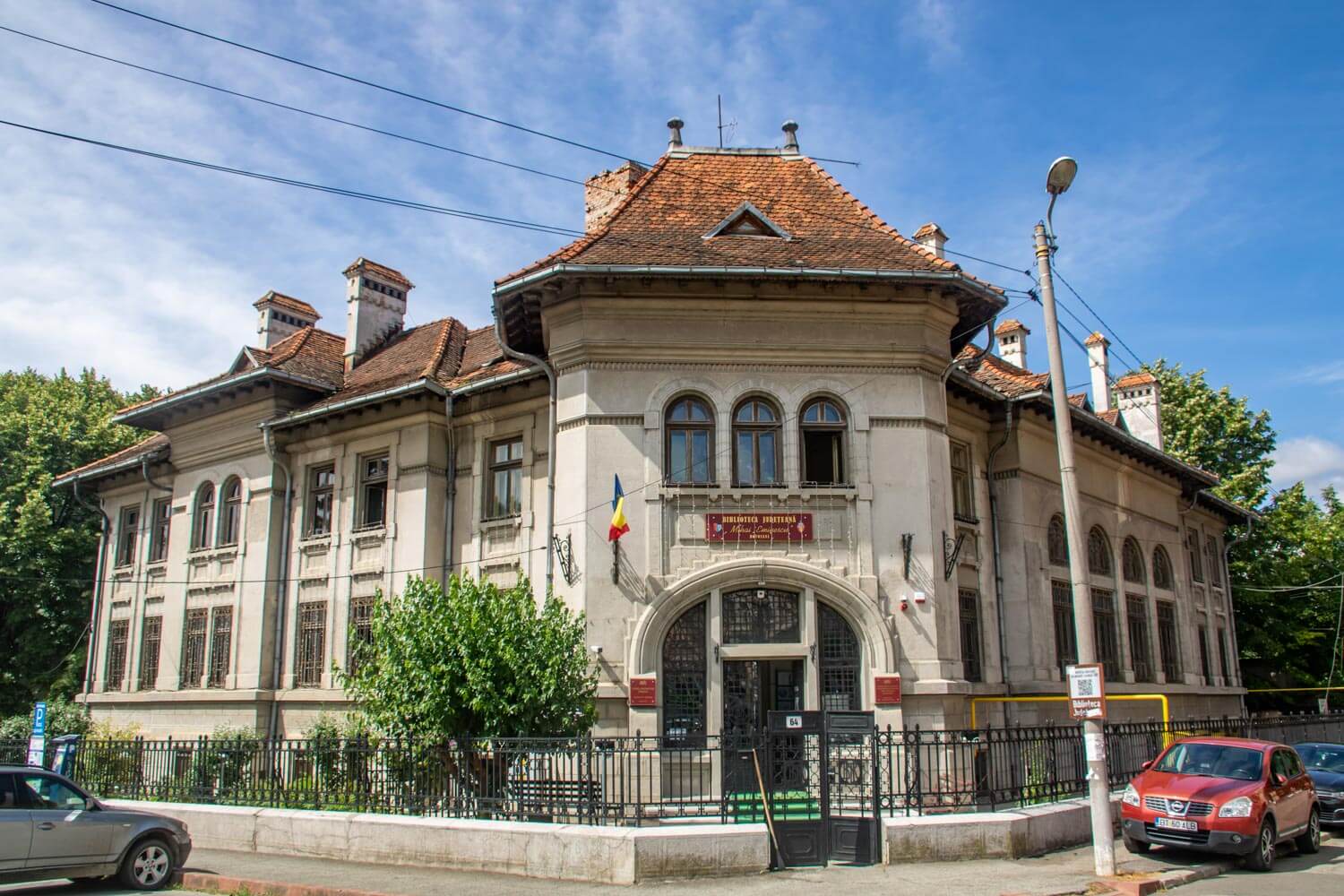
After the Moscovici family spent increasingly long periods abroad, the property was sold to the Chamber of Commerce, which used it during the interwar years. The building later accommodated several public institutions, including municipal health services, a police district and judicial offices, before being acquired by Botoșani County in 2021 and brought into use by the Mihai Eminescu County Library.
The exterior is distinguished by its strongly articulated façades, tall windows, decorative surrounds and projecting cornices, with each side treated somewhat differently according to its position around the building. The combination of classical symmetry with richer Baroque detailing gives the house a more monumental appearance than a typical urban residence of the period.