The Potters Church (Biserica Olari) is a 17th-century Romanian Orthodox church dedicated to the Dormition of the Mother of God, located in the former potters’ district of Curtea de Argeș. Its unusual architecture, with a shingled roof, a bell tower attached to one side, and religious paintings on the exterior walls, distinguishes it from other historic churches in the town.
The church was first documented in 1687 and is believed to have been built through the efforts of a nun named Salomia. Its name comes from the potters (olari) who once lived and worked in this part of Curtea de Argeș, where pottery production was an important local craft. Archaeological excavations during restoration work in 1967-1968 uncovered the foundations of an earlier 15th-century structure, together with ceramics and coins from the 15th and 16th centuries. The present church underwent further repairs and decoration during the 19th century, including a campaign of exterior painting in 1869.
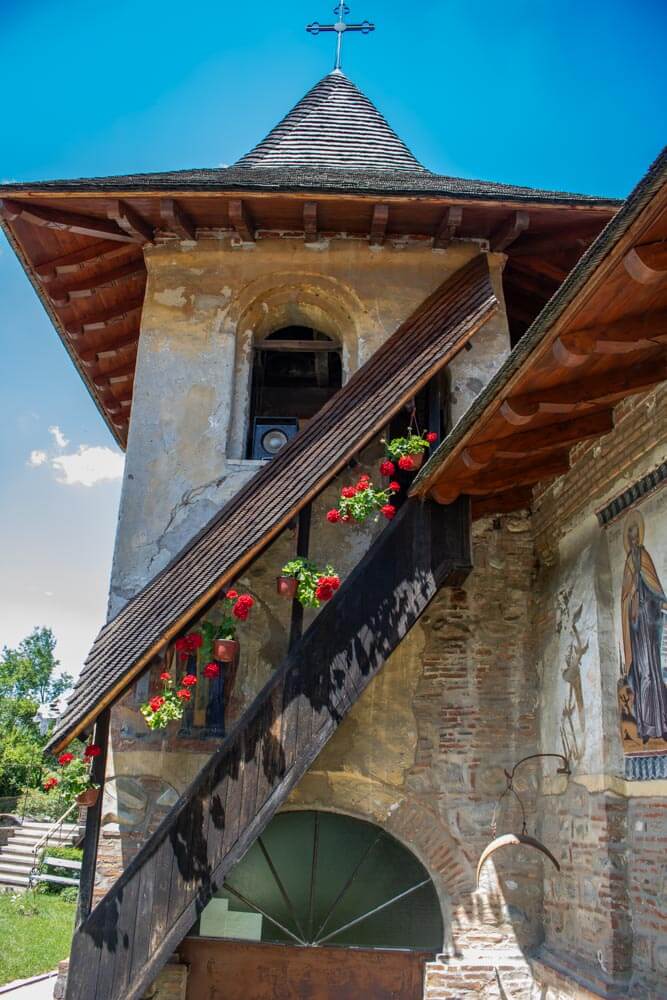
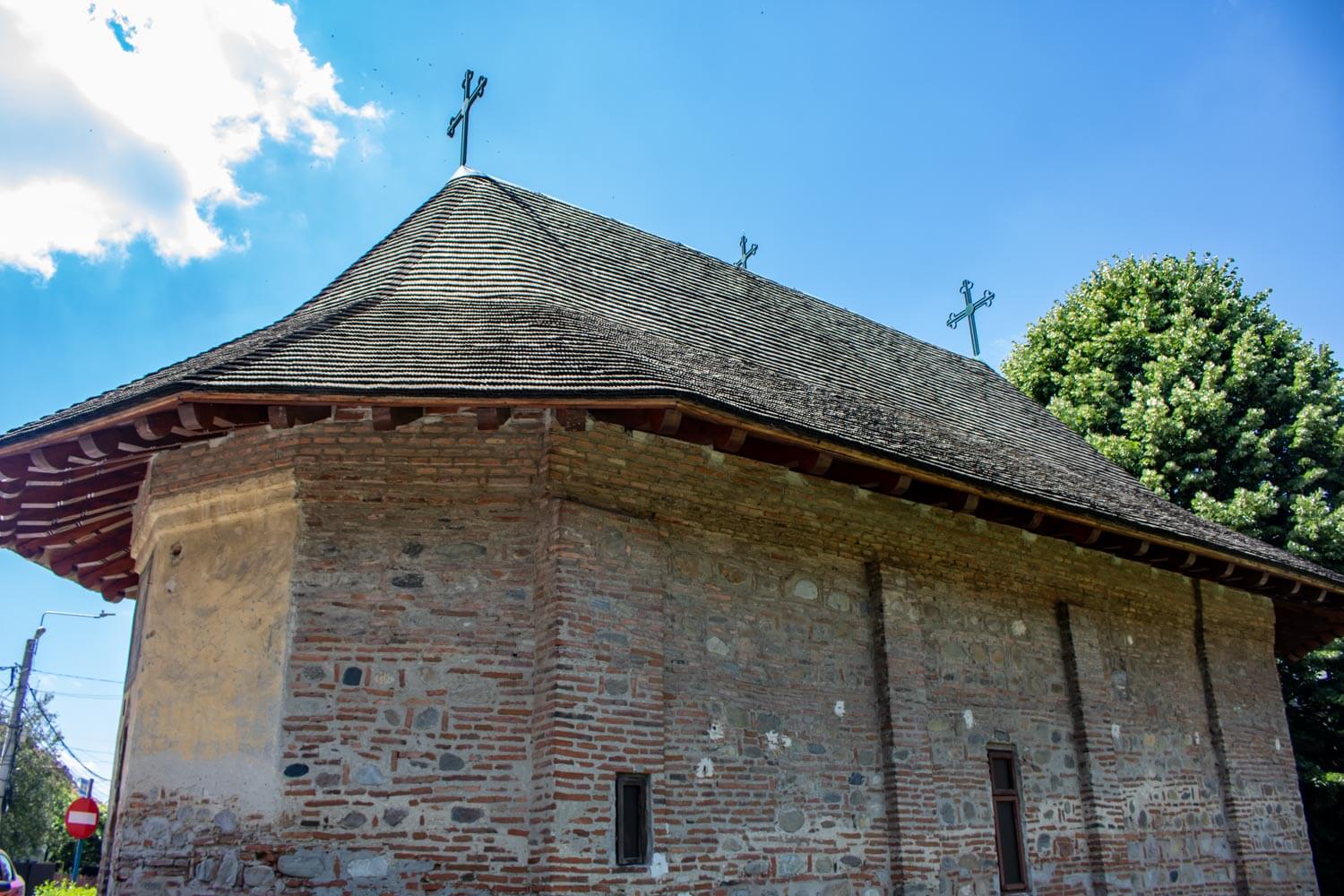
The building has an elongated rectangular plan with polygonal ends, a form more characteristic of certain Moldavian churches than of those in Wallachia. Its stone and brick walls support a steep shingled roof without a central dome, while a tall, square bell tower rises against the southern side. An exterior wooden staircase, protected by a small roof, leads to the bell chamber. The unusual arrangement of the tower, polygonal narthex, and vaulted interior gives the church an appearance quite different from the more familiar cross-shaped Orthodox churches of the region.
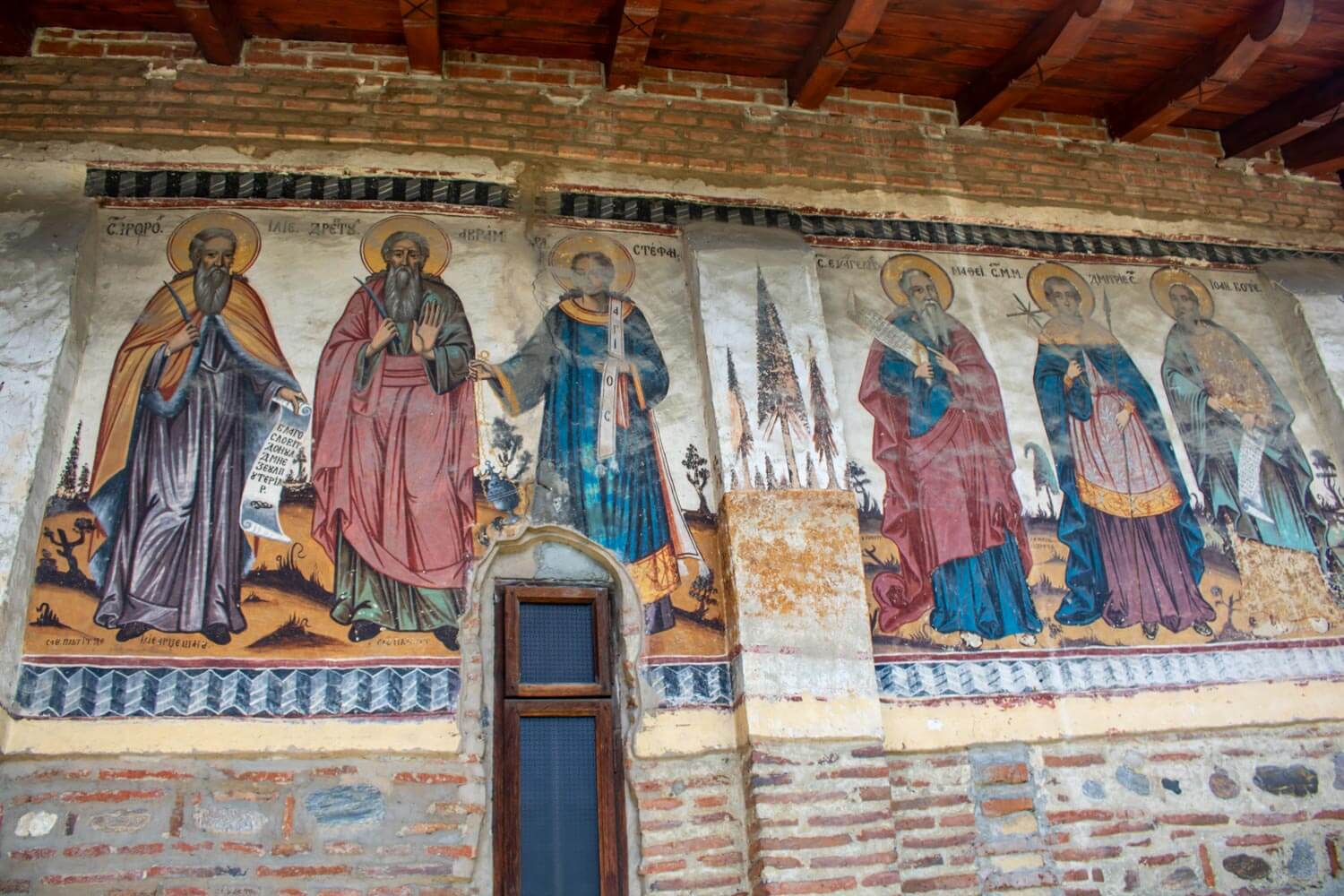
The exterior paintings, dating from 1869, depict saints in large recessed panels along the upper walls. Among the church’s most remarkable artistic features is a personification of Death, portrayed as a standing figure with unusual symbolic details. This rare subject has attracted particular attention from researchers of Romanian religious art. The interior also preserves religious wall paintings from different periods, while the churchyard contains old stone crosses and sections of its historic enclosure wall.