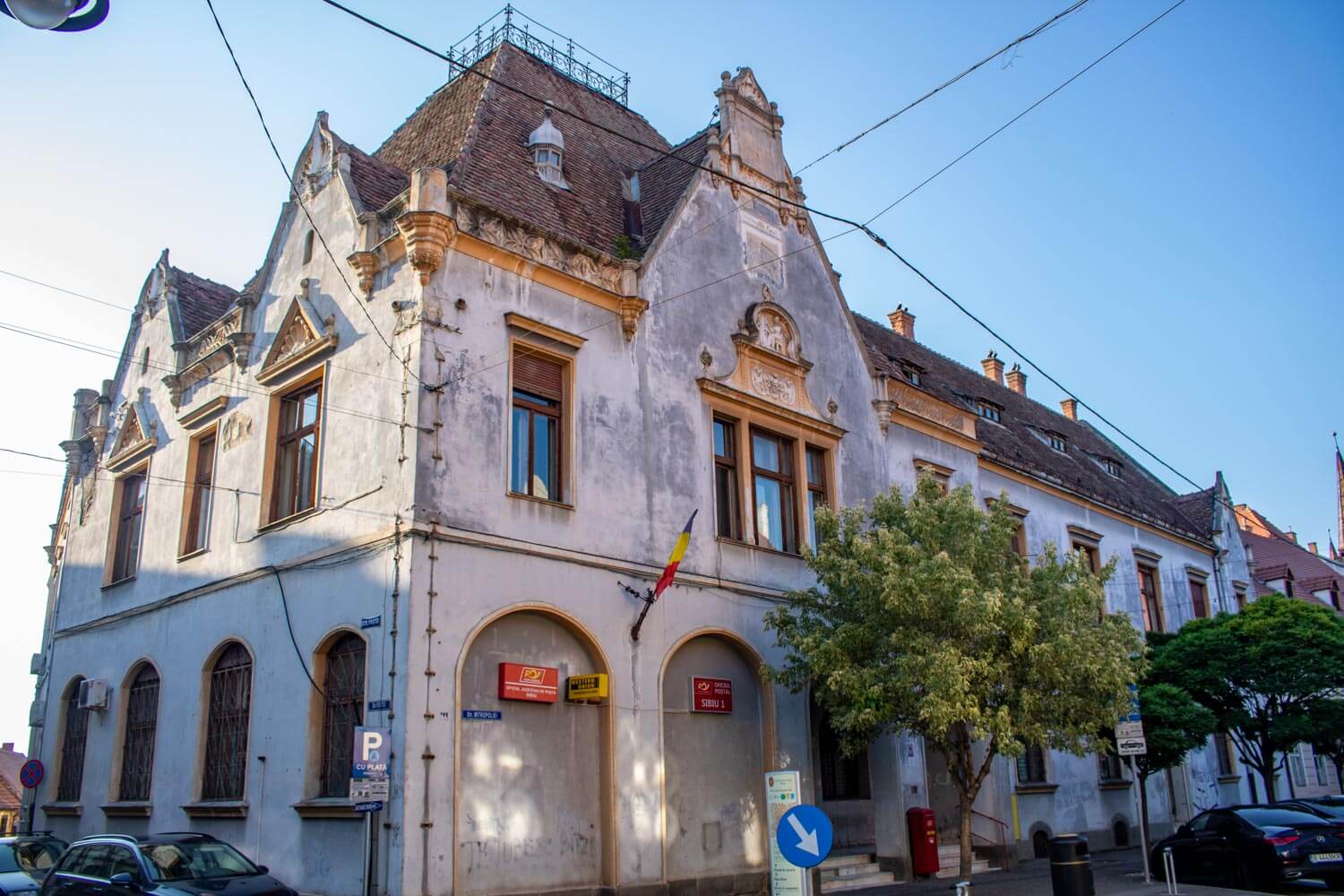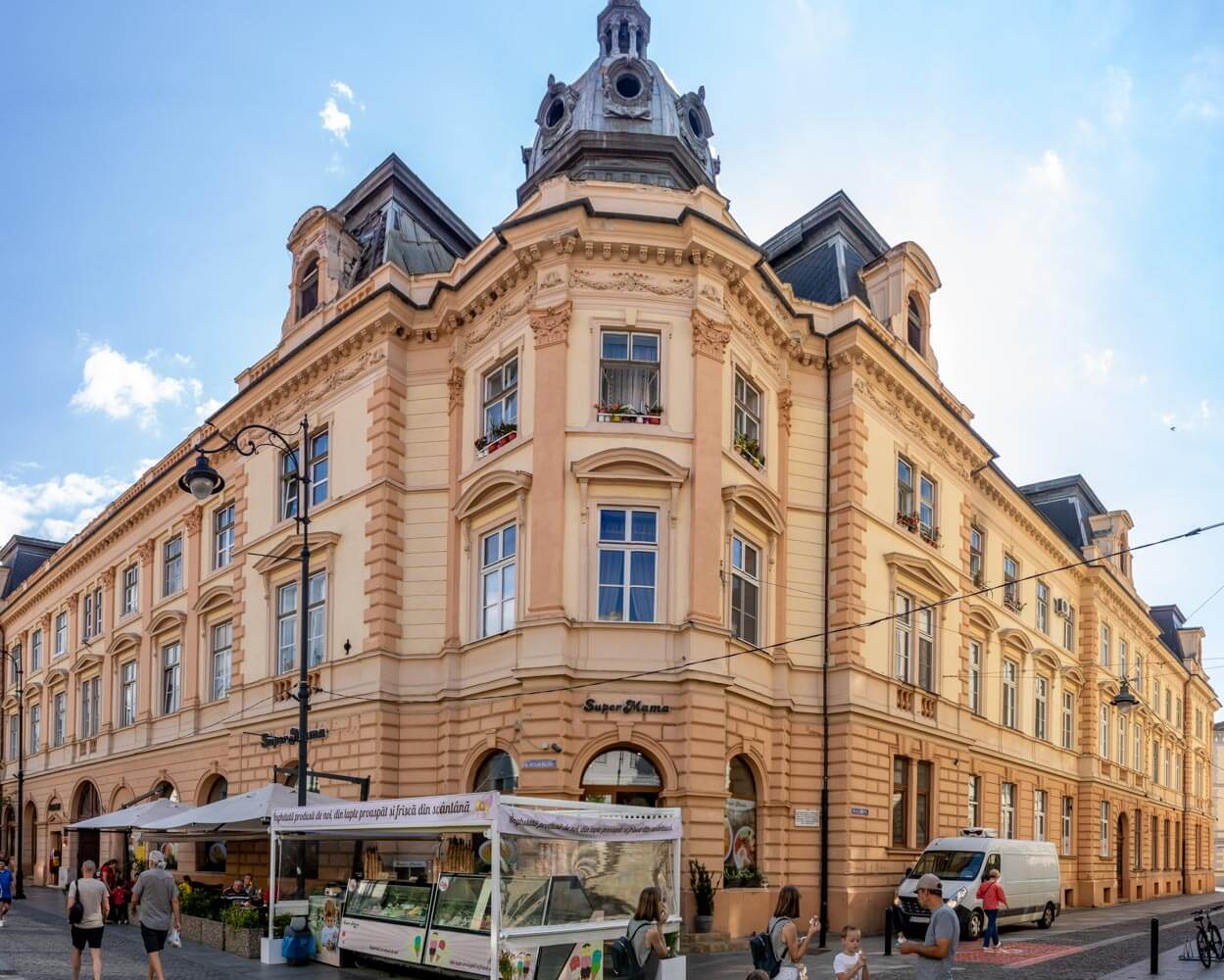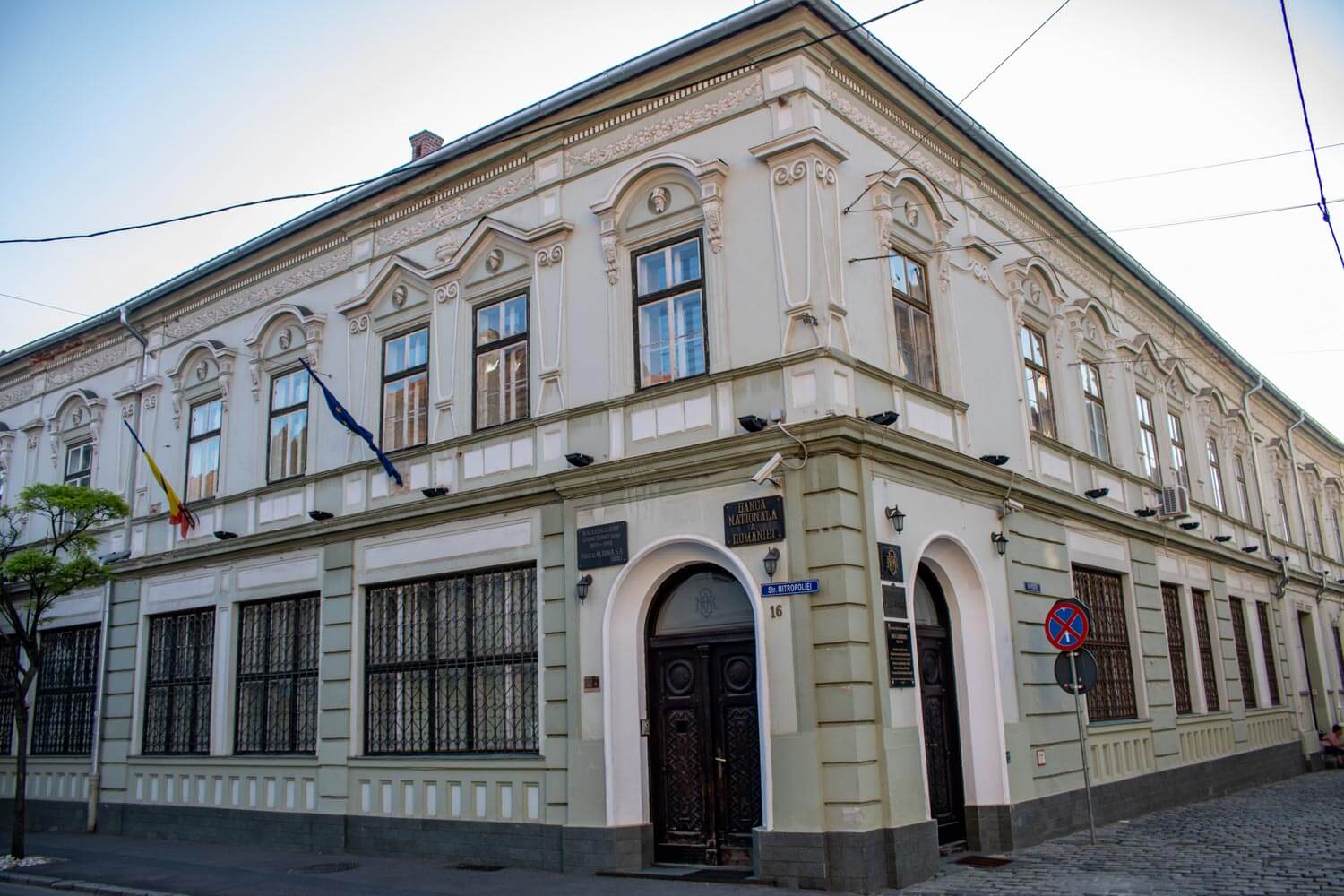
The Sibiu branch of the National Bank of Romania (Banca Națională a României) is housed in the former headquarters of the Albina Bank, a prominent late-19th-century building in the historic center of Sibiu.
Albina was founded in Sibiu in 1871 at the initiative of Visarion Roman and began operating the following year as the first Romanian bank in Transylvania. Created to give the region’s Romanian population greater access to credit and savings, it grew rapidly enough to require a substantial headquarters of its own. The present building was completed in 1882, giving the bank a commanding corner presence with long façades on two streets and spacious offices arranged around an inner courtyard. Its prosperous appearance survives in the richly framed upper-floor windows, alternating triangular and curved pediments, garlands and masks, while an original gallery supported by cast-iron brackets remains in the courtyard.
Behind those decorated façades, the building was designed around the practical demands of a major financial institution. Most remarkable is the old strongroom, where rows of original safe-deposit boxes still carry the names of some of the clients who once stored valuables here. Its enormous doors were brought into position before the surrounding walls were completed, effectively making the vault one of the elements around which the headquarters was constructed. Much of the original interior and exterior woodwork has also survived from the 1880s.
Albina’s growing financial strength allowed it to play a wider role in Romanian cultural and educational life in Transylvania. The Romanian Reading Society met in the building toward the end of the 19th century, and from 1895 a student meal program provided free daily meals to around 50 pupils from poorer families. Future poet Octavian Goga and historian Ioan Lupaș were among those who benefited, while the interwar years also brought the editorial offices of Revista Economică into the building.
That chapter ended with the reorganization of Romania’s banking system after the communist takeover, when Albina ceased operating in 1948. The National Bank of Romania had maintained its own Sibiu office since 1921 in the former Austro-Hungarian Bank building on Strada General Magheru, but moved here in 1950 and has remained ever since. The Sibiu unit was reorganized several times over the following decades and has operated as a National Bank agency since 2011.
The building is not normally open for sightseeing, although the National Bank has held public open days at its Sibiu branch in recent years, usually around its anniversary, with guided access to the historic interiors and old vault. Visitors interested in Romanian banking and currency history can also visit the National Bank of Romania Museum in Bucharest.