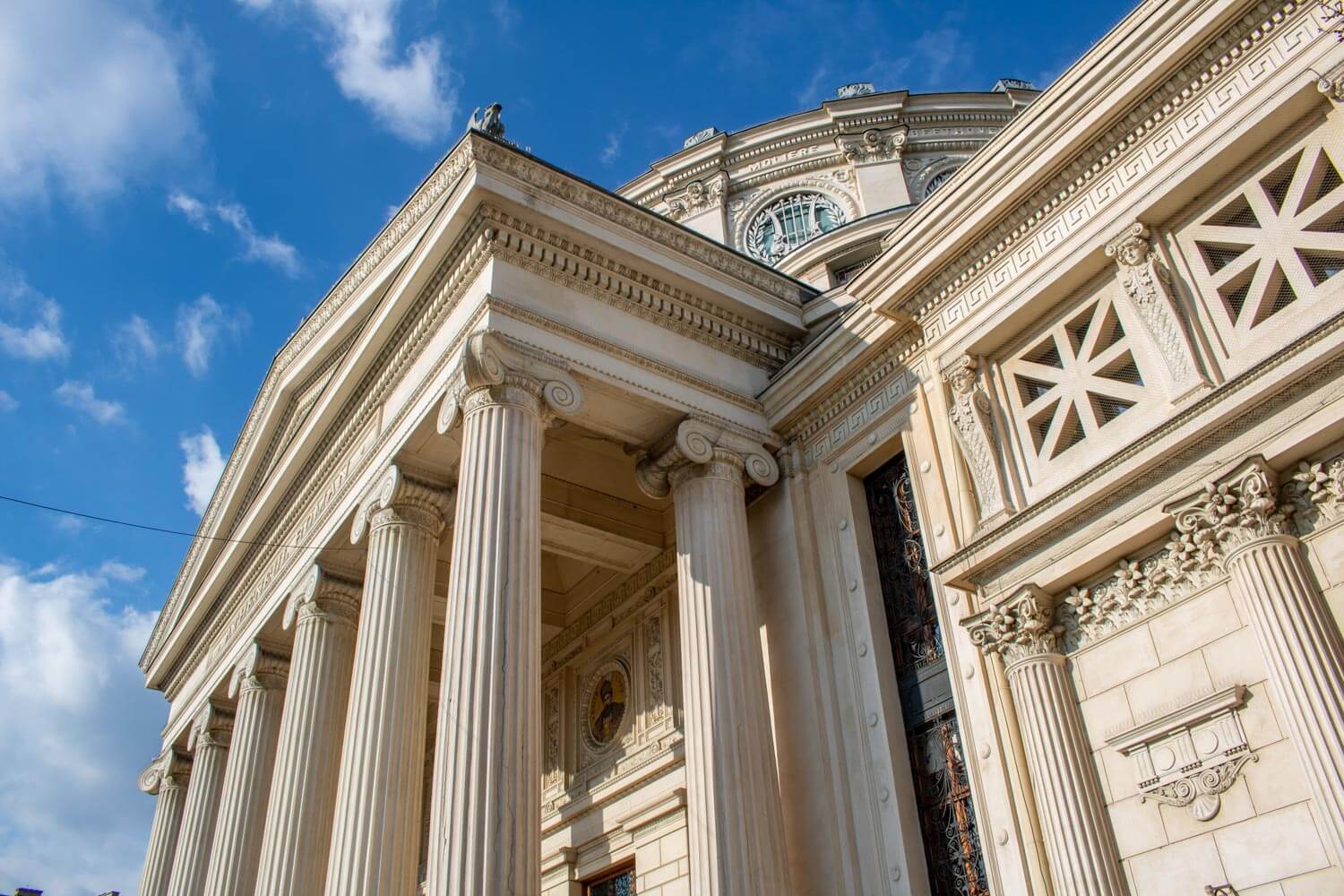
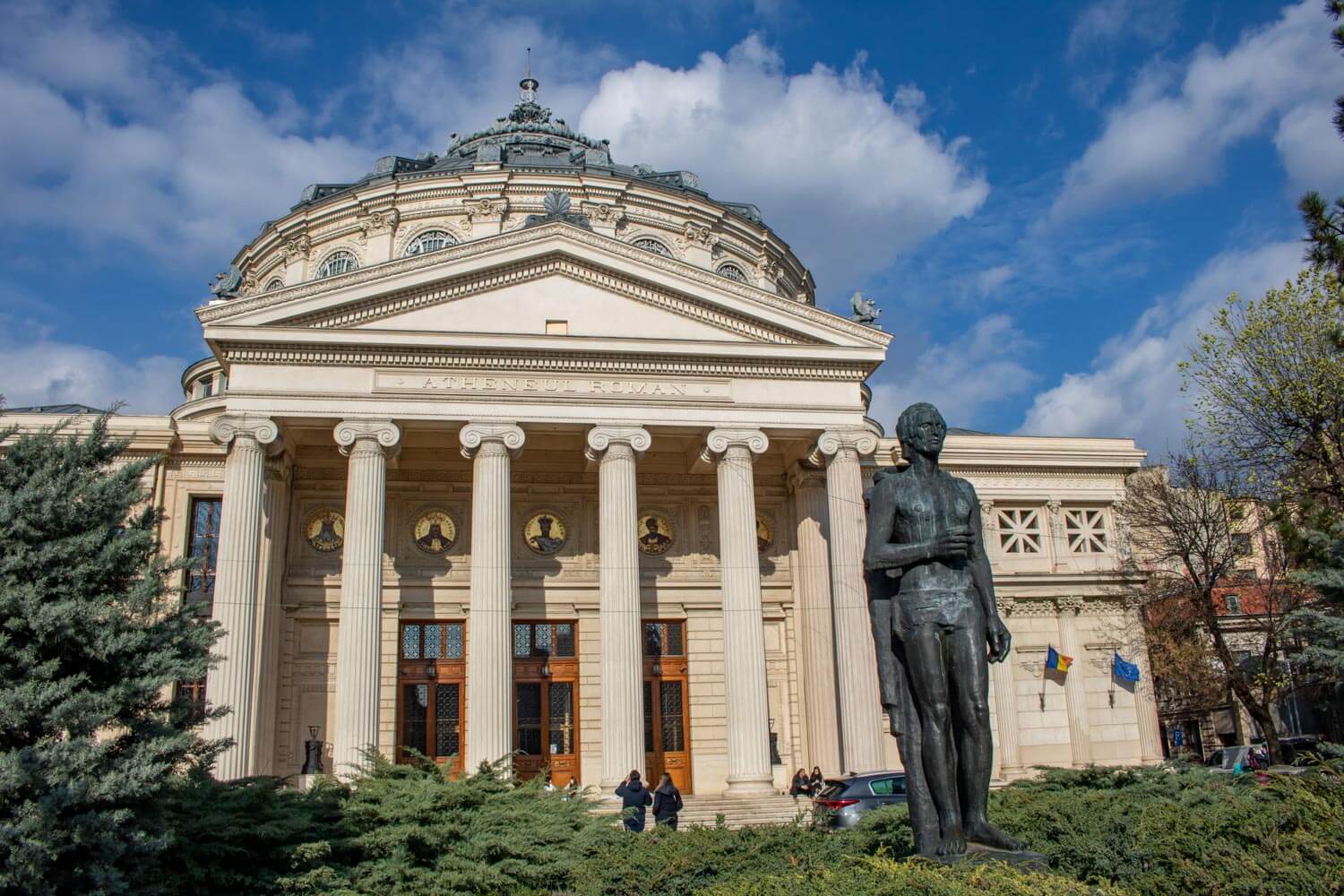


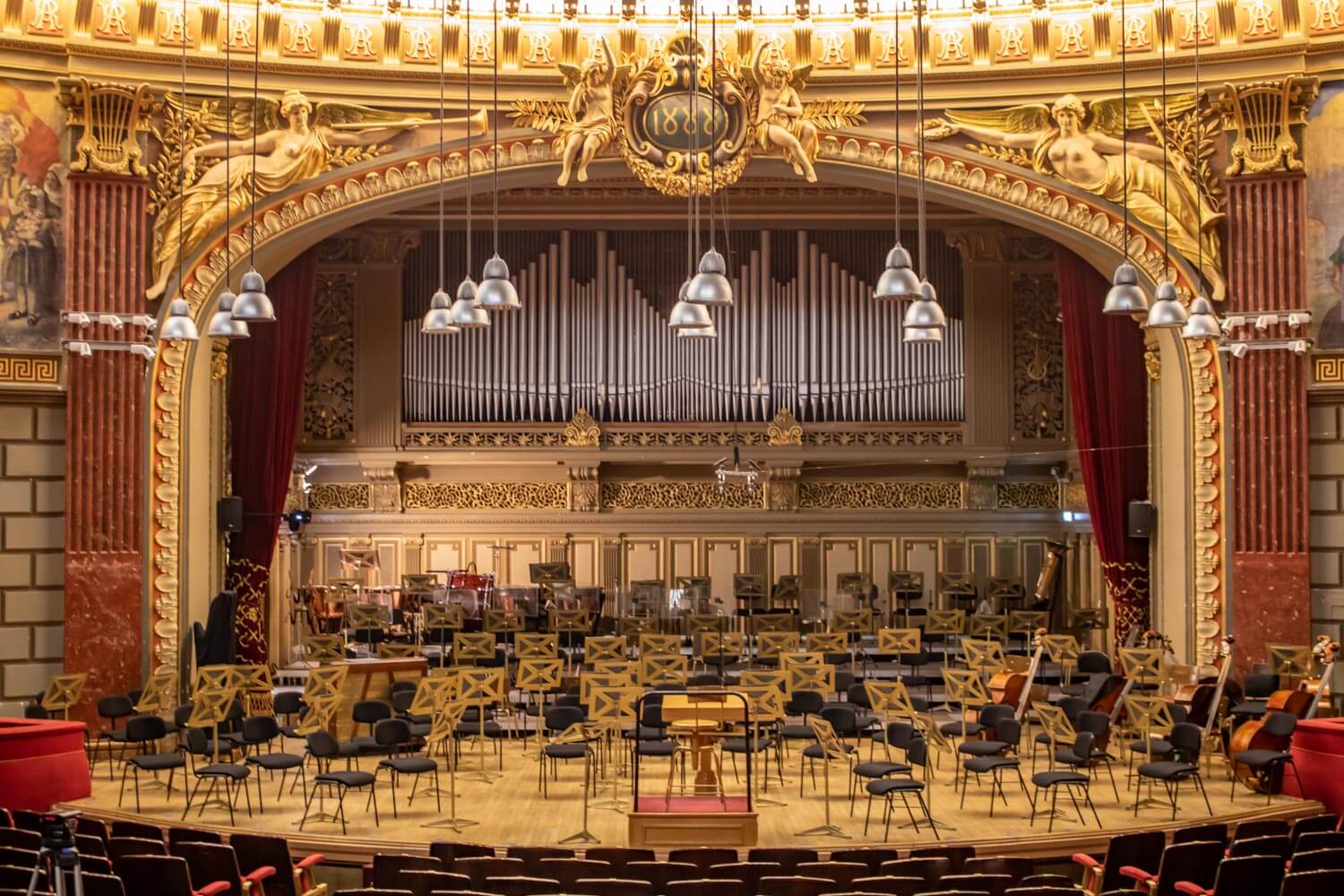
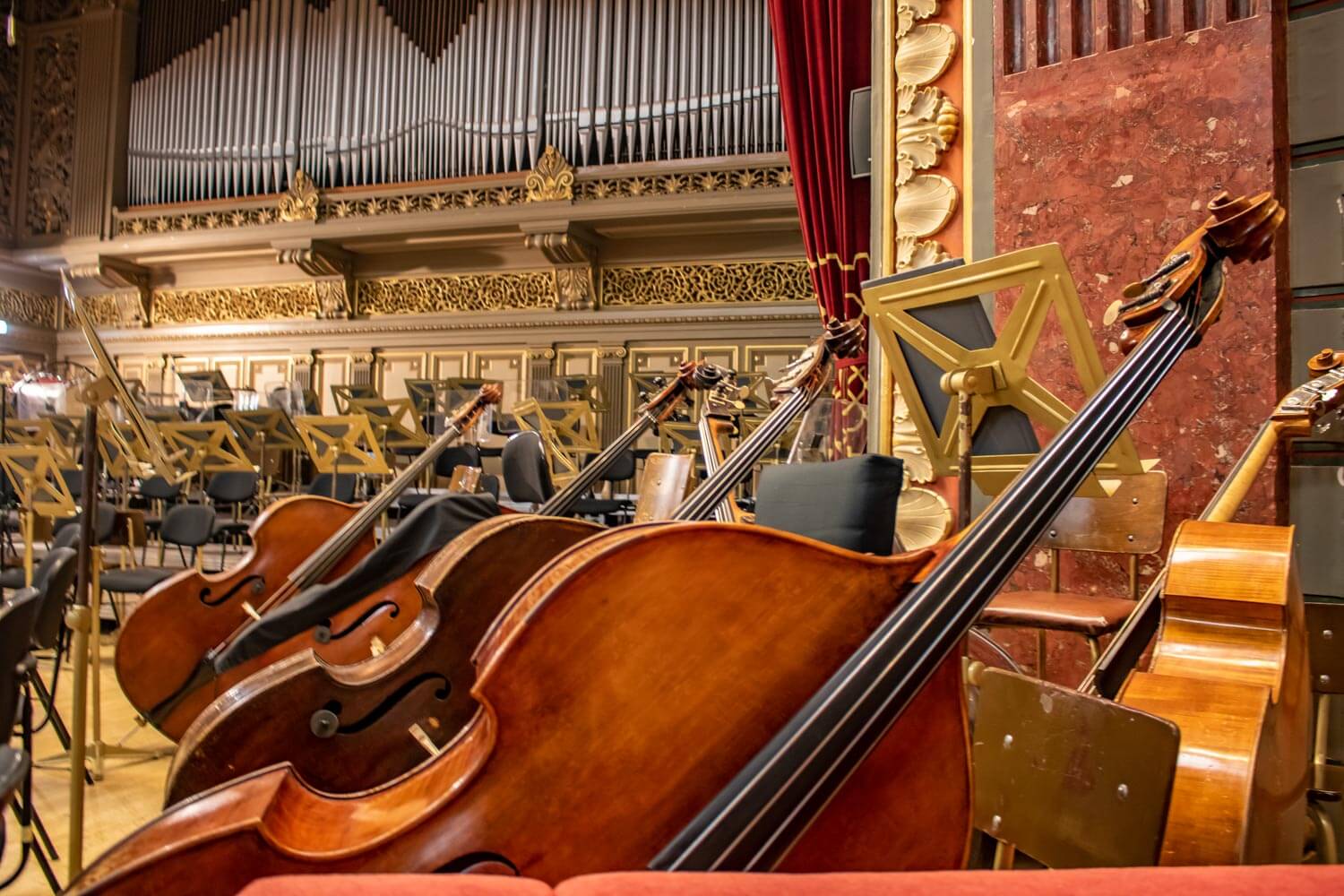
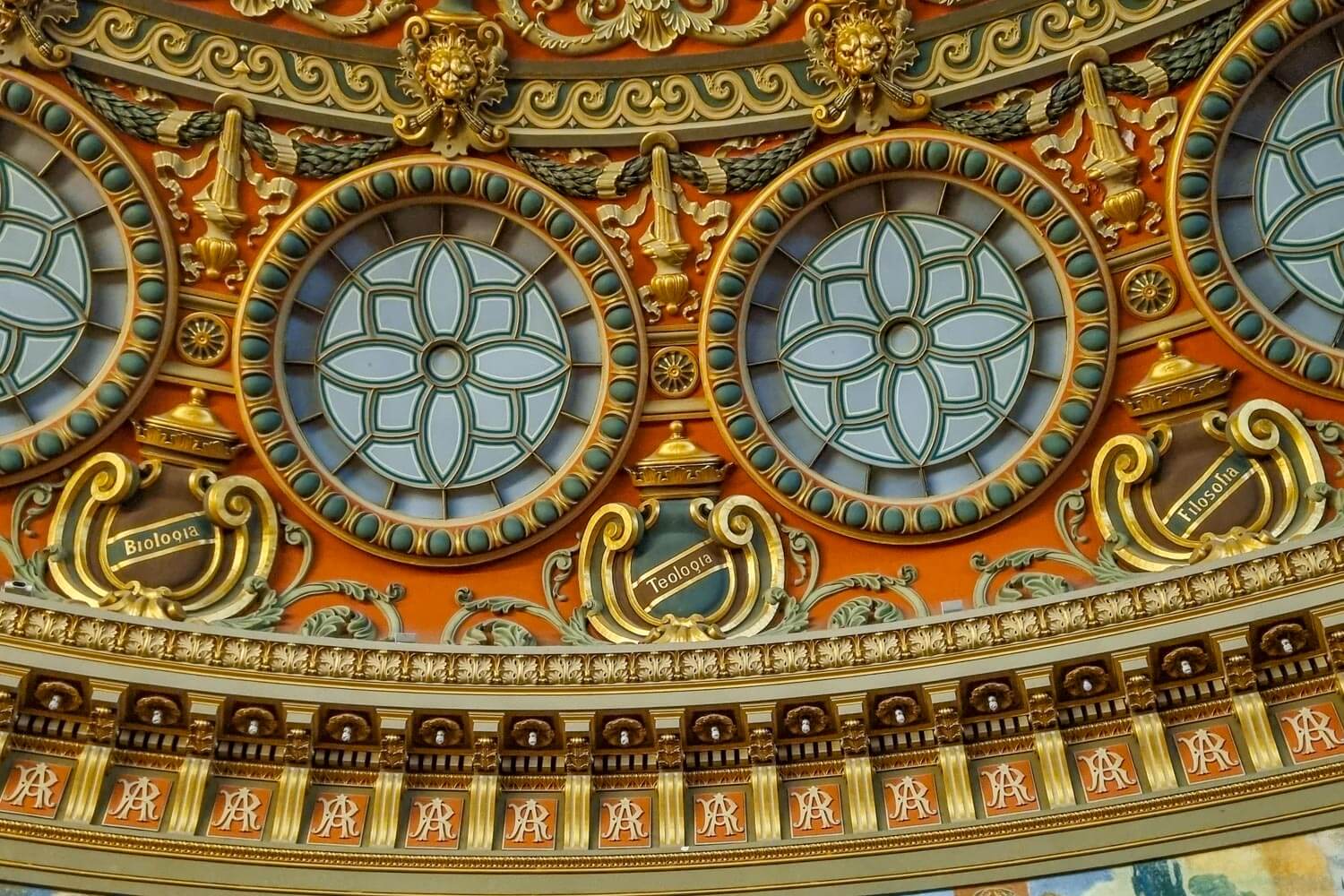
The Romanian Athenaeum (Ateneul Român) is the most prestigious concert hall in Bucharest and a city landmark. It is the home of the “George Enescu” Philharmonic and the George Enescu Festival, both named after the famous composer George Enescu (1881-1955). The theater has a capacity of 794 seats, all with great visibility of the stage and impeccable acoustics.
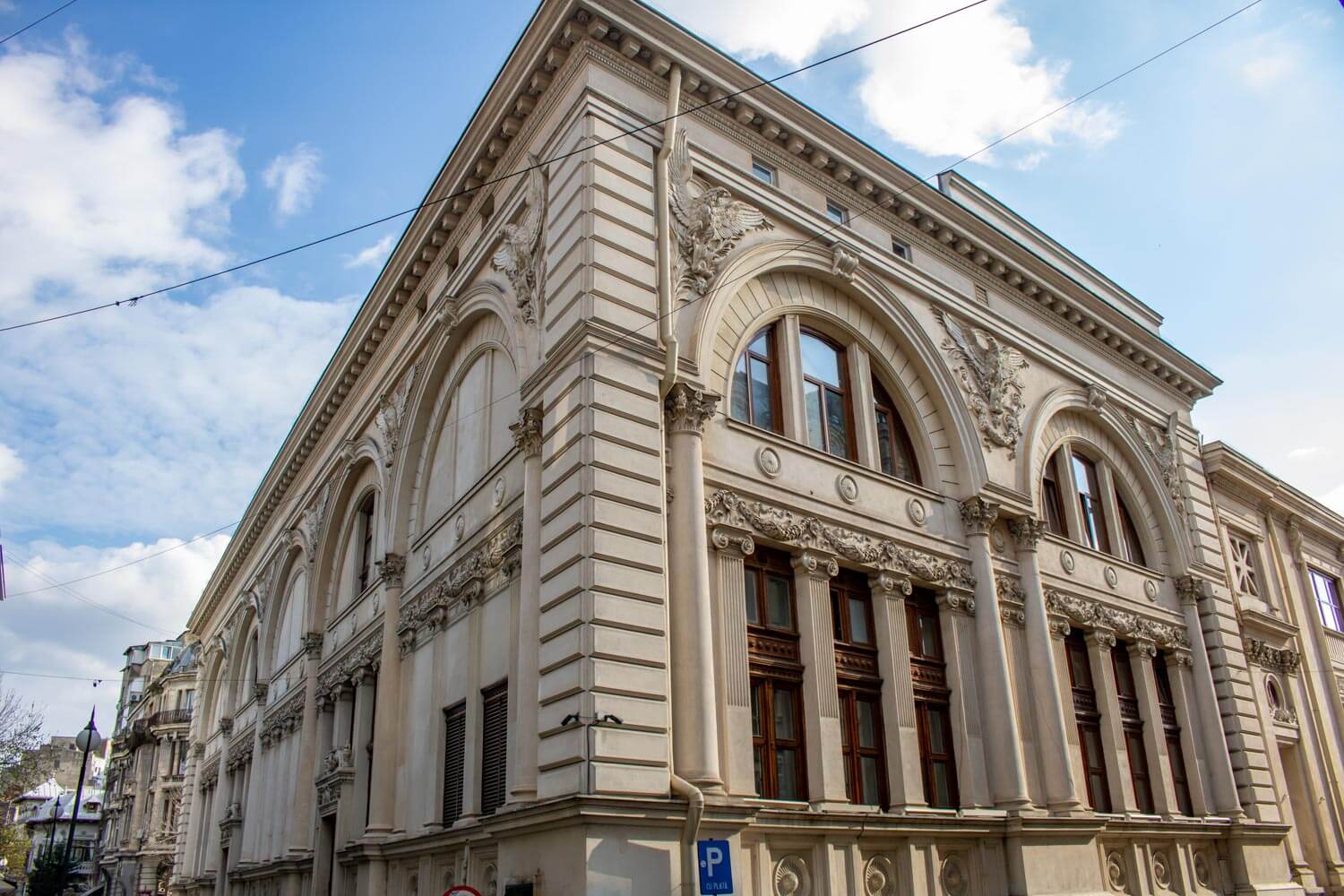
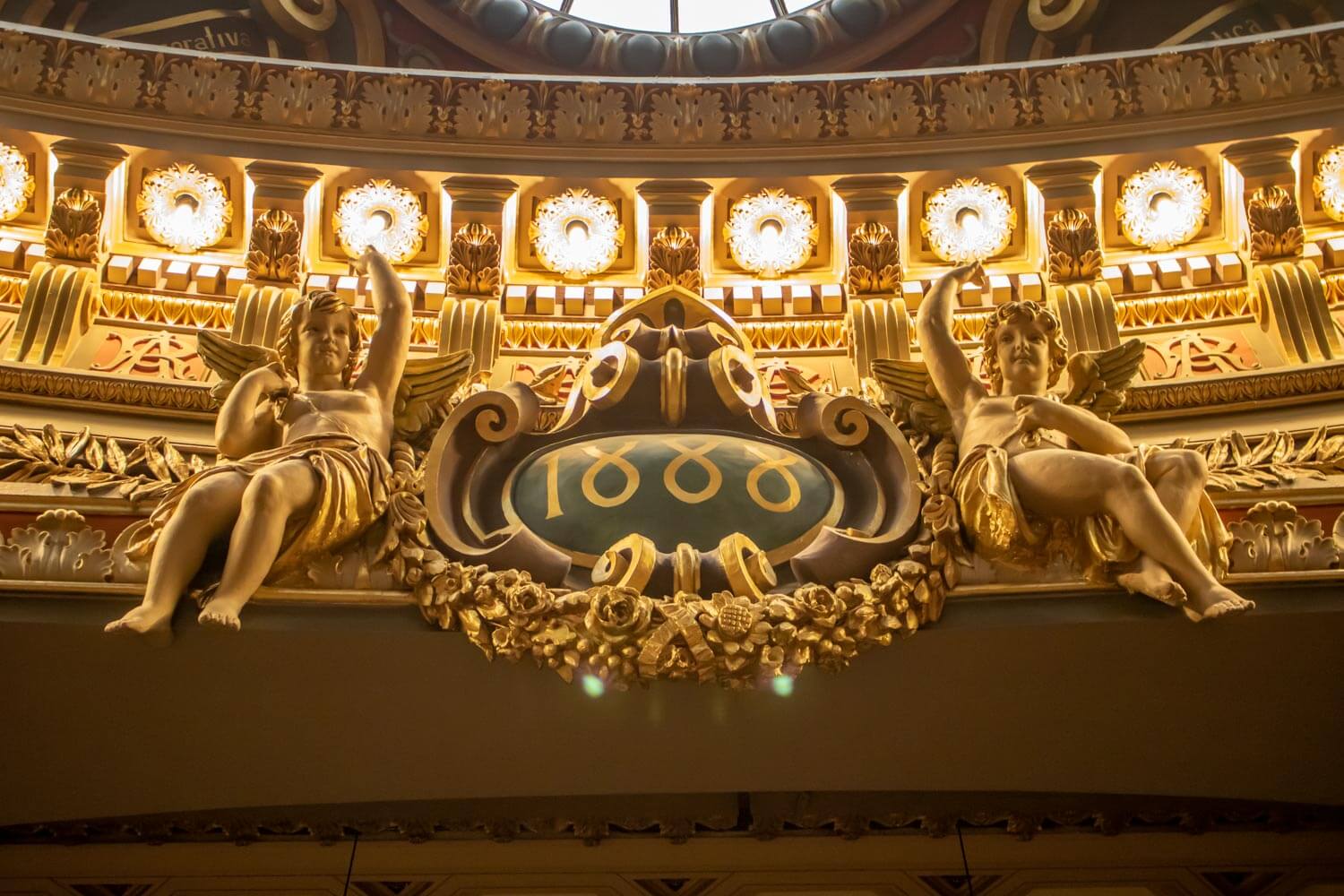
The round, dome-shaped building on Calea Victoriei was designed by the French architect Albert Galleron and constructed between in 1886 and 1888. The reason behind the round shape of the building is that it was built on the foundations of a former circus. The building is a real piece of art in the neoclassical style with some romantic touches.
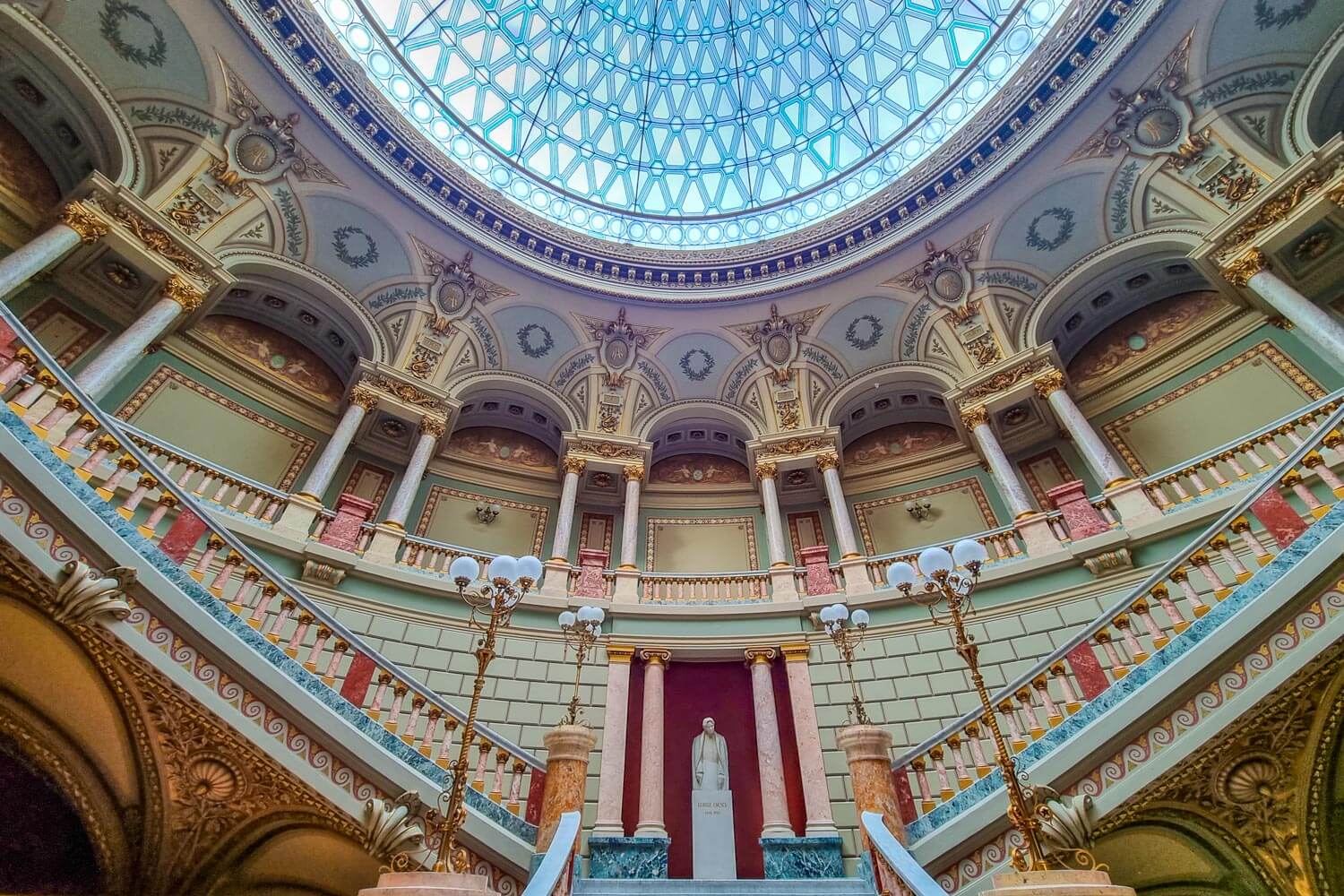
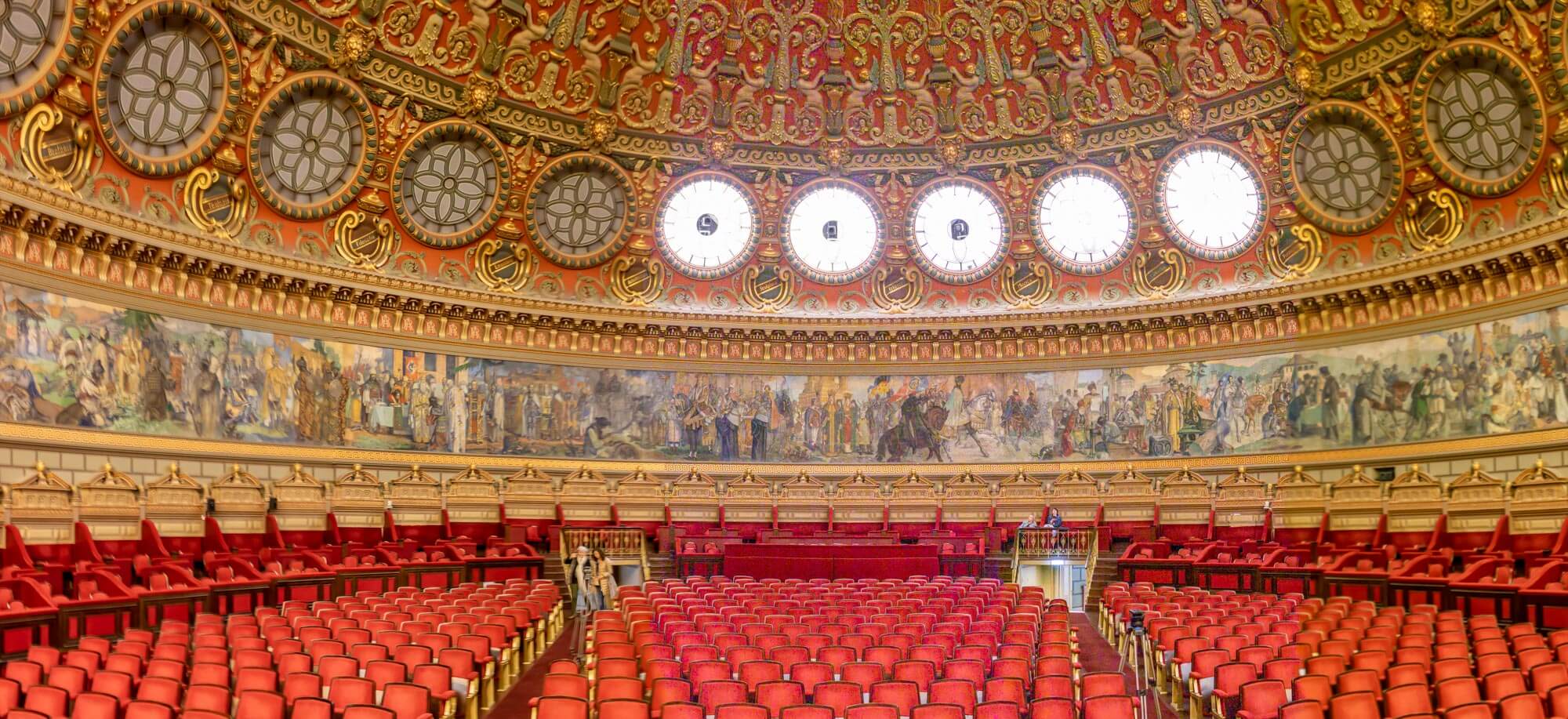
When you enter the building, you’ll see an impressive fresco by Costin Petrescu on the inside of the circular wall. The gigantic 75-by-3-meter painting depicts scenes from the history of Romania, from the conquest of Dacia by the Roman emperor Trajan, to the realization of Greater Romania in 1918. The Romanian Atheneum was also where the ratification vote for the unification of Moldavia, Transylvania, Bucovina, and Wallachia took place on December 29th 1919, to constitute Greater Romania.
The building underwent an extensive reconstruction and restoration in 1992 to save it from collapsing. In 2004, the Romanian Athenaeum was classified as a historical monument and in 2007 it was put on the list of European heritage. In front of the building is a small park with a statue of the famous Romanian poet Mihai Eminescu.
You can visit the Romanian Atheneum via the entrance on the right side of the building (Strada Benjamin Franklin). A ticket to see the concert hall is 10 lei. The best way to visit the building is of course by attending a classical concert. You can buy tickets from the other entrance on the left side of the building (Strada Constantin Esarcu).