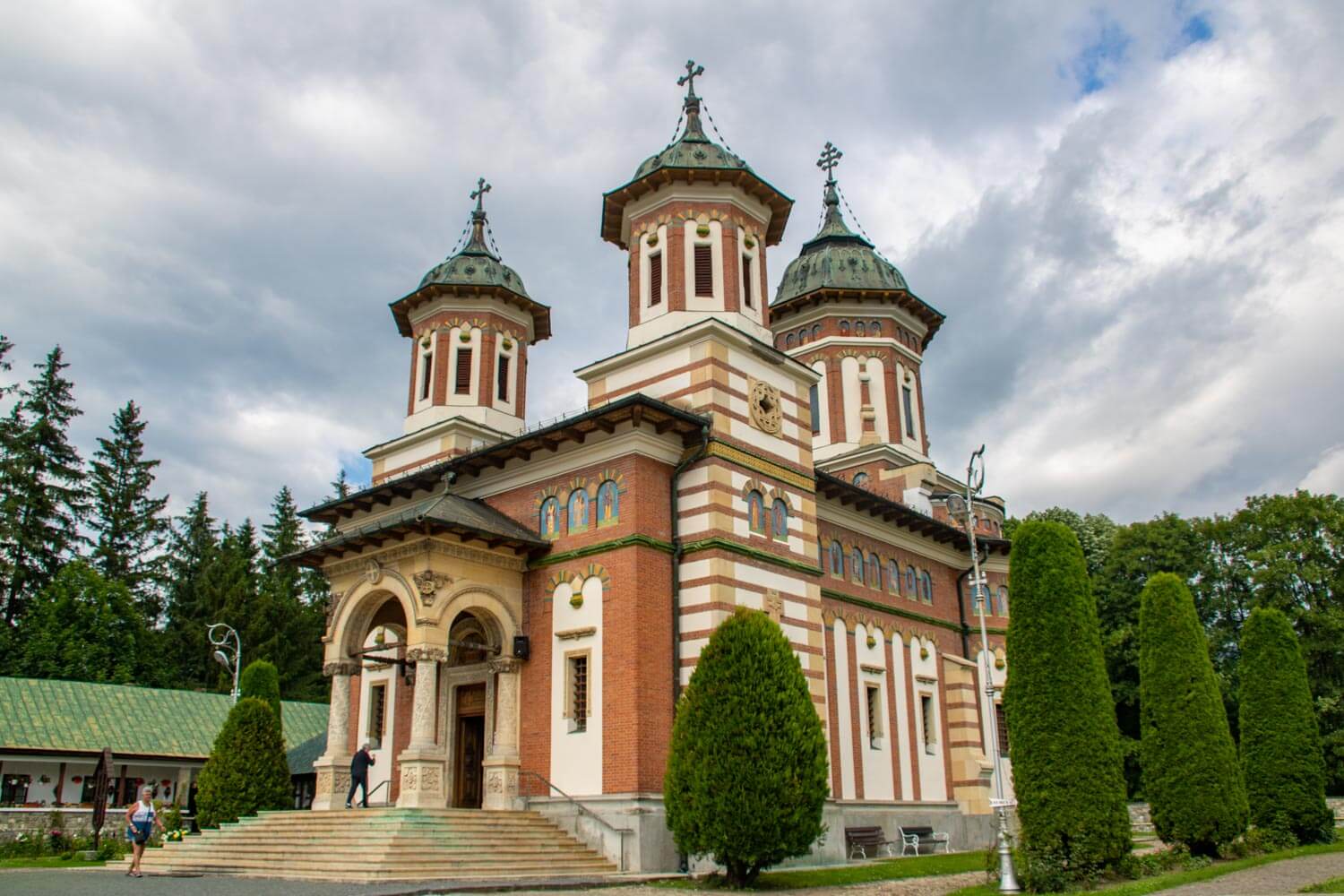
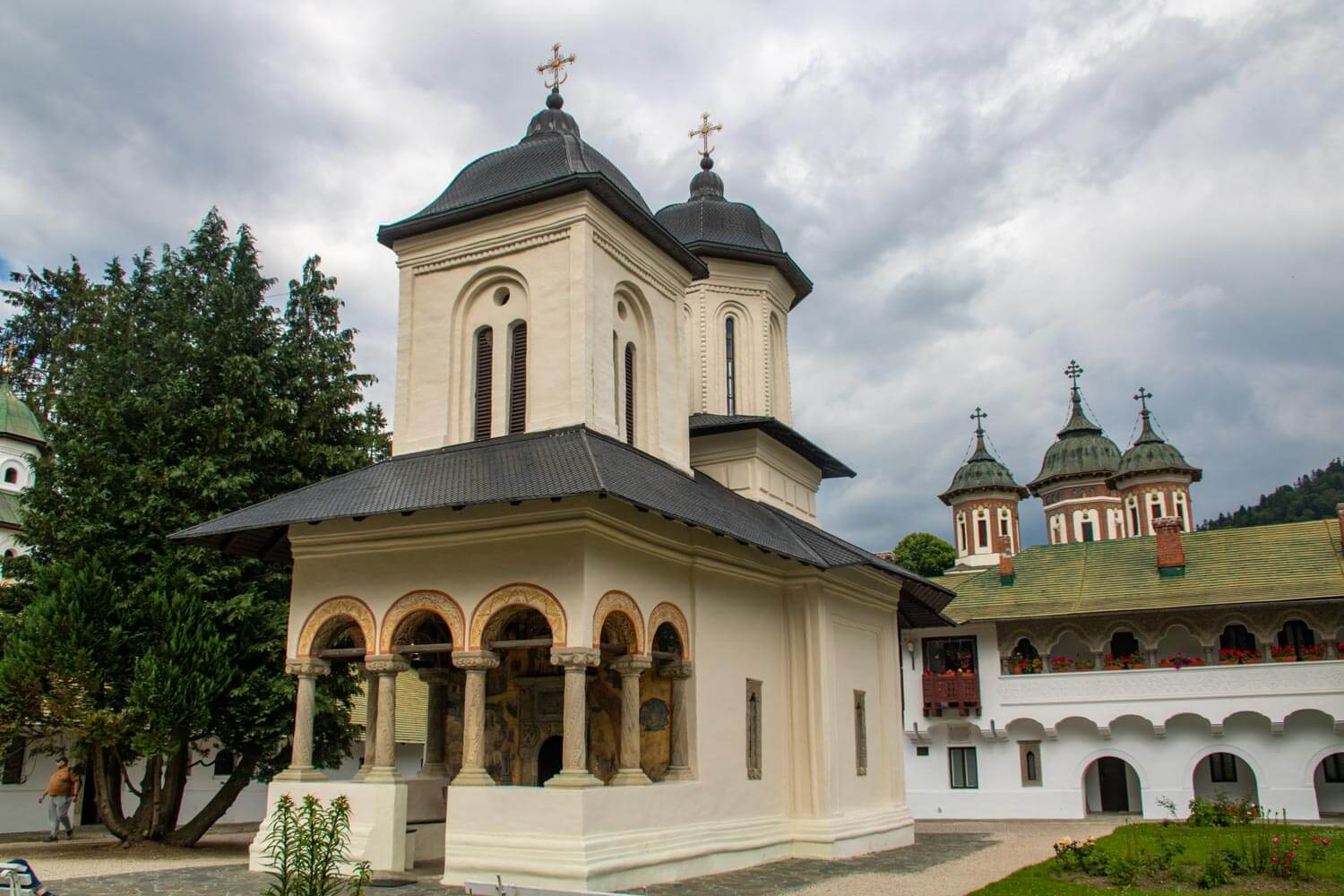
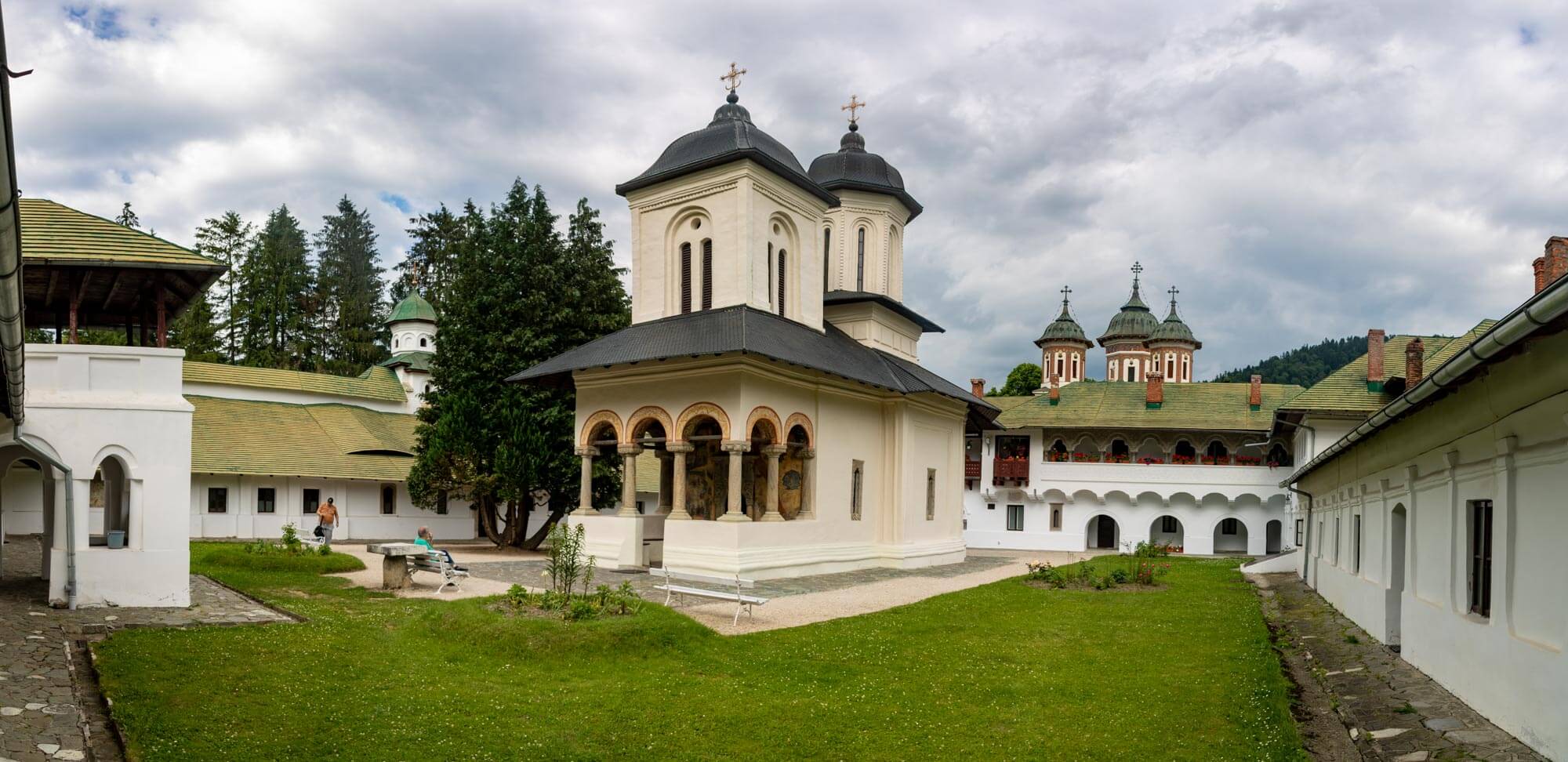
The Sinaia Monastery (Mănăstirea Sinaia) was founded by Prince Mihail Cantacuzino in 1695 and was named after Mount Sinai in Egypt. In its turn, the Sinaia Monastery gave its name to the town of Sinaia that grew around it.
The story of the monastery starts with a pilgrimage that Prince Mihail Cantacuzino and his wife made, during which they reached Saint Catherine’s Monastery on the Sinai Mountain in Egypt. He was so impressed that he fell in love with the holy grounds and upon their return, he decided to build a monastery which he would name after the Sinai Mountain.
The construction of Sinaia Monastery took place between 1690 and 1695 and apart from being a place of worship, it also served as a stronghold to protect the trade route between Brașov and Bucharest through the Prahova Valley. Initially, the monastery was built to accommodate 12 monks representing the 12 Apostles, but over time the number of monks grew. To accommodate a larger number of monks, in the 19th century a second monastery, the Great Church, was built inside a second courtyard, the New Court (Curtea Noua). The construction took place between 1842 and 1846 and the new church became the first place of worship with electric lighting in Romania.
In 1892 a large 1,700-kilogram bell tower was added to the monastery, which was brought from the Colţea Tower in Bucharest.
In 1895, on the occasion of the monastery’s bicentenary, a museum was built which was the first religious museum in the country. The museum holds the first Romanian translation of the bible, which was printed in Bucharest in 1688. Among the collection of the museum are also 17th century icons and crosses.
In the courtyard you can also find the tomb of Tache Ionescu, who was the prime minister during World War I, and played an important role in the unification of Greater Romania in 1918.