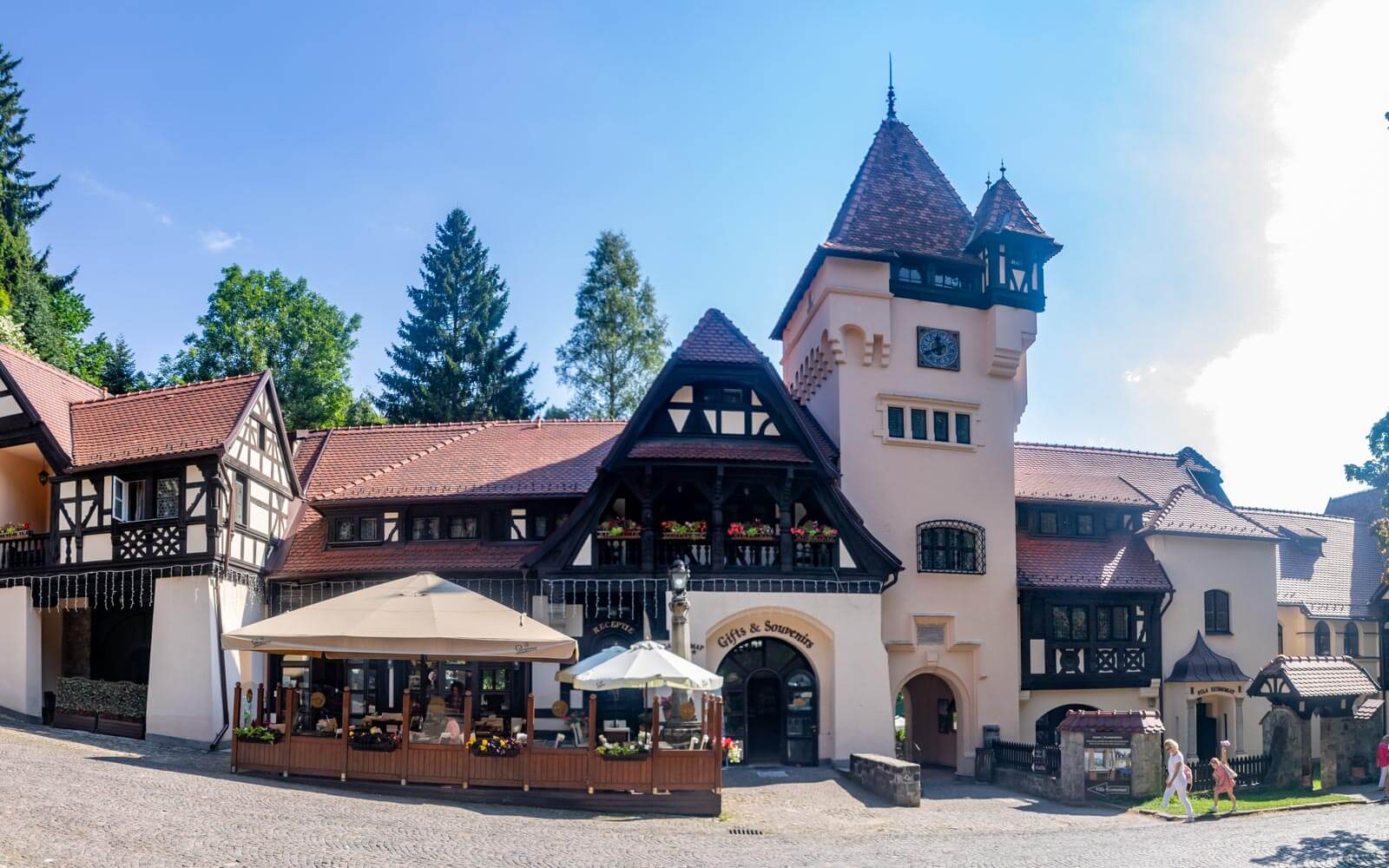
La Tunuri is a historic guard and service building on the Peleș Royal Estate in Sinaia, standing beside the small square opposite Peleș Castle. Originally built between 1880 and 1883 by architect Johannes Schultz, it formed part of the infrastructure created alongside the new royal residence and housed the personnel responsible for guarding and supporting the estate.
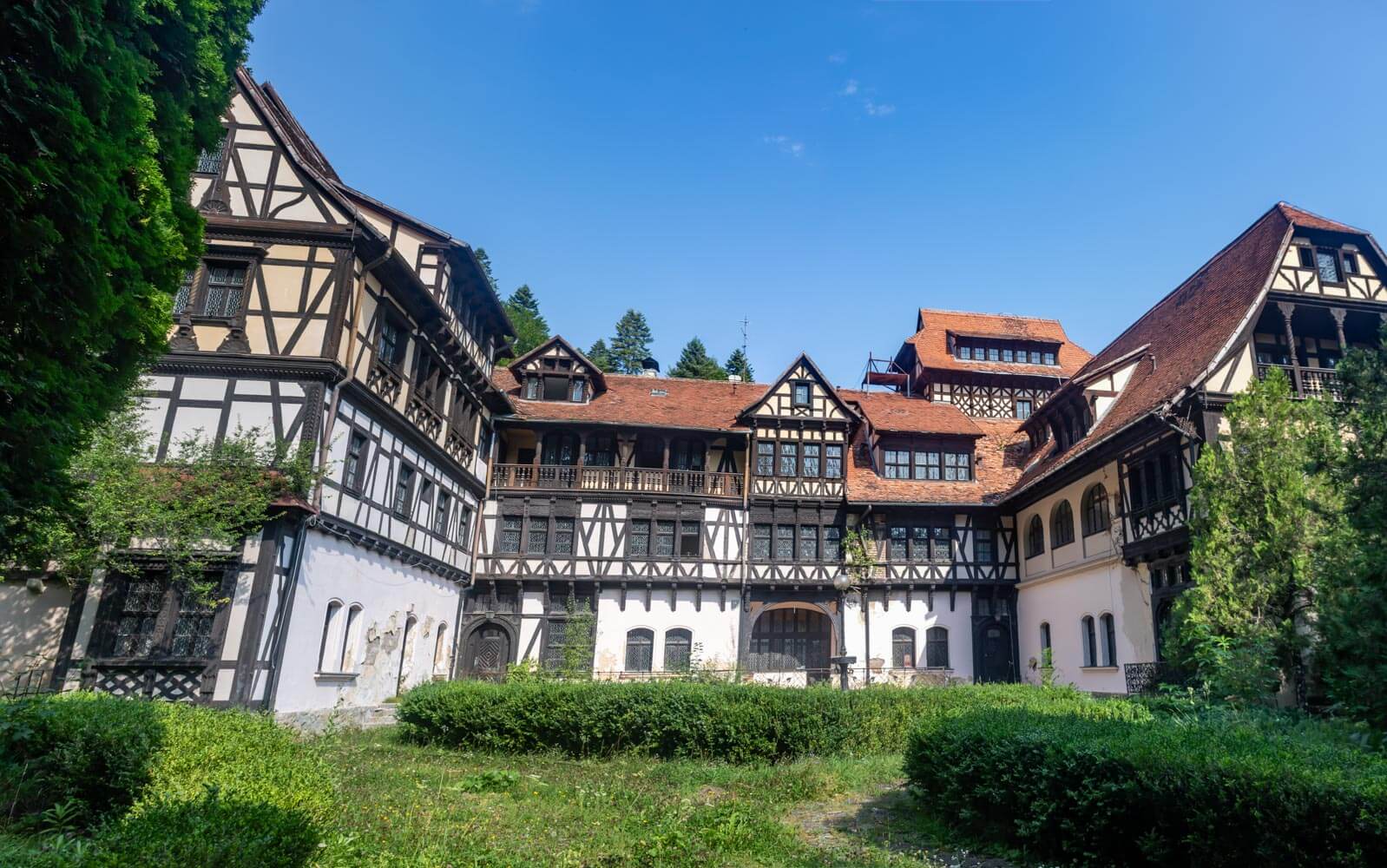
As Peleș expanded, so did the demands placed on the building. Karel Liman substantially enlarged and remodeled it between 1908 and 1909, giving it much of its present appearance in a German Renaissance style. The new construction greatly increased its size and incorporated offices for the guard officers, a post and telegraph office, accommodation for civilian employees and garages for several automobiles. Its towers, steep roofs and gateway-like form still make its original role easy to recognize among the more residential buildings of the estate.
The name La Tunuri, meaning “At the Cannons,” comes from the two historic cannons placed on the terrace in front of the building. They had been acquired by King Carol I and used during the Romanian War of Independence in 1877. The cannons became such a recognizable feature that their name was adopted for both the building and the adjoining square.
Today La Tunuri forms part of the wider hospitality complex operated together with Villa Economat. Parts of the former guard building are used for accommodation and dining, allowing visitors to enter spaces within what was once one of the working buildings of the royal estate rather than viewing it only from outside.
- Book a room at Complex La Tunuri – Vila Economat
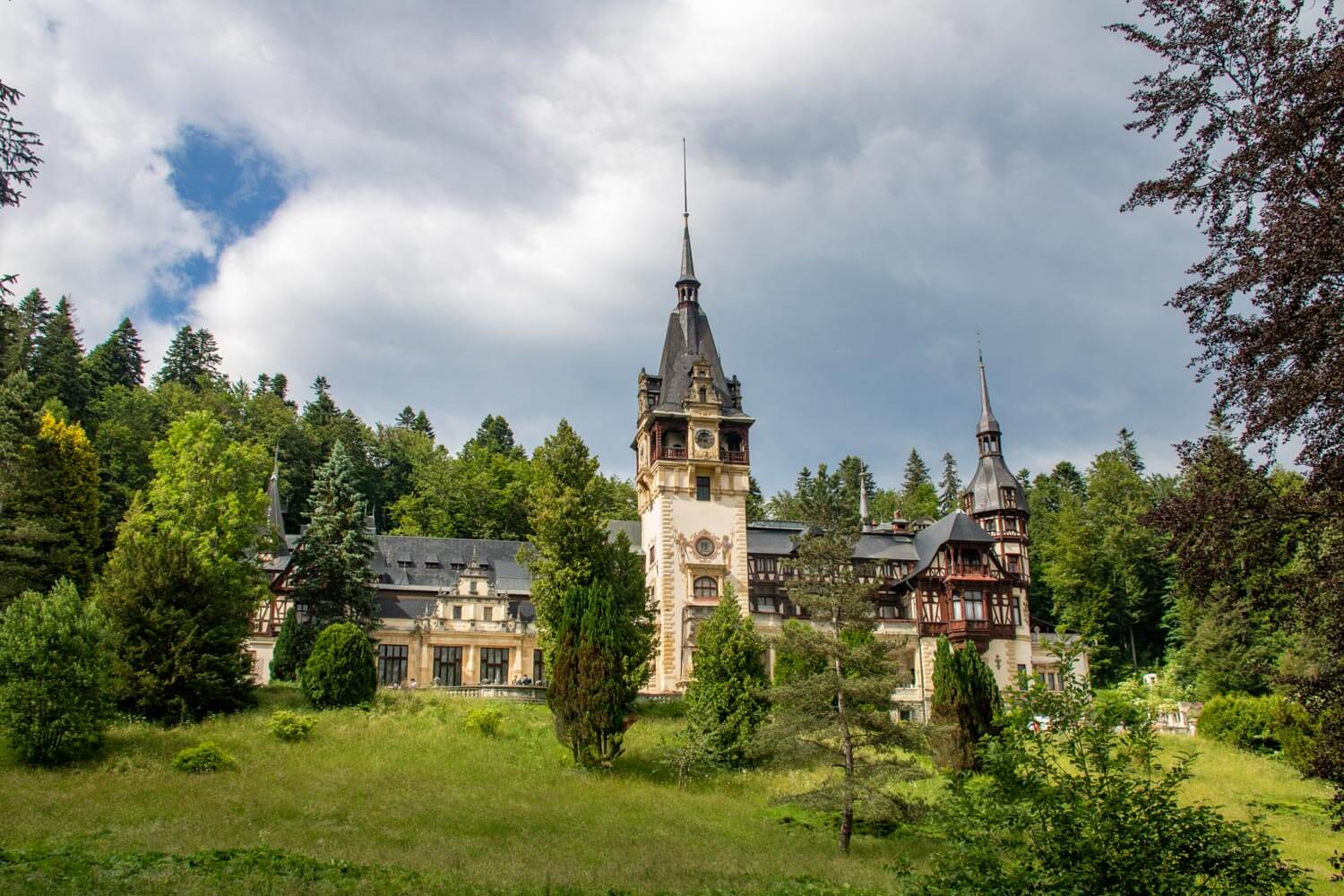
Although it stands in the shadow of Peleș and Pelișor castles, La Tunuri helps complete the picture of how the royal estate functioned. The palaces depended on a much larger network of guards, officials, communications and service staff, and this imposing building was one of the places from which that daily activity was organized.