The Saint Spyridon Church (Biserica Sfântul Spiridon) is an Orthodox church in central Iași and the historic religious center of the Saint Spyridon hospital complex. Its origins go back to the mid-18th century, when boyar Ștefan Bosie and other benefactors established a church and charitable medical foundation on a site already known for an icon of Saint Spyridon. The neighboring hospital began operating in 1757 and developed into the oldest major medical institution in Iași and Moldavia.
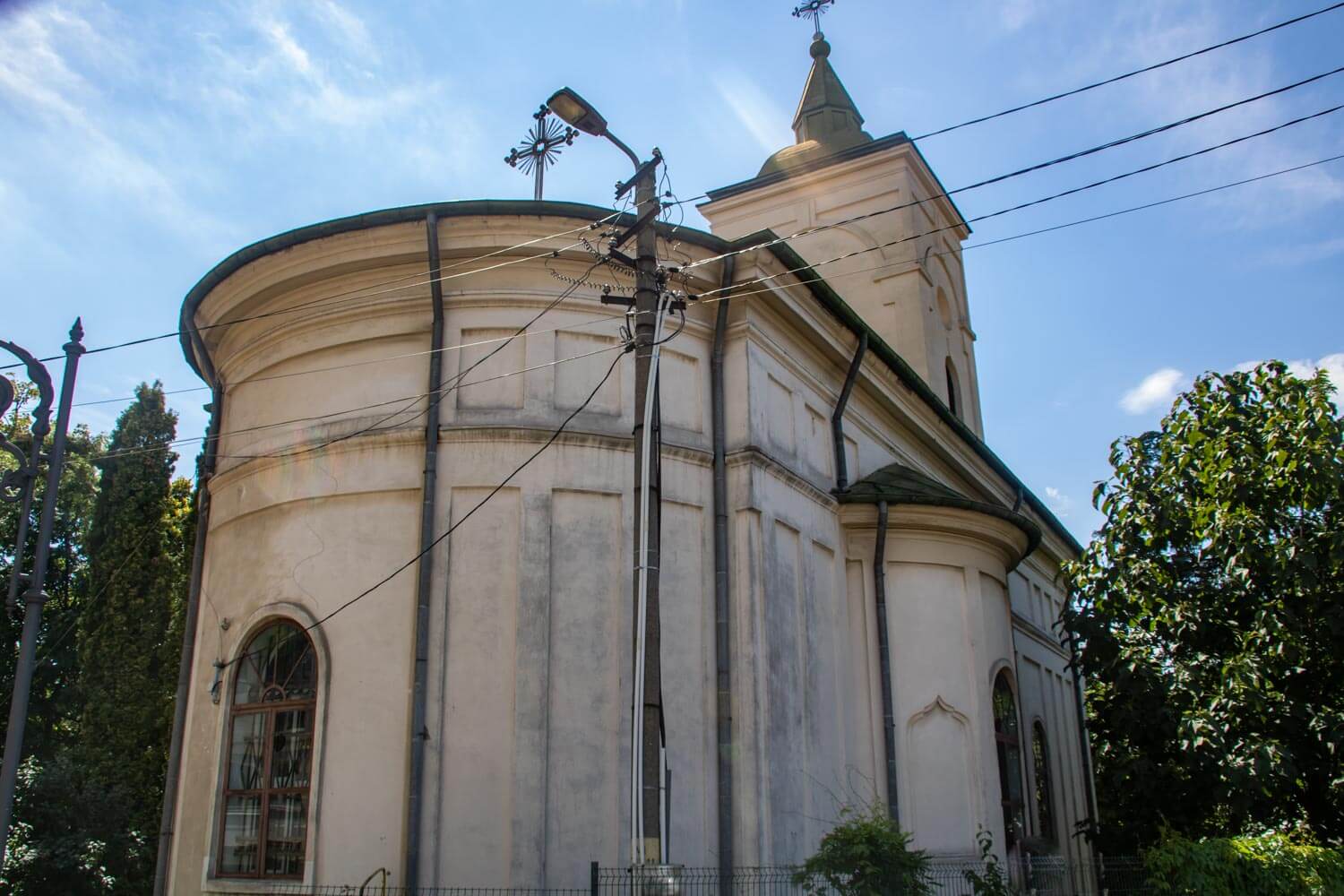
The first church was built between 1747 and 1752, but the earthquake of 1802 damaged it so severely that it was rebuilt from the foundations in 1804-1805. The present building therefore belongs mainly to the early 19th century, with a predominantly Neoclassical design influenced by Russian church architecture. Its rectangular plan is comparatively restrained, while the interior preserves a richer decorative character through the iconostasis, wall paintings, and liturgical furnishings.
The iconostasis was painted by Eustatie Altini and later repaired and gilded in 1863. To the right of the nave is a revered icon of Saint Spyridon painted in 1757 by Matei Dunaevschi of Lviv, while the dome and altar carry paintings of Christ, the Evangelists, and the Holy Trinity. The church also contains the tomb of Prince Grigore III Ghica, whose body was buried here after his execution in 1777, while his head was taken to Constantinople.
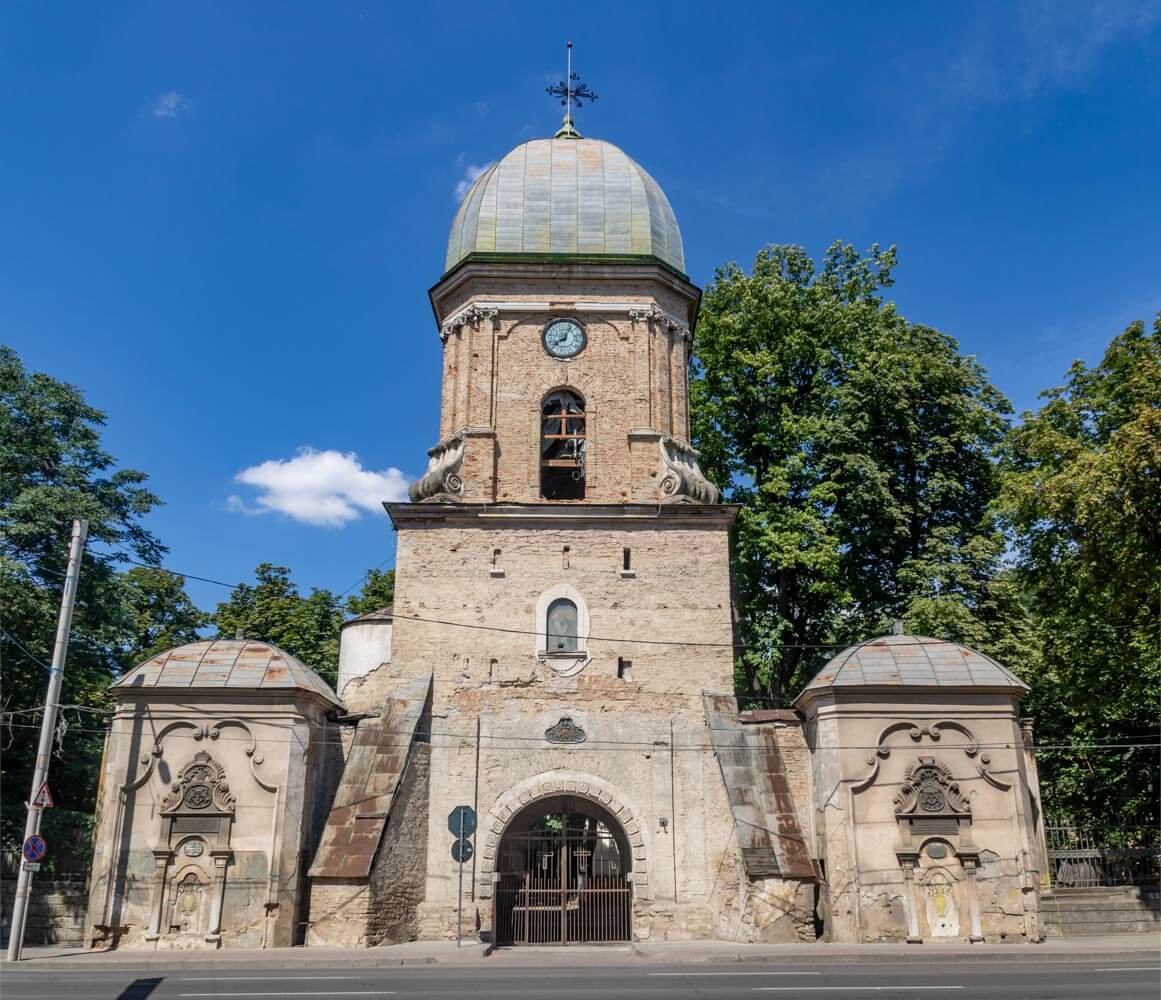
The church remained closely integrated with the medical foundation that grew around it, serving generations of patients, staff, and students as the Saint Spyridon Hospital expanded into a major teaching hospital. The adjoining bell tower and twin fountains, built and altered in several stages during the 18th and 19th centuries, form the most distinctive entrance to the wider historic ensemble.
The Saint Spyridon Church (Biserica Sfântul Spiridon) is an Orthodox church in central Iași and the historic religious center of the Saint Spyridon hospital complex. Its origins go back to the mid-18th century, when boyar Ștefan Bosie and other benefactors established a church and charitable medical foundation on a site already known for an icon of Saint Spyridon. The neighboring hospital began operating in 1757 and developed into the oldest major medical institution in Iași and Moldavia.
The original church was badly damaged by the earthquake of 1802 and rebuilt from the foundations soon afterward, giving the present building much of its early 19th-century appearance. Its exterior is predominantly Neoclassical with Russian influences, while the interior is more richly decorated. The iconostasis was painted by Eustatie Altini and later repaired and gilded in 1863, when marble imitation and other interior decoration were also renewed. The dome and altar carry paintings of Christ Pantocrator, the Evangelists, and the Holy Trinity, while the church also preserves valuable liturgical objects and books.
One of the church’s most important devotional objects is the icon of Saint Spyridon painted in 1757 by Matei Dunaevschi of Lviv. The church also contains the tomb of Prince Grigore III Ghica, whose body was buried here after his execution in 1777 for opposing the Habsburg annexation of Bukovina, while his head was taken to Constantinople. Ghica also played an important role in the development of the surrounding complex, including the water supply that fed the two fountains beside the entrance.
The monumental entrance on the south side developed in several stages during the 18th and 19th centuries. Two stone fountains were added in 1765 after Grigore III Ghica arranged a new water supply from Copou, and their inscriptions in Romanian, Greek, and Ottoman Turkish record the work. The bell tower was built above the entrance in 1786, rebuilt after the 1802 earthquake, fitted with a Parisian clock around 1830, and altered again in 1862. Its present rounded roof was shaped to resemble the culion, the distinctive cap traditionally worn by Saint Spyridon, making the tower one of the most recognizable features of the complex.