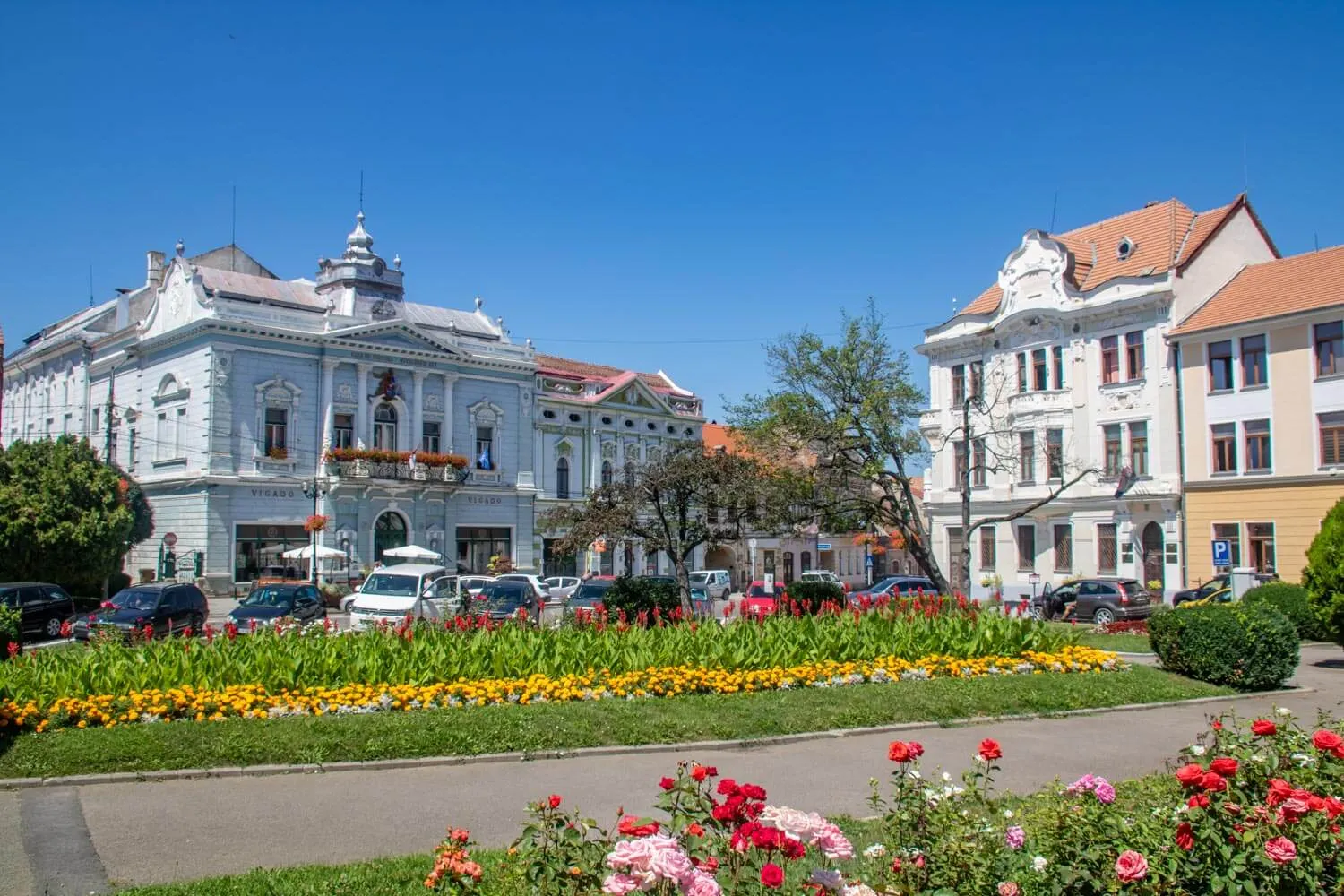
The Mózes Turóczi House (Casa Turóczi Mózes) is a historic residence built in 1843 near Áron Gábor Square in Târgu Secuiesc. It was the home of local metalworker Mózes Turóczi (1813-1896), whose workshop behind the house became an important center of cannon production during the Hungarian Revolution of 1848-1849.
Turóczi worked with artillery officer Áron Gábor, who organized the manufacture of cannons for the Székely revolutionary forces defending southeastern Transylvania. As the demand for artillery increased, production was concentrated in Turóczi’s workshop, where craftsmen melted down church bells collected from across the region to cast cannon barrels. Between January and June 1849, approximately 64 of the 70 cannons manufactured for the forces were produced here. Turóczi supervised the foundry with the rank of captain, while other workshops in the town manufactured ammunition, gunpowder, and the wooden carriages needed to put the cannons into service.
Production ended in June 1849 when Russian troops entered Târgu Secuiesc and destroyed the foundry. The residence survived and was subsequently commemorated as the site of the town’s revolutionary cannon-making activities. Two memorial plaques on the house recall this history, including one installed in 1904. In the small square outside stands a bronze bust of Turóczi by local sculptor Vetró B. András, unveiled in November 1993.