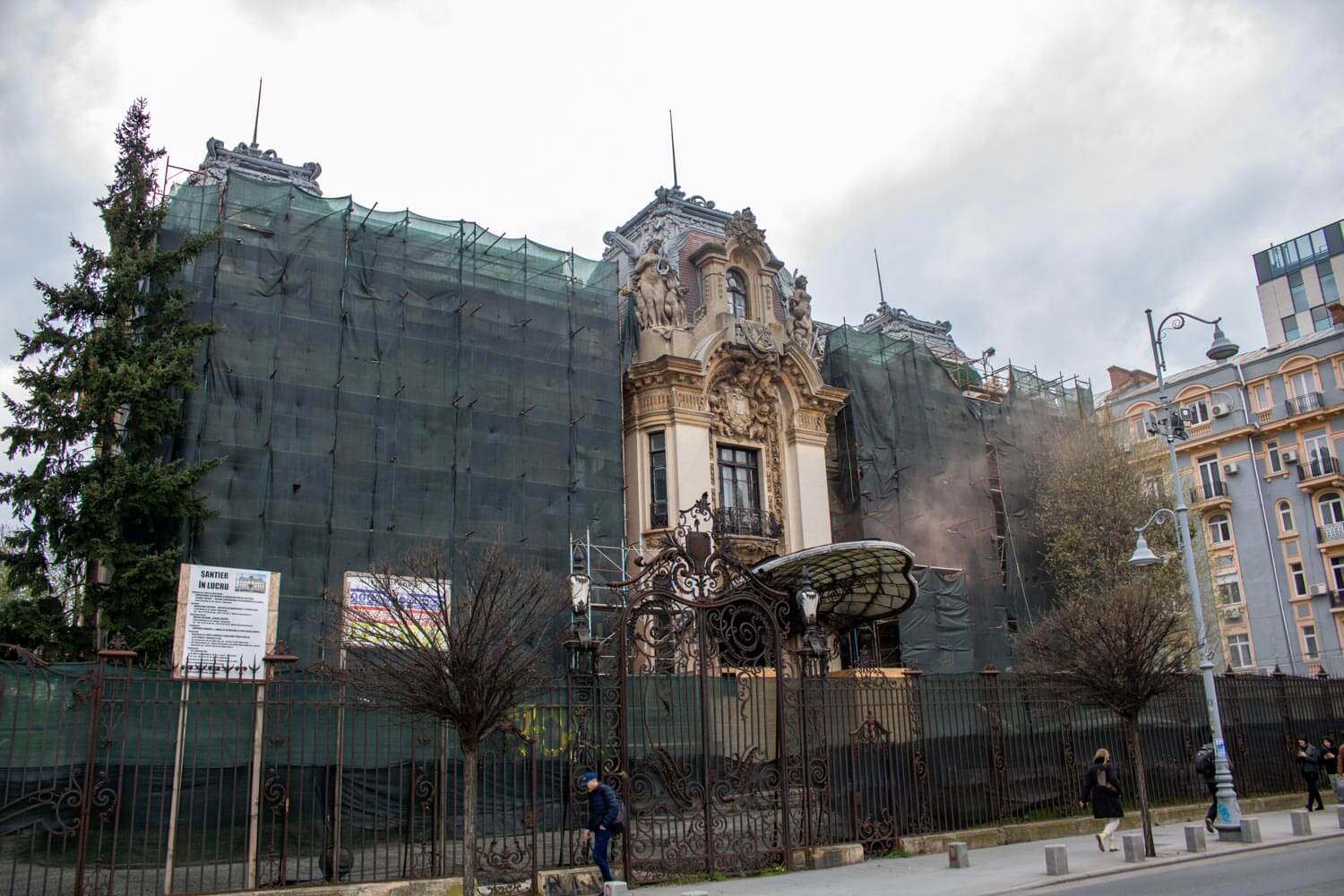
The George Enescu National Museum (Muzeul Național George Enescu) is a museum about the life of the famous Romanian musician George Enescu, which is located in the Cantacuzino Palace (Palatul Cantacuzino) on Victory Avenue in Bucharest.
History of the Cantacuzino Palace
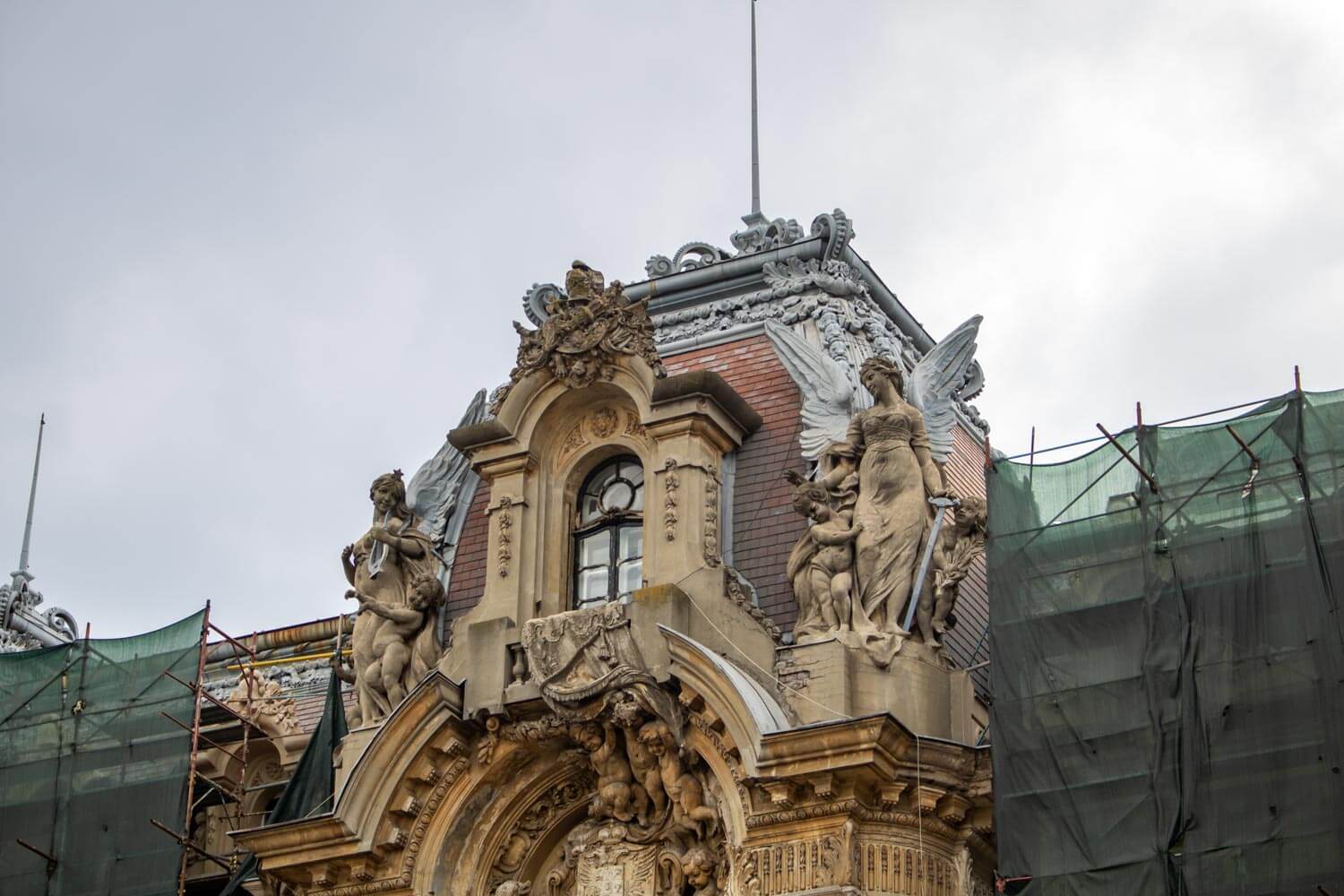
Cantacuzino Palace was designed by the architect Ion D. Berindey and constructed between 1901-1902 for Gheorghe Grigore Cantacuzino, the mayor of Bucharest. Its architectural style can be described as French Beaux-Arts with some Rococo Revival influences. The gates and two lion sculptures in front of the palace are of the French classicist style. The interior decorations include the works of some famous Romanian artists: George Demetrescu Mirea, Nicolae Vermont, and Costin Petrescu. George Cantacuzino regularly held balls in the palace. On 10 August 1913, the Treaty of Bucharest was signed to declare the end of the Second Balkan War.
After Cantacuzino’s death in 1913, his son Mihail G. Cantacuzino inherited the palace, but he died prematurely in 1929. His wife Maria Rosetti remarried the music composer George Enescu in December 1939. After Enescu’s death in 1955, his wife declared that the Cantacuzino Palace should become a museum dedicated to the artist.
About George Enescu
George Enescu (7 August 1881 – 4 May 1955) was born in Liveni, Dorohoi County (later renamed to George Enescu, Botoșani County) and began experimenting with composing at an early age. At the age of 7, he became the youngest student to ever attend the Vienna Conservatory and the first non-Austrian to be admitted. In 1891, at the age of 10, he gave a private concert to Emperor Franz Joseph at the Court of Vienna. Between 1895 and 1899 he continued his studies in Paris, where he presented his first mature work, “Poema Română”, which was played by the Colonne Orchestra, one of the most prestigious in the world. George Enescu went on to become one of the most famous and influential musicians in Romanian history while conducting orchestras worldwide and composing many famous musical pieces.
Visiting The George Enescu National Museum
The George Enescu National Museum opened its doors at Cantacuzino Palace on Victory Boulevard in 1956. Its permanent collection consists of numerous photographs, personal objects, manuscripts, documents, musical instruments, and other objects which give you a glimpse of the life of the most celebrated composer in Romania.