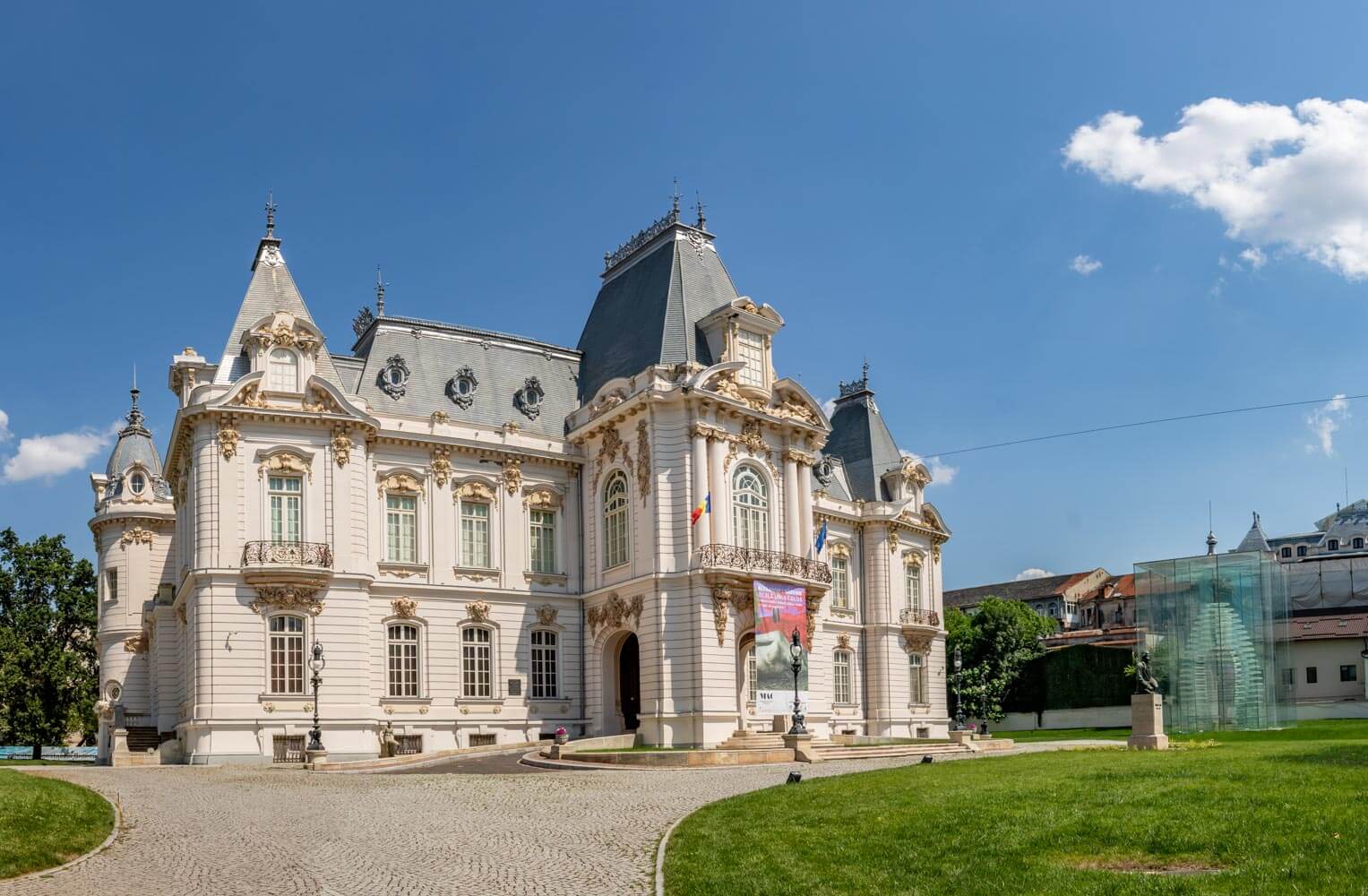
The Constantin Brâncuși Center (Centrul Constantin Brâncuși) is a cultural and exhibition complex dedicated to the Romanian sculptor Constantin Brâncuși (1876-1957), located in the grounds of the Craiova Art Museum. Designed by architect Dorin Ștefan and inaugurated in 2022, the center combines an underground exhibition gallery with a striking glass structure inspired by Brâncuși’s artistic ideas. The complex explores the sculptor’s life and work through multimedia displays, documentary material, and contemporary architecture.
The center was developed by the Dolj County Council as an extension of the cultural facilities surrounding the Jean Mihail Palace, which houses the Craiova Art Museum. Its design draws inspiration from Brâncuși’s unrealized Temple of Meditation, conceived in the 1930s for Maharaja Yeshwant Rao Holkar II of Indore, India, as a memorial to his wife. Architect Dorin Ștefan reinterpreted the sculptor’s concept through an unusual combination of architecture and sculpture, with a monumental glass prism rising above a largely concealed underground complex. Construction began in 2020, and the center was officially inaugurated on September 15, 2022.
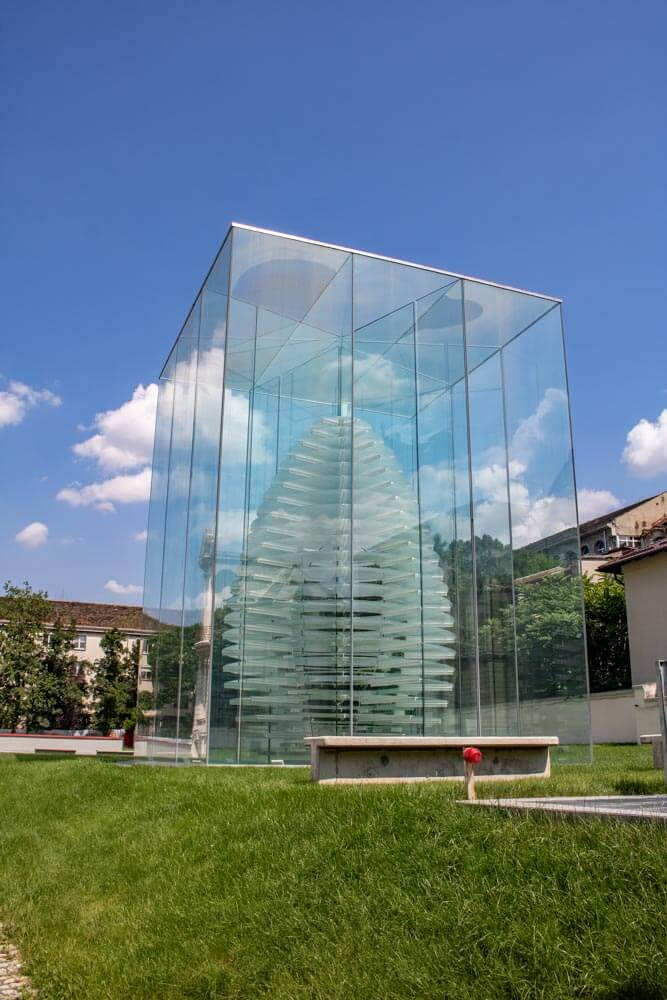
The most distinctive architectural feature is a glass prism rising approximately 12 meters above the courtyard. Inside, overlapping glass elements form a large ovoid inspired by Brâncuși’s recurring use of egg-shaped forms, while a representation of his Măiastra bird introduces another of his characteristic sculptural subjects. The installation, also known as Brâncuși’s Egg (Oul lui Brâncuși), stands above the underground exhibition pavilion, creating a striking contrast with the historic architecture of the Jean Mihail Palace.
Visitors enter the underground pavilion through a broad stepped amphitheater behind the palace. Covering approximately 1,200 square meters, the complex contains exhibition galleries and spaces for conferences, performances, and creative workshops. Displays explore Brâncuși’s artistic development through historical photographs, documentary films, and interactive presentations, including digital reconstructions of his sculptures. Among the historical objects are wooden beams recovered from the sculptor’s former workshop in Paris and brought to Craiova by art critic Vasile Georgescu Paleolog, an early scholar of Brâncuși’s work. From the underground level, a lift ascends into the glass installation, allowing visitors to experience its layered interior from within.
The center forms part of the Craiova Art Museum, whose permanent collection includes six original sculptures by Brâncuși, including The Kiss and Miss Pogany. These works are exhibited in Jean Mihail Palace, while the center provides a separate experience devoted to the artist’s creative legacy. Unlike the Art Museum, admission to the Constantin Brâncuși Center is free.