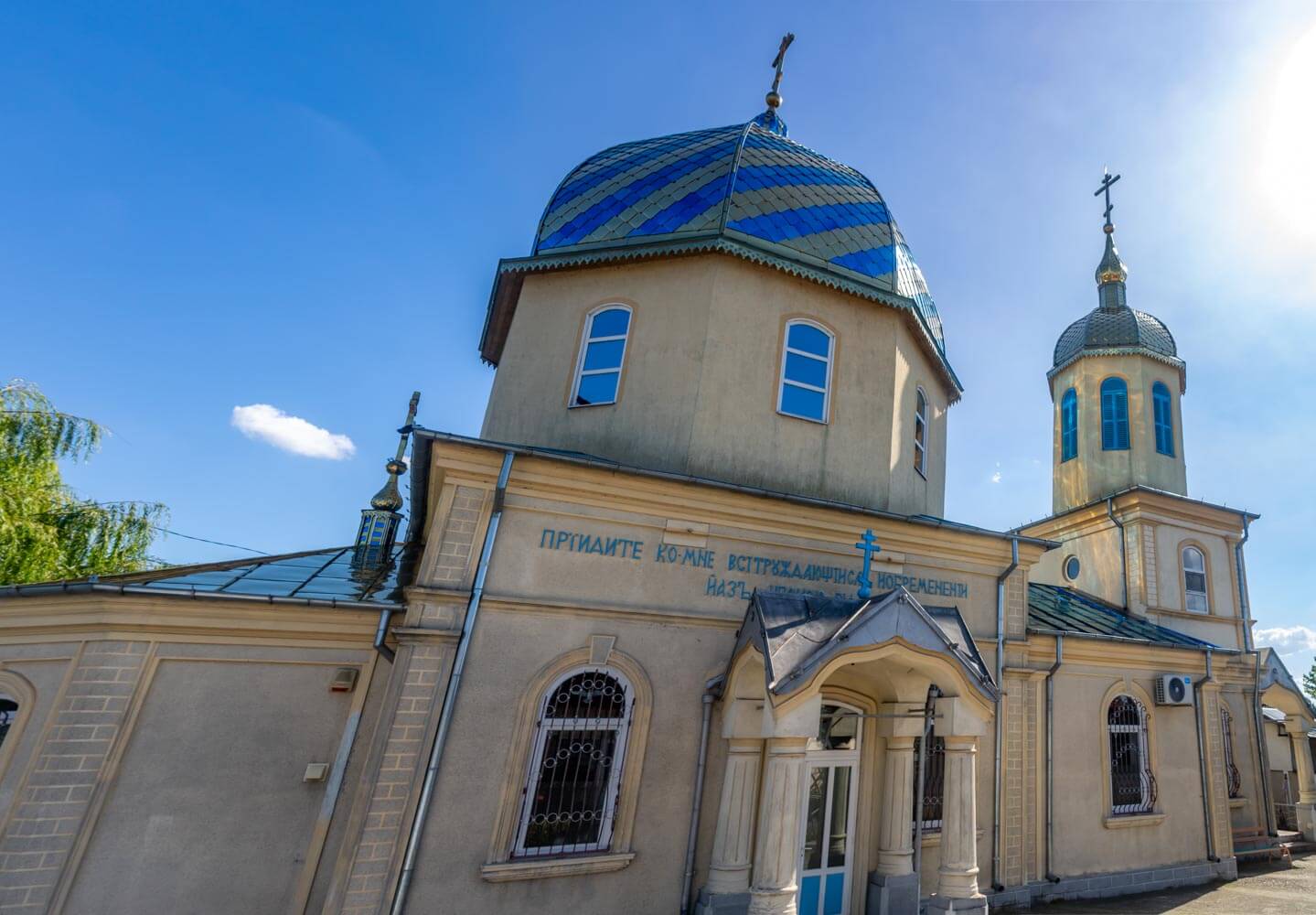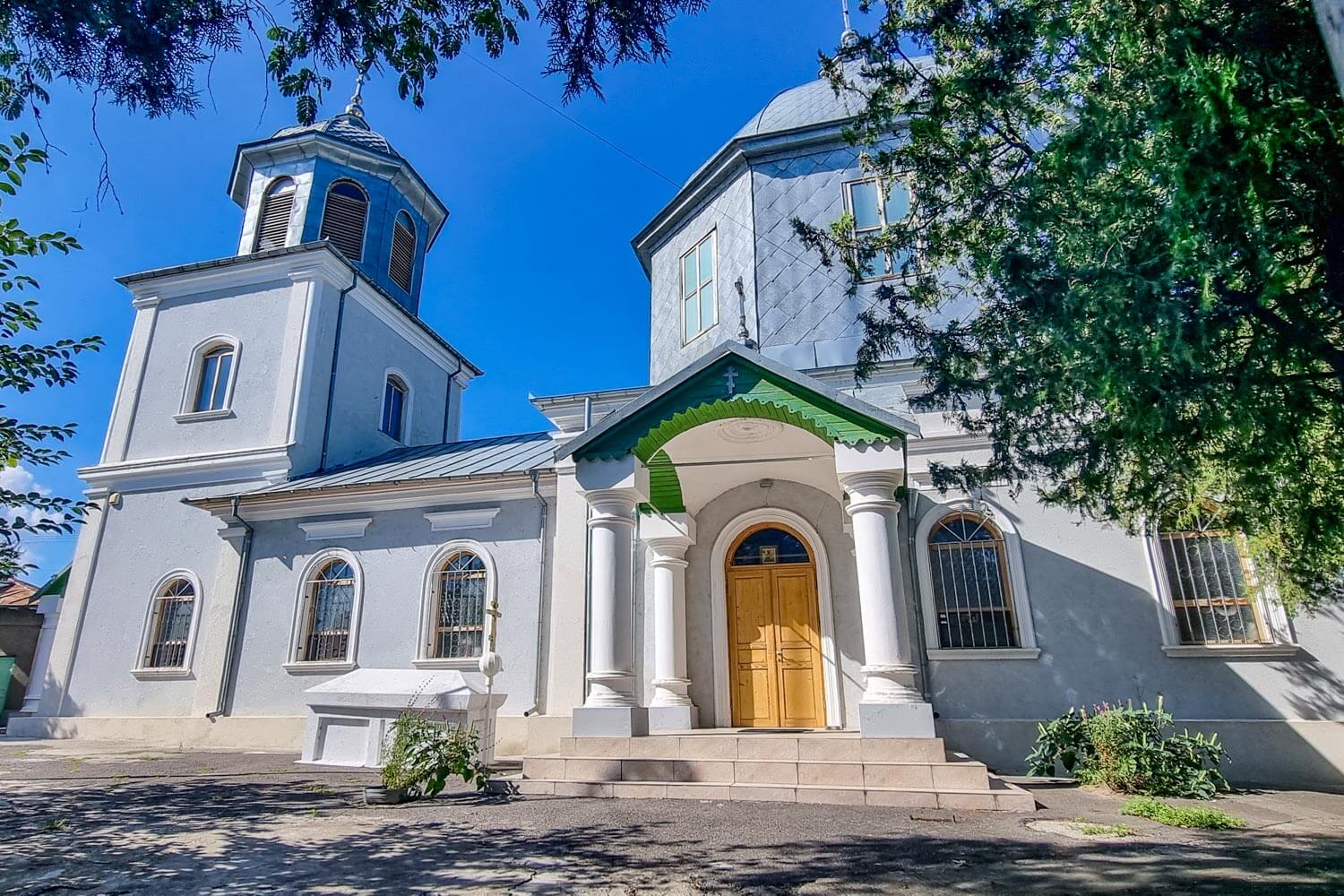
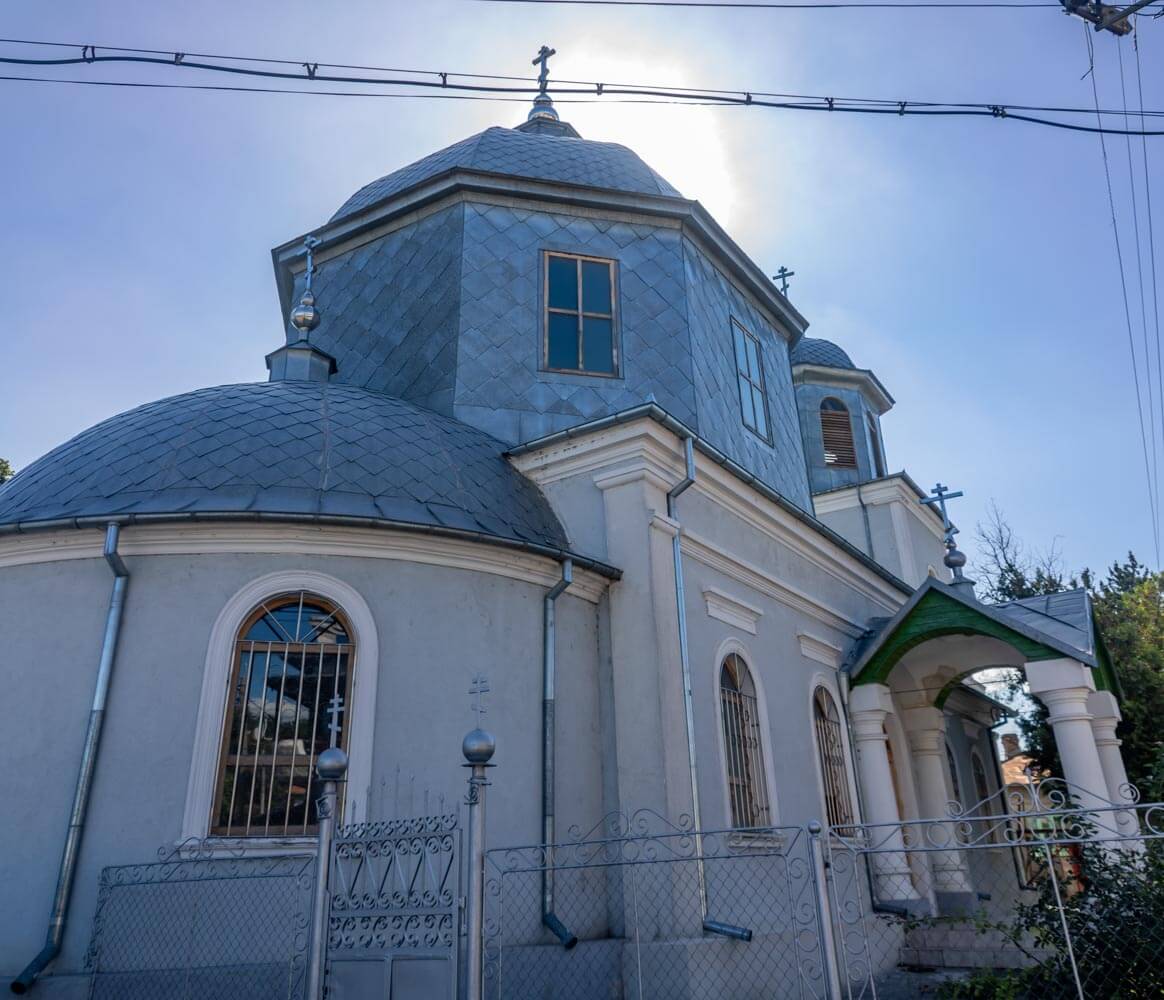
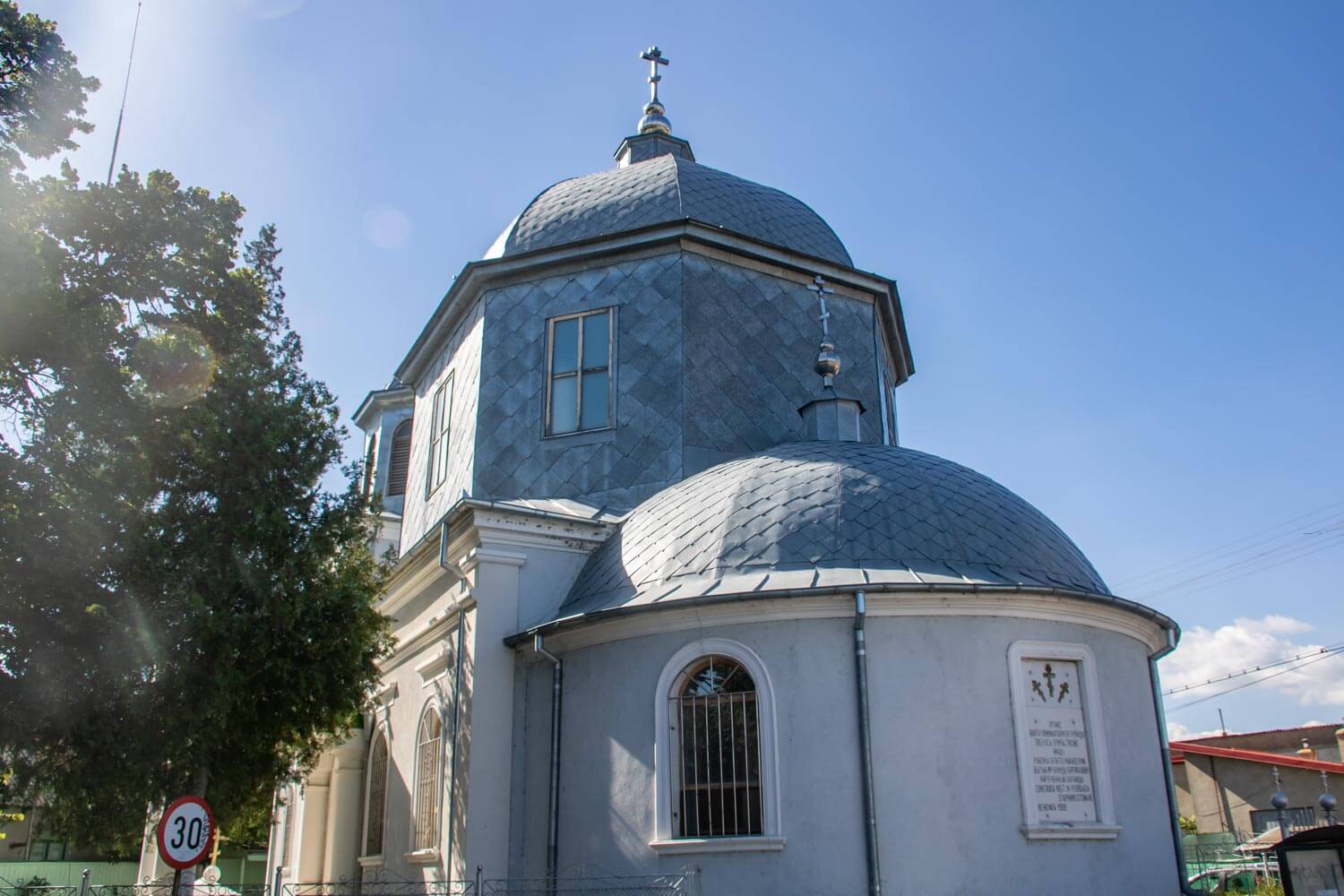
The Church of Saint Paraskeva (Biserica Sfânta Parascheva) is a Russian Old Rite Orthodox church in Tulcea, built in 1857 for the city’s Russian-Lipovan community. Standing on Strada Gloriei, it belongs to the period when Tulcea was still part of the Ottoman Empire and preserves an unusually clear record of the conditions under which Christian communities were permitted to build places of worship.
The church was constructed with the support of the local Old Rite community and Ottoman approval. Its archive still preserves the original authorization, which specified maximum dimensions of 40 cubits in length, 20 in width and 28 in height so that the building would not rise above the minaret of the nearby mosque. At the same time, the document formally recognized the community’s ownership of the church and its freedom to practice its faith.
The congregation belonged to the Russian Old Believer tradition, whose members had separated from the Russian Orthodox Church after the liturgical reforms of the 17th century. Tulcea became home to a substantial Lipovan community, and Saint Paraskeva was one of its principal places of worship. A Russian priest named Alexandru, who died in 1886, was buried in the churchyard, showing that clergy from Russia were still serving the community during the 19th century.
That situation changed during the First World War and after the Bolshevik Revolution, when priests could no longer arrive regularly from Russia. The Saint Paraskeva congregation subsequently became known locally as bezpopovți, or “priestless” Old Believers. This difference later contributed to a division within Tulcea’s Old Rite community: parishioners who wanted regular priestly services founded the Church of the Ascension of the Lord nearby in 1920-1921, while members of Saint Paraskeva opposed the new construction.
The church remains part of the Russian Old Rite Orthodox tradition today. Its relatively restrained exterior reflects the restrictions under which it was originally built, while its history preserves an important part of Tulcea’s Russian-Lipovan religious heritage.