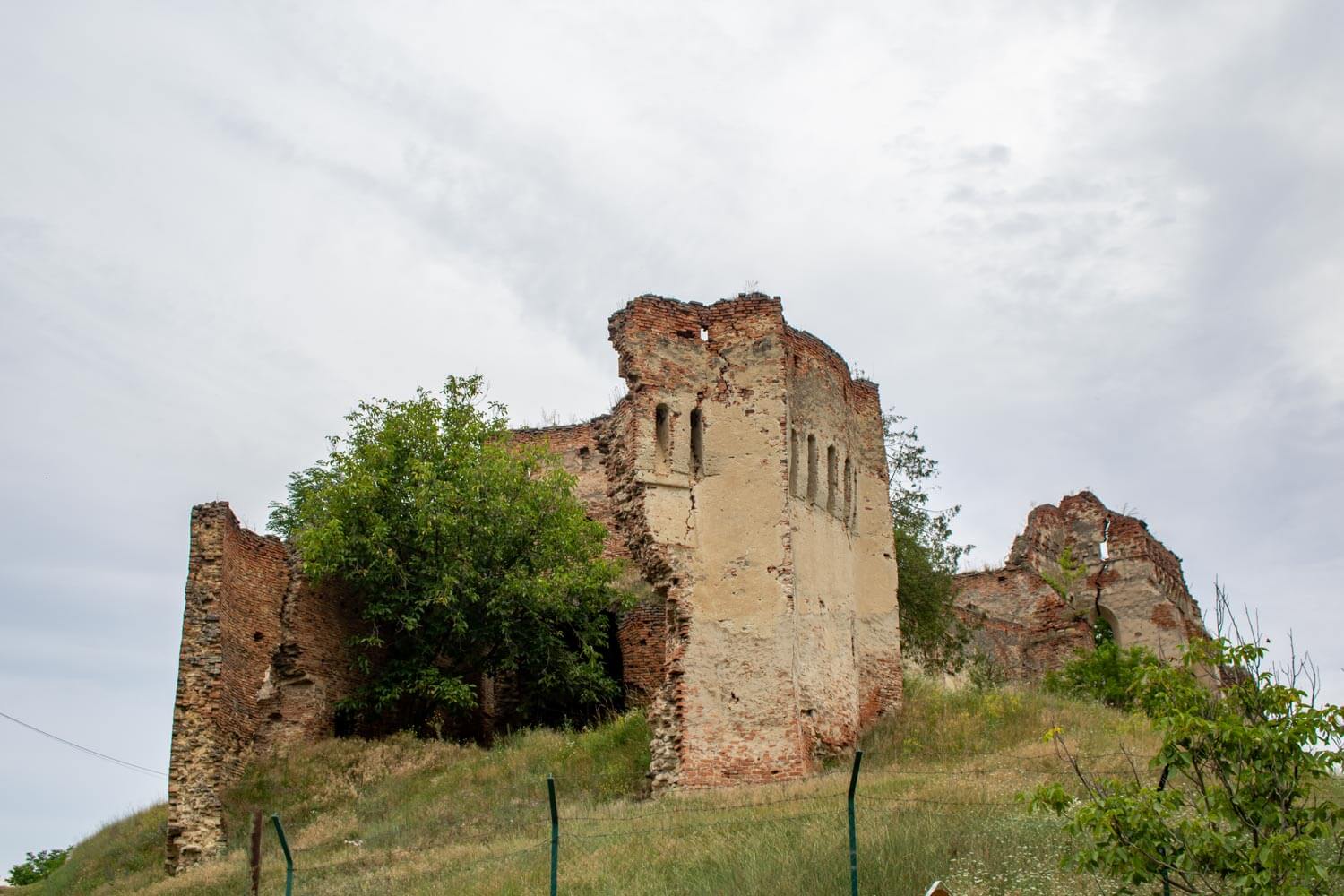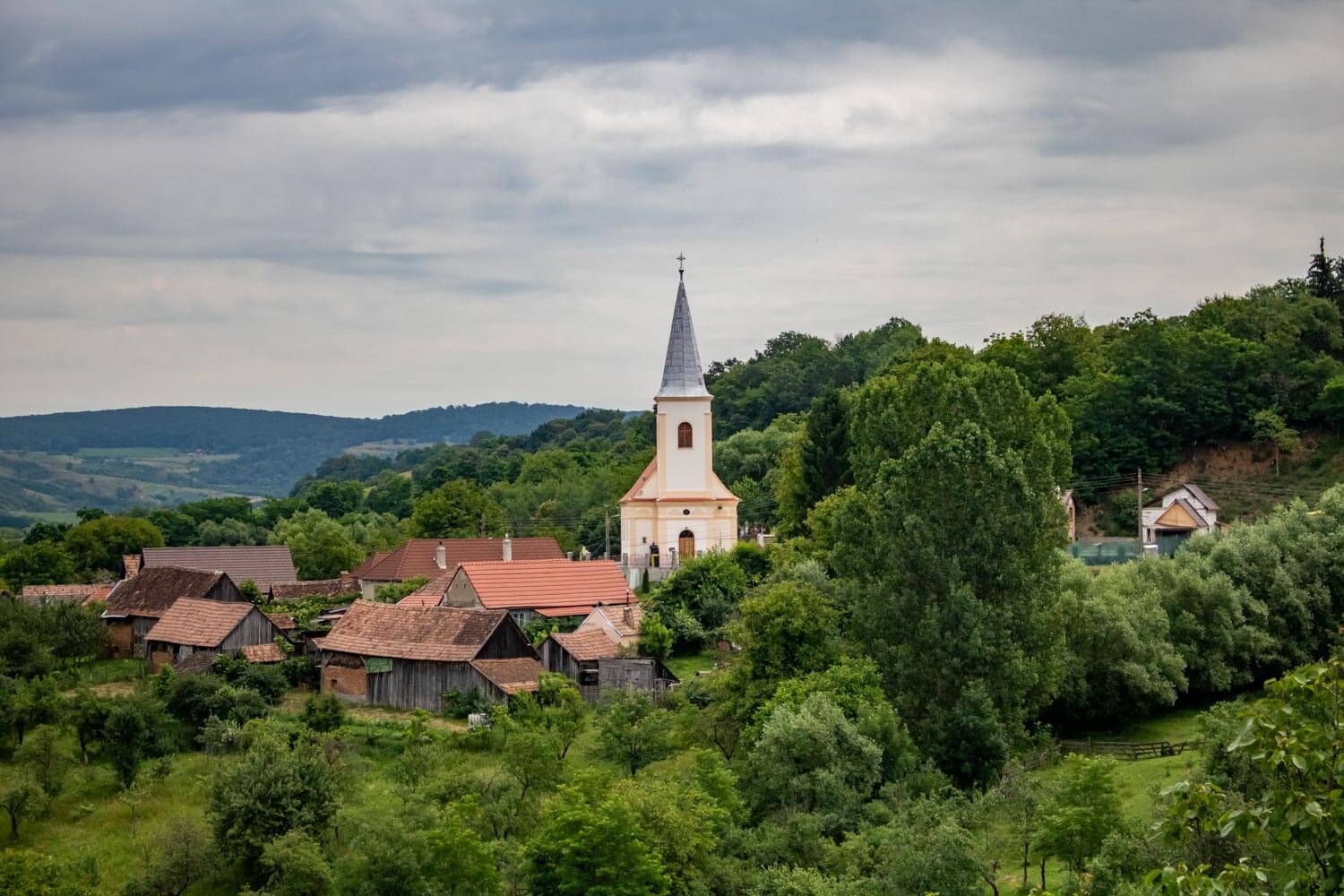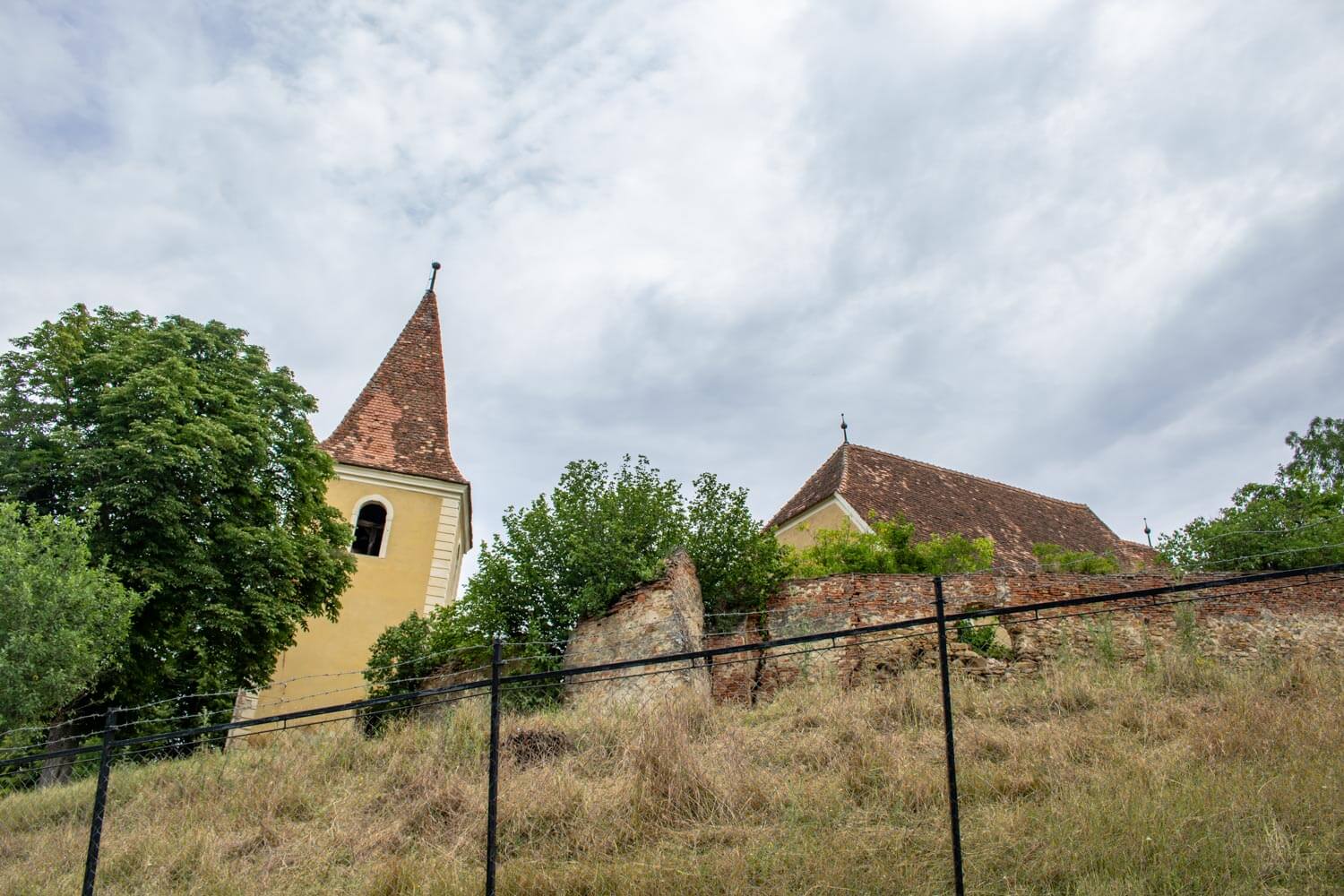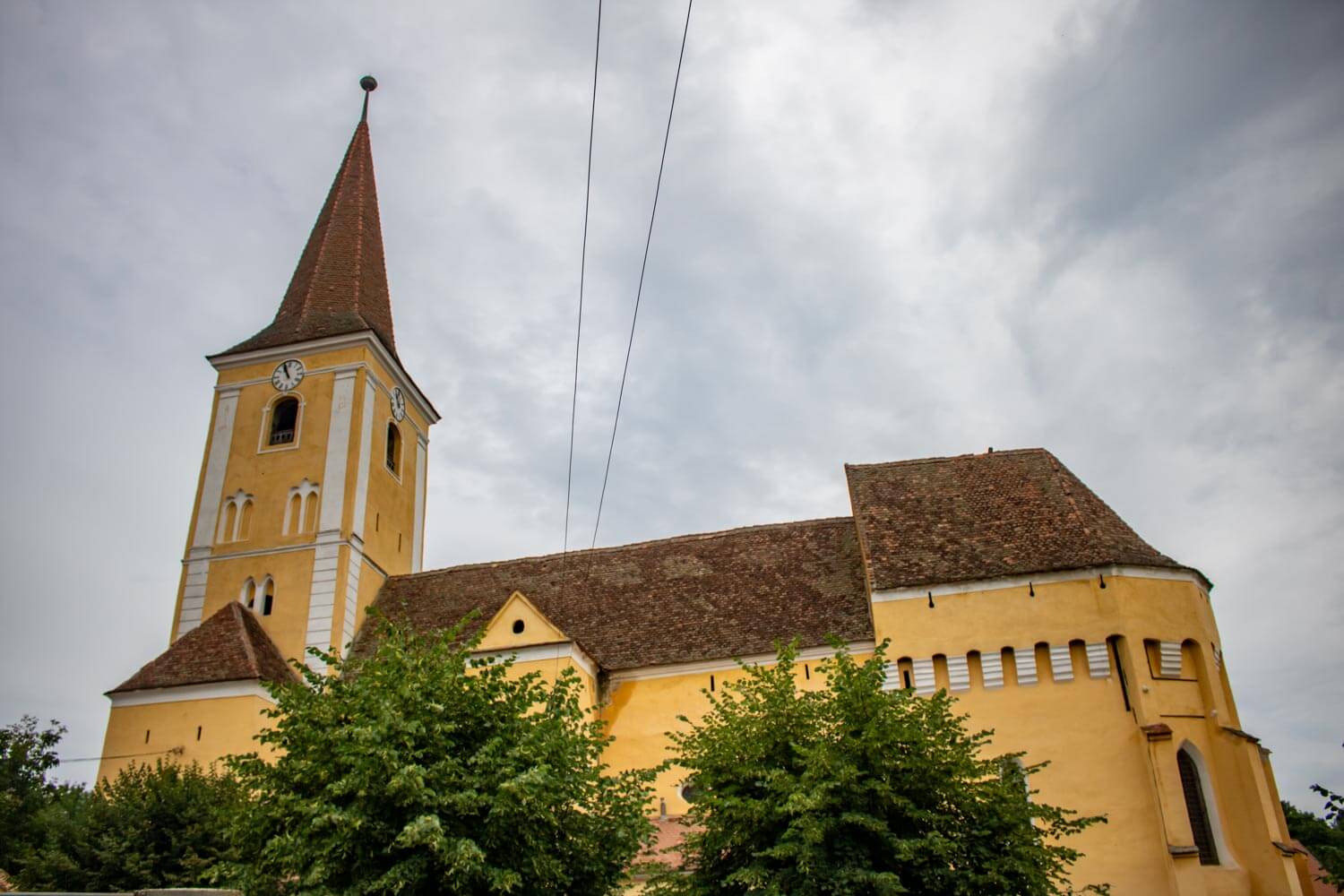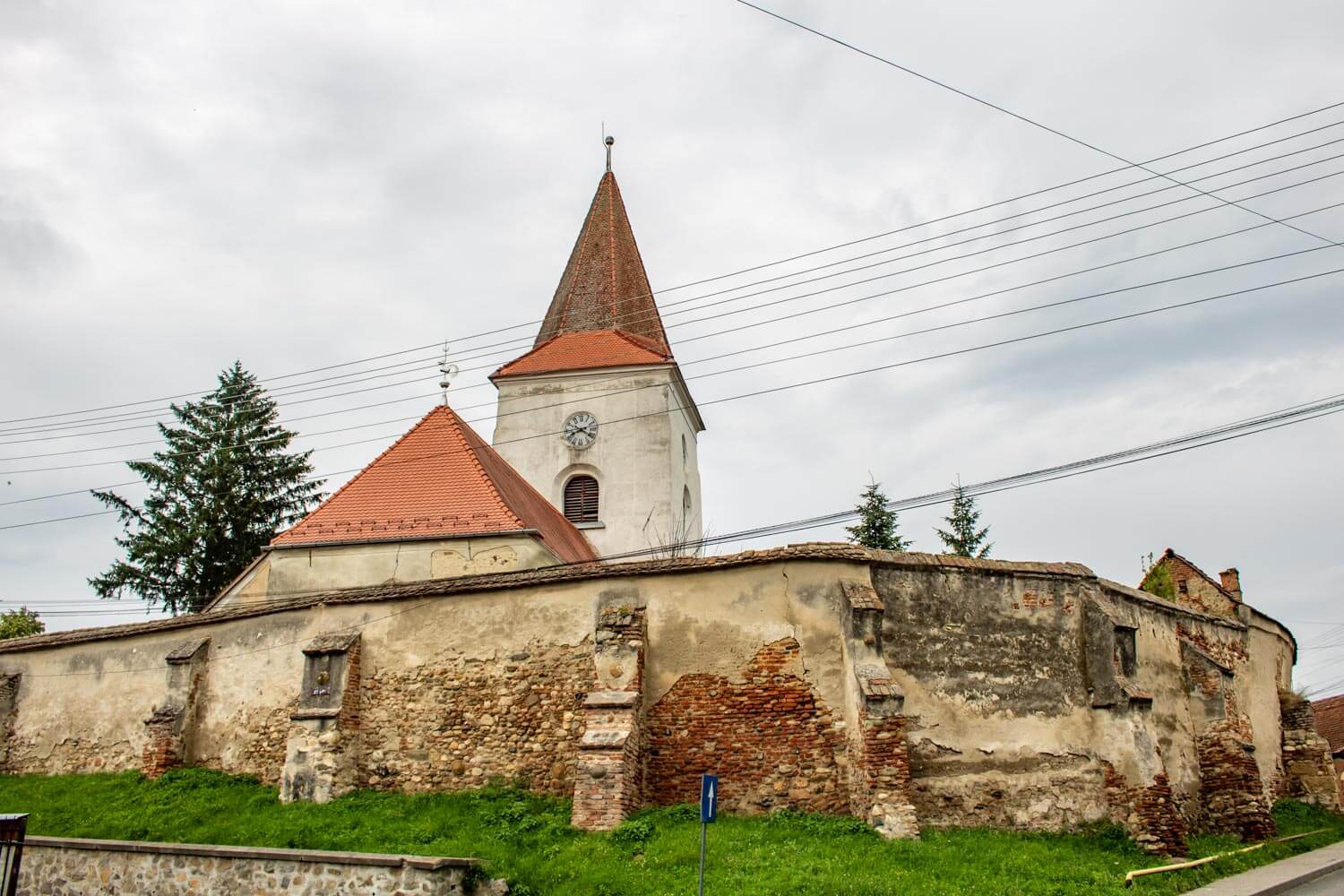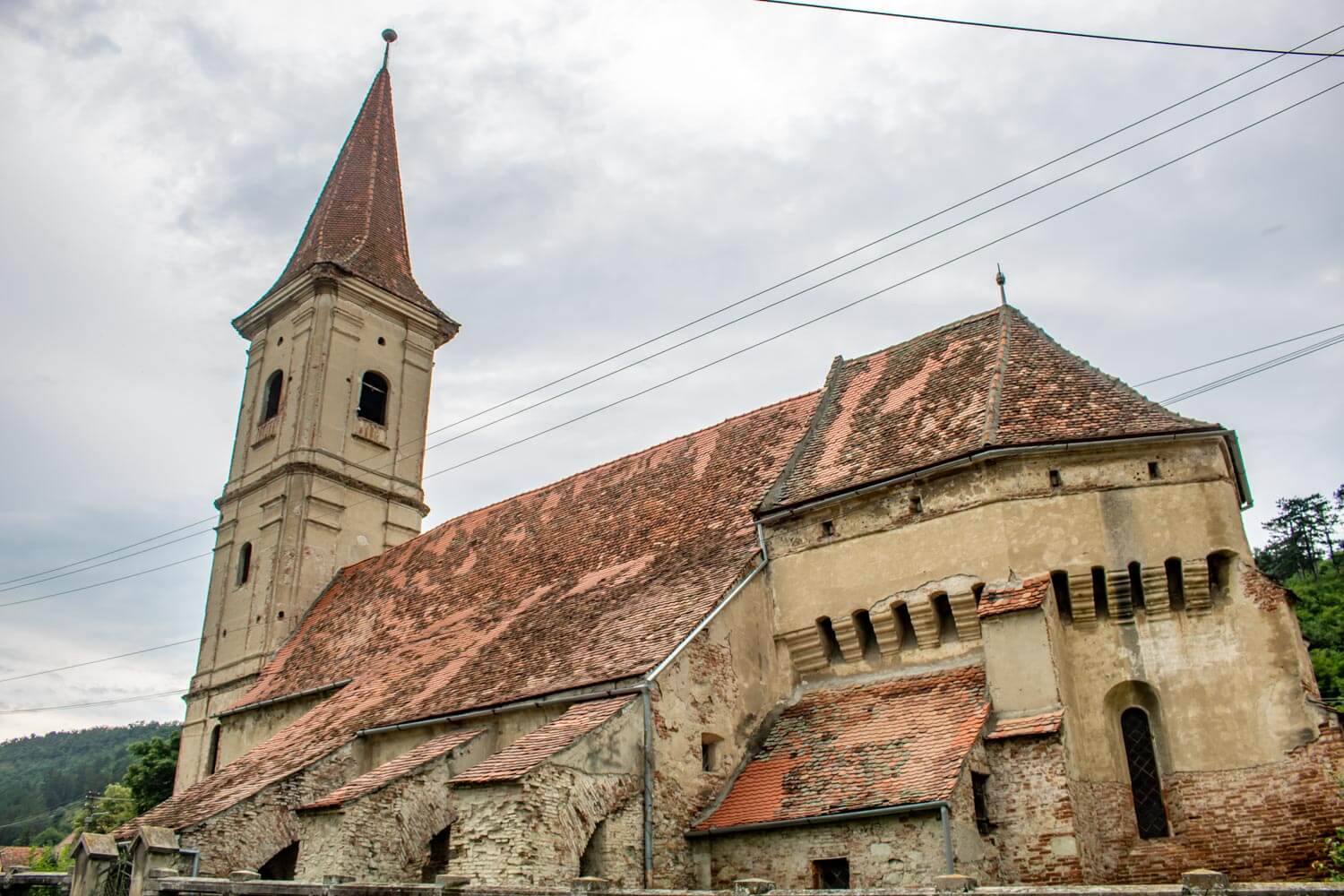
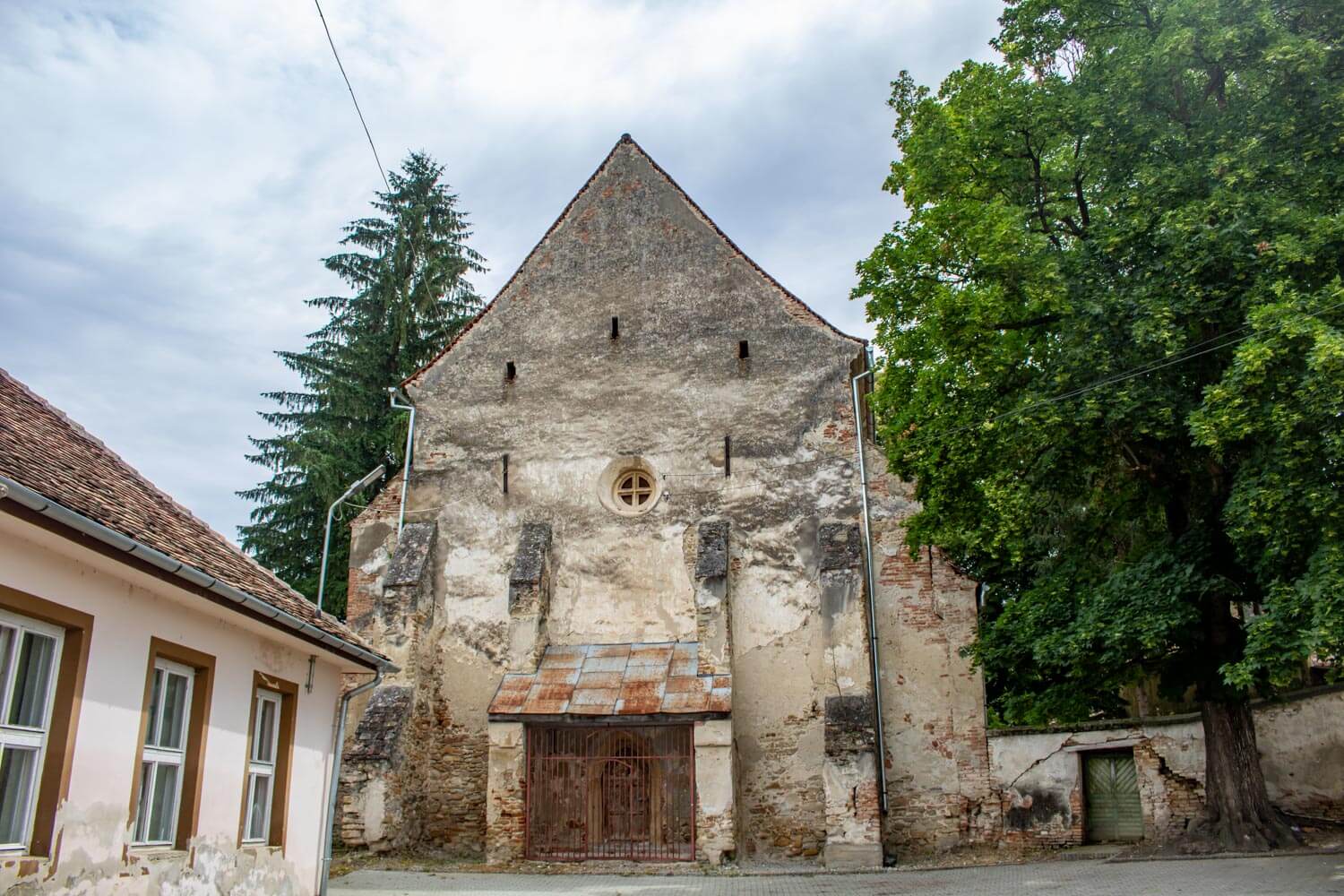
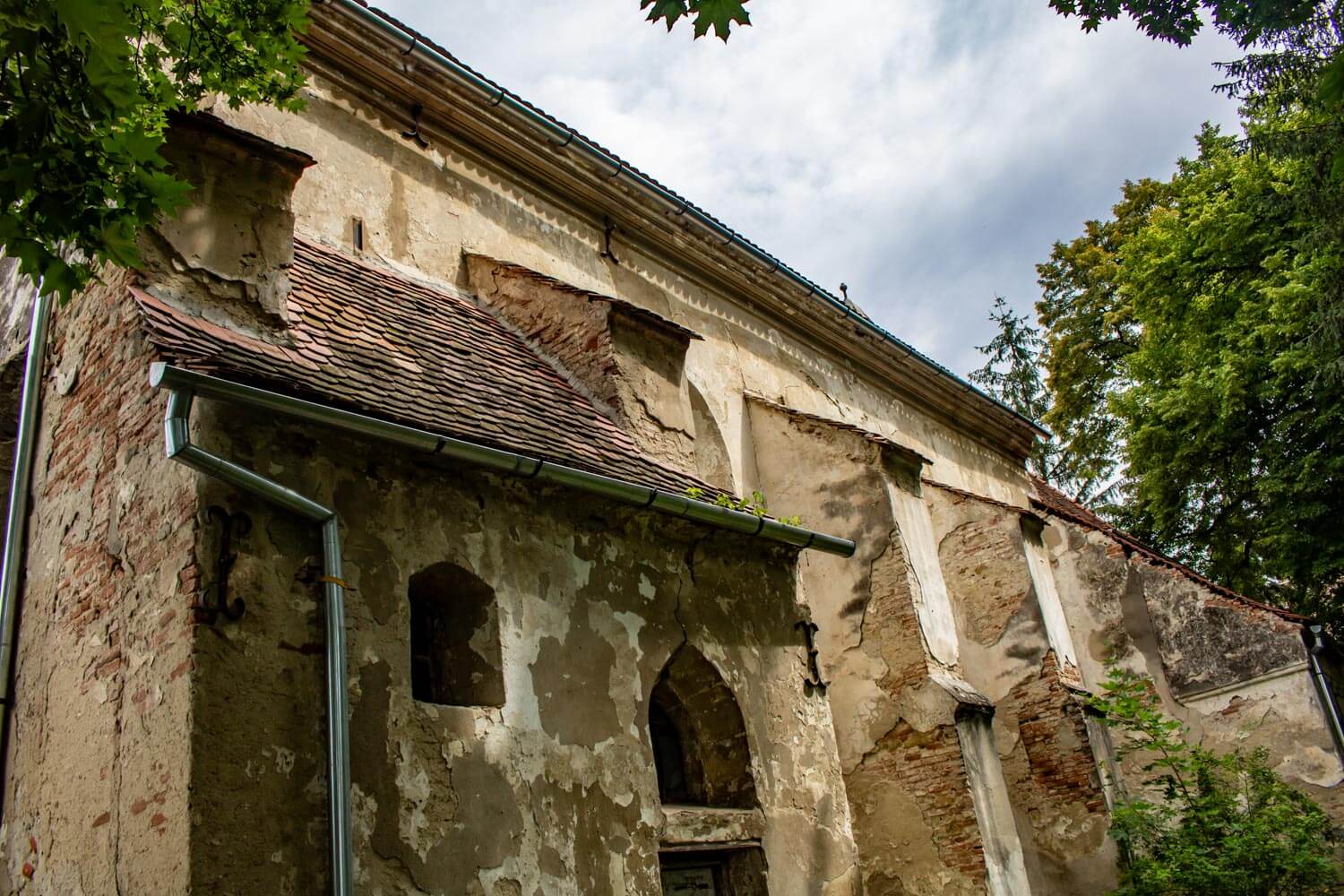
The Evangelical Church of Slimnic (Biserica Evanghelică din Slimnic) is a historic Lutheran church in the village of Slimnic, Sibiu County, standing below Slimnic Fortress in the center of the settlement. Originally dedicated to Saint Bartholomew, the church was built during the second half of the 14th century and first appears in written records in 1394.
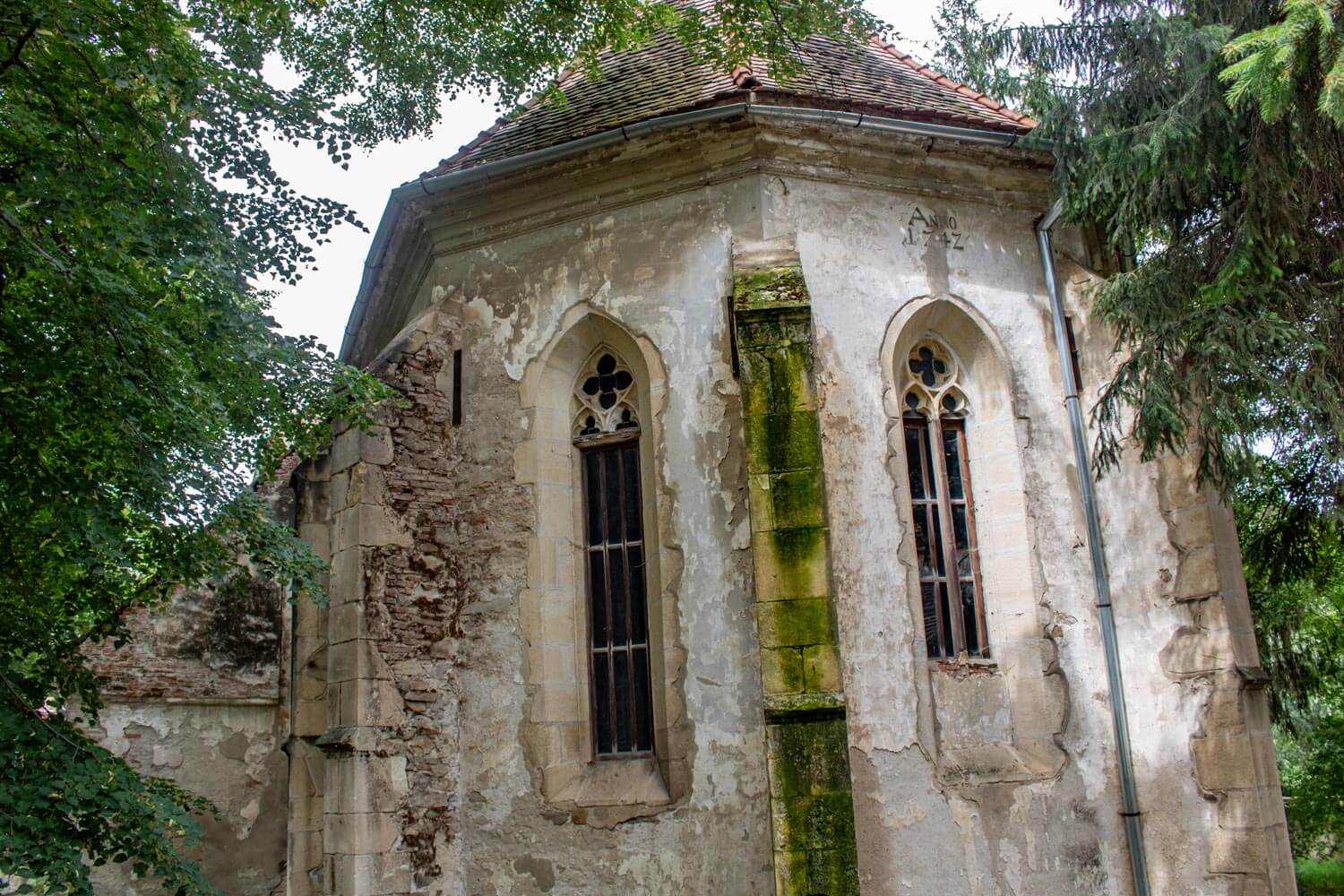
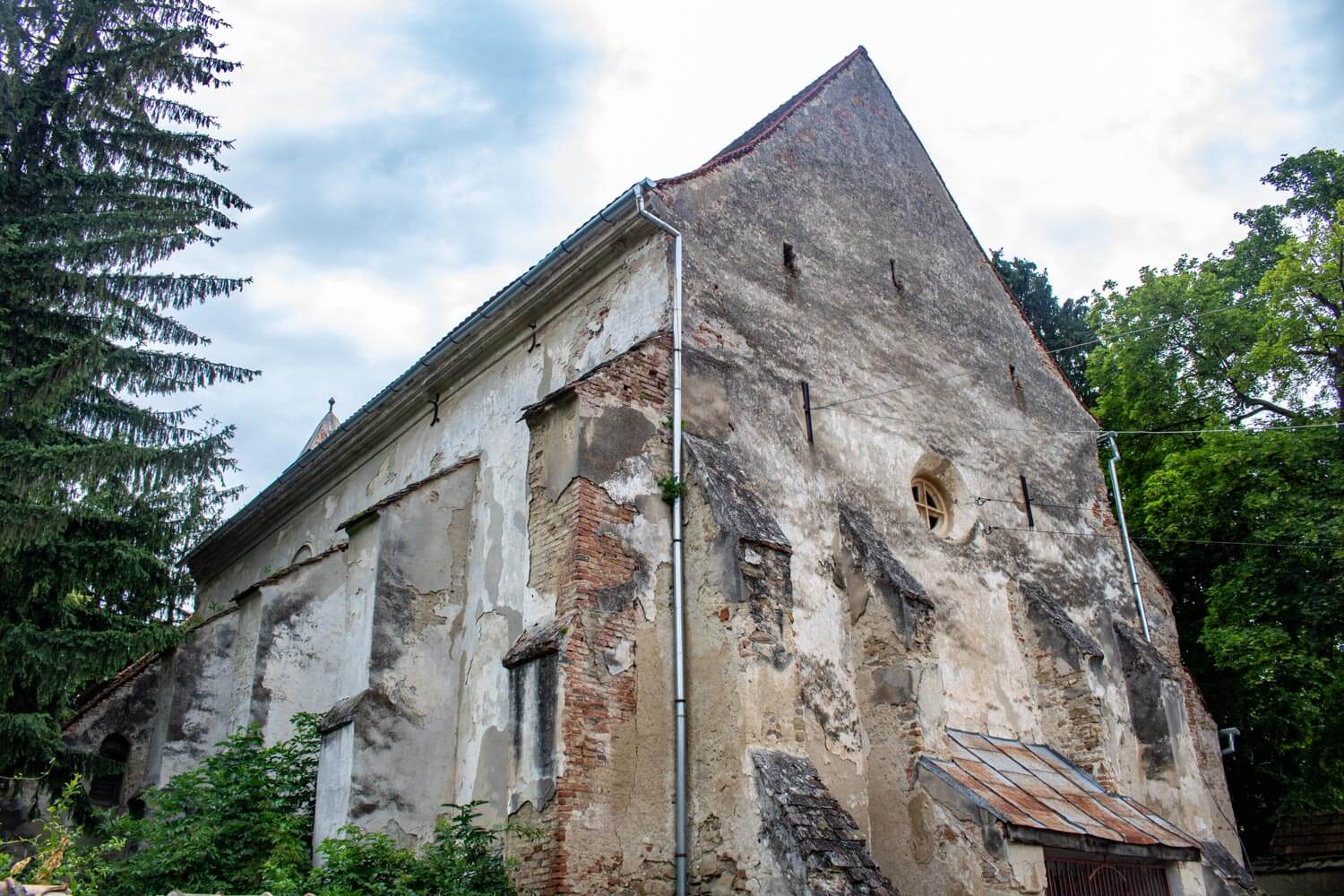
The building is a Gothic hall church constructed mainly from brick, with carefully dressed stone used around the portals, windows and buttresses. Its choir preserves a ribbed Gothic vault and pointed windows with trefoil and quatrefoil tracery, while the western and southern entrances retain profiled stone surrounds from the medieval building. Around 1500, the original timber ceiling over the nave was replaced by a Late Gothic net vault.
The interior was reshaped again during the Baroque period. The present altar was installed in 1773 and incorporates older paintings, including a Last Supper scene from the early 18th century. Its principal images were painted by Stephan Adolph Valepagi of Mediaș and could be changed according to the church calendar. The Baroque pulpit dates from 1759, with its canopy later painted by the same artist.
An organ built by Sibiu organ maker Johannes Hahn was installed in 1733, while two 16th- and 17th-century funerary stones in the choir commemorate former pastors of Slimnic. The church once possessed several particularly valuable medieval liturgical objects, including a gilded silver crucifix from around 1520 and an ornate chalice, both now preserved in the Brukenthal National Museum in Sibiu.
The church remained the religious center of Slimnic’s Saxon community even as the much larger fortress above the village lost its defensive role, leaving the two monuments as separate but complementary parts of the settlement’s medieval history.