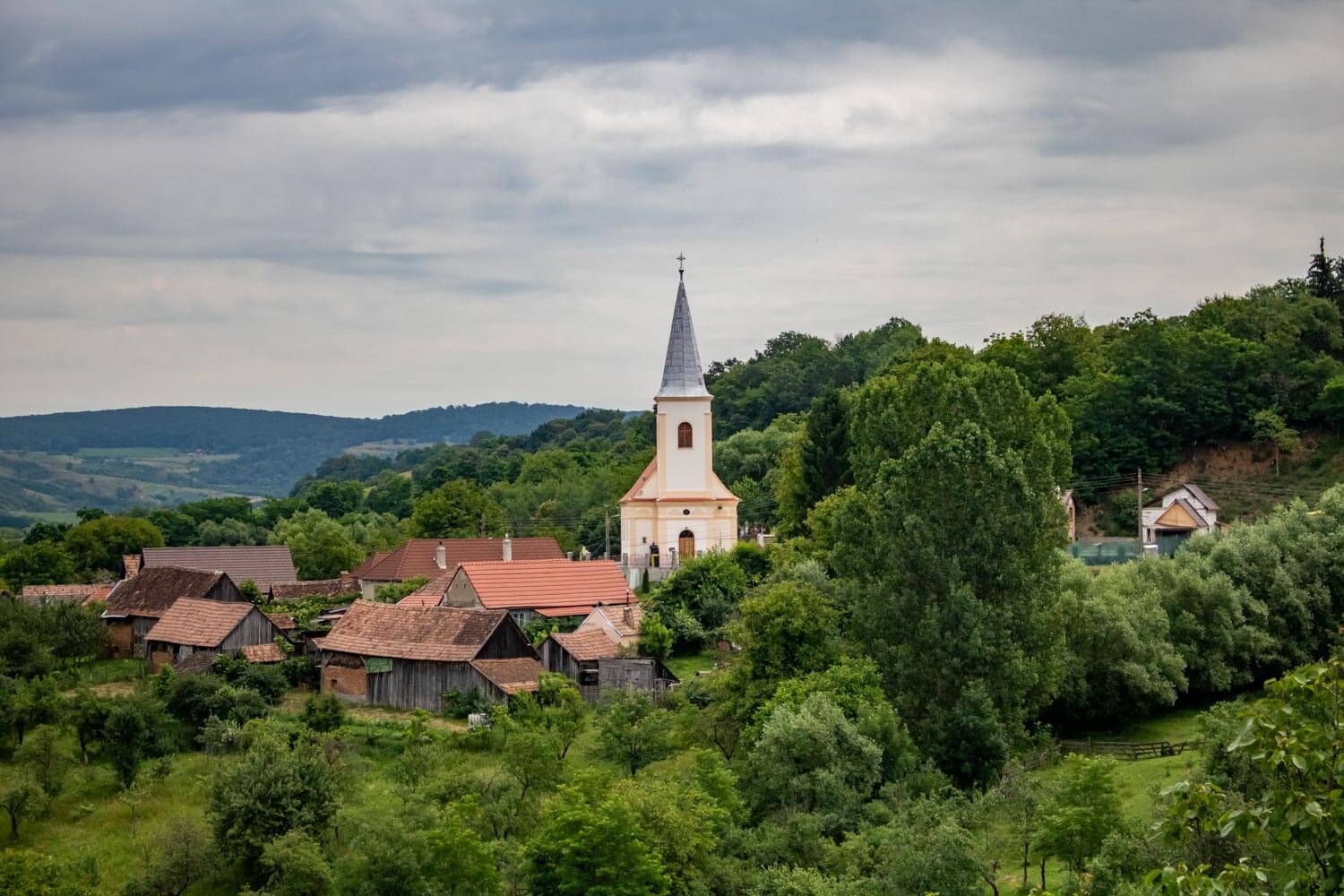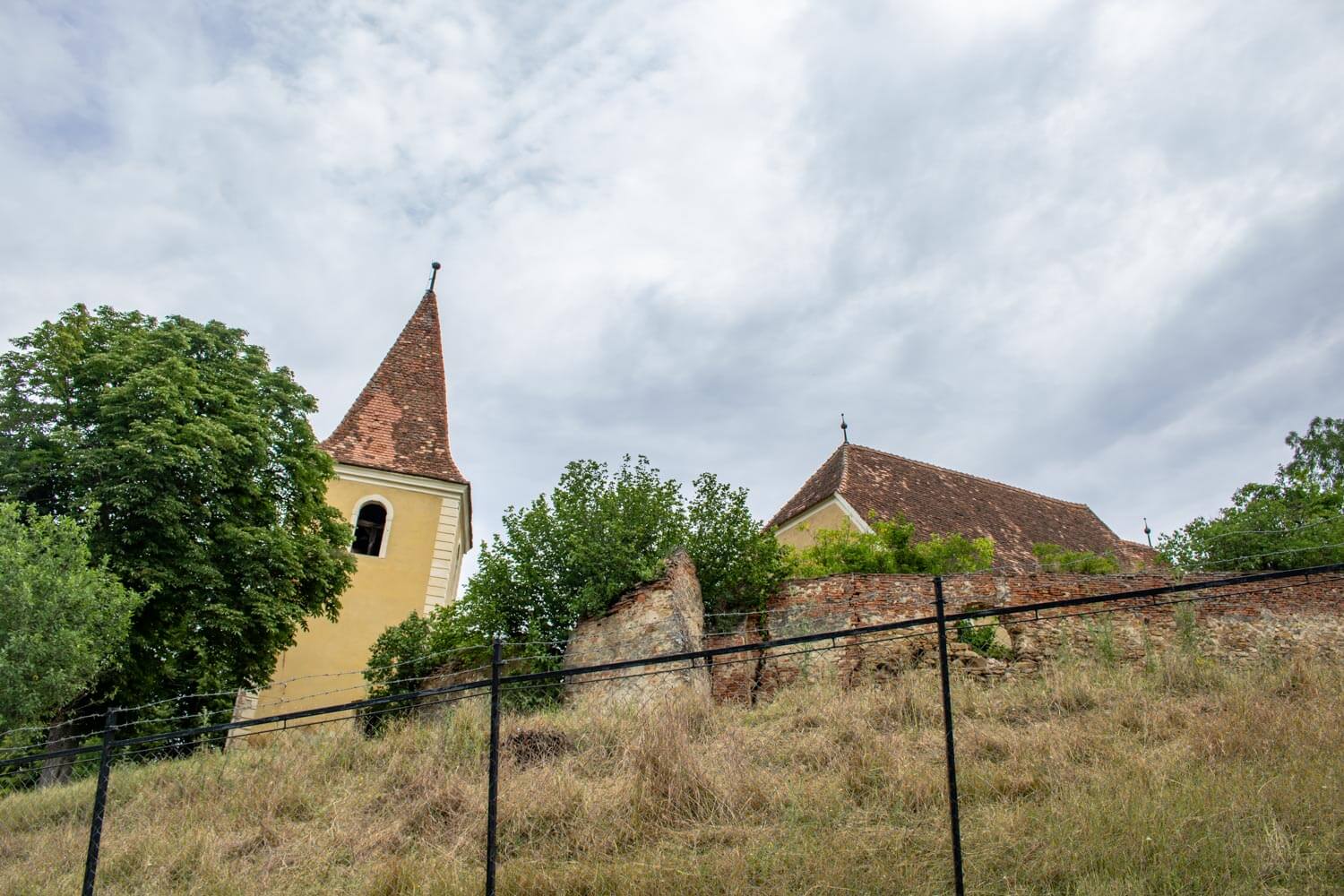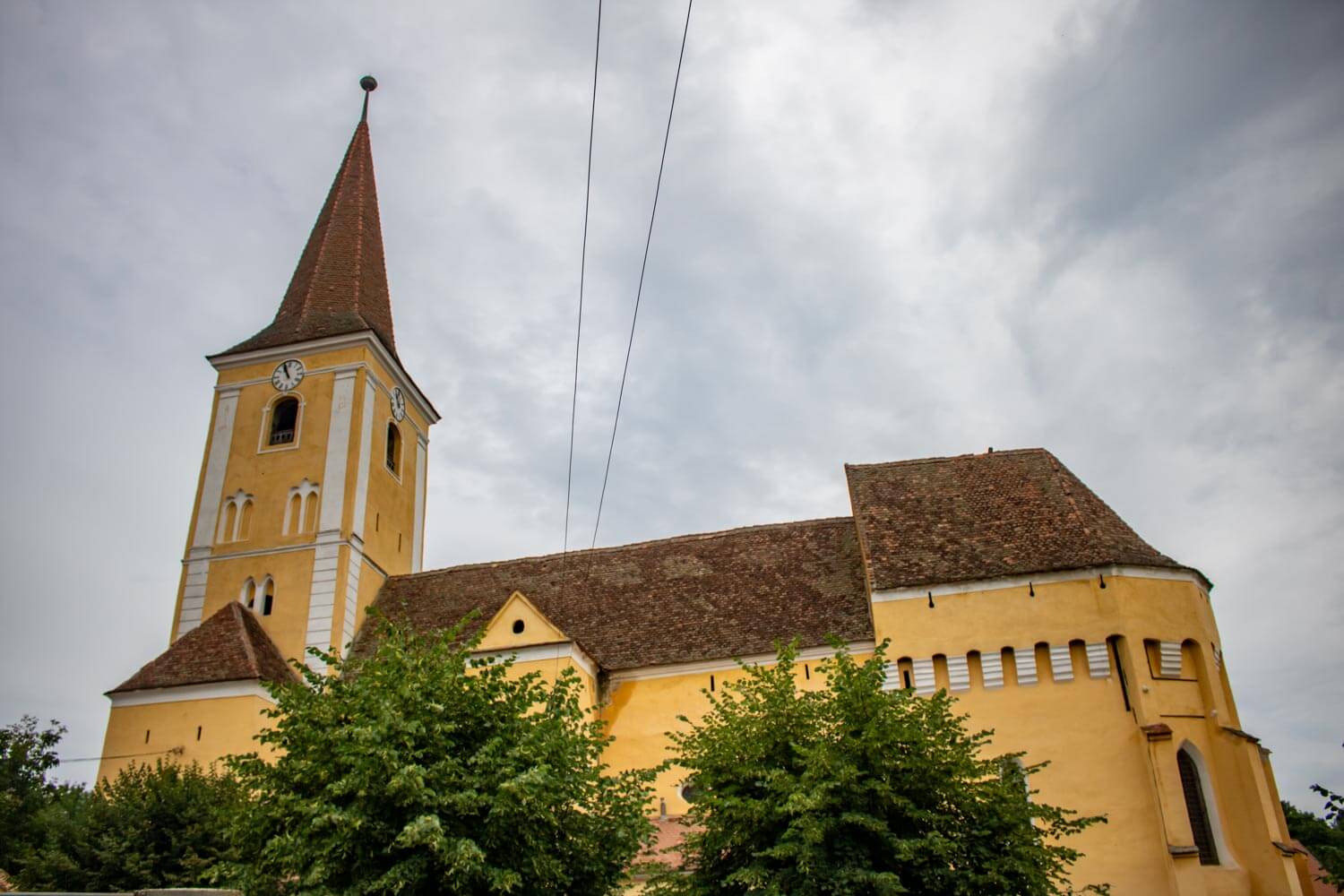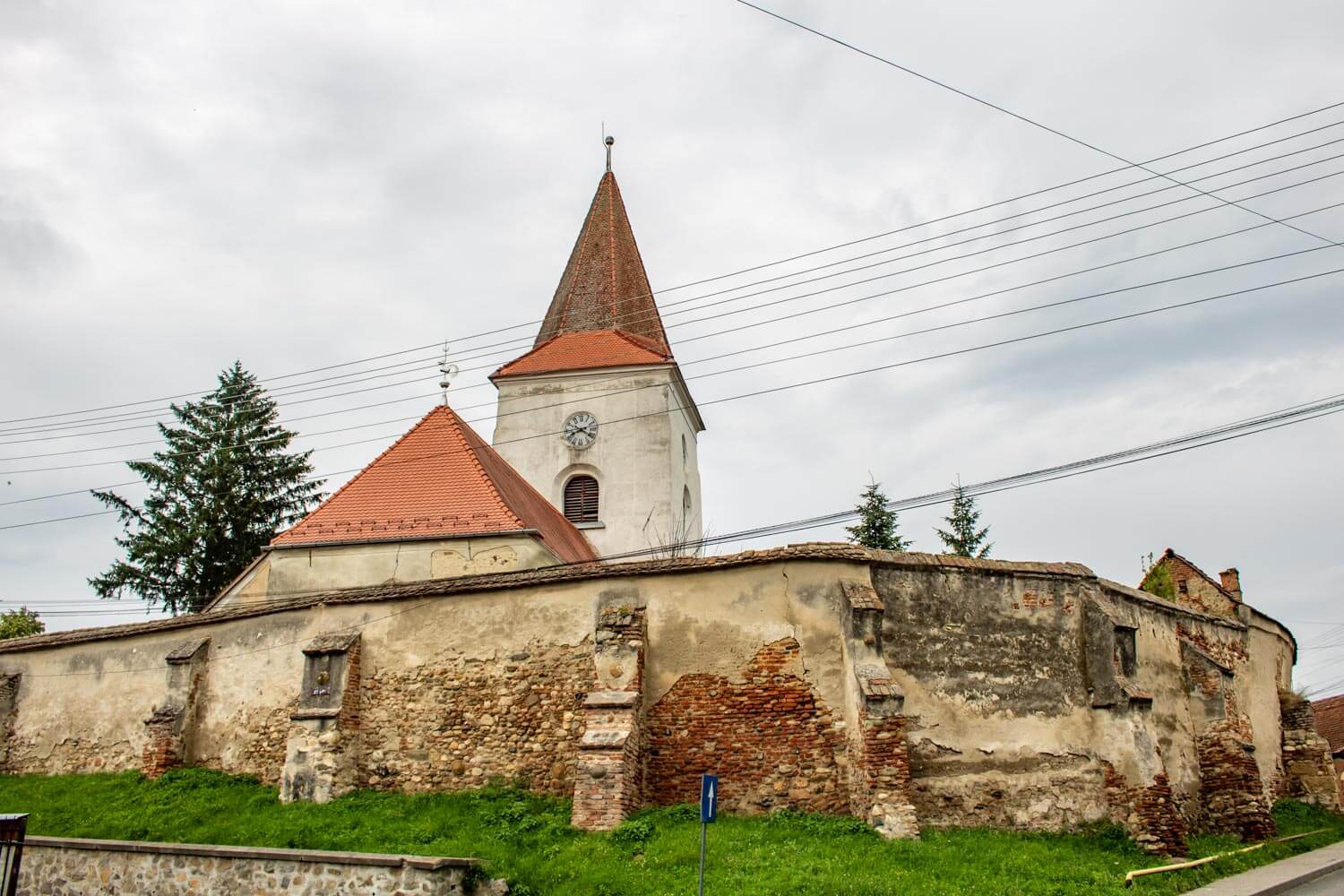
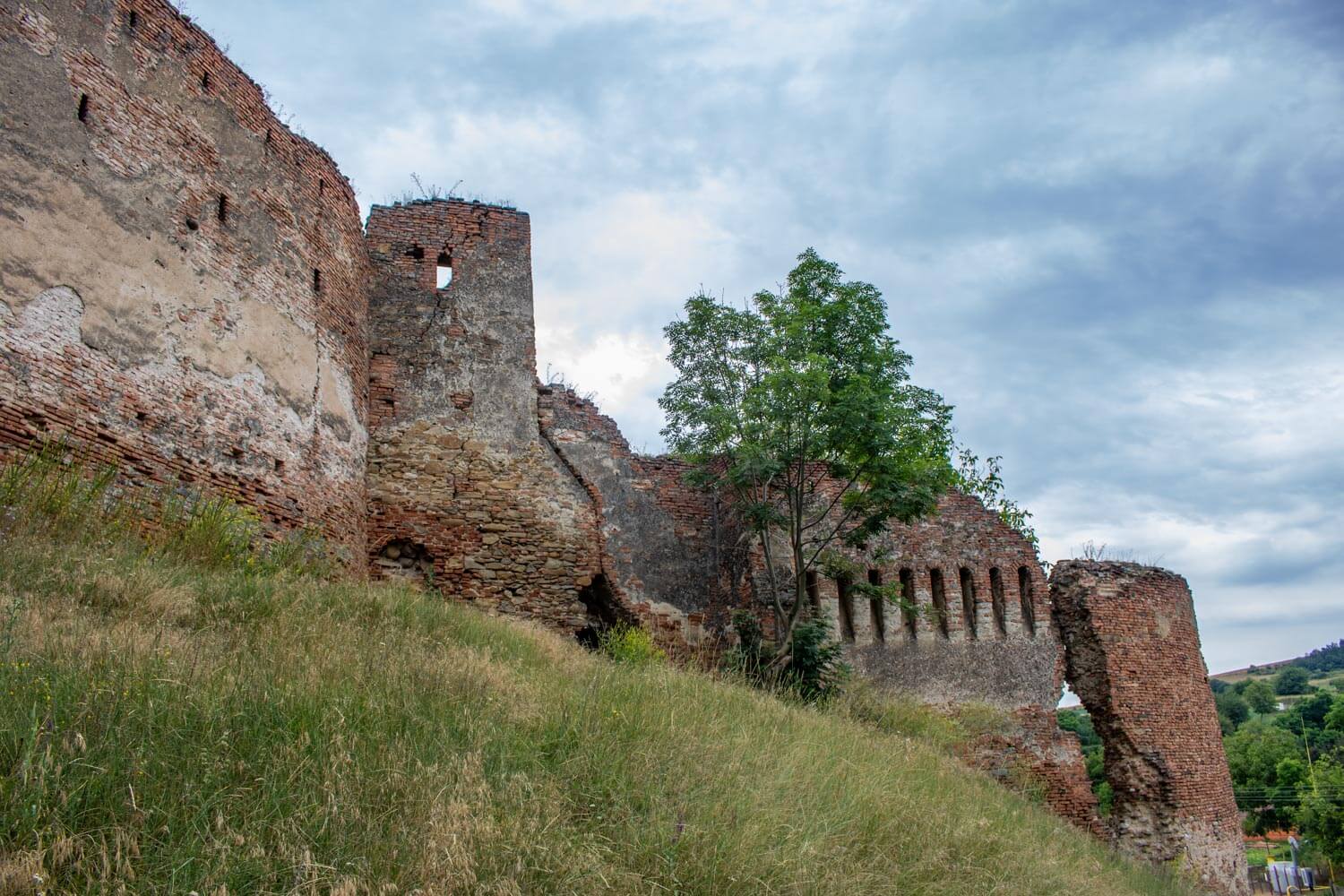
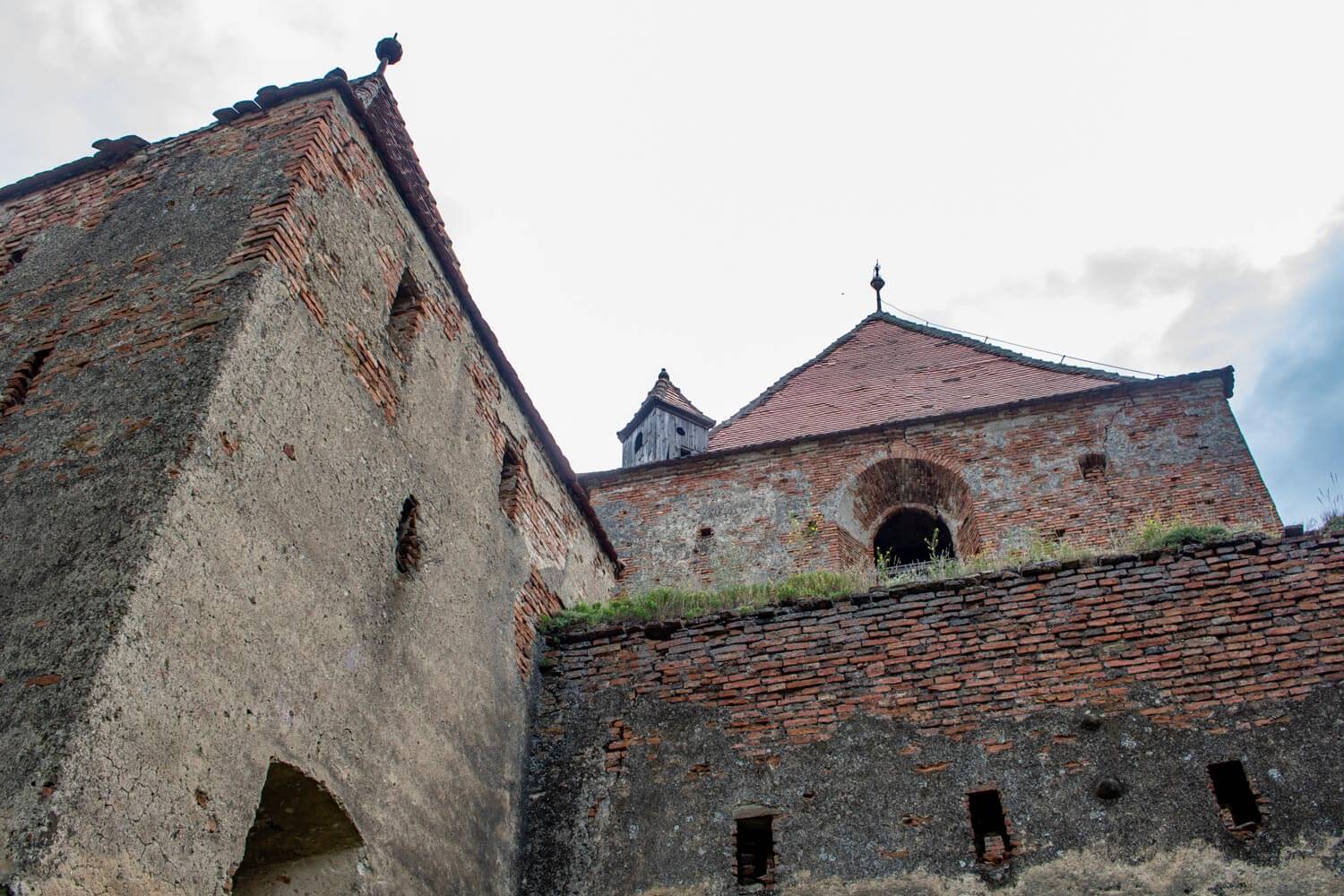
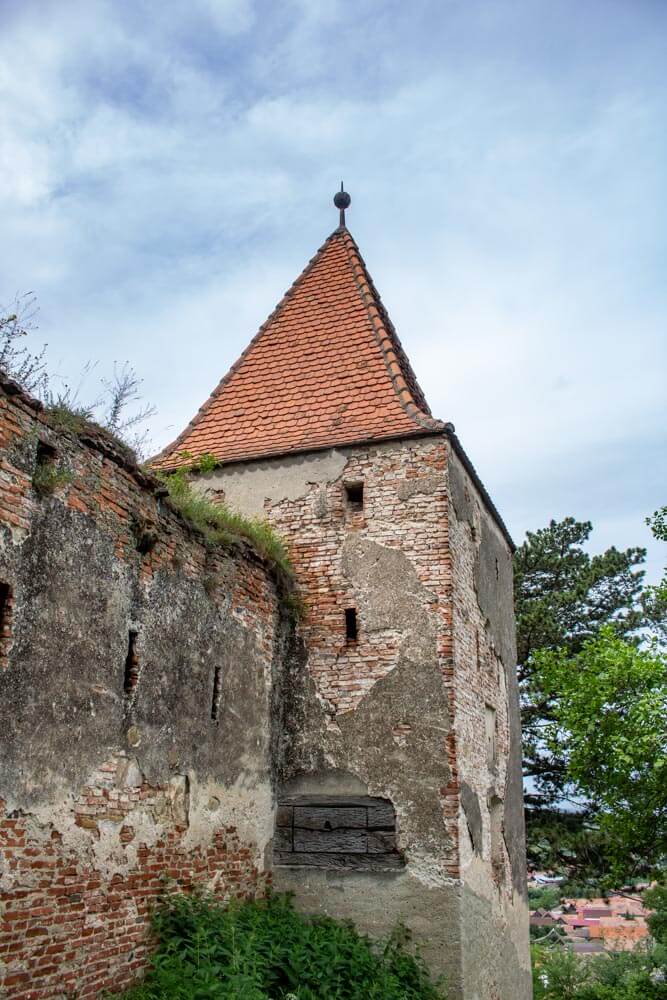

Slimnic Fortress (Cetatea Slimnicului), also known as Stolzenburg, is a medieval hilltop fortress above the village of Slimnic, Sibiu County. Built and expanded between the 14th and 16th centuries, it guarded the important road between Sibiu and Mediaș and developed into one of the largest rural defensive complexes in the area.
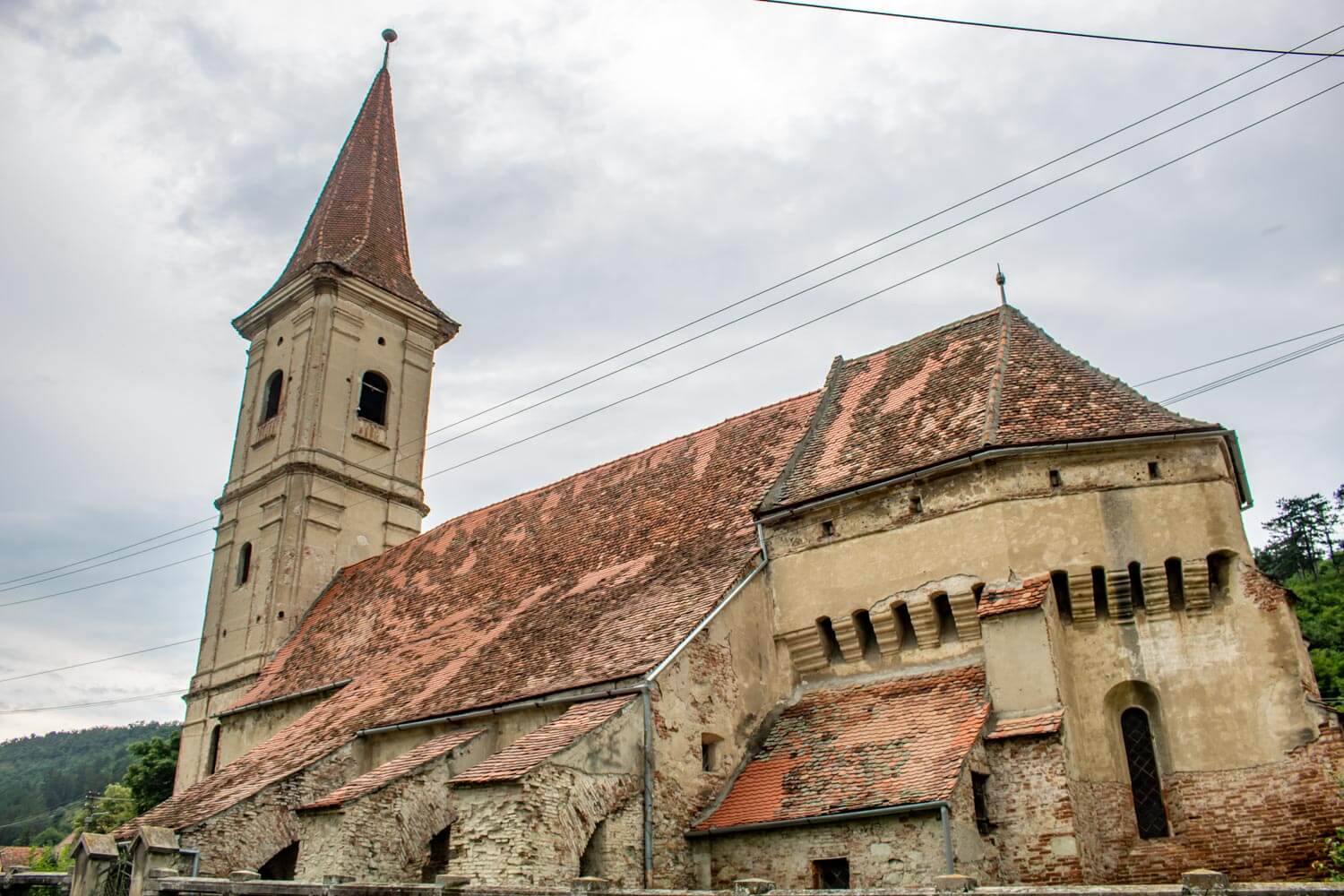
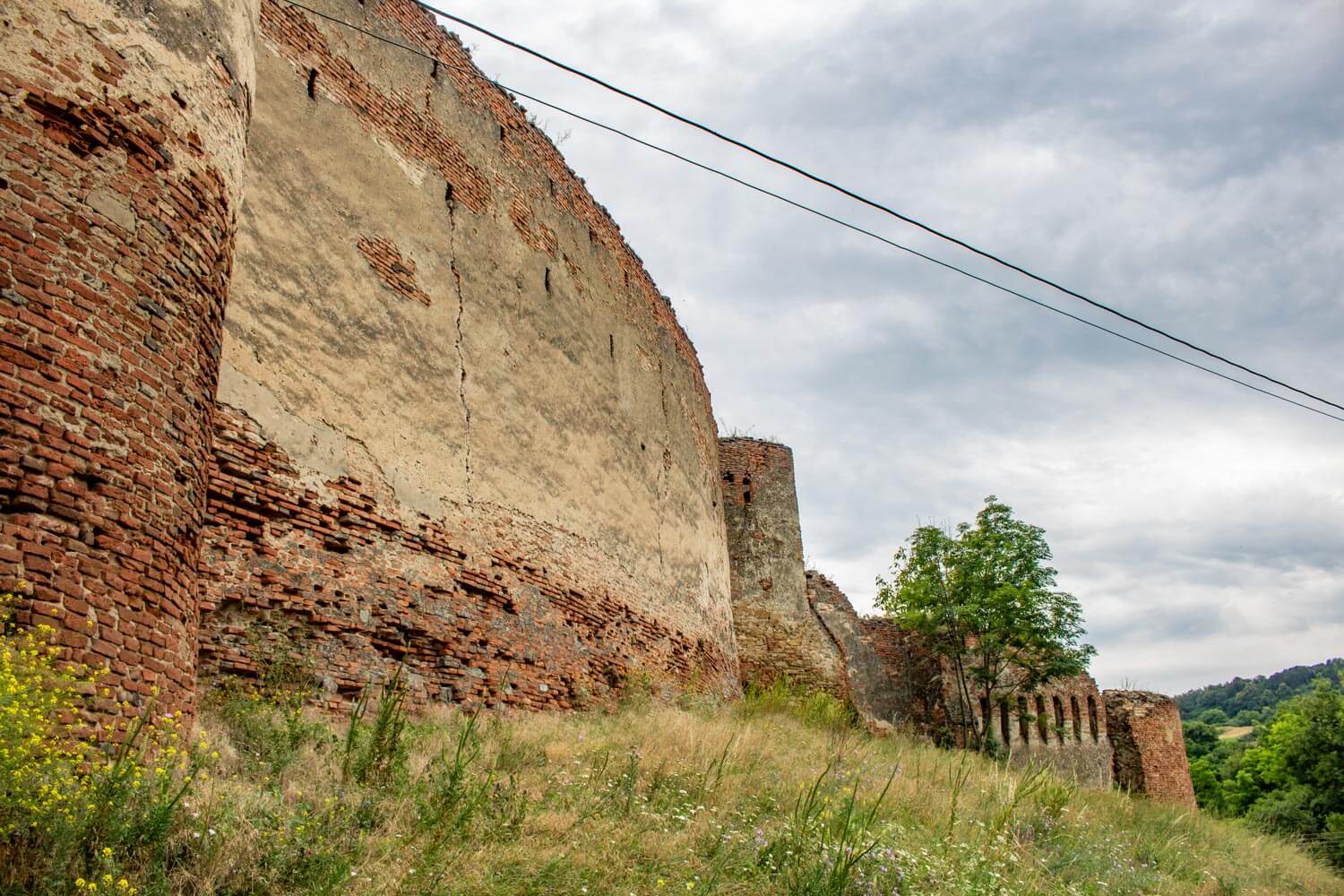
The oldest surviving part is the northern bell tower, whose ground floor formed part of a Gothic chapel dating from the 14th century. During the 15th century, the hill was enclosed by high brick walls strengthened with buttresses, firing openings and defensive galleries. The fortress was then extended southward, creating a long irregular enclosure divided into separate courtyards.
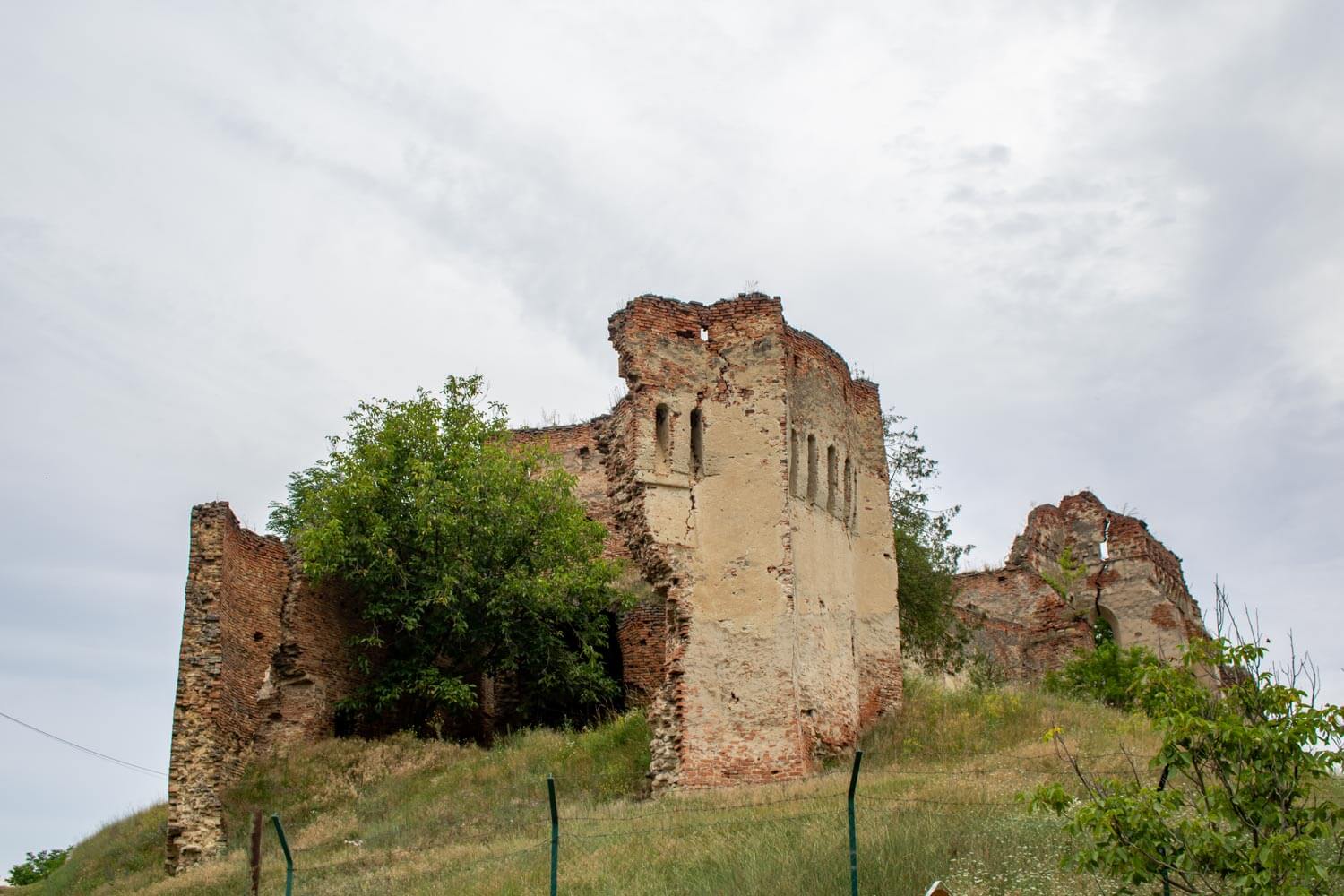
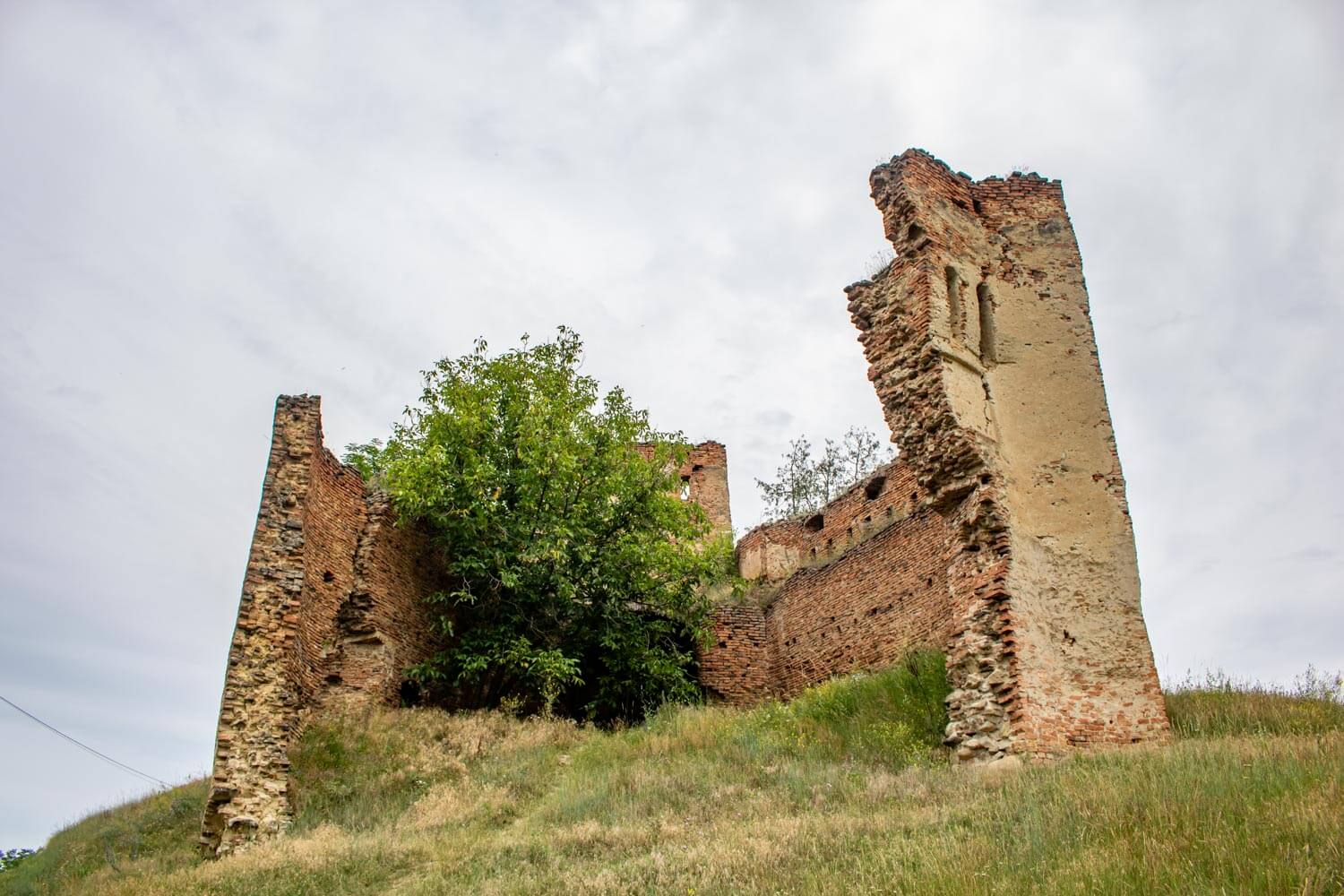
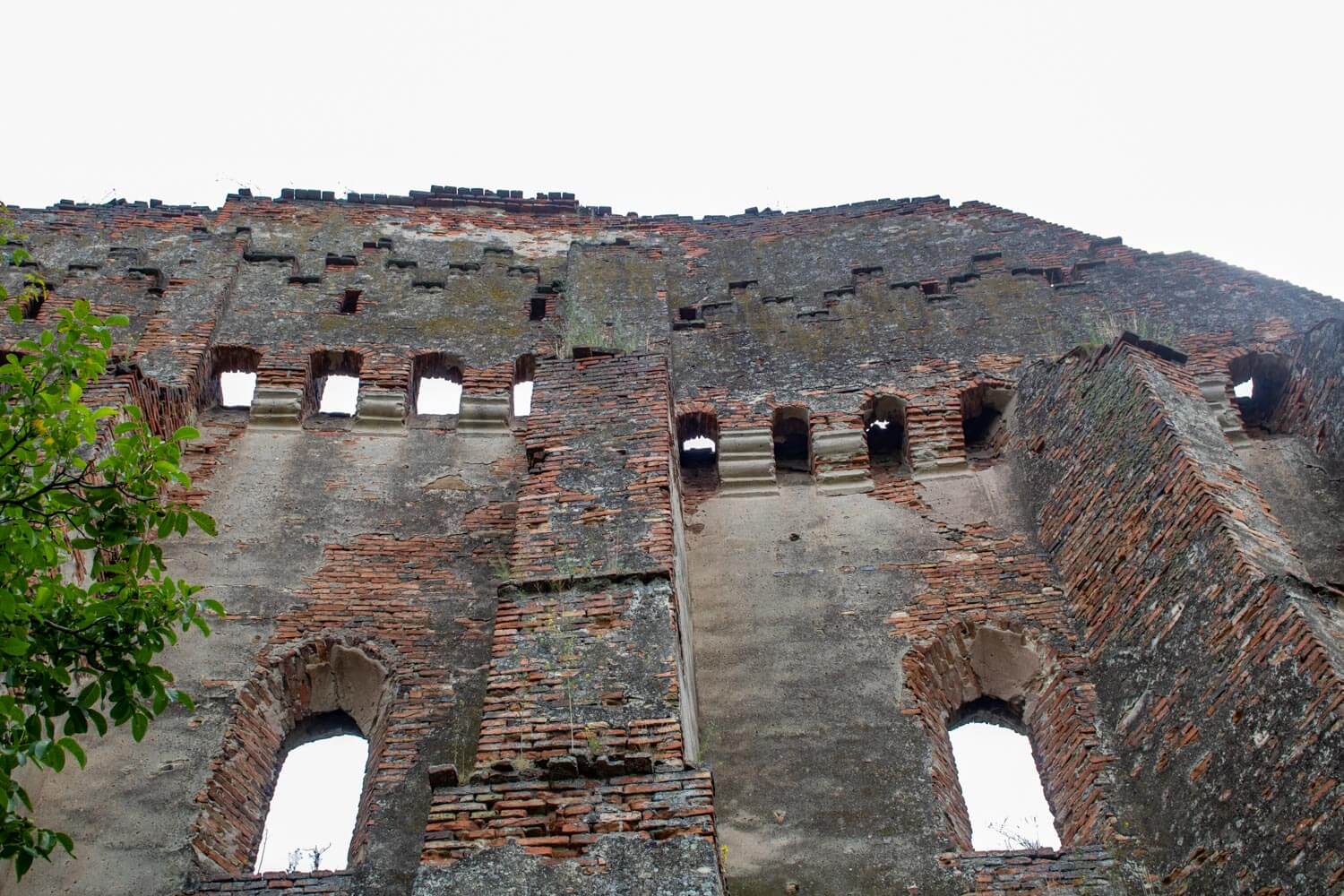
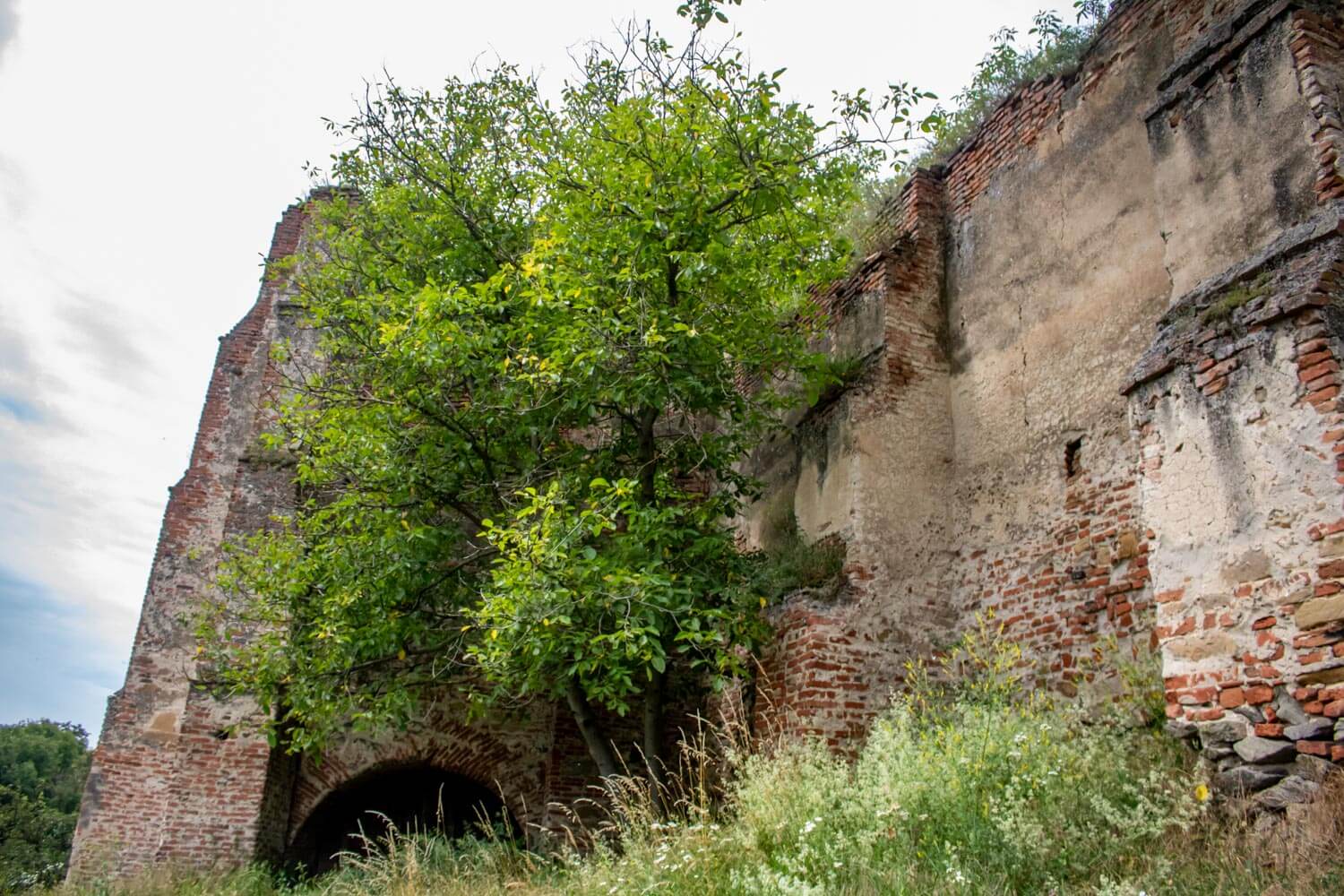
A much larger Gothic hall church was begun inside the fortress but was never completed. Its surviving walls and pointed arcades still stand in the center of the ruins, while defensive openings in the western wall show that the upper level was intended to function as a fighting platform as well as part of the church. The unfinished building has become one of the most recognizable features of Slimnic Fortress.
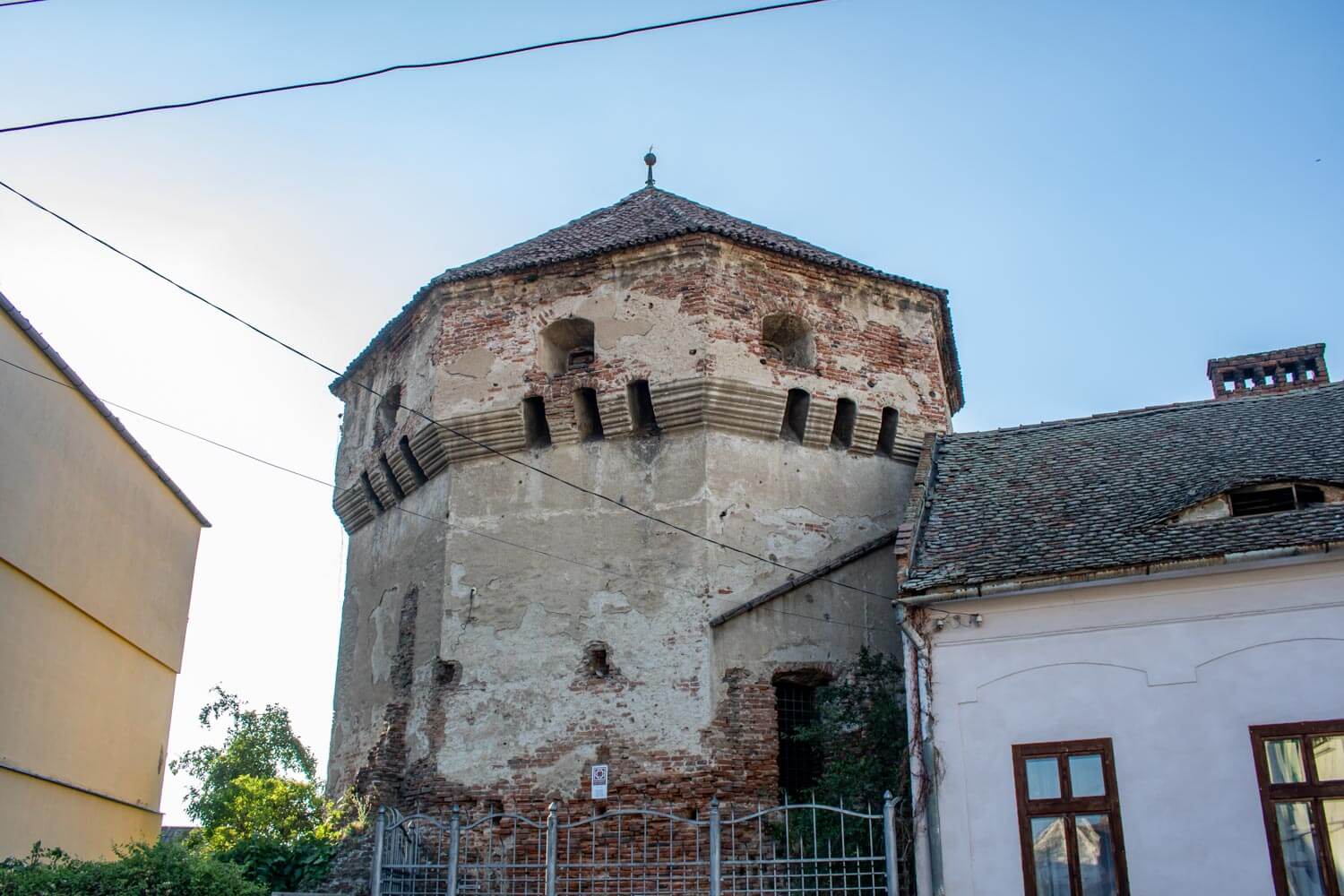
The defensive system continued to grow during the 16th century. A southern courtyard was added together with a fortified well enclosure, where a deep well provided water during sieges. Heavy gun positions, gate towers and additional bastions strengthened the approaches, while the different courtyards allowed the community to organize refuge, storage and defense within the same fortified area.
Slimnic Fortress was repeatedly attacked because of its strategic position. It was occupied by the forces of John Zápolya in 1529, later captured during the conflicts of the early 17th century, and suffered particularly serious damage during the Kuruc uprising in 1706-1707. Restoration began in 1717, but a major plague outbreak two years later interrupted the work, and parts of the complex were gradually abandoned or dismantled during the following centuries.
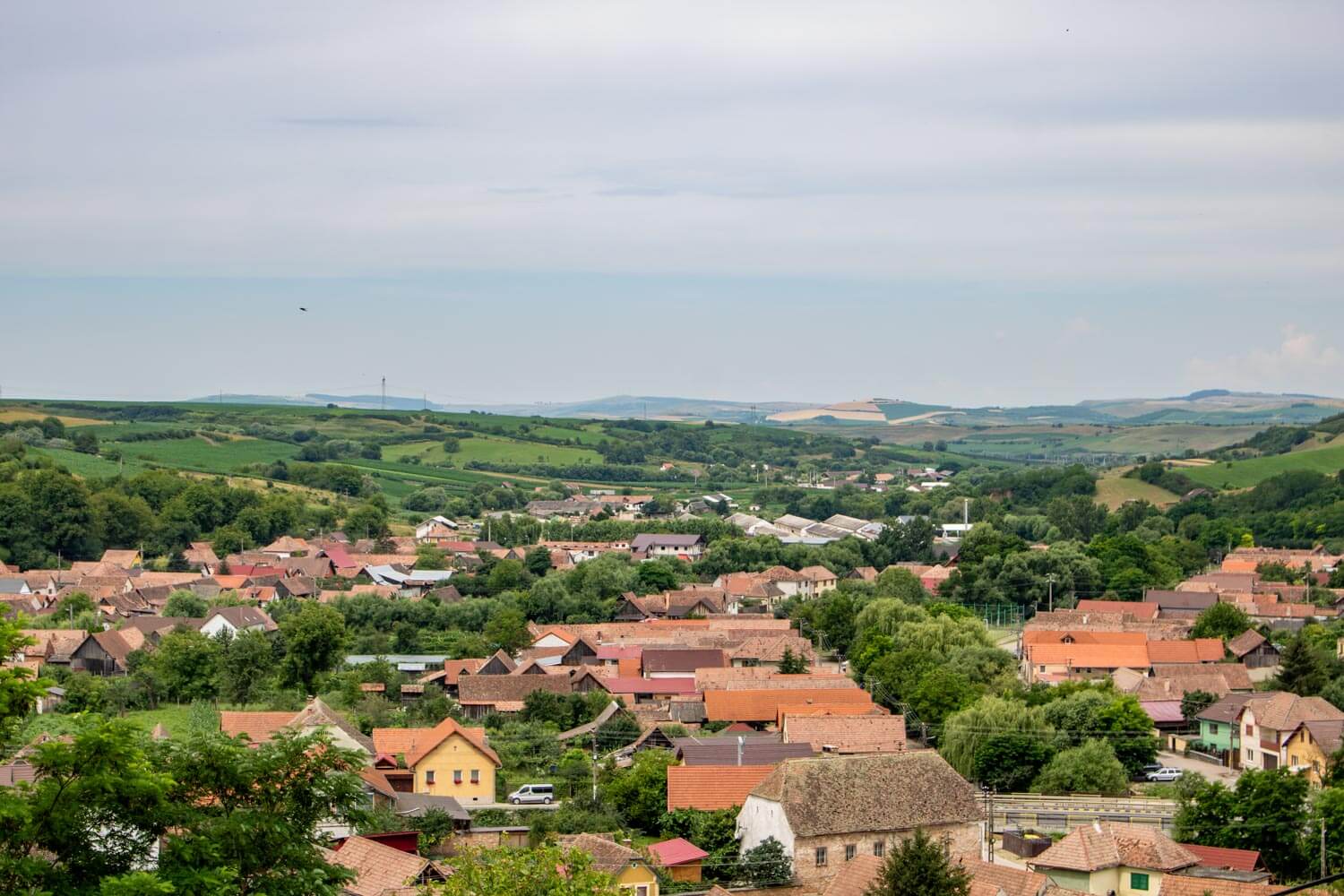
Today the high red-brick ruins remain visible from far across the surrounding landscape. Visitors can explore the surviving courtyards, towers, chapel remains and unfinished Gothic church while also looking out across Slimnic and the countryside from the hilltop.