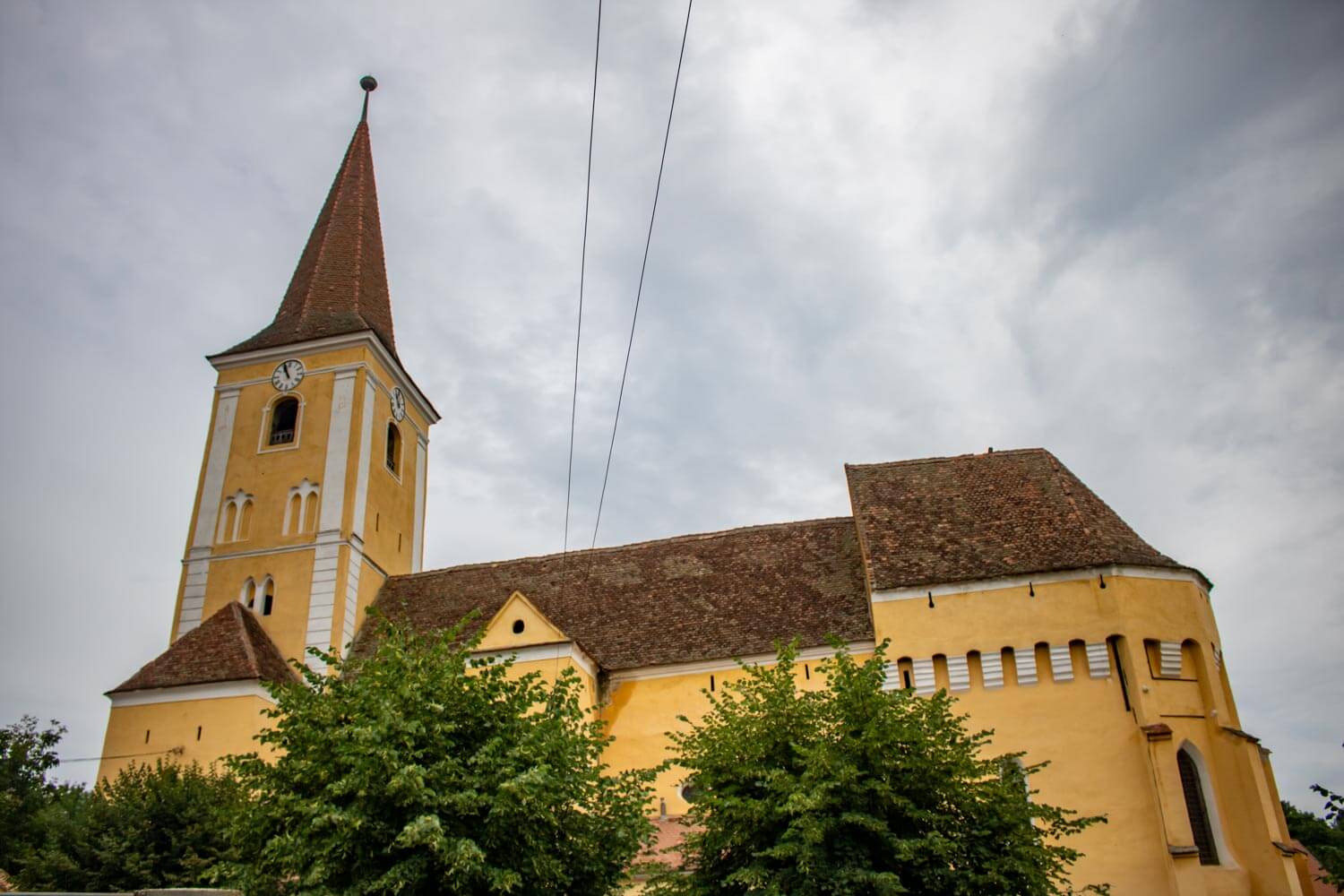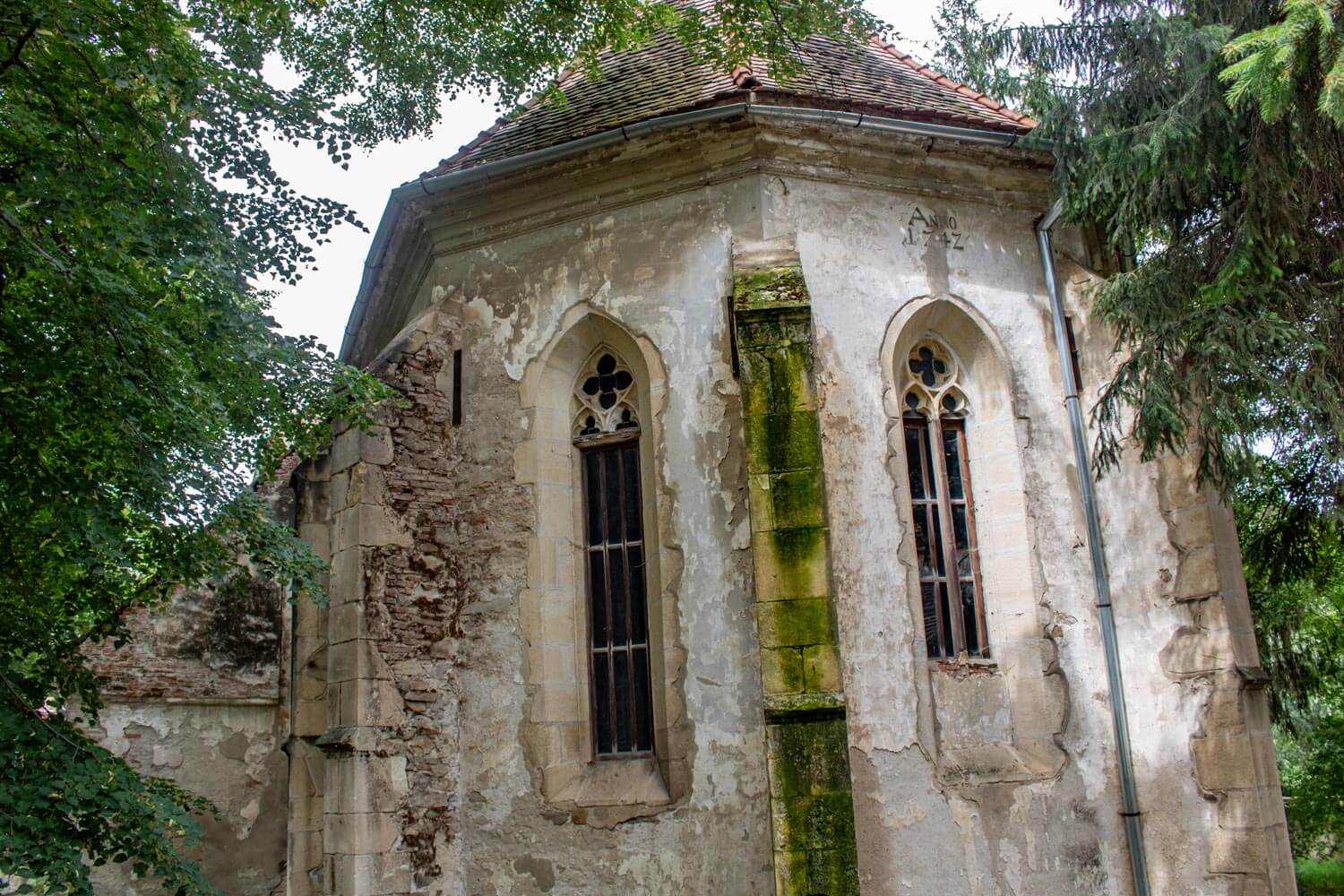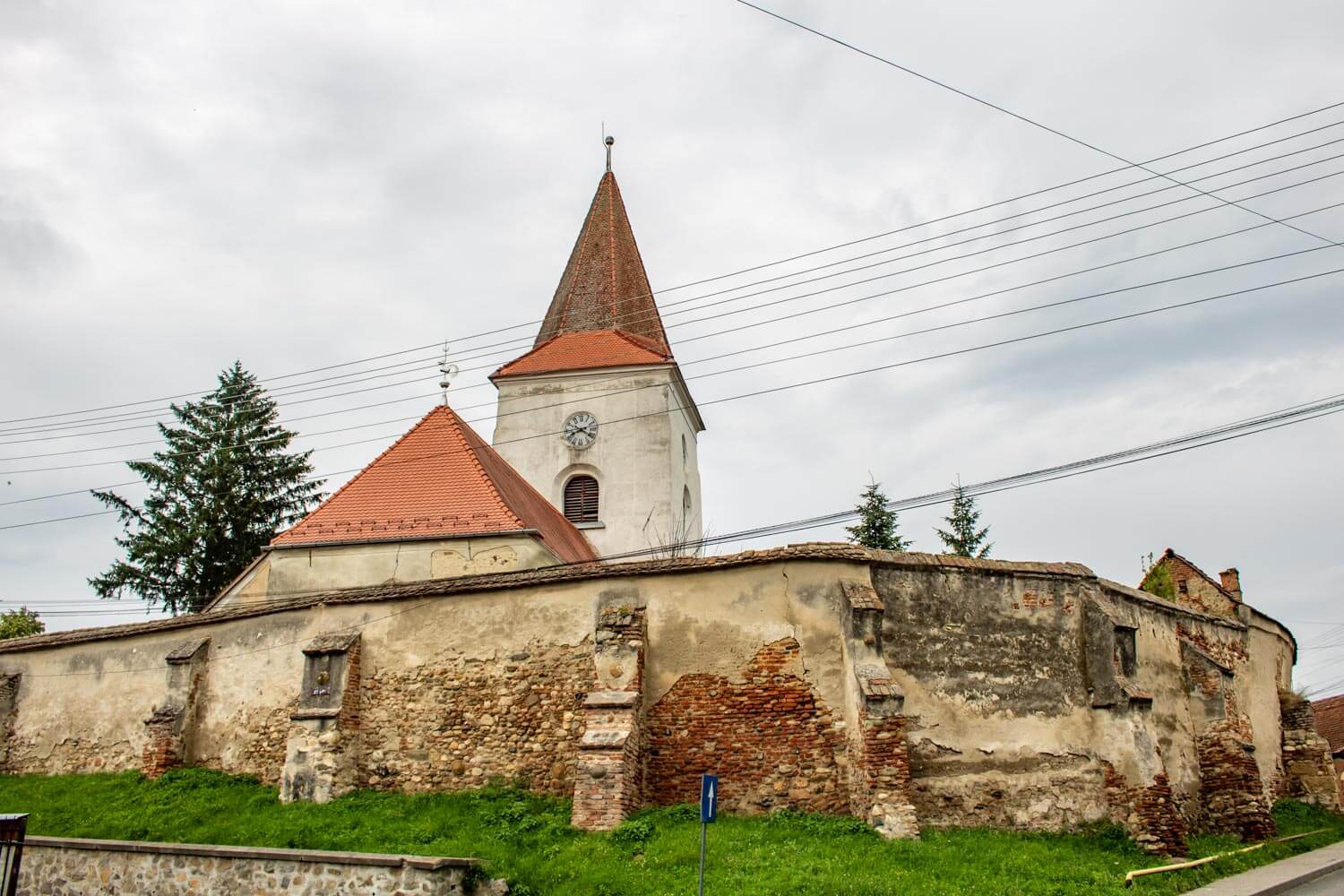
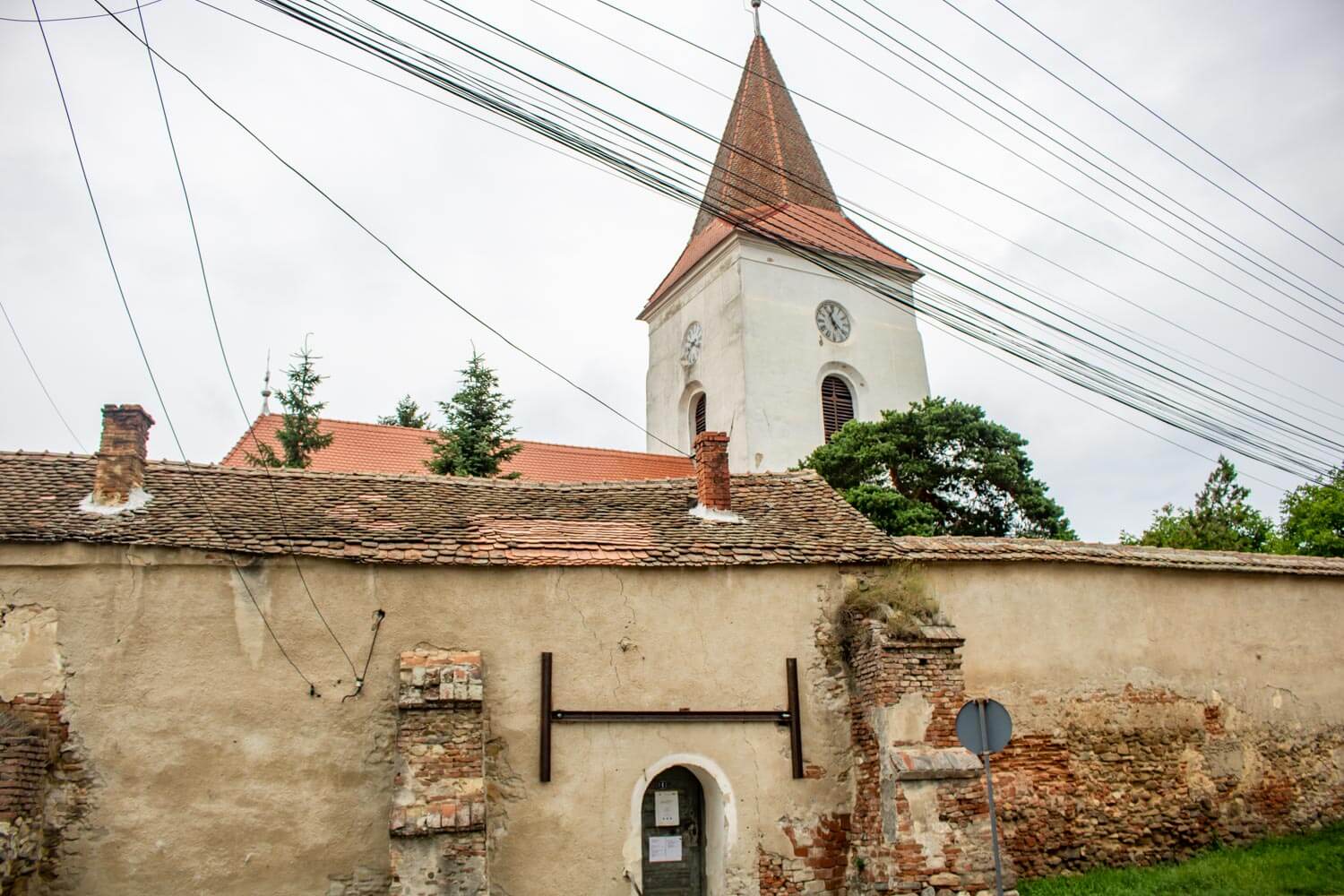
The Fortified Church of Ocna Sibiului (Biserica Fortificată din Ocna Sibiului) is a historic Lutheran church and fortified enclosure in the town of Ocna Sibiului, Sibiu County. The building began as a Romanesque basilica in the 13th century and was later altered with Gothic, Renaissance and Baroque elements, creating a church whose long history is still visible in its architecture and interior.
Construction was already underway when the Mongol invasion reached Ocna Sibiului in 1241. The attack caused serious damage, and work on the church only resumed several years later. Once the basilica was completed, the community surrounded it with a substantial defensive wall, giving the church a protected role within the settlement as well as a religious one.
Although the building changed repeatedly over the following centuries, several Romanesque features survived. The most remarkable is the stone pulpit, considered one of the oldest surviving examples of Romanesque stone sculpture in Transylvania. Later Gothic and Renaissance alterations reshaped parts of the church, while Baroque additions introduced another layer to the interior.
Fragments of early 16th-century wall painting by the Sibiu painter Vincentius also survive inside, preserving a rare trace of the church’s pre-Reformation decoration. Together with the Romanesque pulpit, these paintings make the interior especially important for understanding the artistic development of the church across several periods.