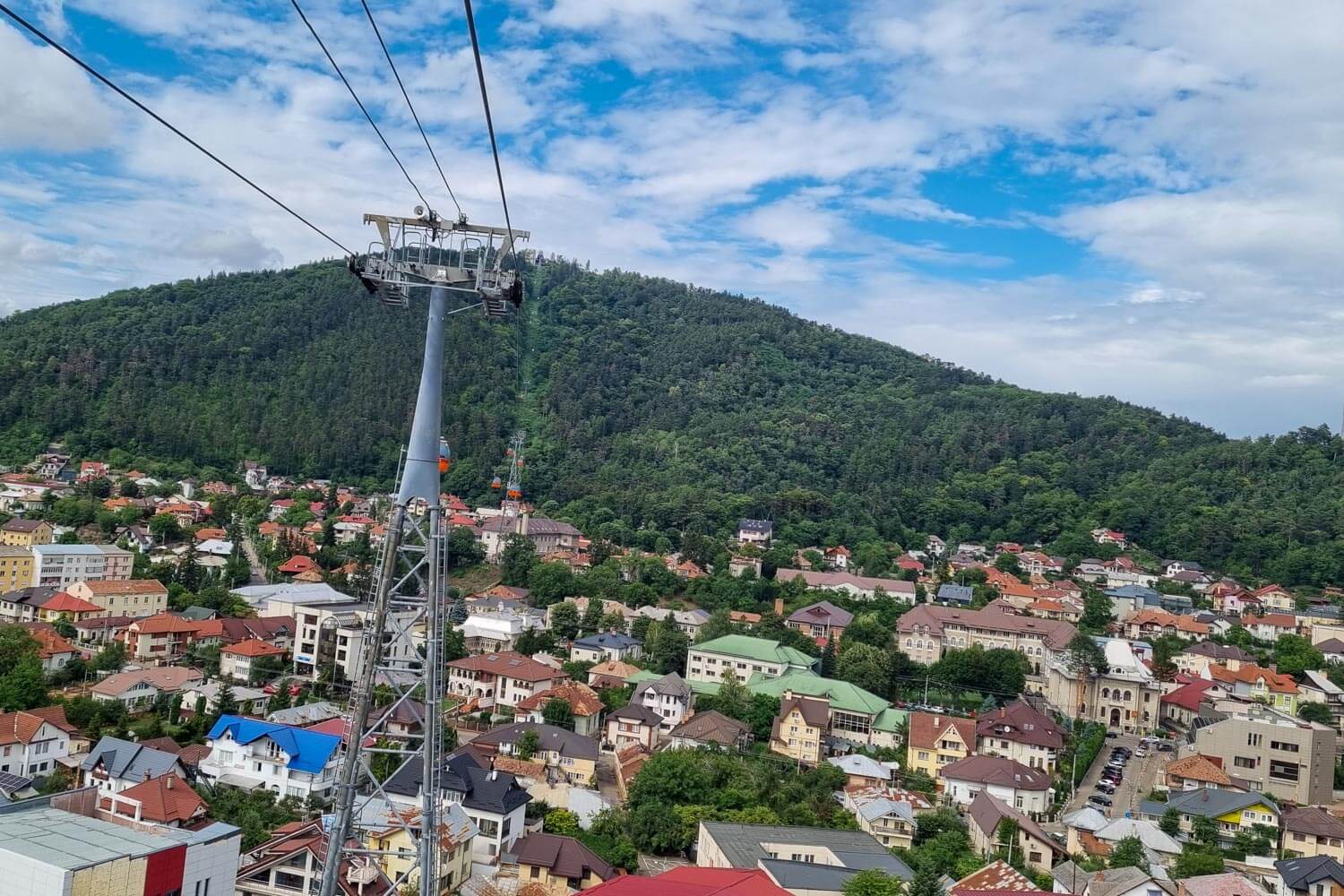
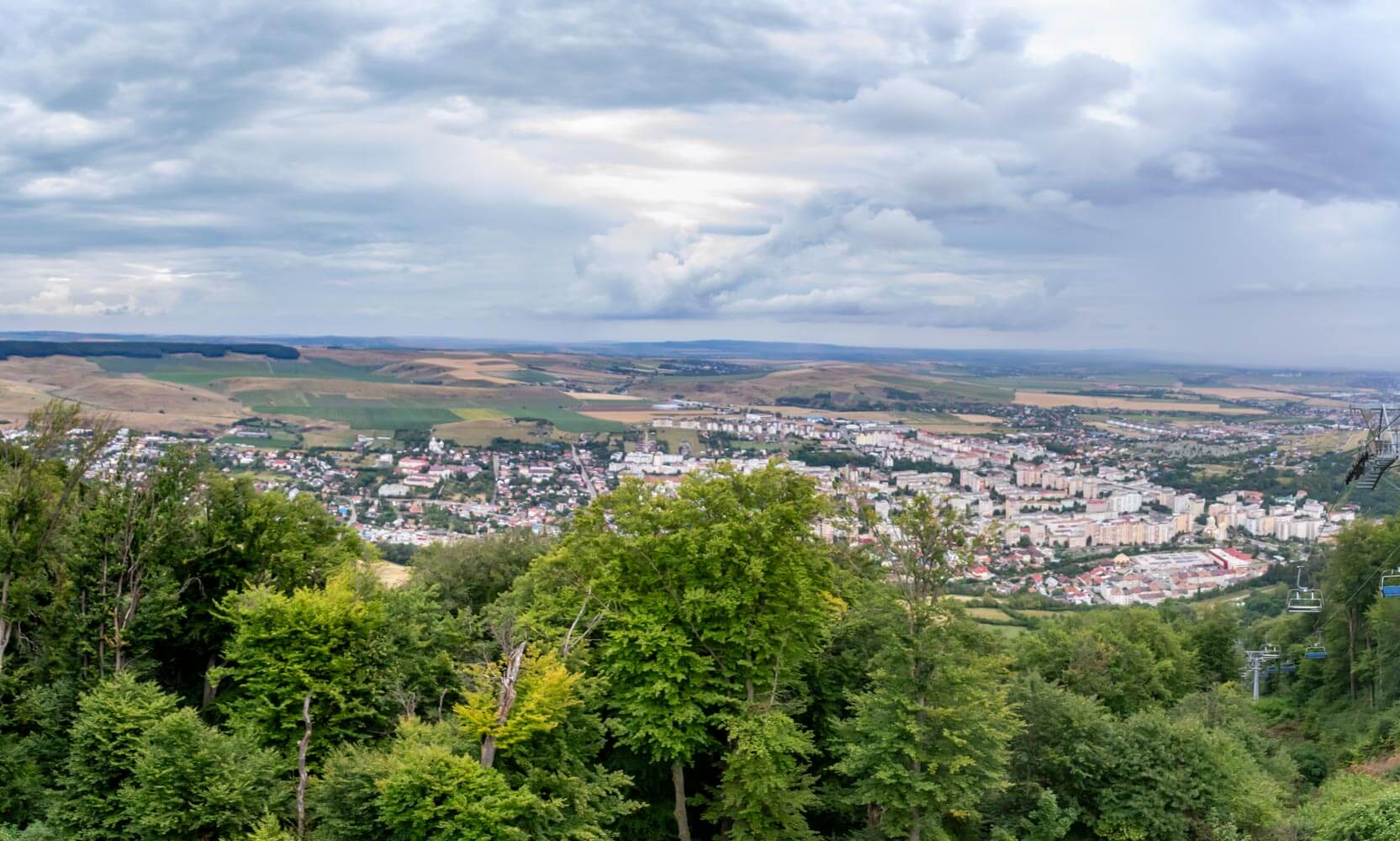
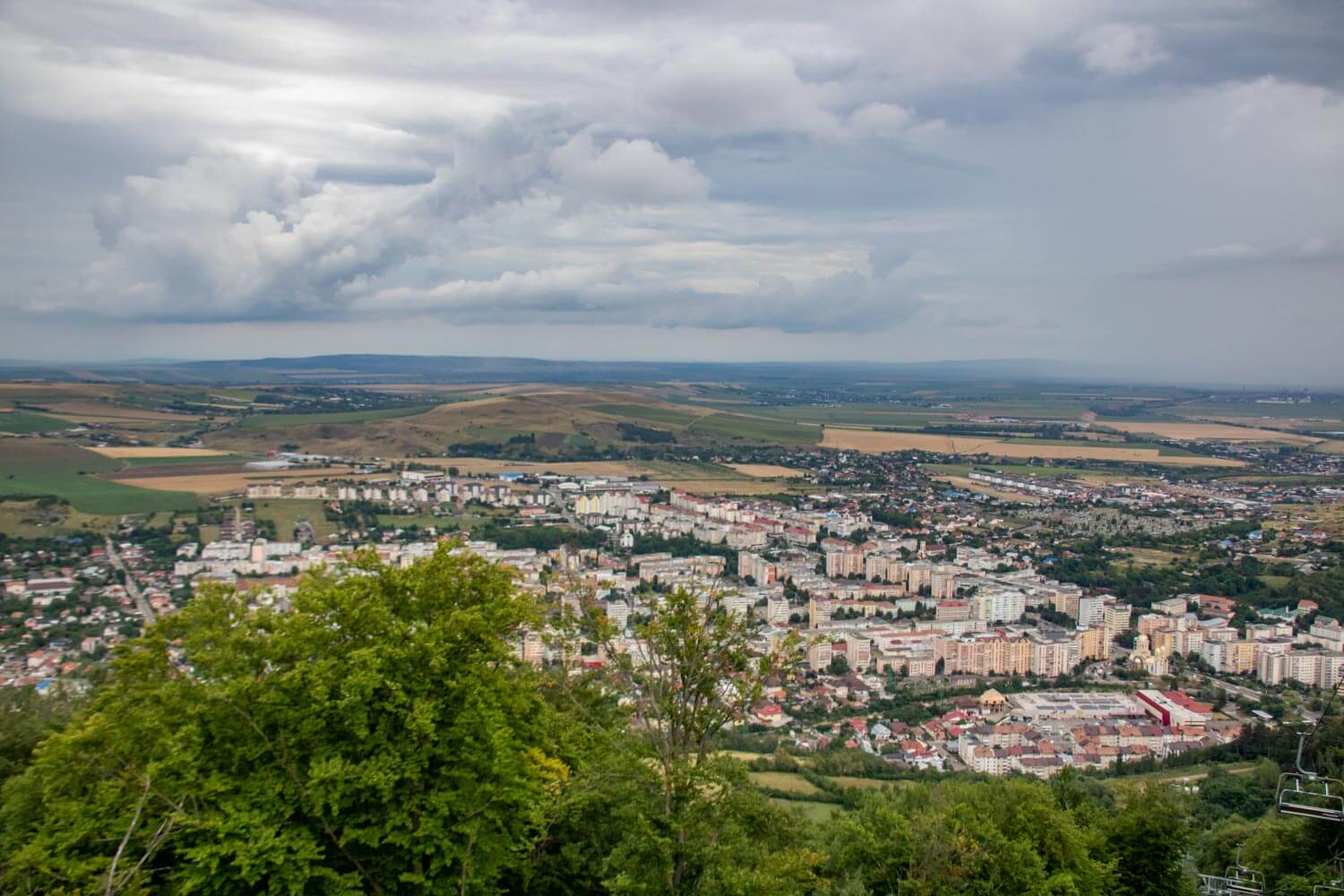
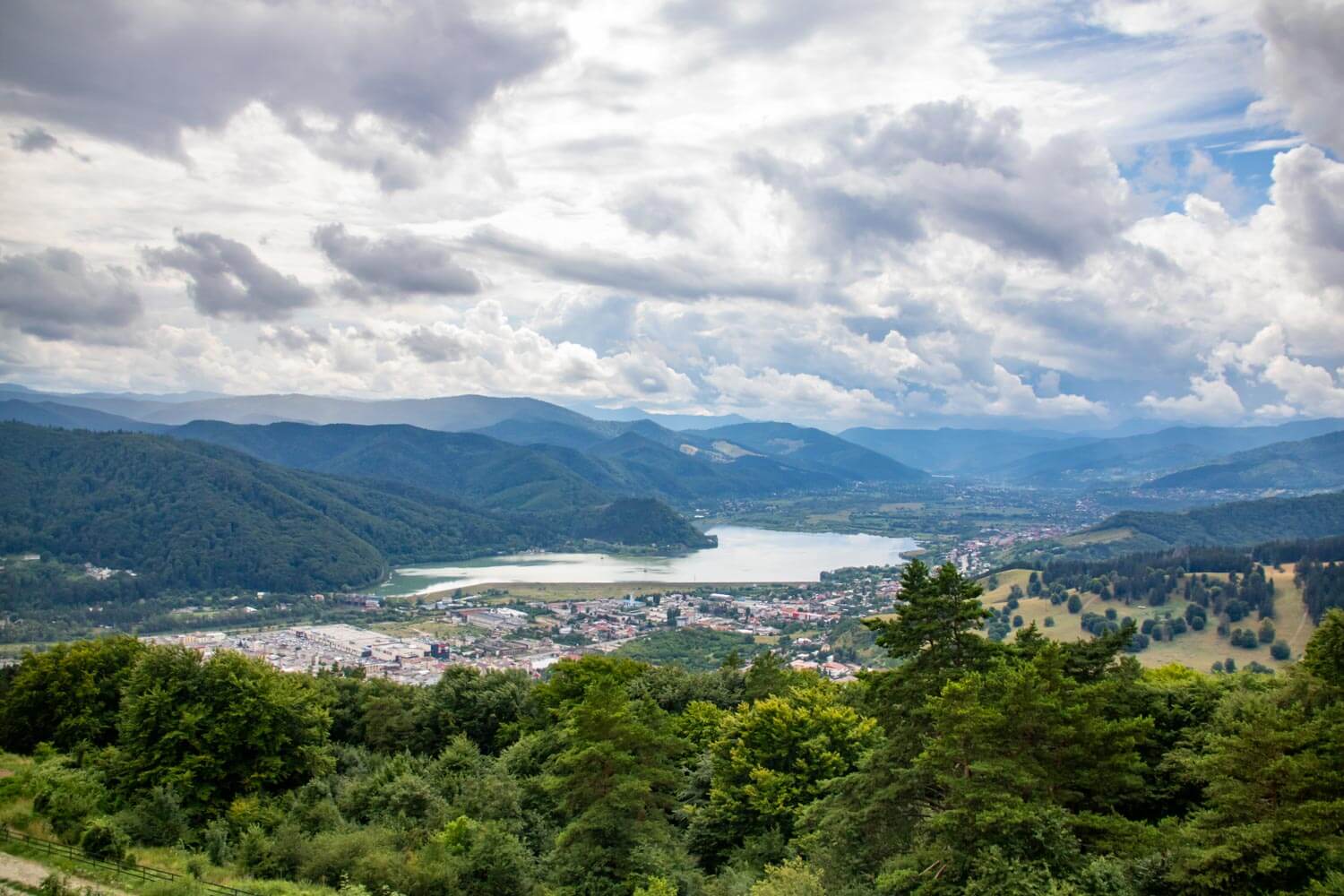
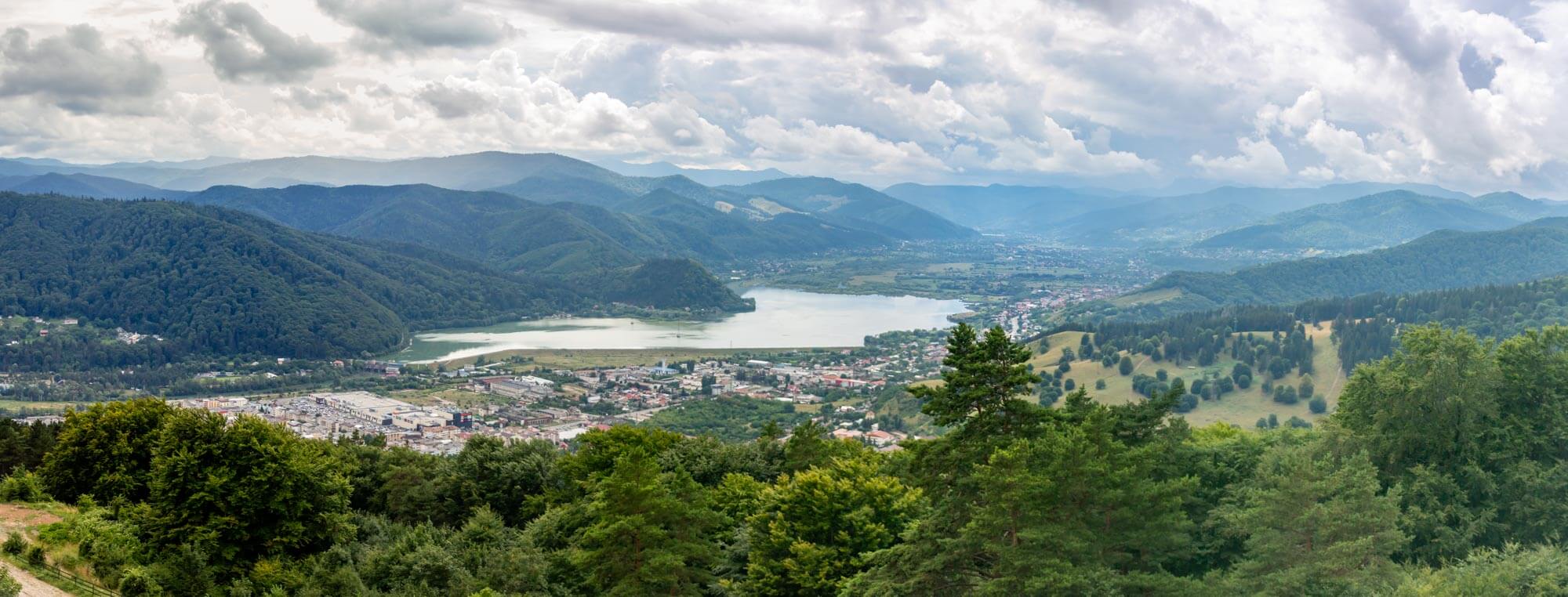
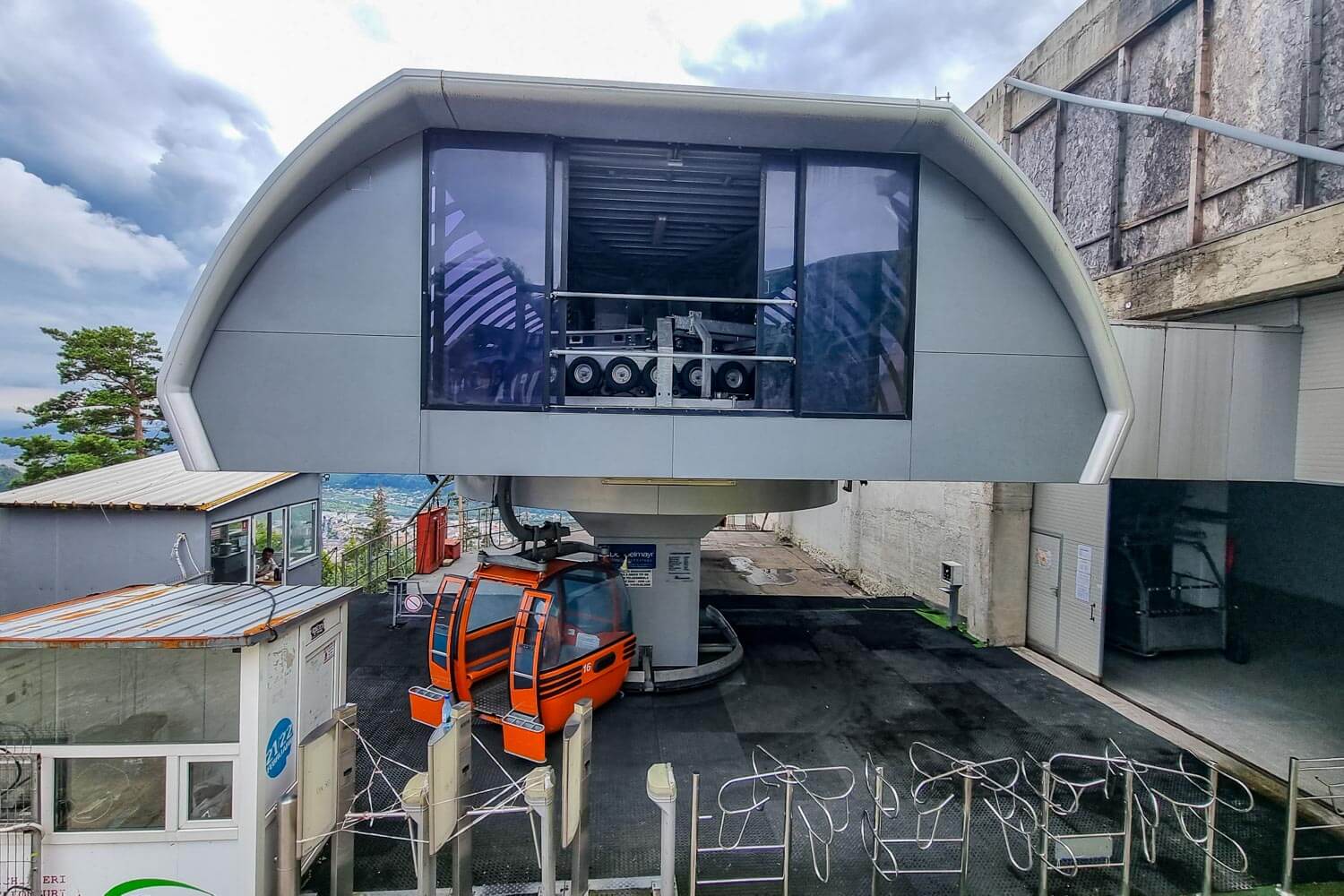
Cozla Hill (Dealul Cozla) is a forest-covered hill rising above the northern side of Piatra Neamț, with panoramic viewpoints, walking trails, and recreational facilities overlooking the city and the Bistrița Valley. Part of the foothills of the Stânișoara Mountains, it is a popular destination for sightseeing and hiking, with its upper plateau accessible by the Piatra Neamț Cable Car.
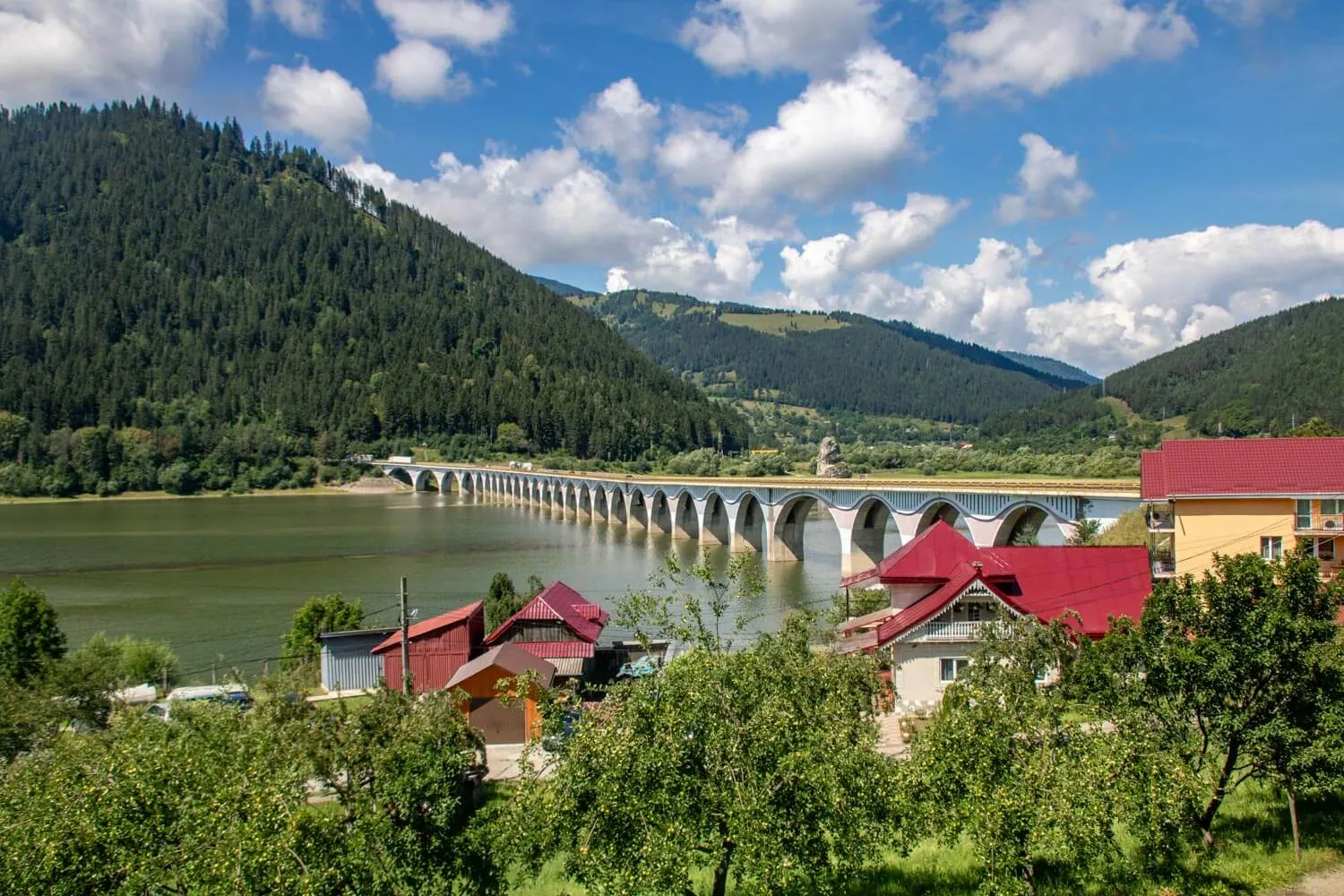
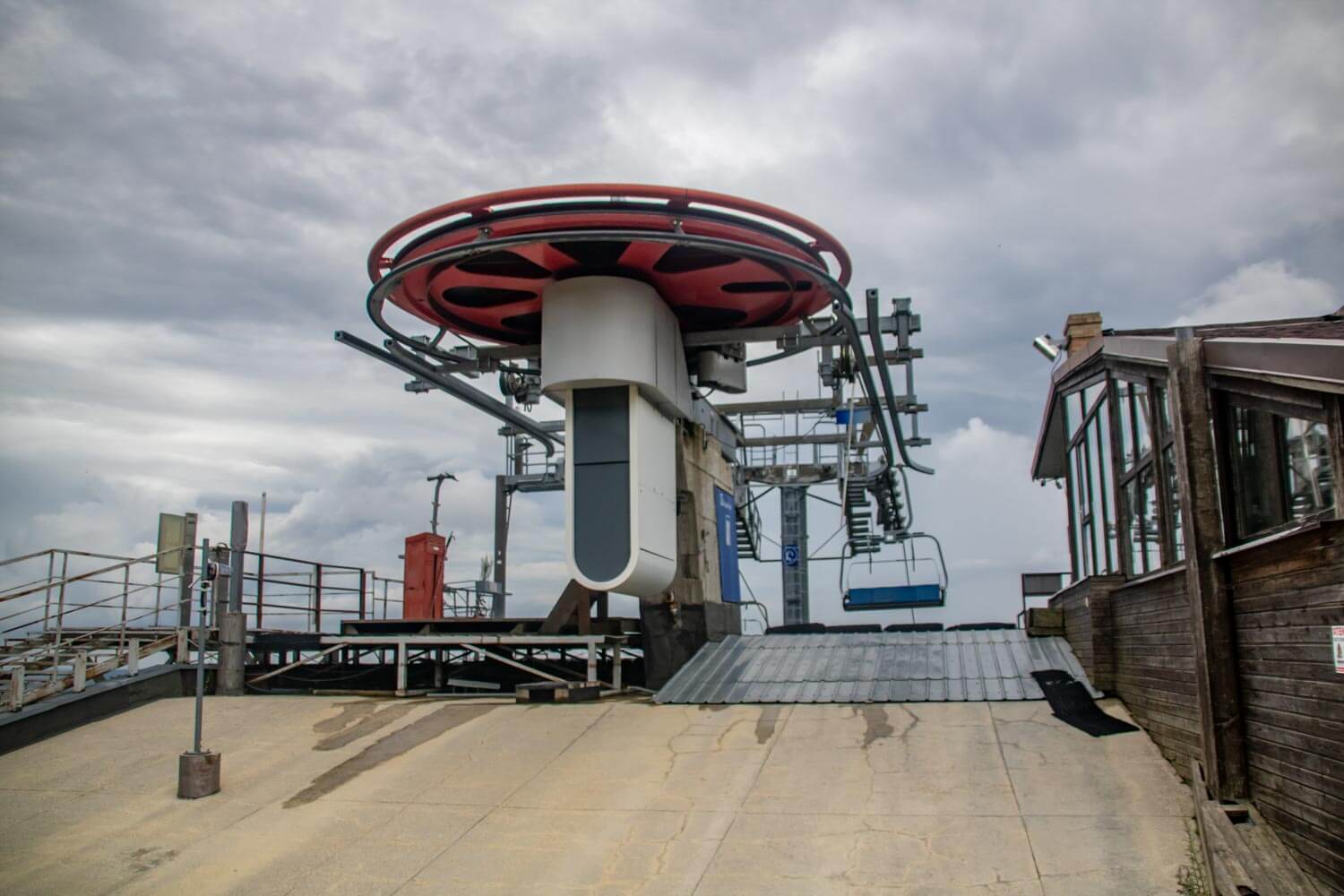
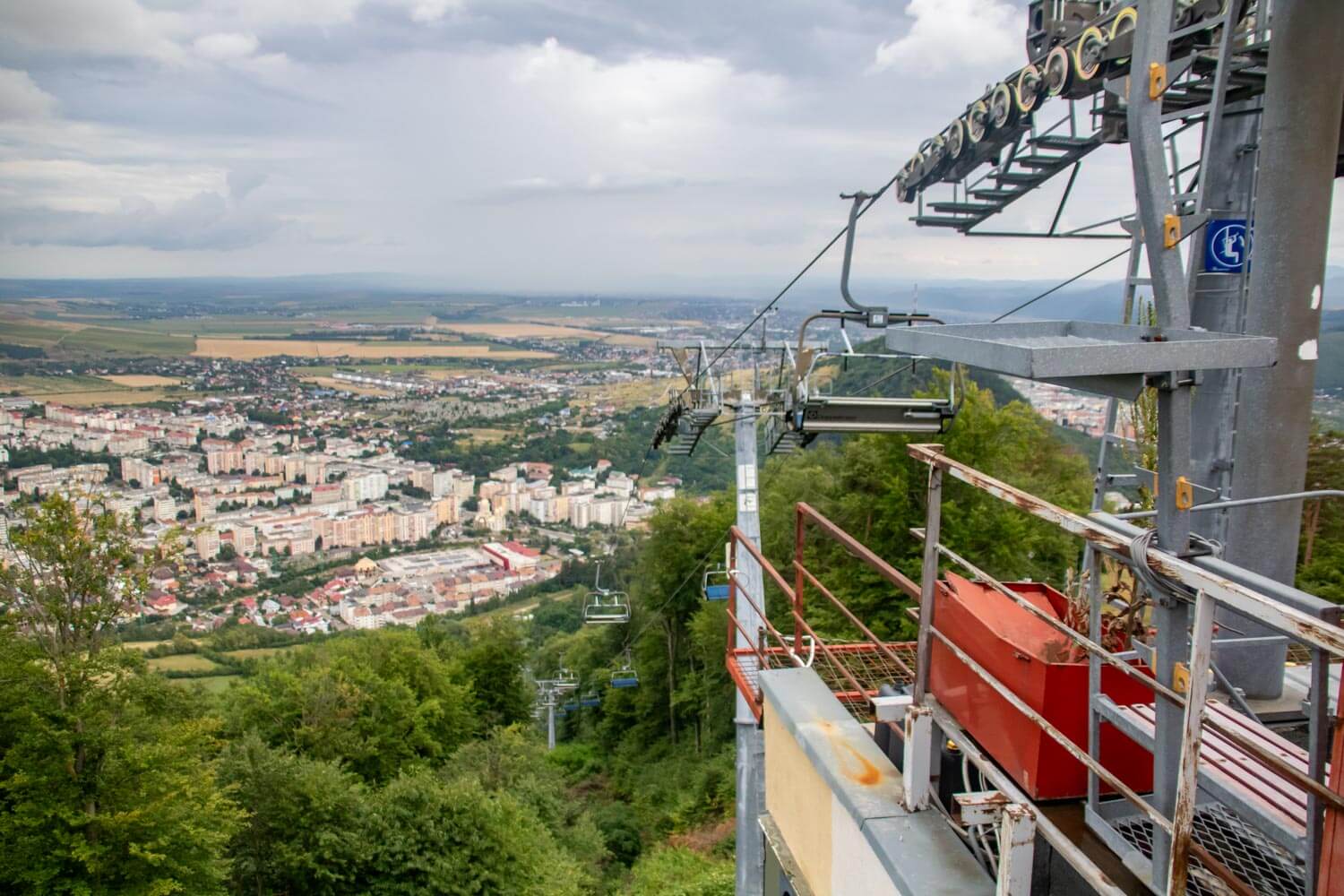
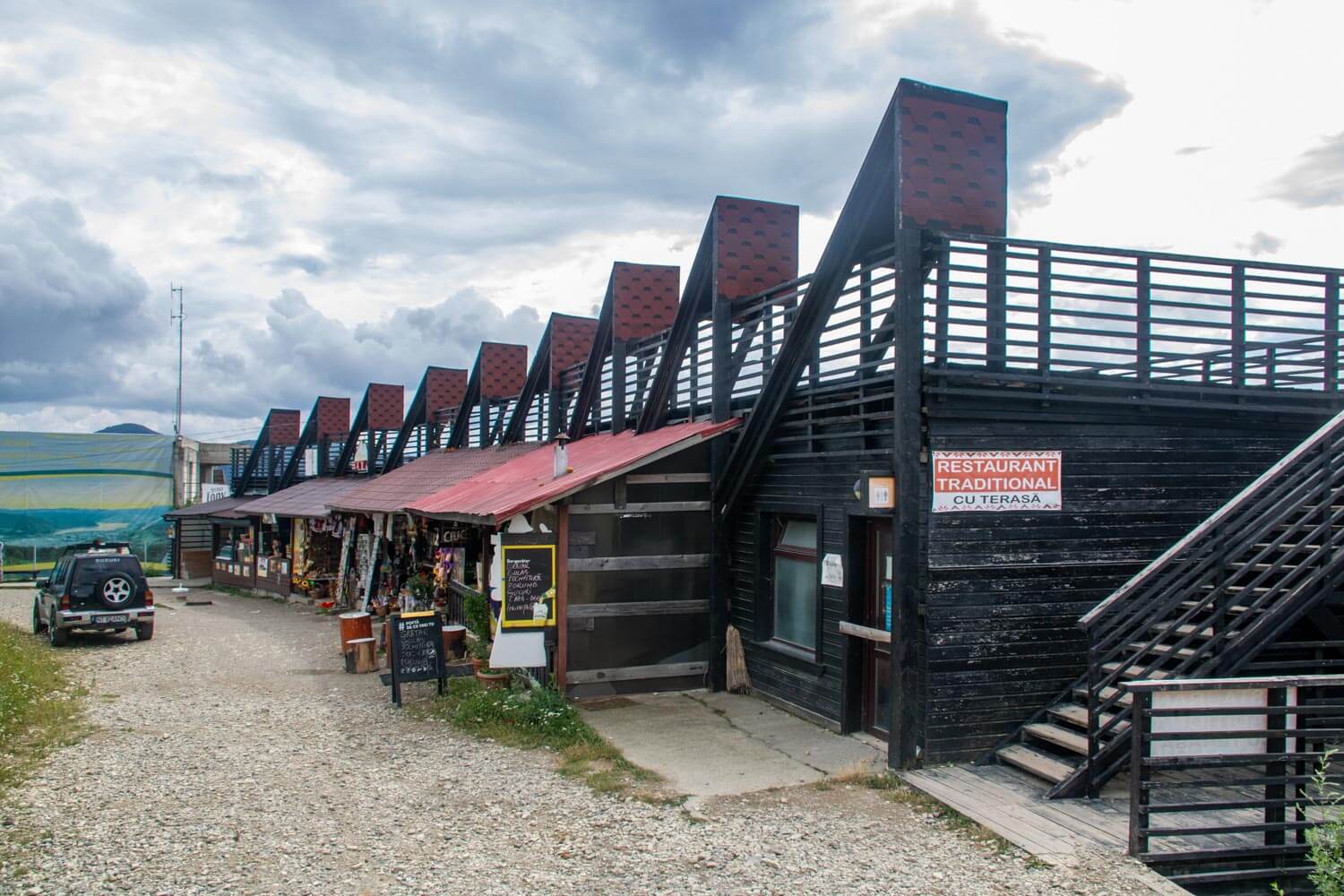
The upper cable-car station stands near Trei Coline, at approximately 657 meters above sea level. A viewing platform provides wide views over Piatra Neamț, Lake Bâtca Doamnei, and the surrounding hills, with the Ceahlău Mountains visible in the distance. The area around the station has a café, small kiosks selling refreshments and souvenirs, and facilities for winter sports. A ski slope descends the hillside, served by a separate chairlift, while the gondola connects the plateau directly with the railway station in the city below.
Beyond the developed plateau, walking paths continue through the forest and along the upper ridge. One of the best-known walking routes leads to the Three Cauldrons (Trei Căldări), an unusual sandstone rock with three large, rounded cavities eroded into its face. The formation is protected as a natural monument. The marked trail begins near the upper cable-car station and covers about 2.5 kilometers each way, passing through forest to reach the formation. Other paths descend toward the neighborhoods of Piatra Neamț or continue toward Cârloman and the surrounding hills.
Cozla is also known for its geological formations containing Oligocene fossil fish, dating from approximately 34 to 23 million years ago, when the area lay beneath the ancient Paratethys Sea. Fossils discovered on Cozla and neighboring hills contributed to the paleontological collections of the Piatra Neamț Museum of Natural Sciences. Mineral springs were also discovered on the hill in 1882 and studied by the Romanian chemist Petru Poni, although their subsequent exploitation led to their deterioration.