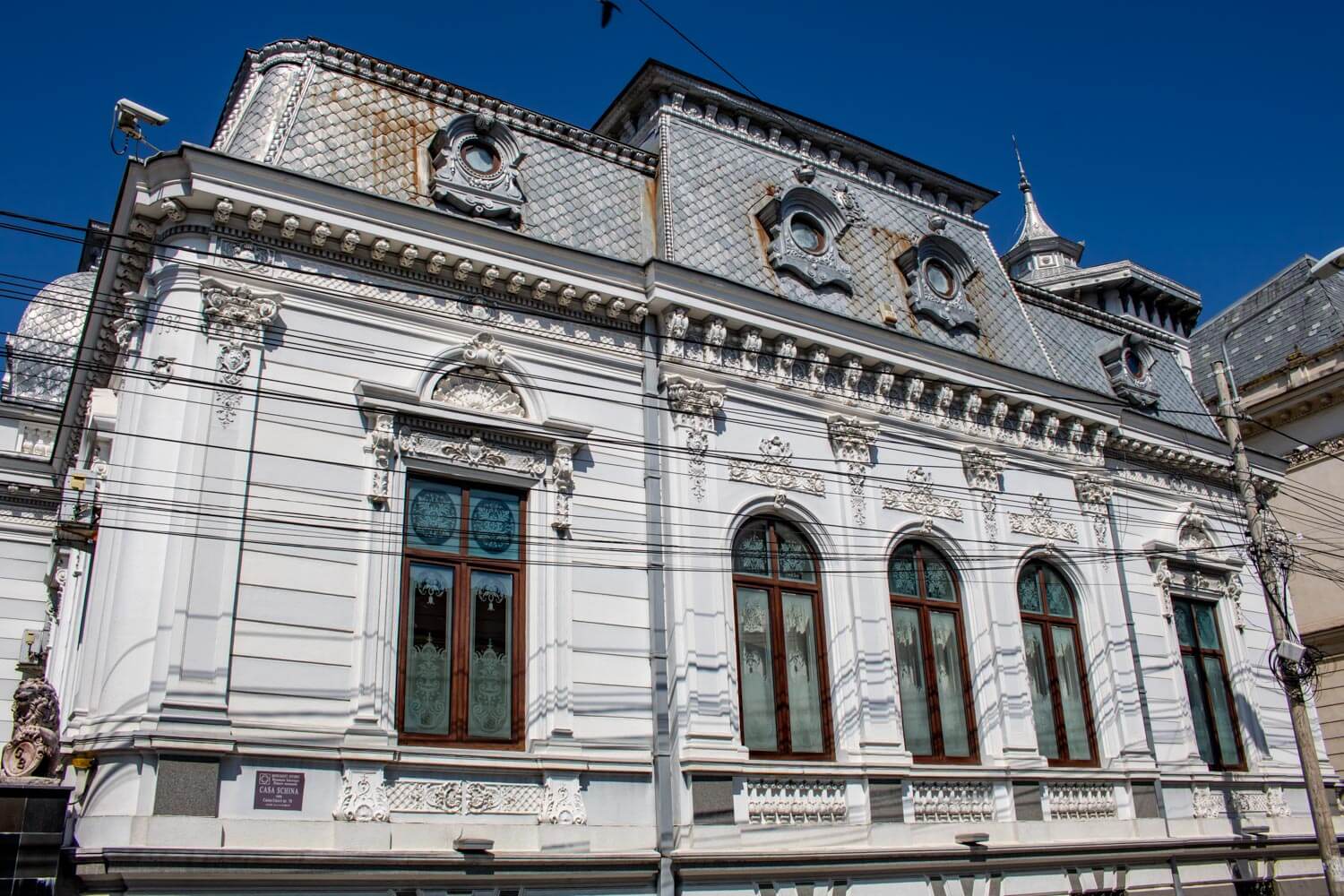
Schina House (Casa Schina) is a historic mansion built in 1898 in central Craiova for physician Constantin Schina. Its elaborate Renaissance-inspired architecture earned it the nickname Little Louvre (Micul Luvru). The building also has an unusual institutional history, having accommodated a museum of medicine and pharmacy during the late 20th century.
Constantin Schina (born in 1860) came from a family with a medical background and studied medicine in Bucharest before returning to Craiova in 1886. He worked as a military and hospital physician and became active in the city’s scientific and cultural organizations. His interest in music also made the house a gathering place for local musicians. Small concerts organized by the Philharmonic, Hora, and Armonia musical societies were held in the residence, giving it a cultural role beyond its original domestic function.
The mansion was designed in a richly ornamented historicist style, incorporating elements inspired by Renaissance architecture. Its elaborate exterior decoration and monumental appearance distinguish it from the simpler residential buildings nearby.
After Schina’s death, his descendants sold the house to a Craiova lawyer named Popescu sometime after 1943. Between 1979 and 1996, it accommodated the Victor Gomoiu Museum of the History of Medicine and Pharmacy, established by physician Mihail Șcheau. Its collections developed from an earlier pharmaceutical history collection and objects assembled by the Romanian surgeon and medical historian Victor Gomoiu. The museum displayed medical instruments, pharmaceutical equipment, documents, and historical artworks, including works attributed to Constantin Brâncuși.
The building was returned to the descendants of its former owner following a legal decision in 1997, leading to the closure of the museum and the relocation of its collections. It subsequently accommodated a research institute before returning to private use.