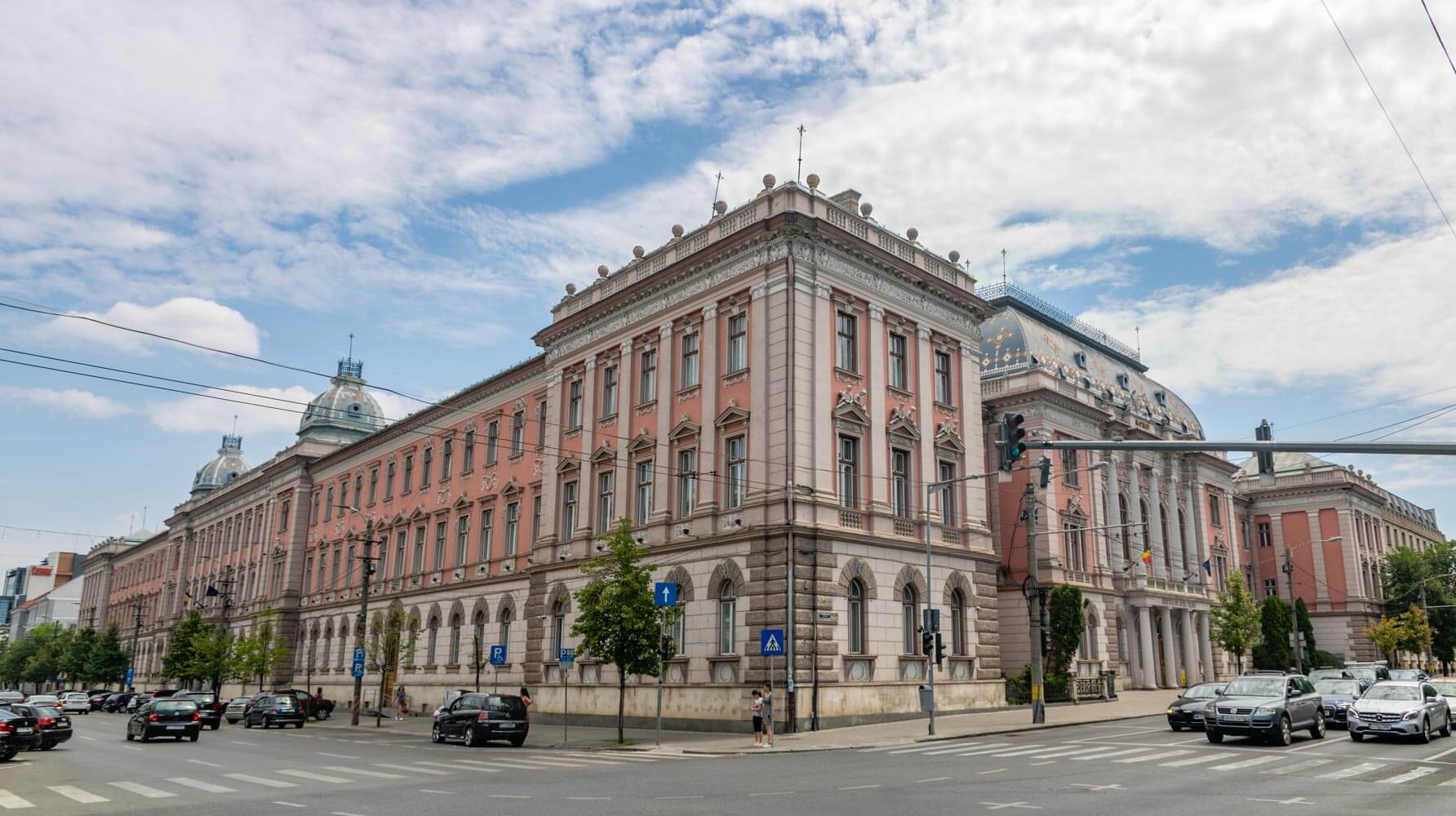
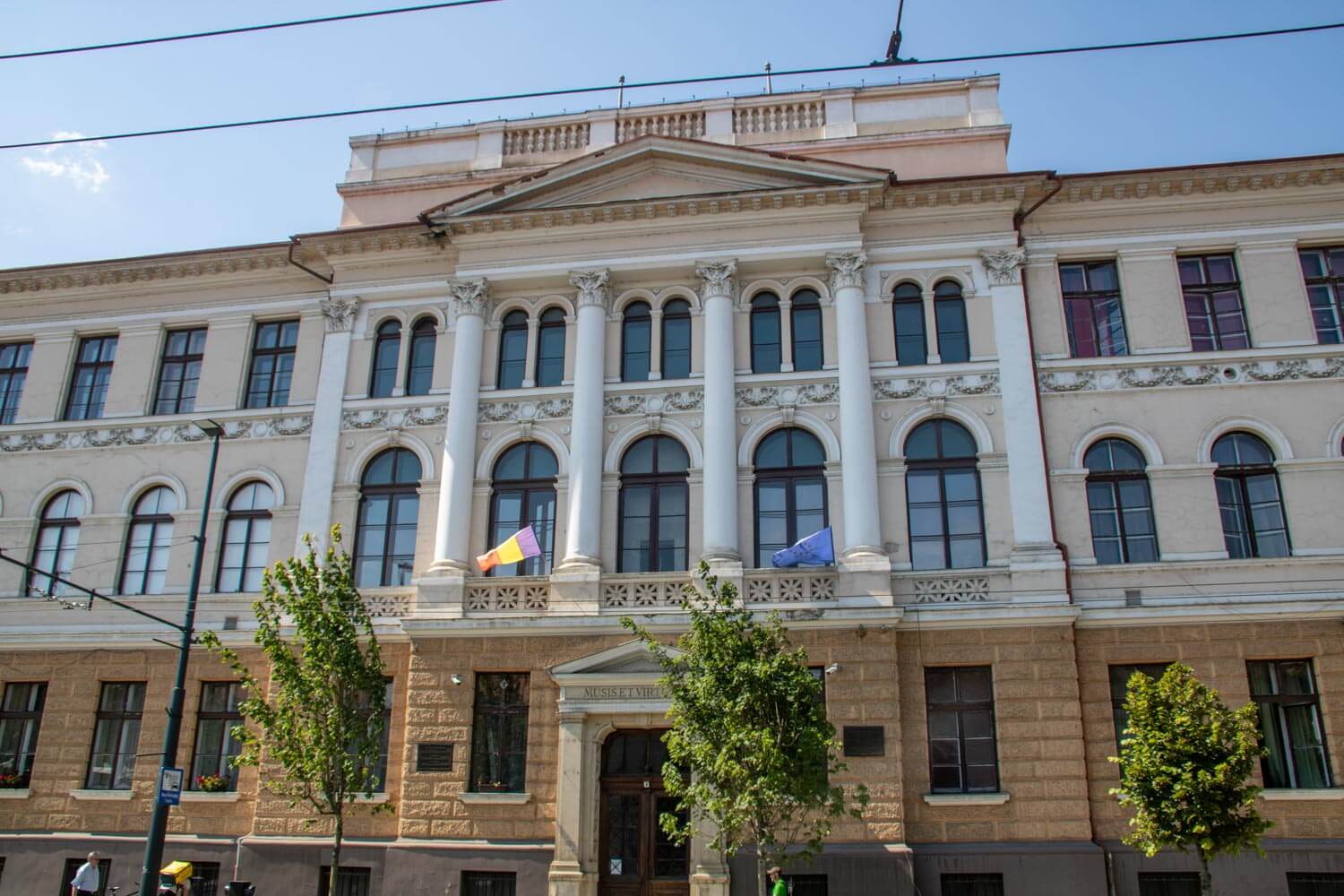
The National Theater Lucian Blaga (Teatrul Național Lucian Blaga) is located on Piața Ștefan cel Mare in the center of Cluj-Napoca and is one of the most prestigious theaters in Romania. The building is part of a historic architectural ensemble around Avram Iancu Square and is shared between the theater and the Romanian National Opera of Cluj-Napoca.
The theater building was designed by the famous Austrian architects Ferdinand Fellner and Hermann Helmer, who have designed multiple theaters and palaces across Europe. The construction took place between 1904 and 1906 and the theater opened on September 8, 1906. Until 1919, when Cluj-Napoca was part of the Kingdom of Hungary, it was used by the local Hungarian National Theater, which then moved into its new building on Strada Emil Isac.
Under the new Romanian administration, the building became the home of the Romanian National Theater and the Romanian National Opera. Between 1940 and 1944 northern Transylvania was annexed by Hungary for the second time and the theater was used by the Hungarian Theater again until the liberation of 1944. During that time the National Theater had to operate from Timișoara. On October 31, 1944 a common performance with Romanian and Hungarian actors was held to celebrate the freedom of the city.
The theater was built in a Neo-Baroque style with some Secessionism details and has a capacity of 928 places. The building is now considered a historic monument.