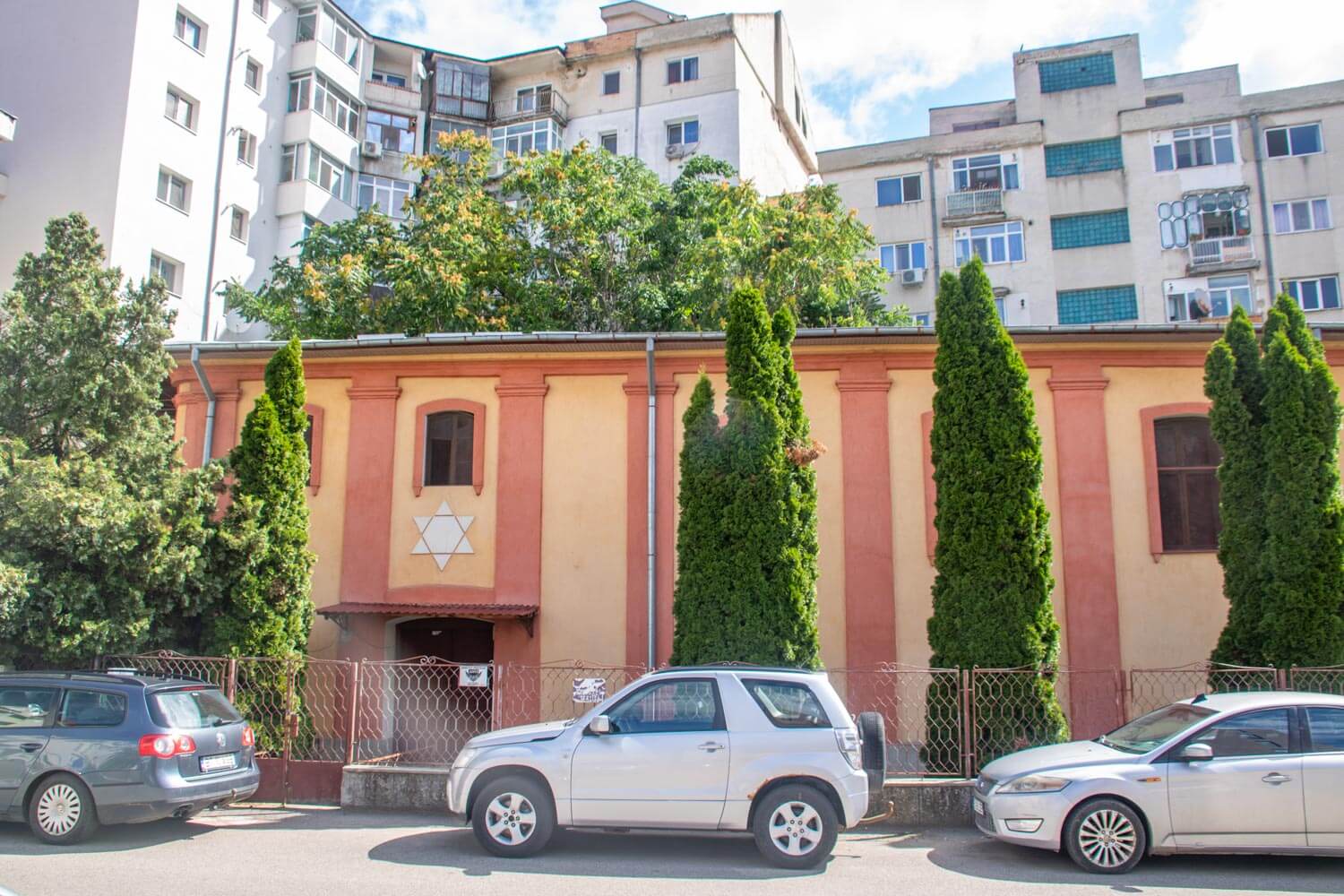
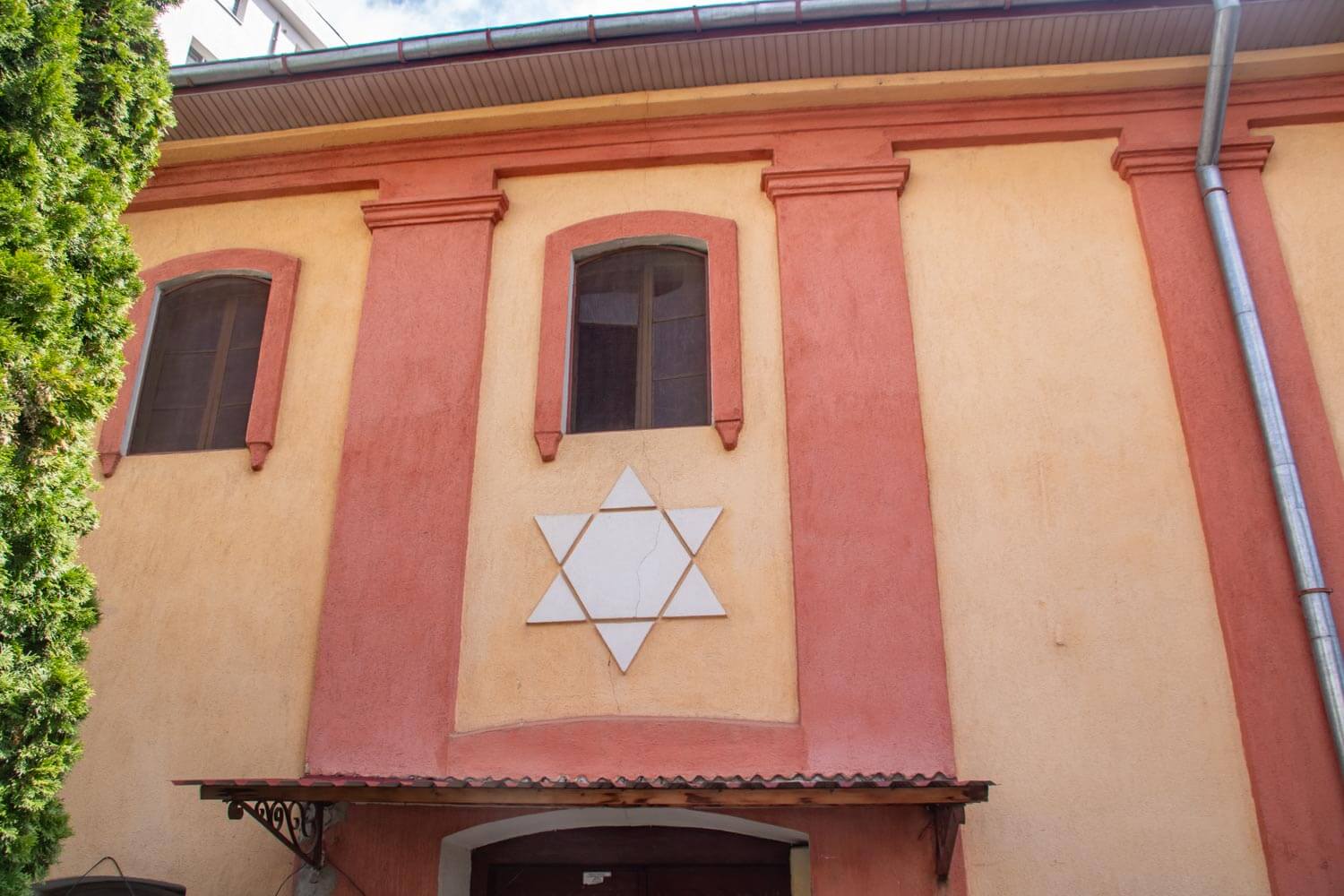
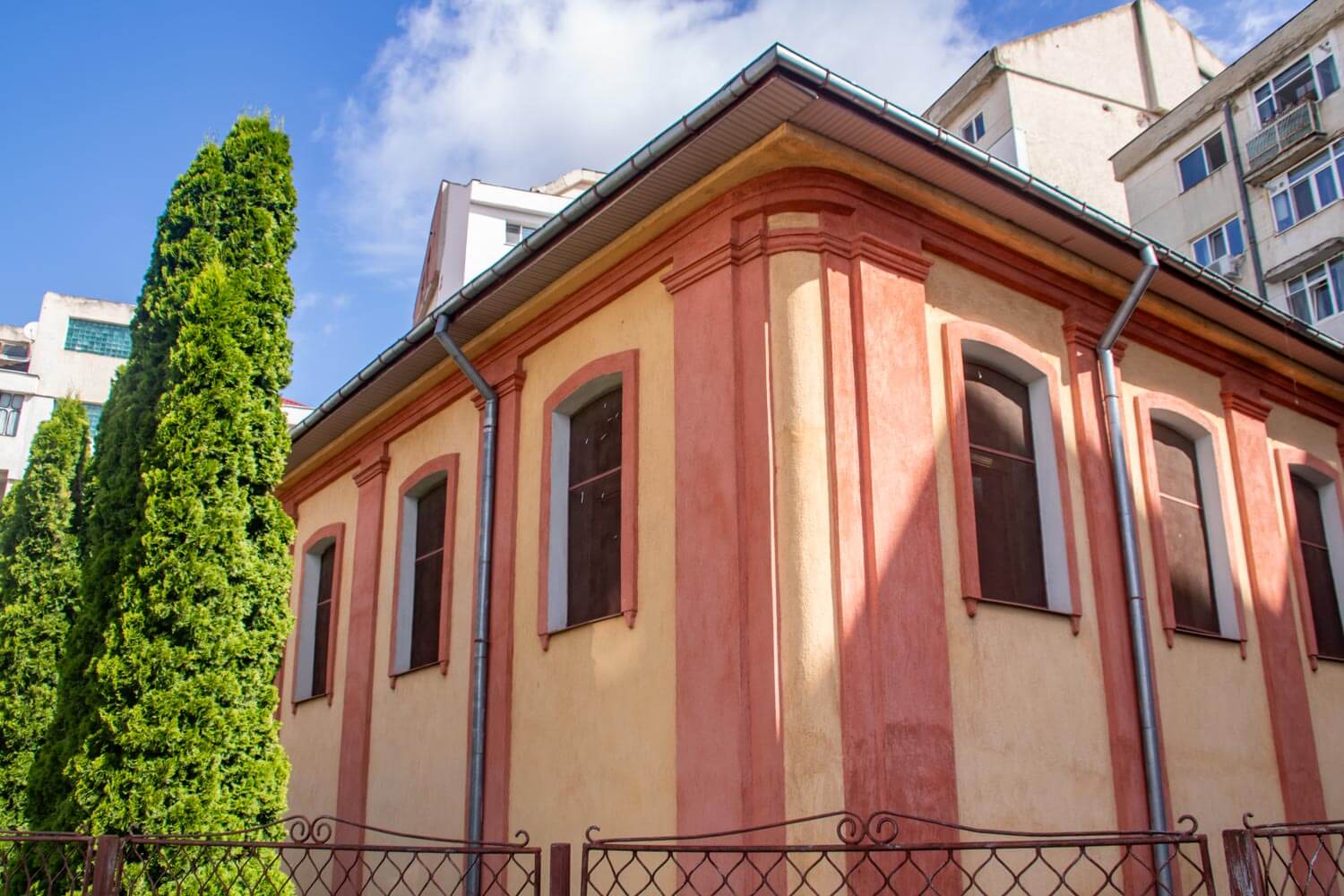
The Great Synagogue of Botoșani (Sinagoga Mare din Botoșani), also known as Hoykhe Shul or Oiche Sil, is a historic synagogue in Botoșani dating from 1834. Built for the city’s growing Jewish community, it became one of Botoșani’s principal synagogues and is the only one in the city where regular religious services still take place.
The building presents a relatively restrained exterior, but its interior develops into a much richer religious space. The rectangular prayer hall lies partly below street level and is lit by tall windows, with the women’s gallery arranged above the western end. At the eastern side, the Torah ark rises prominently against the wall and forms part of an interior covered with painted biblical imagery, including views of Jerusalem, symbolic animals and representations of the Twelve Tribes of Israel.
Much of this decoration was added during the late 19th century, when the synagogue’s interior was developed into the form largely preserved today. Painted ceilings extend above the prayer hall, while large chandeliers hang over the central space and carved wooden elements frame the Torah ark and surrounding furnishings. The combination of mural painting, woodwork and metalwork gives the interior a far more elaborate character than the exterior suggests.
During the 20th century, Botoșani’s Jewish community became much smaller through wartime persecution and later emigration, leaving fewer congregations to support the city’s many synagogues. The Great Synagogue remained in use and eventually became the only one where regular religious services still take place. Restoration work between 2008 and 2012 helped preserve the building and its painted interior, while the Idiş Synagogue is the only other historic synagogue building still standing in Botoșani.