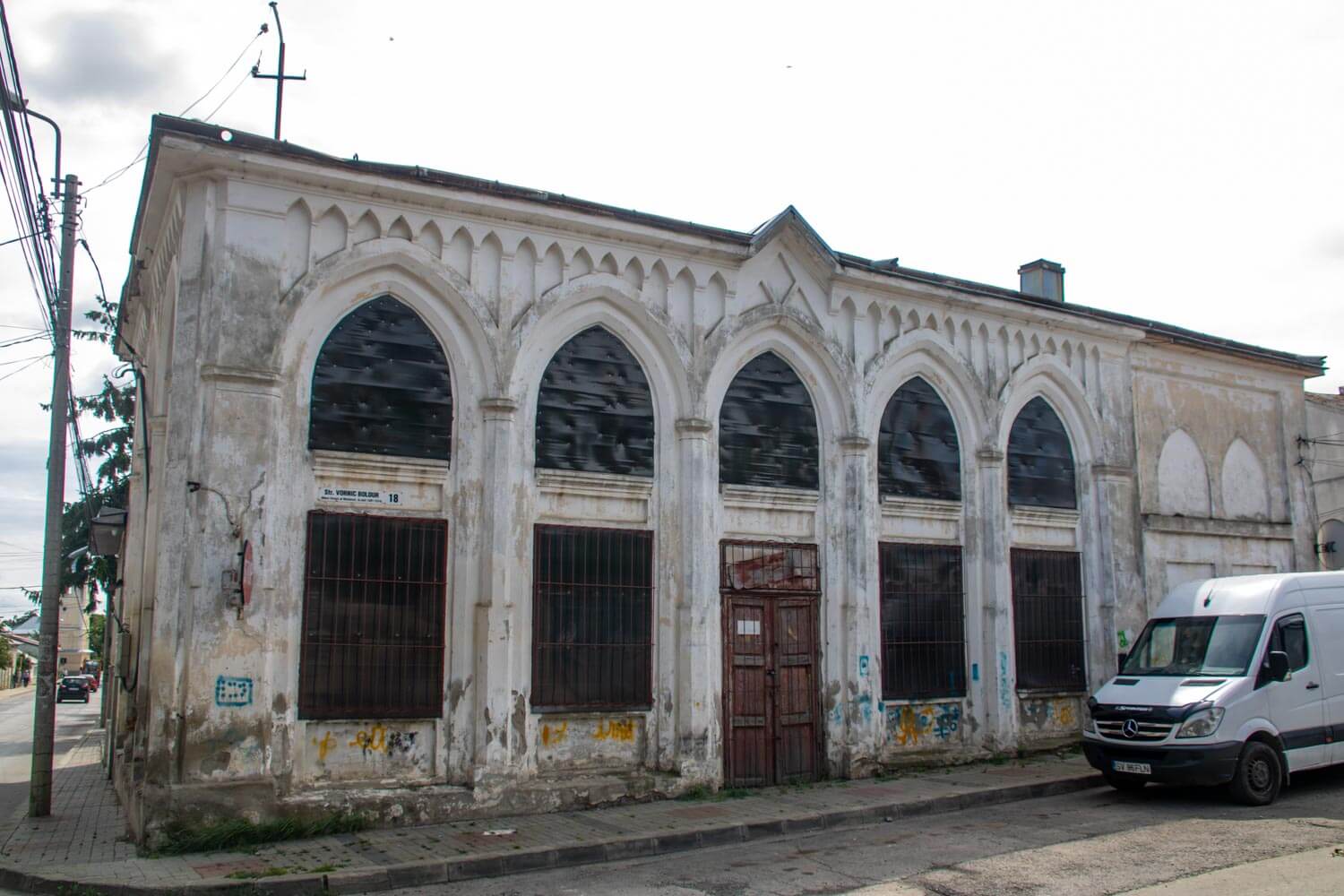
The Idiş Synagogue (Sinagoga Idiş) is a mid-19th-century synagogue in Botoșani that served as one of the city’s main weekday prayer houses. Known as Idishes Beis-Medras and also as the Temple of the New Market, it was built around 1850 and became one of the most frequently used synagogues in Botoșani.
A major turning point came with the fire of 1887, which devastated much of the Jewish quarter and destroyed hundreds of houses together with several religious and educational buildings. The Idiş Synagogue was badly damaged and underwent an extensive rebuilding over the following two years, reopening in 1889. During this work, Avram Iosef Schnitzer, a craftsman from Odessa, created the Aron Hakodesh and biblical decorative carvings that became some of the most elaborate elements of the interior.
The rebuilt synagogue combines a Romantic composition with strong Neo-Gothic influences. Large pointed arches organize the façades, while two superimposed rows of tall windows are grouped within broad decorative frames. Inside, painted ceilings, carved woodwork and ornamental ironwork continue the rich decorative treatment, with the Aron Hakodesh distinguished by detailed carving and biblical imagery. The prayer hall and its painted decoration were still documented in 1996, confirming the survival of much of this interior scheme into the late 20th century.
The synagogue continued to serve Botoșani’s Jewish community into the 20th century but eventually ceased regular religious use. Religious services now take place only at the Great Synagogue, Botoșani’s only other surviving synagogue.