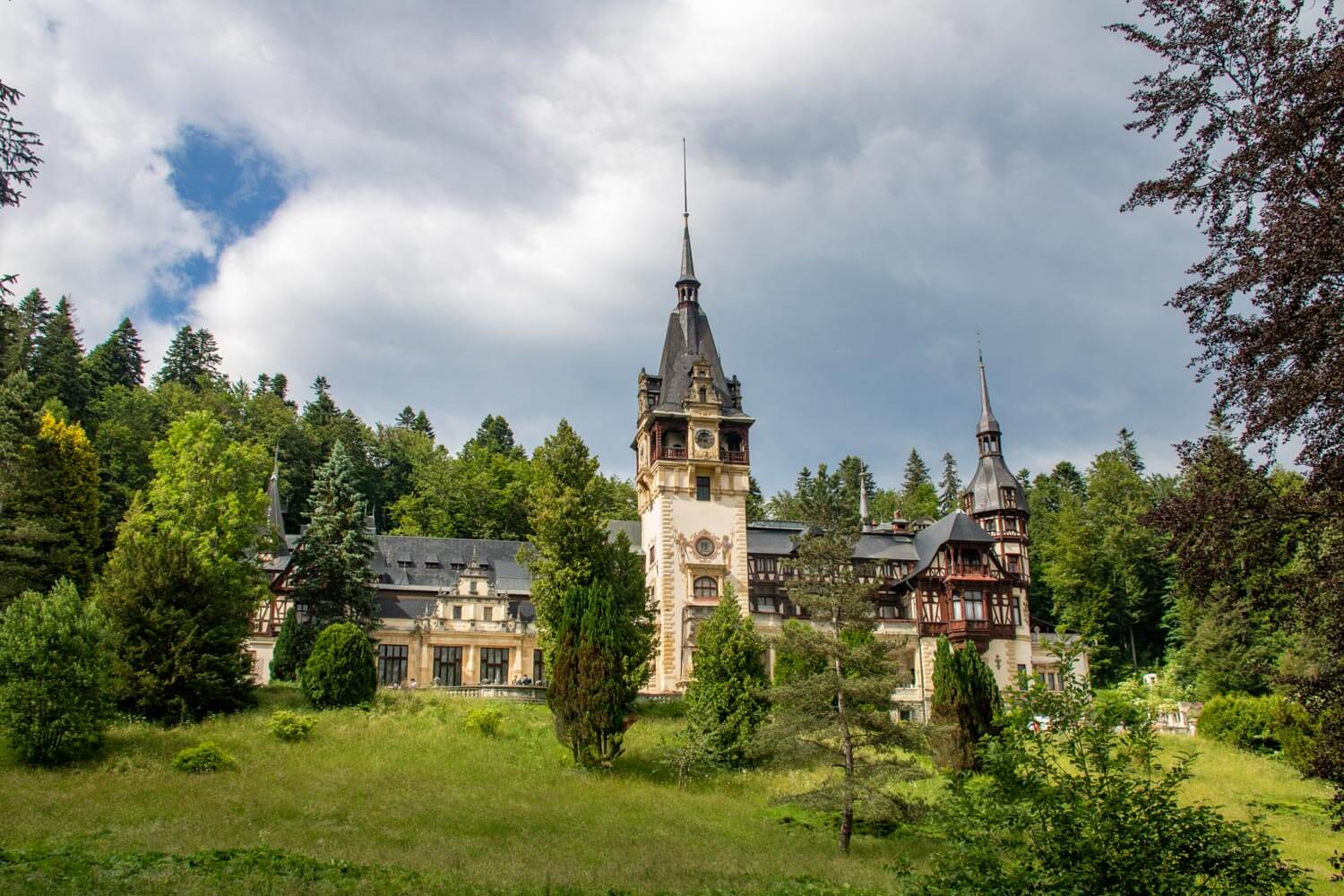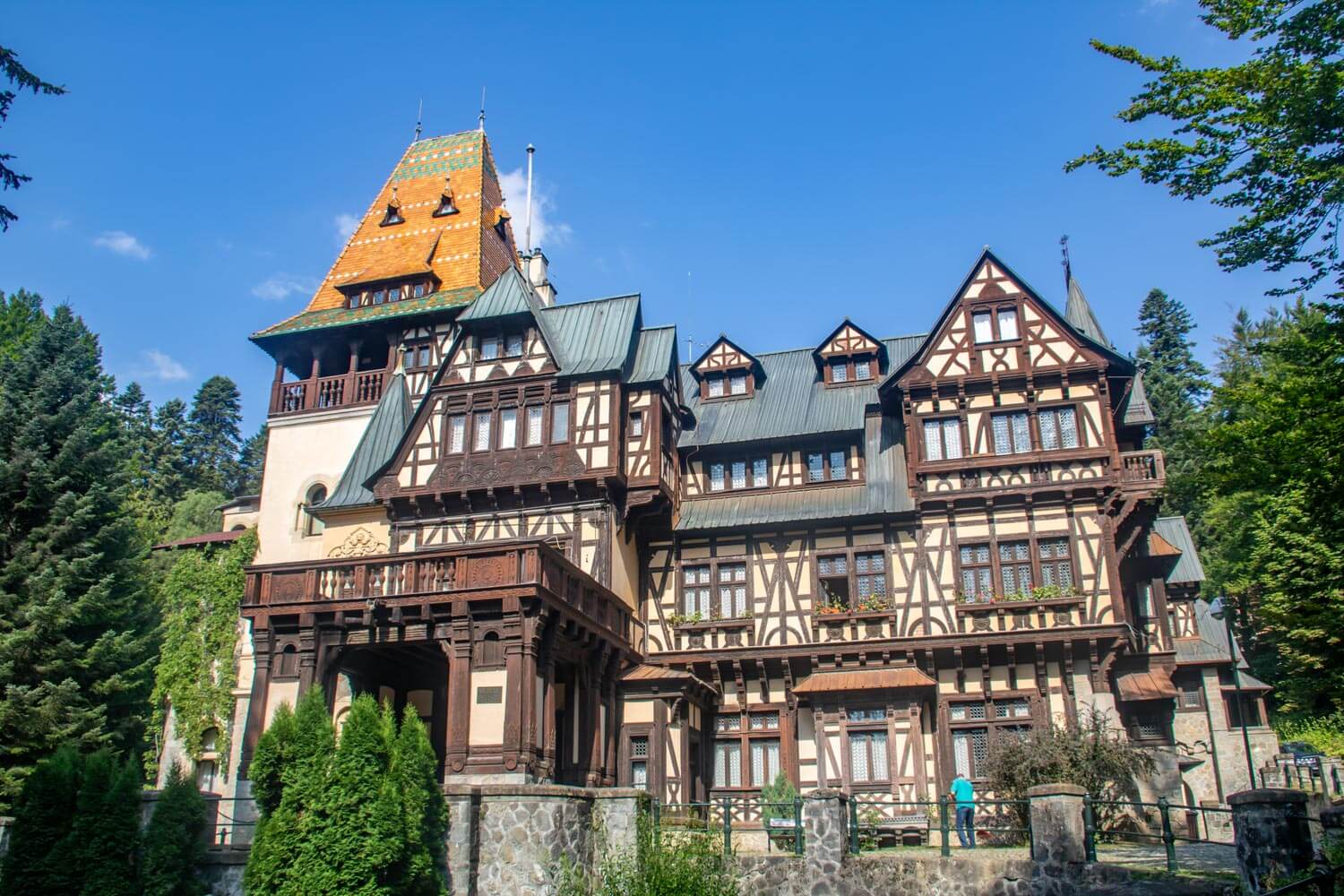
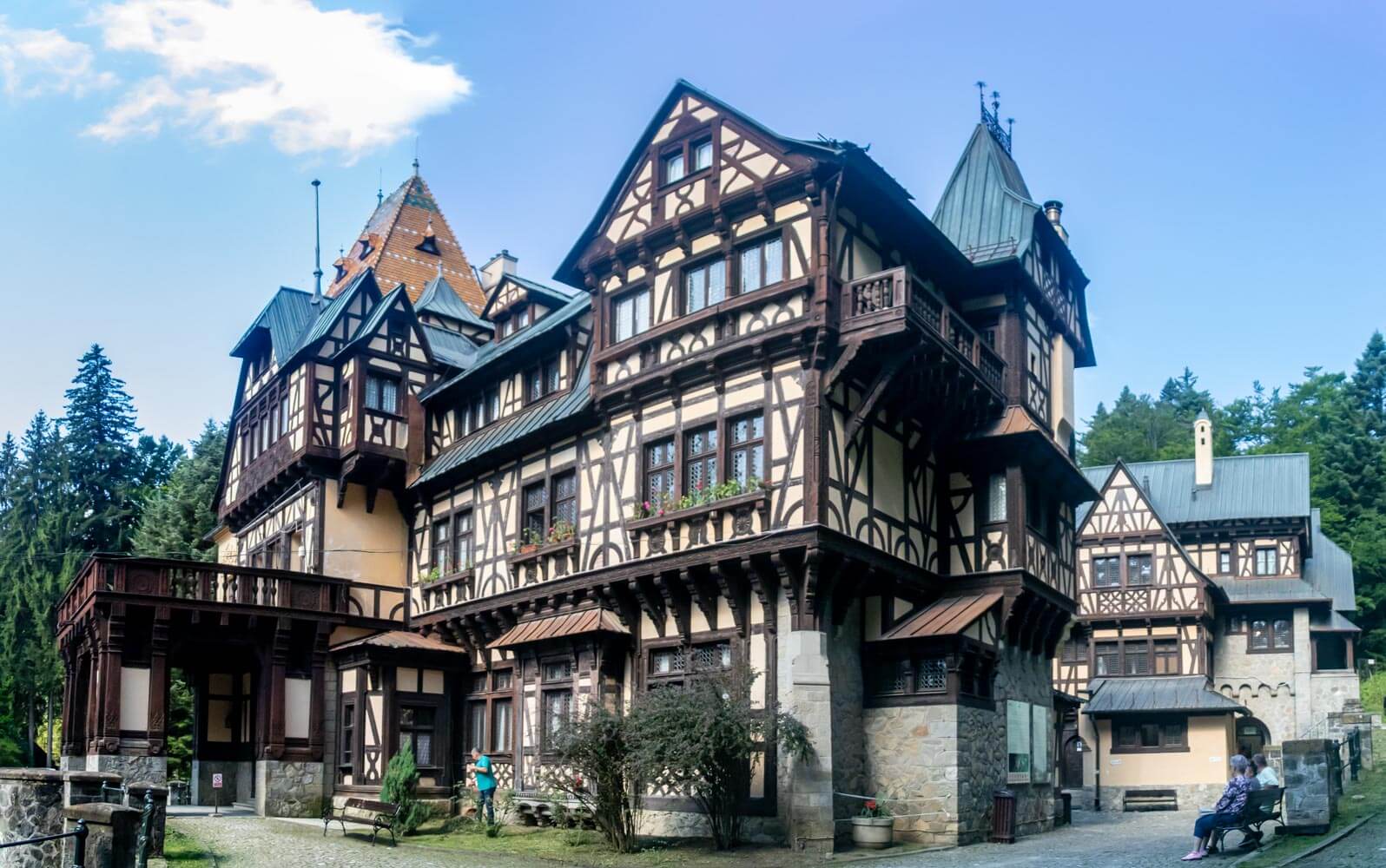
Pelișor Castle (Castelul Pelișor) is a former royal residence in Sinaia, standing just uphill from Peleș Castle within the former royal estate. Built for Crown Prince Ferdinand and Princess Marie, the future King Ferdinand I and Queen Marie of Romania, the smaller castle offers a much more intimate look at the private life and personal tastes of Romania’s royal family.
History
Pelișor was commissioned by King Carol I as a home for his nephew and heir Ferdinand and his wife Marie. Czech architect Karel Liman, who was also responsible for major later additions to Peleș Castle, designed the residence between 1899 and 1902. Ferdinand and Marie moved in with their children when the castle was inaugurated on May 24, 1903.
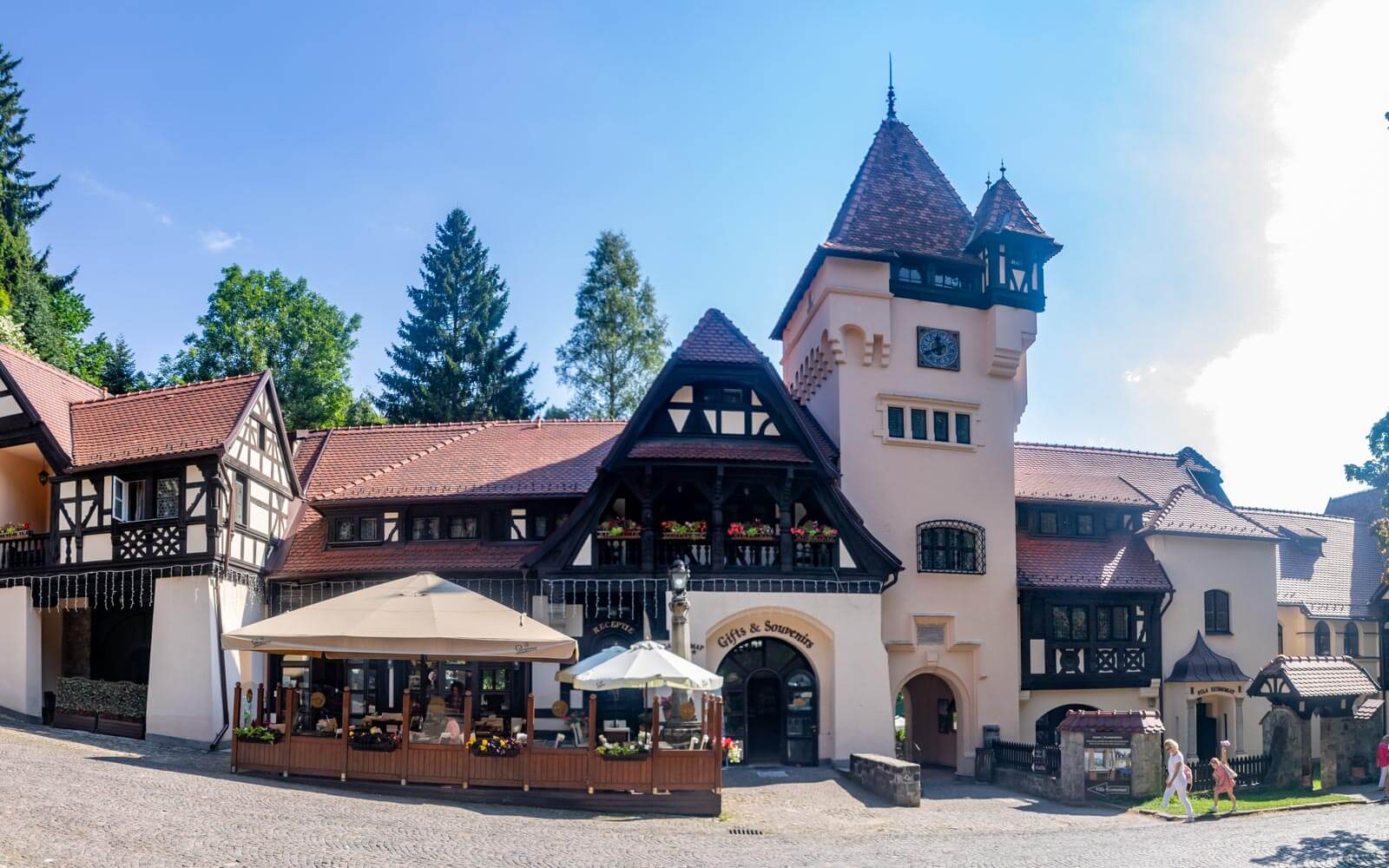
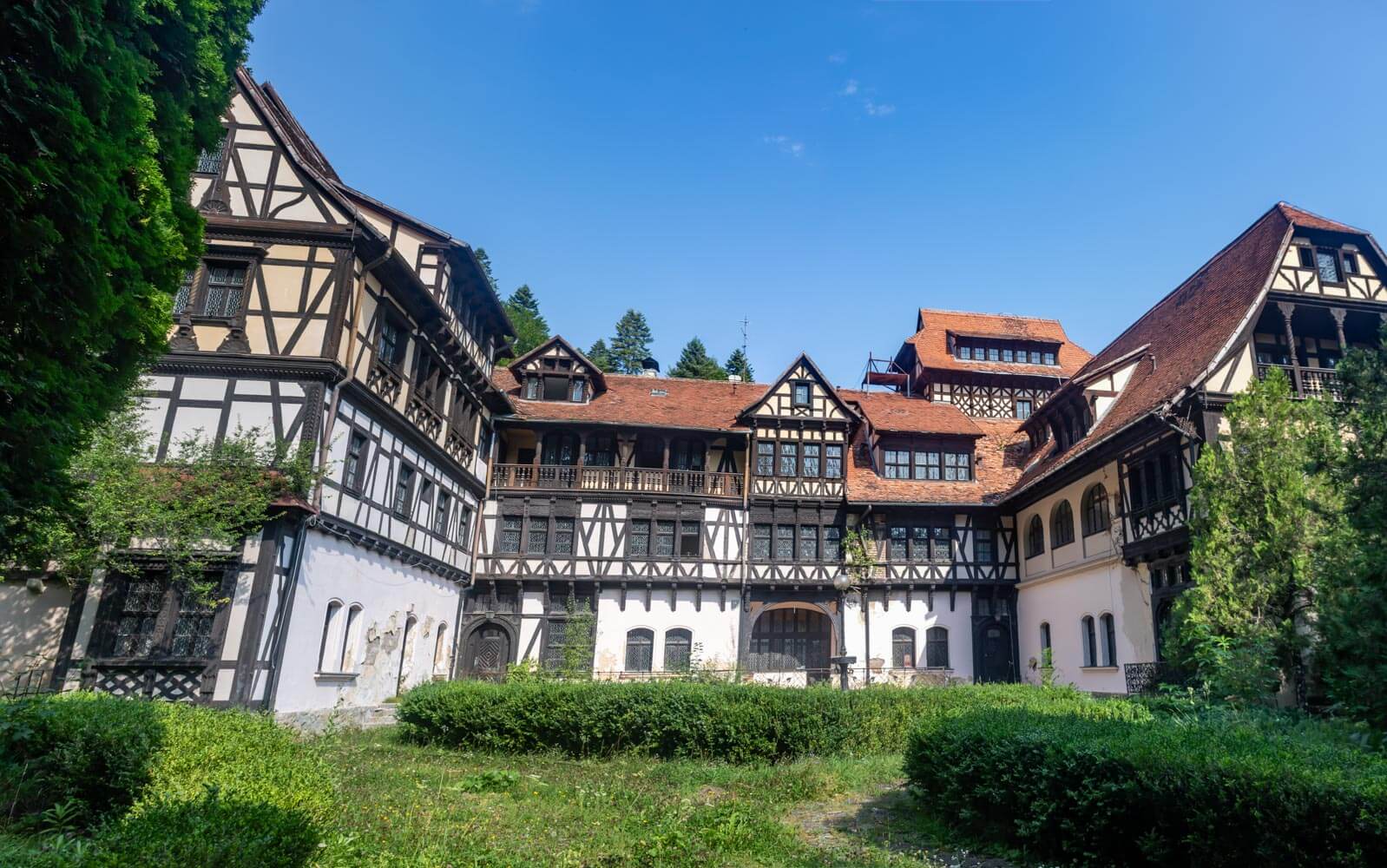
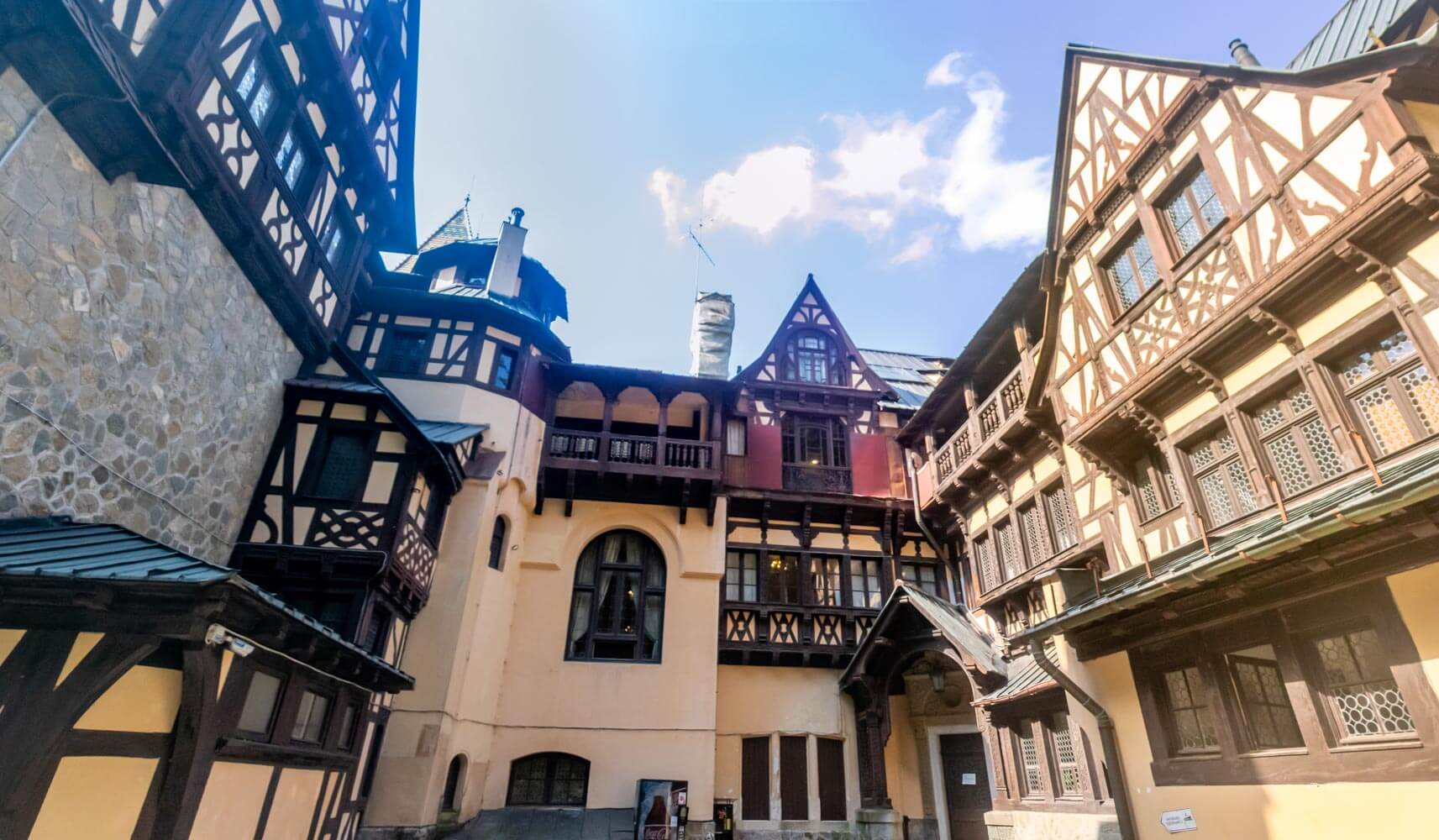
Although it stood only a short distance from Carol I’s imposing residence, Pelișor was conceived on a more domestic scale. Its exterior follows the picturesque character of the wider Peleș estate, with half-timbered details and steep roofs, while Liman also incorporated Romanian influences, particularly in the towers and decorative elements inspired by traditional architecture.
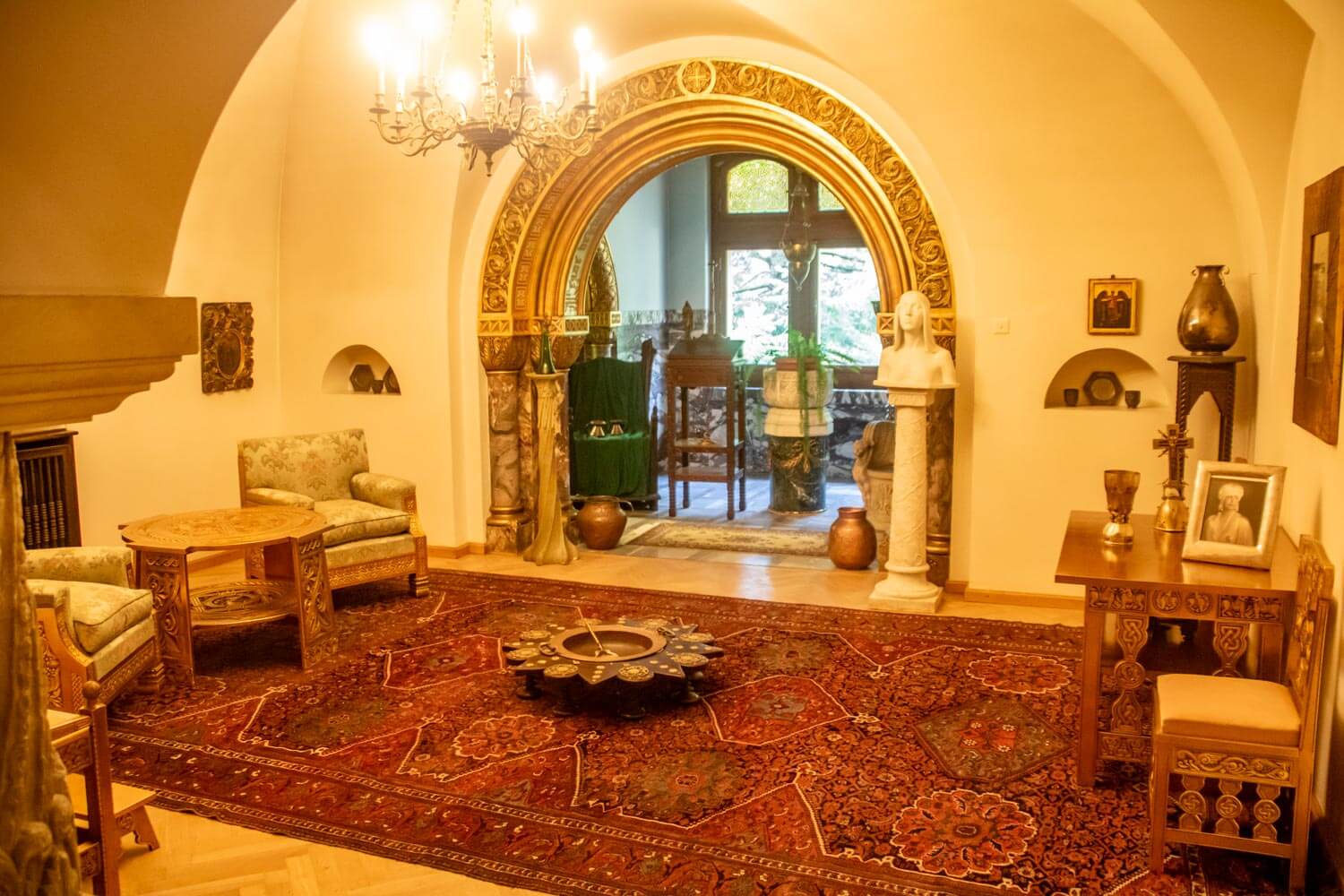
The strongest influence inside, however, came from Princess Marie herself. She took an active role in decorating Pelișor, gradually turning it into a highly personal expression of the Art Nouveau and Art 1900 styles she admired. Romanian motifs, Byzantine and Celtic-inspired symbols, floral forms and later more geometric designs were mixed freely rather than following the heavier historicist interiors of Peleș Castle. The result reflects the evolution of Marie’s own artistic taste as she became increasingly engaged with Romanian culture.
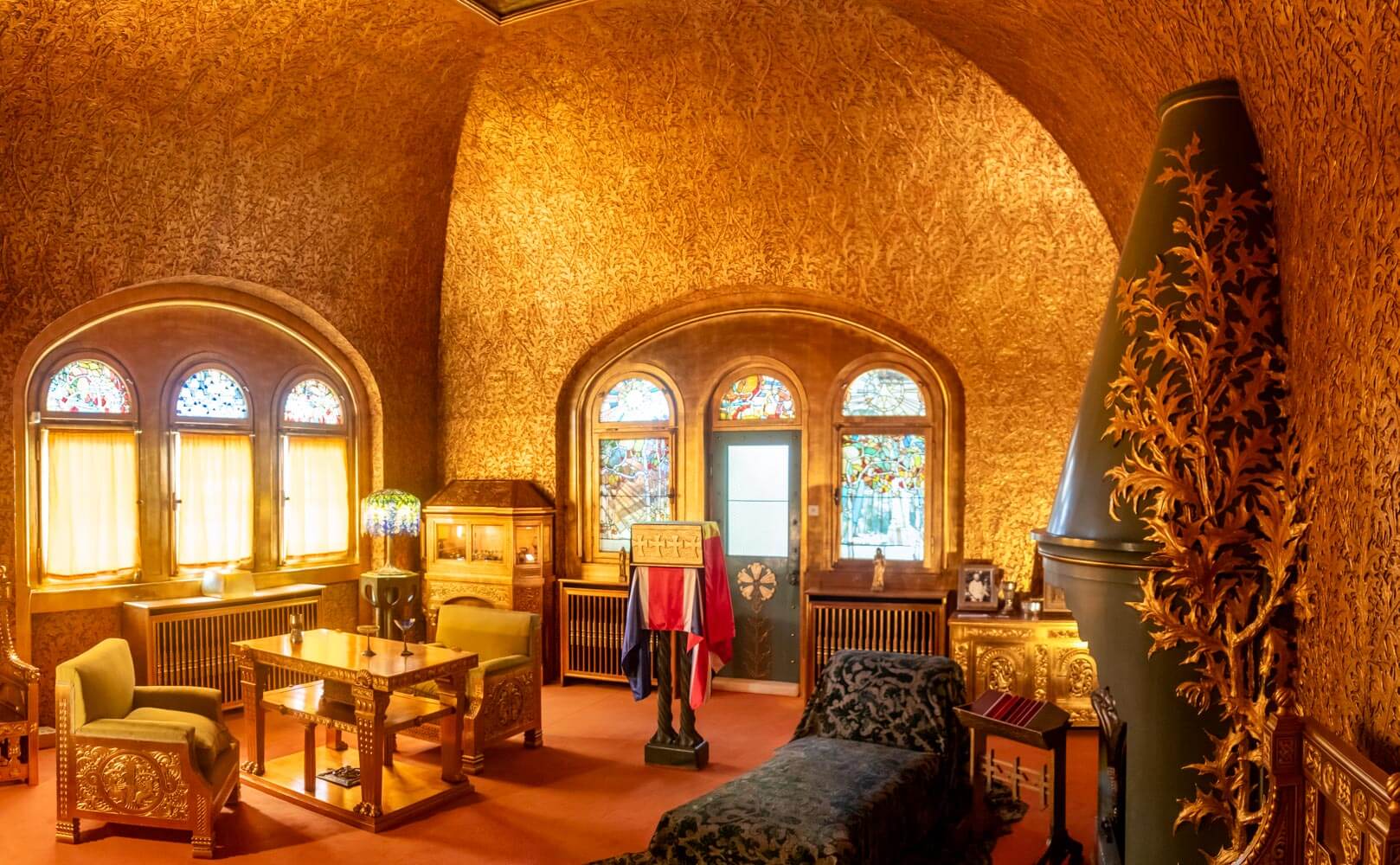
After Ferdinand became king in 1914, Pelișor continued to serve as one of the royal couple’s residences. Ferdinand died in 1927, while Marie continued to use the castle and make changes to its interiors during the following years. In 1938, after her health had seriously deteriorated, she traveled abroad for treatment. She returned to Romania in July and died at Pelișor on July 18, in the Golden Room she had designed.
After the abolition of the monarchy, the wider royal estate was nationalized in 1948. Pelișor subsequently served as a retreat for writers and artists during the communist period before reopening to the public as a museum in 1993. Today it forms part of the Peleș National Museum.
What to See
Pelișor Castle combines the character of a royal residence with the much more personal decorative vision of Queen Marie. The exterior is richly detailed, with steep roofs, half-timbering and towers that blend Central European influences with motifs inspired by Romanian architecture.
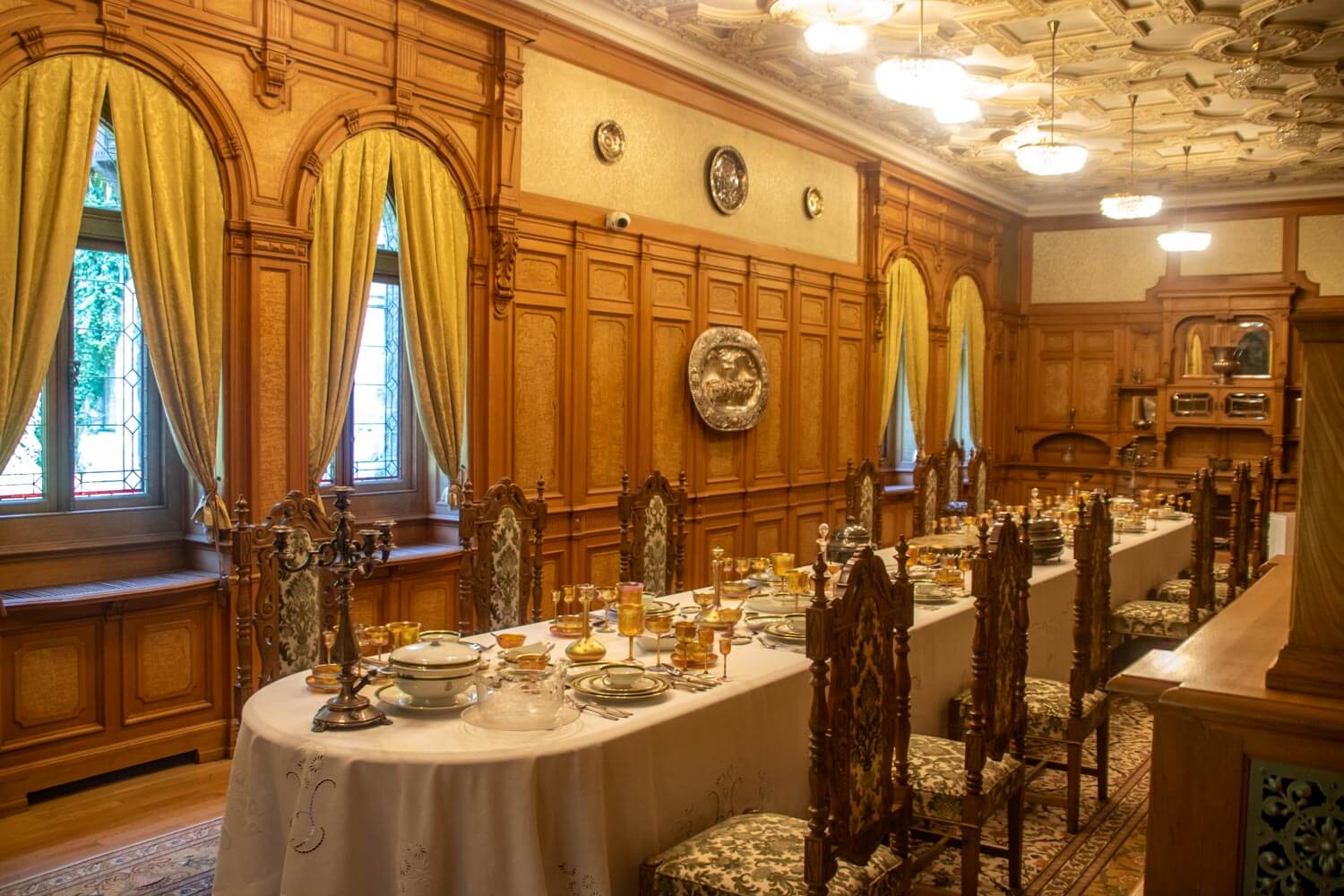
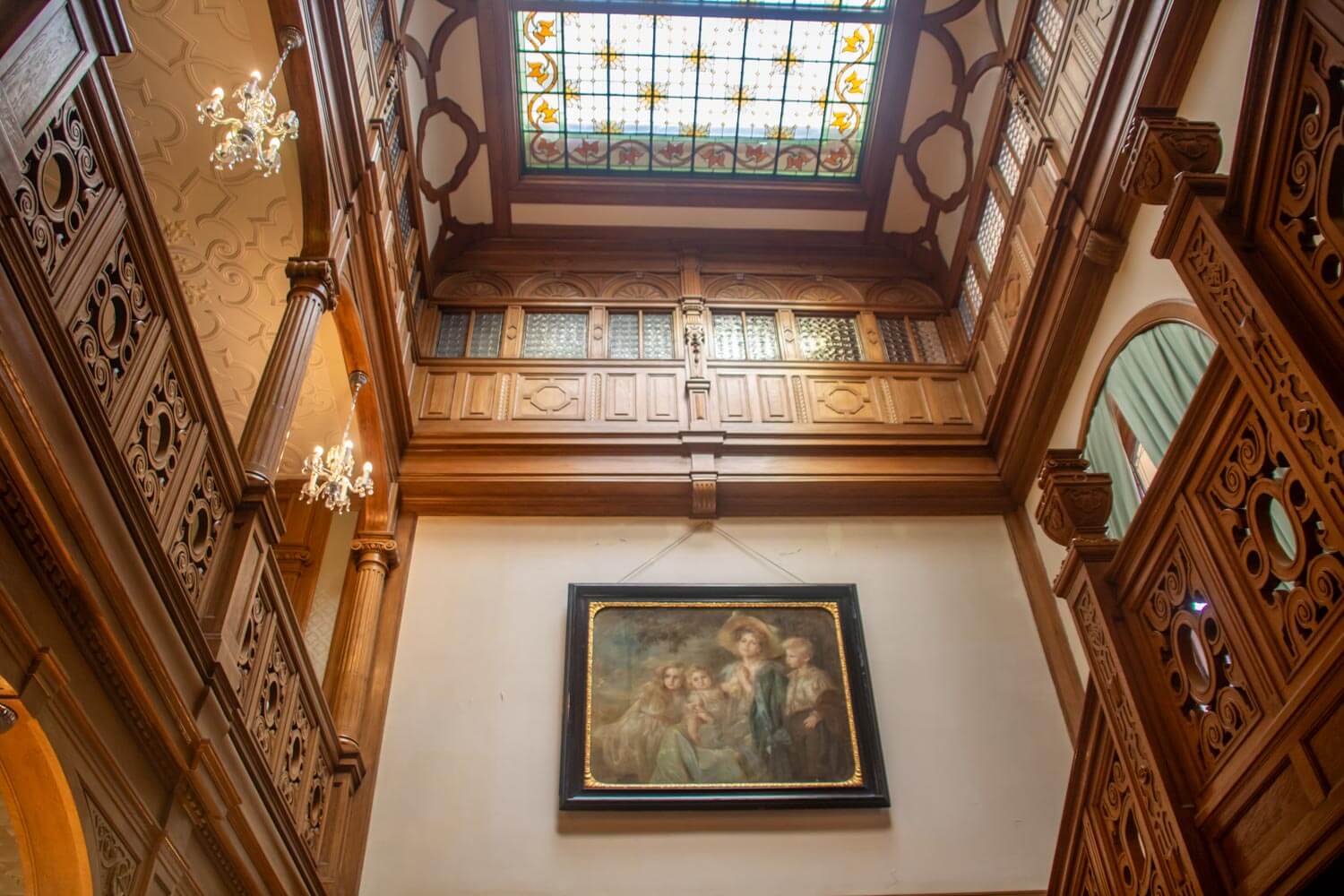
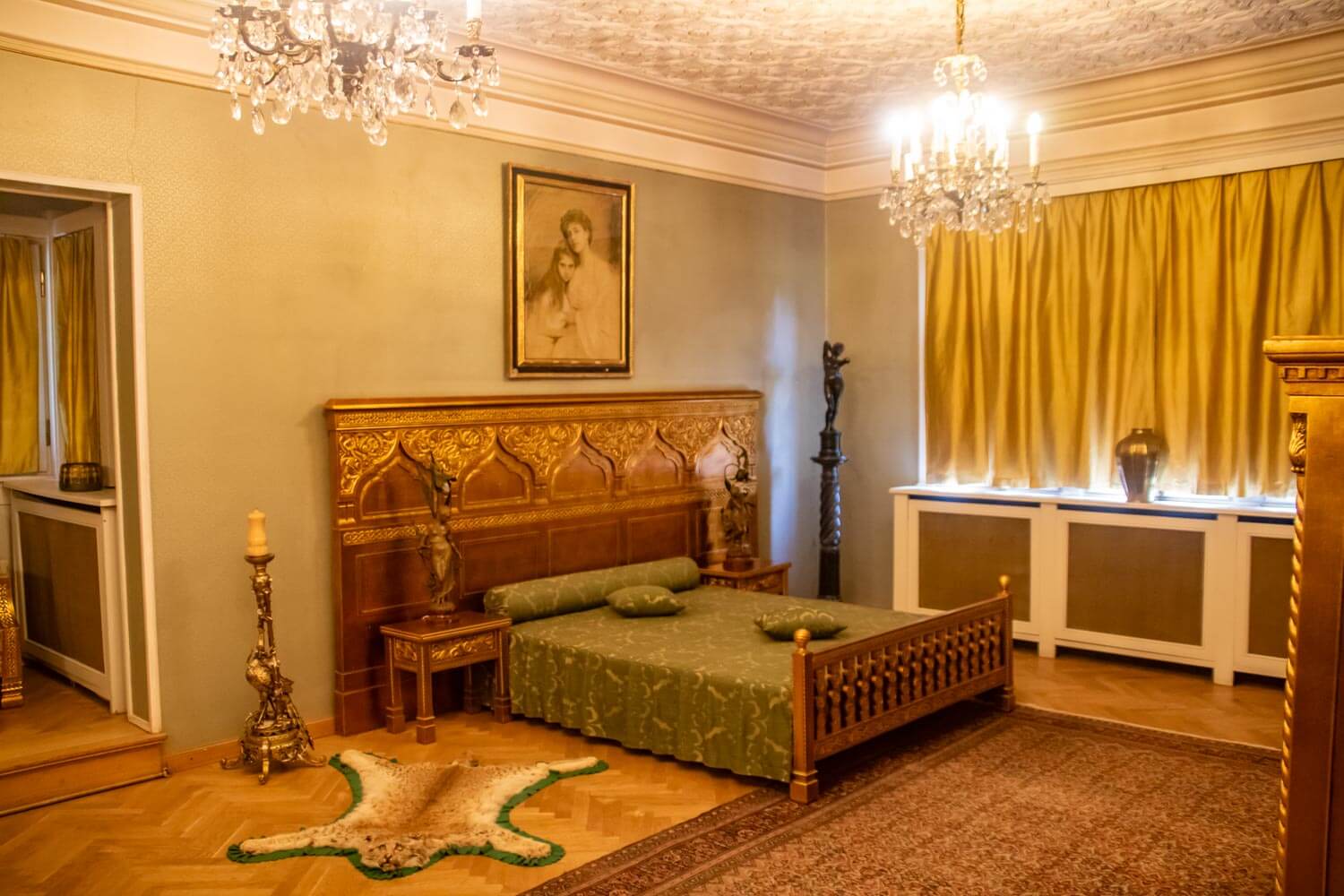
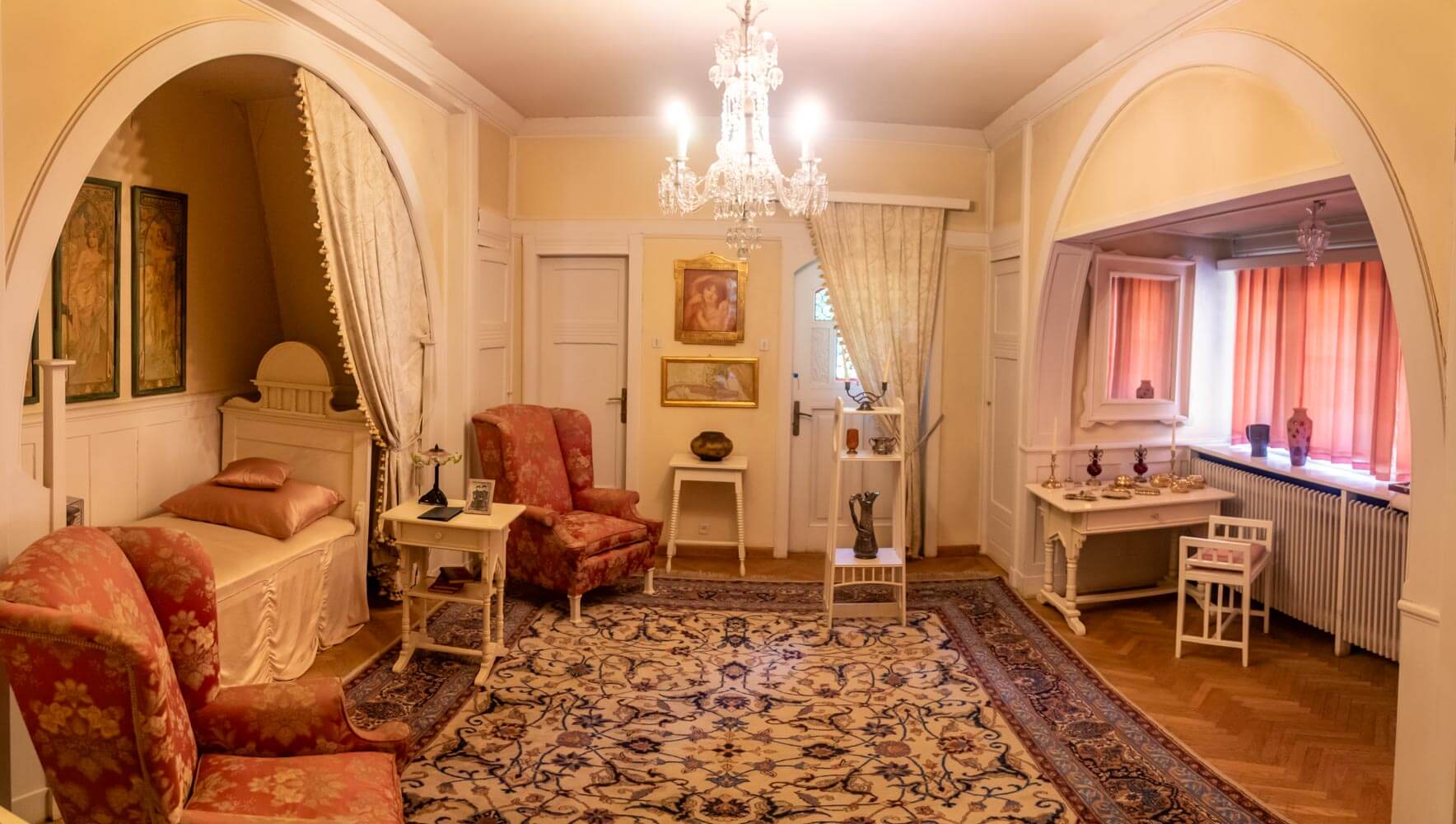
Inside, the rooms are arranged on a more intimate scale and include reception spaces, studies, bedrooms and family apartments. Much of the decoration reflects Marie’s strong interest in Art Nouveau and the decorative arts, with floral forms, carved wood, gilded surfaces and recurring symbolic motifs appearing throughout the castle.
The Golden Room is one of the most distinctive interiors. Designed under Marie’s close supervision, it is covered in gilded decoration and incorporates symbols and ornamental forms drawn from several artistic traditions. Other rooms are more restrained, including Ferdinand’s study and private apartments, which have a simpler and more functional character.
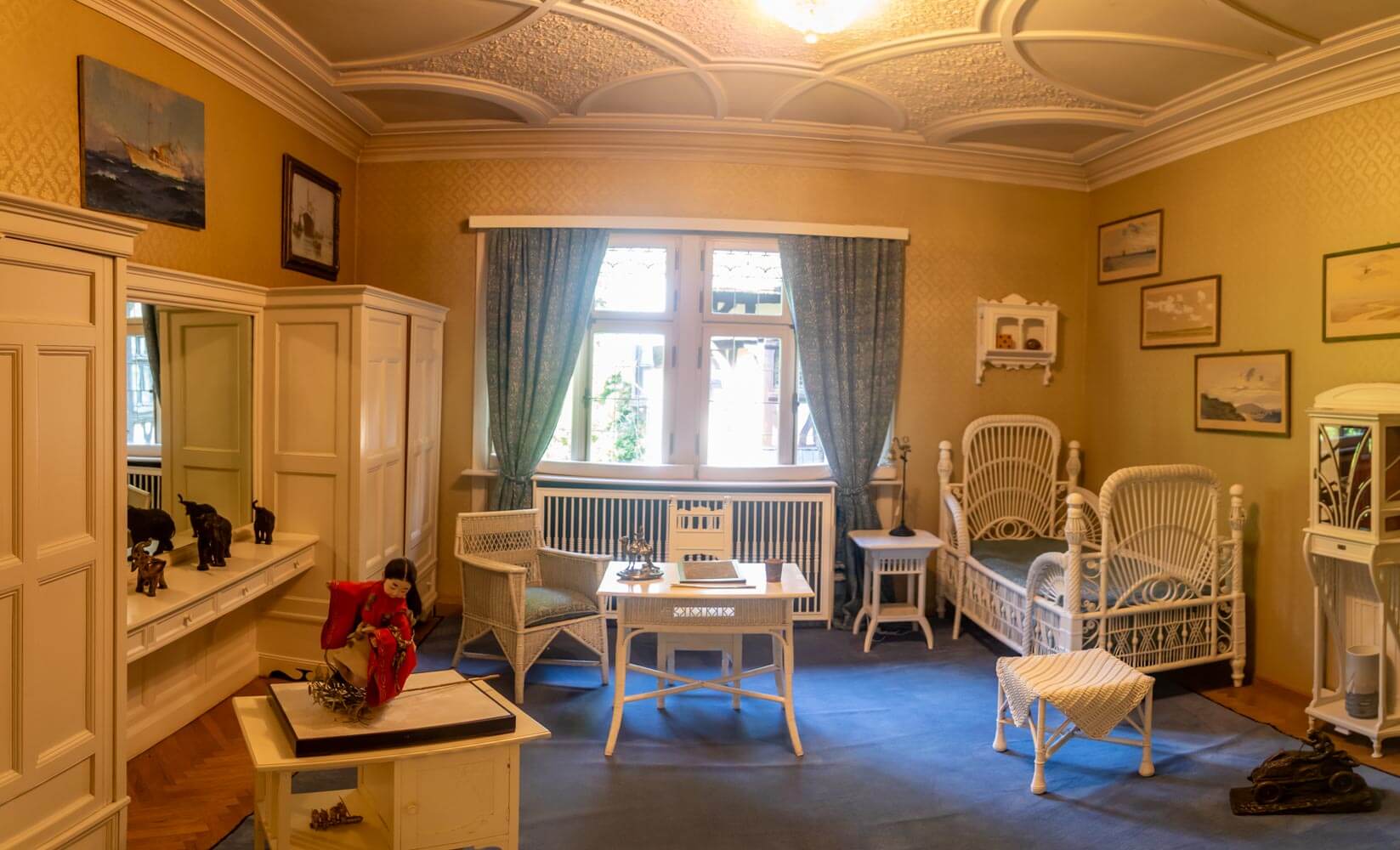
Several rooms connected with the royal children also survive, helping to show Pelișor not only as a ceremonial residence but as a place where the royal family actually lived. Furniture, decorative objects and personal belongings throughout the castle add to that sense of domestic life and make the interiors feel closely tied to the people who used them.
Visiting Pelișor Castle
Pelișor Castle stands within the Peleș estate, a few minutes’ walk from Peleș Castle. The interior is visited as a museum and requires separate admission from Peleș, so visitors who want to see both should allow additional time rather than treating Pelișor as simply another wing of the larger castle.
The castle is considerably smaller than Peleș and the visit is correspondingly shorter, but the interiors are very different and worth seeing independently.