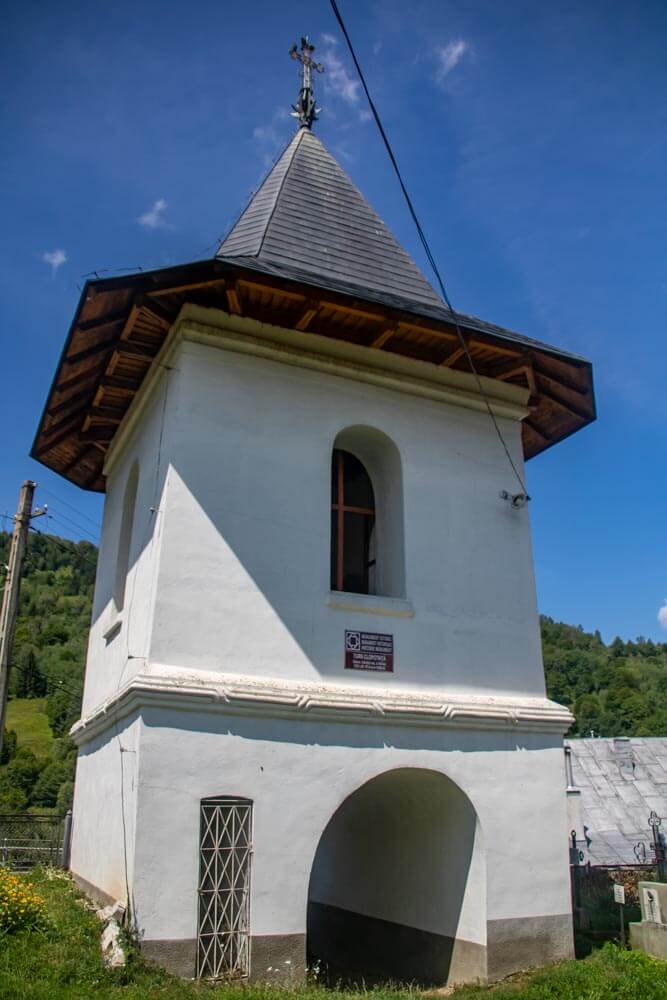
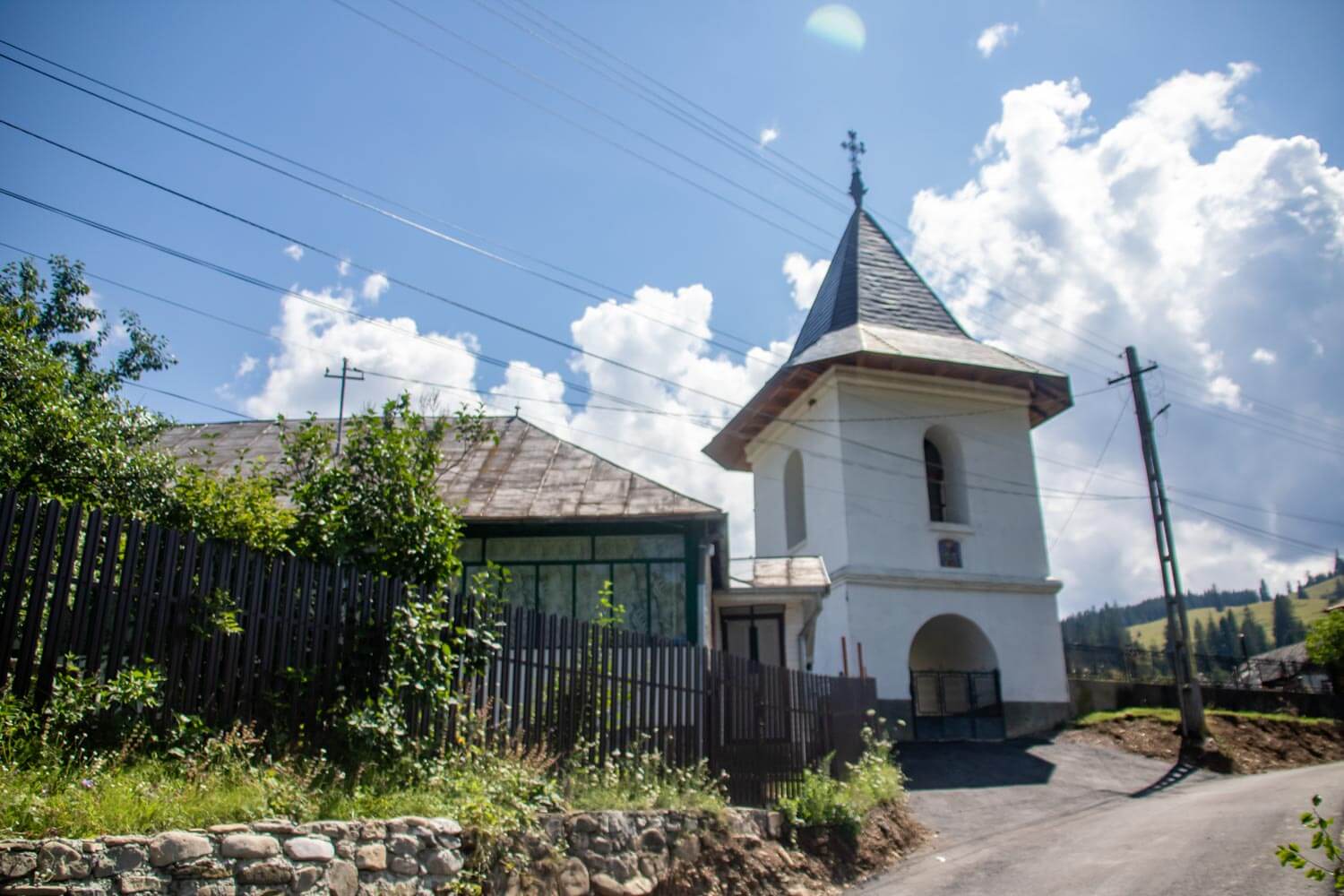
The Wooden Church of Saint Anne (Biserica de lemn Sfânta Ana) is a historic Romanian Orthodox church in the village of Ceahlău, standing in the parish cemetery beside the larger Church of the Nativity of the Virgin Mary. Dating from around 1830, the wooden church and its separate bell tower form part of the former Saint Anne Hermitage.
According to the parish’s history, the origins of the church date to 1720, when fifteen families who had migrated from Transylvania settled in the area and established a place of worship dedicated to the Conception of Saint Anne. The present wooden building was constructed around 1830 and served as Ceahlău’s parish church until 1963, when the neighboring stone church was consecrated.
The church is constructed from timber beams resting on a stone foundation, with a cross-shaped plan, a rounded sanctuary apse, and an enclosed porch at the western end. Its entrance is unusually positioned on the northern side, while the steep wooden-shingle roof has a change in slope around its lower edges. The interior features an elaborate system of wooden vaults above the different sections of the church. A separate masonry bell tower, dating from the late 19th century, stands near the entrance to the cemetery.
The interior preserves a wooden iconostasis with painted icons, alongside fragments of historic religious paintings. The paintings were applied directly to wooden surfaces in some areas and to canvas covering the walls in others, an uncommon feature among Moldavia’s wooden churches. Surviving decorations include representations of the Four Evangelists and painted ornamental motifs, although parts of the original artwork have deteriorated.