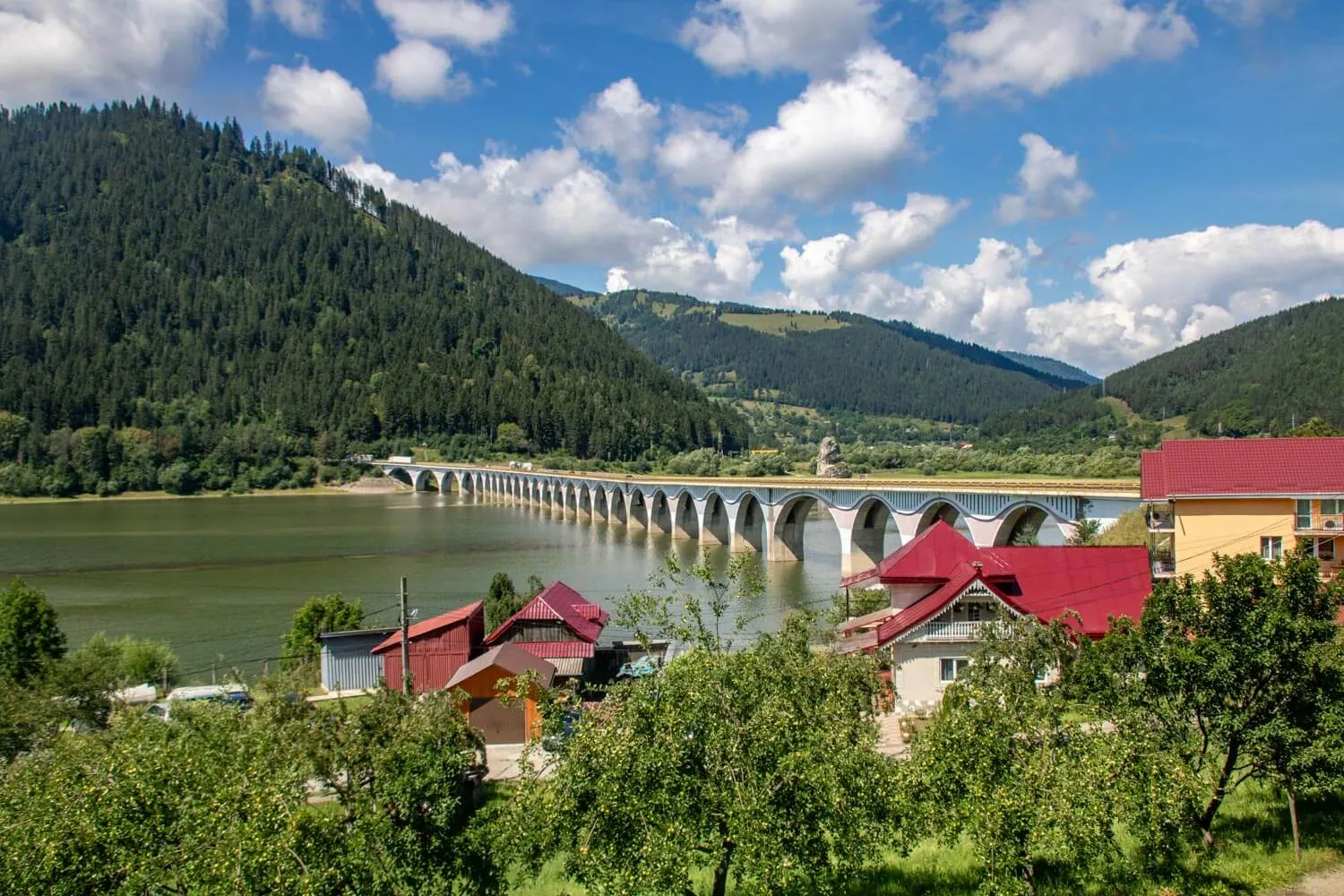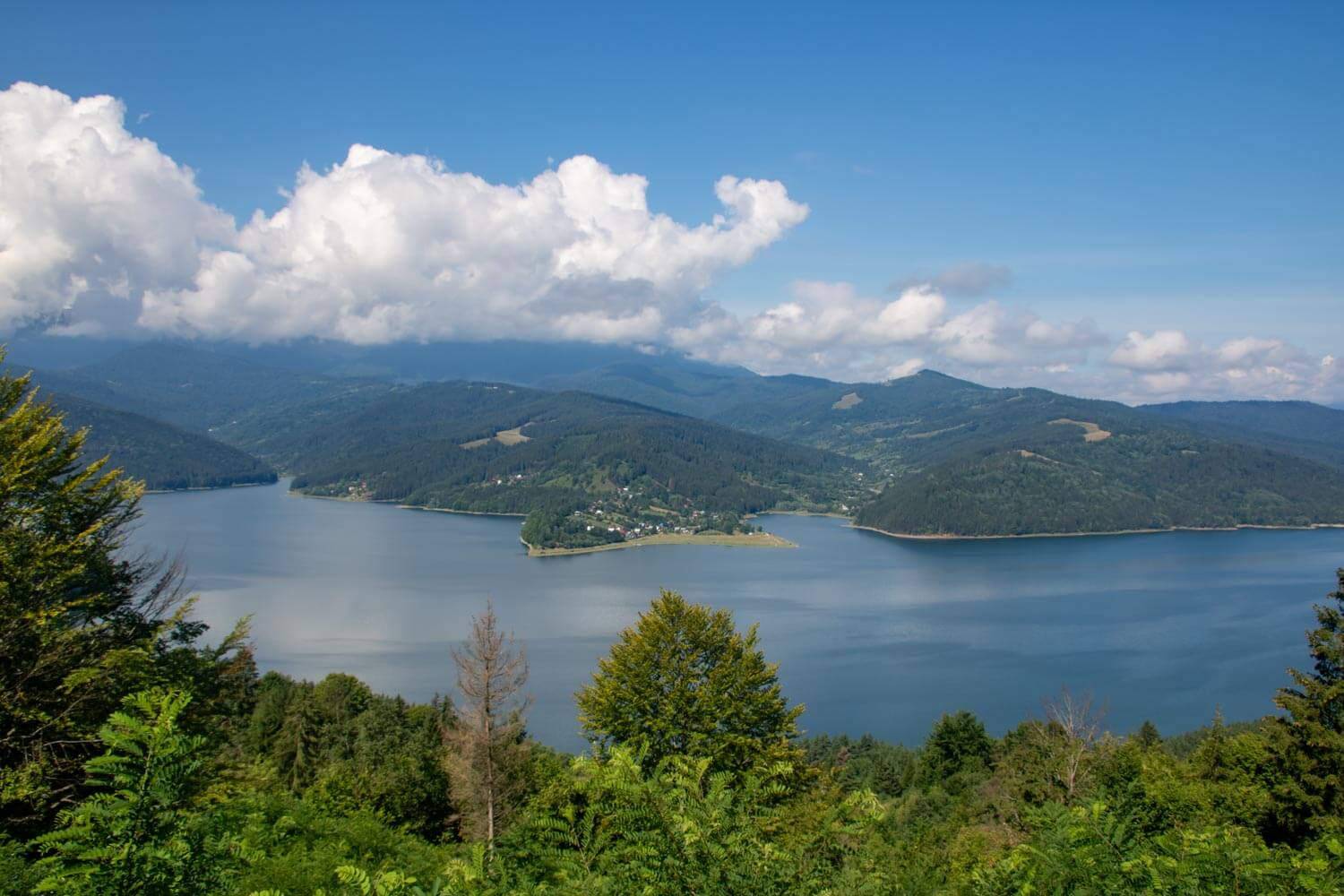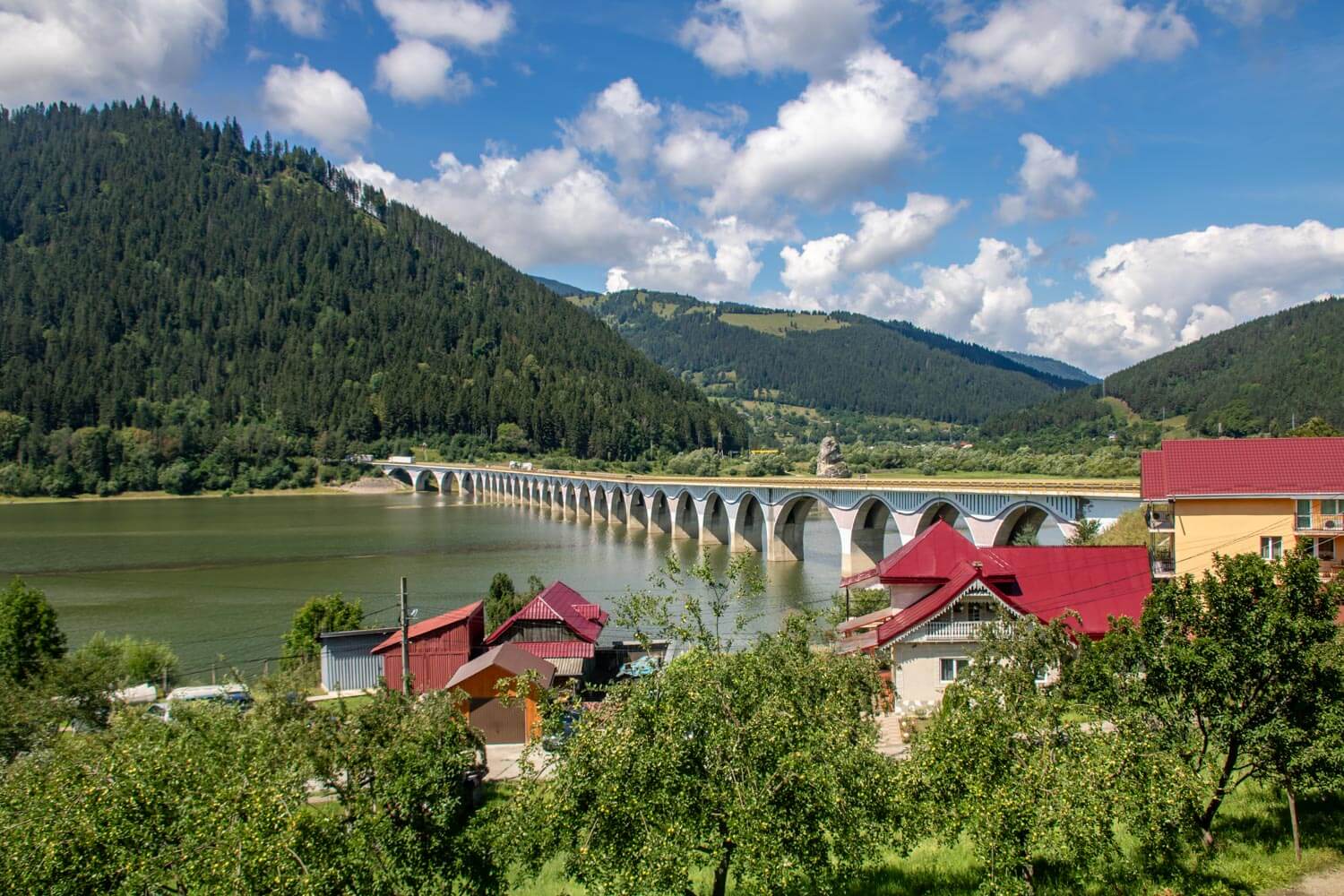
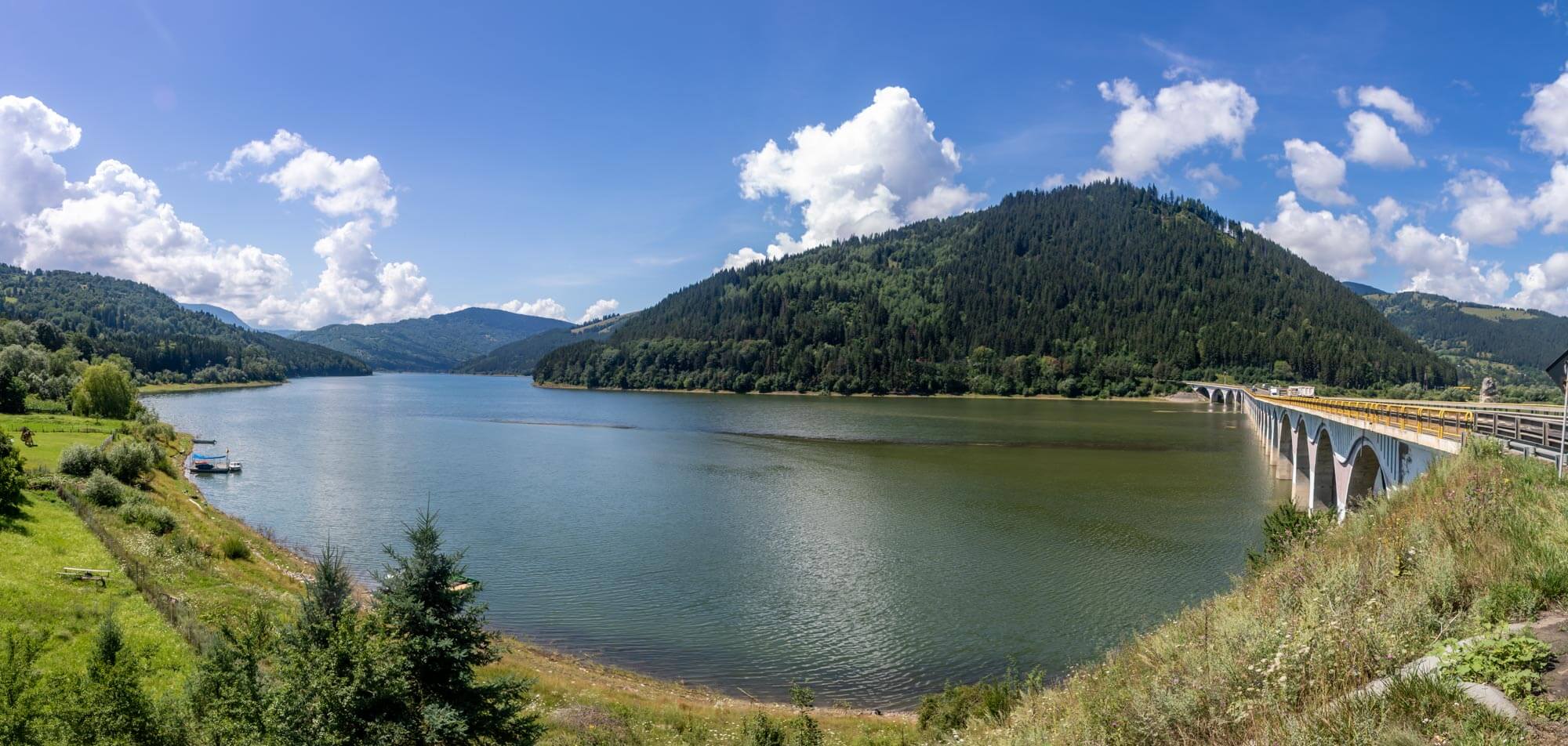
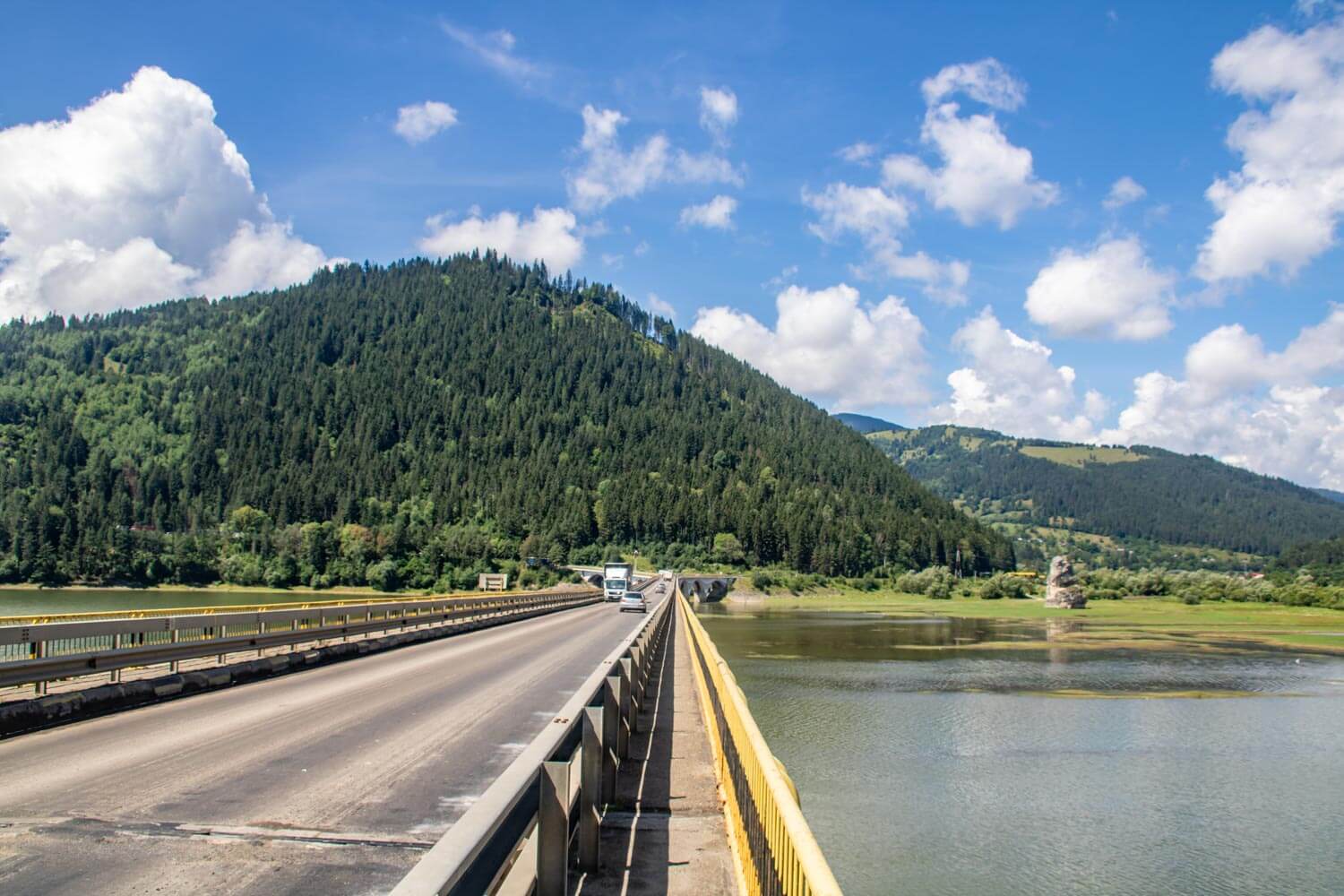
The Poiana Teiului Viaduct (Viaductul Poiana Teiului), also known as Poiana Largului Viaduct, is a road bridge crossing the northern end of Lake Bicaz near the village of Poiana Largului in Neamț County. Stretching more than 600 meters across the Bistrița Valley, the bridge is distinguished by its long series of elegant concrete arches and its scenic setting among the surrounding mountains.
The viaduct was constructed between 1958 and 1960 during the development of the Bicaz hydroelectric complex. The creation of Lake Bicaz submerged sections of the original road through the Bistrița Valley, requiring a new crossing above the reservoir. Designed by a team led by engineer Ernest Blank at the Institute for Transport Design in Bucharest, the viaduct opened to traffic in 1961.
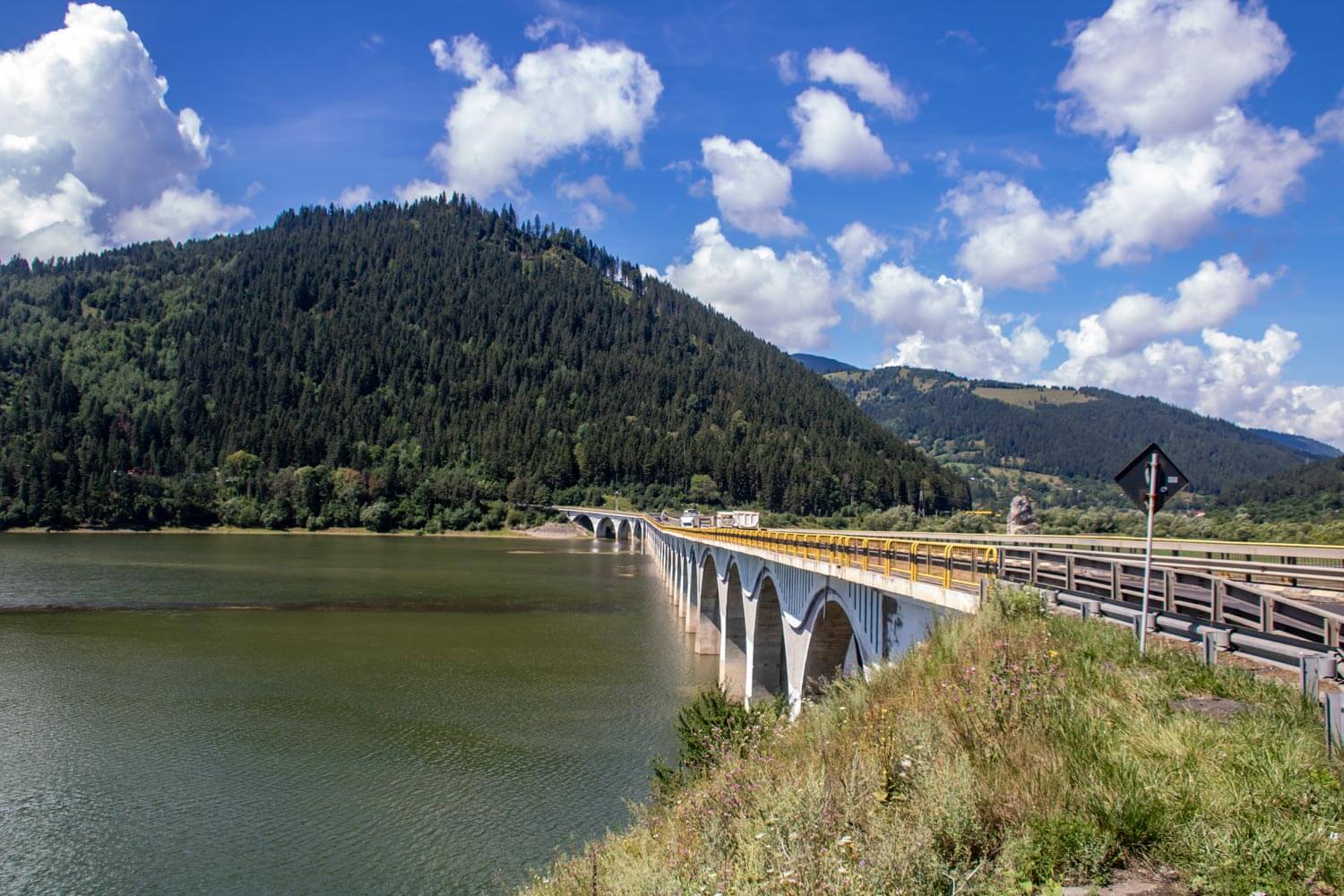
The reinforced-concrete structure consists of a series of arched spans resting on tall piers. Most spans are approximately 23 meters long, while a larger span crosses the original riverbed. At one end, the viaduct divides into two branches serving roads toward Tulgheș and Vatra Dornei.
The bridge’s slender supports and repeated arches create a graceful sweep across the valley, particularly striking when viewed from the surrounding shoreline. Its appearance changes with the water level, which can either surround the piers or expose the ground beneath the crossing. From the roadway, there are expansive views of Lake Bicaz and the forested mountains, while Piatra Teiului Rock stands close to the bridge, rising from the water or exposed lakebed depending on the level of the reservoir.