
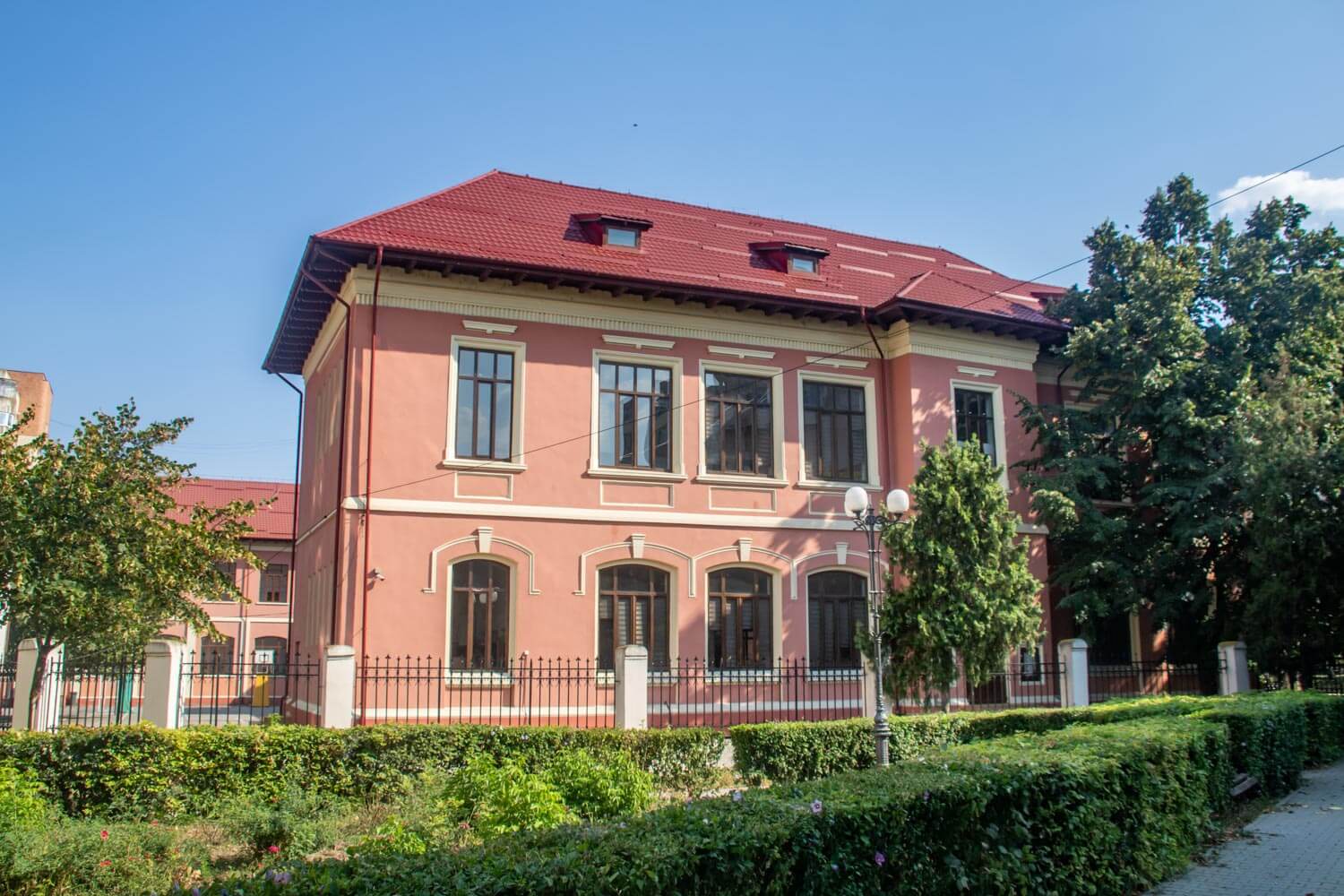
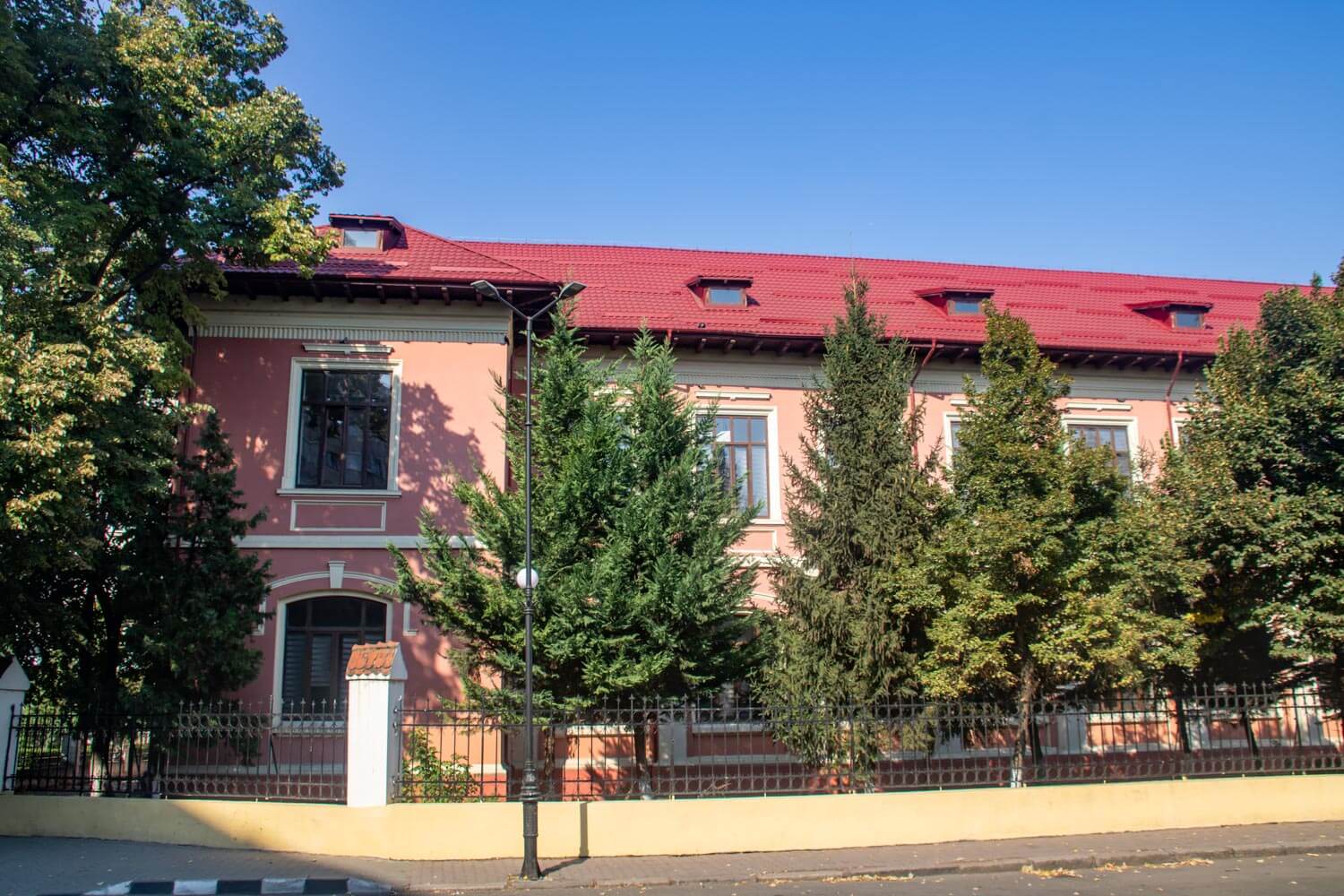
National College Ion Maiorescu (Colegiul Național „Ion Maiorescu”) is a historic secondary school in central Giurgiu, opposite the Cathedral of the Assumption of the Virgin Mary. Founded in 1869, the institution has occupied its present building since 1896 and is named after Ion Maiorescu (1811-1864), a Romanian scholar, educator, and participant in the Revolution of 1848.
The school began as a gymnasium established by the Giurgiu Municipal Council in 1868, opening the following year with just 18 pupils and two teachers. Its first premises were in the Ion Zalomit School building, now home to the Ion Vinea Cultural Center. Under director Nicolae Droc Barcian, who took office in 1873, the gymnasium expanded its educational activities and developed a reputation beyond Giurgiu. In 1890, at his suggestion, the school adopted the name of Ion Maiorescu.
As the number of pupils increased, a larger school building was constructed between 1895 and 1896 near the cathedral, providing permanent premises for the growing institution. Teaching was interrupted during the First World War, when German troops occupied the building. After the war, the gymnasium gradually expanded into a full secondary school, receiving official high school status in 1923. Further growth prompted the addition of an upper floor, completed in 1928, and the construction of new teaching facilities.
The school complex expanded again between 1957 and 1959 with the addition of a new wing, followed by a gymnasium in 1975-1976. Over the decades, its teachers and pupils included several notable figures in Romanian intellectual and cultural life, among them literary critic Tudor Vianu and mathematician and poet Ion Barbu. In 1996, the institution received the title of National College.
Structural deterioration eventually required extensive restoration of the historic building, with work beginning in 2007. Funding difficulties repeatedly interrupted the project, leaving parts of the school unusable until further municipal investment allowed construction to resume in 2014. The restored building was inaugurated in September that year, returning its classrooms to educational use. Today, the college provides lower and upper secondary education, including mathematics, sciences, humanities, and foreign languages.


