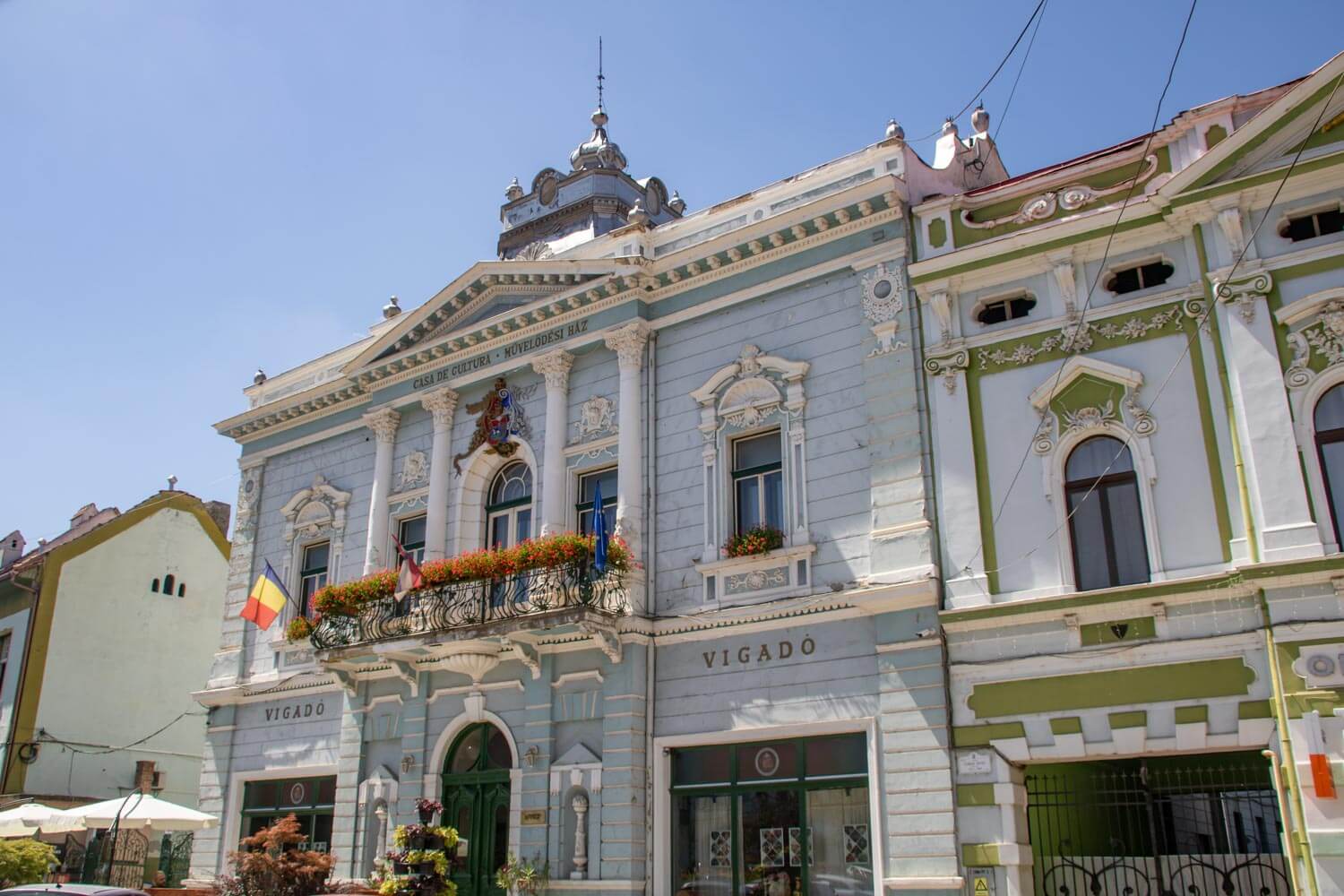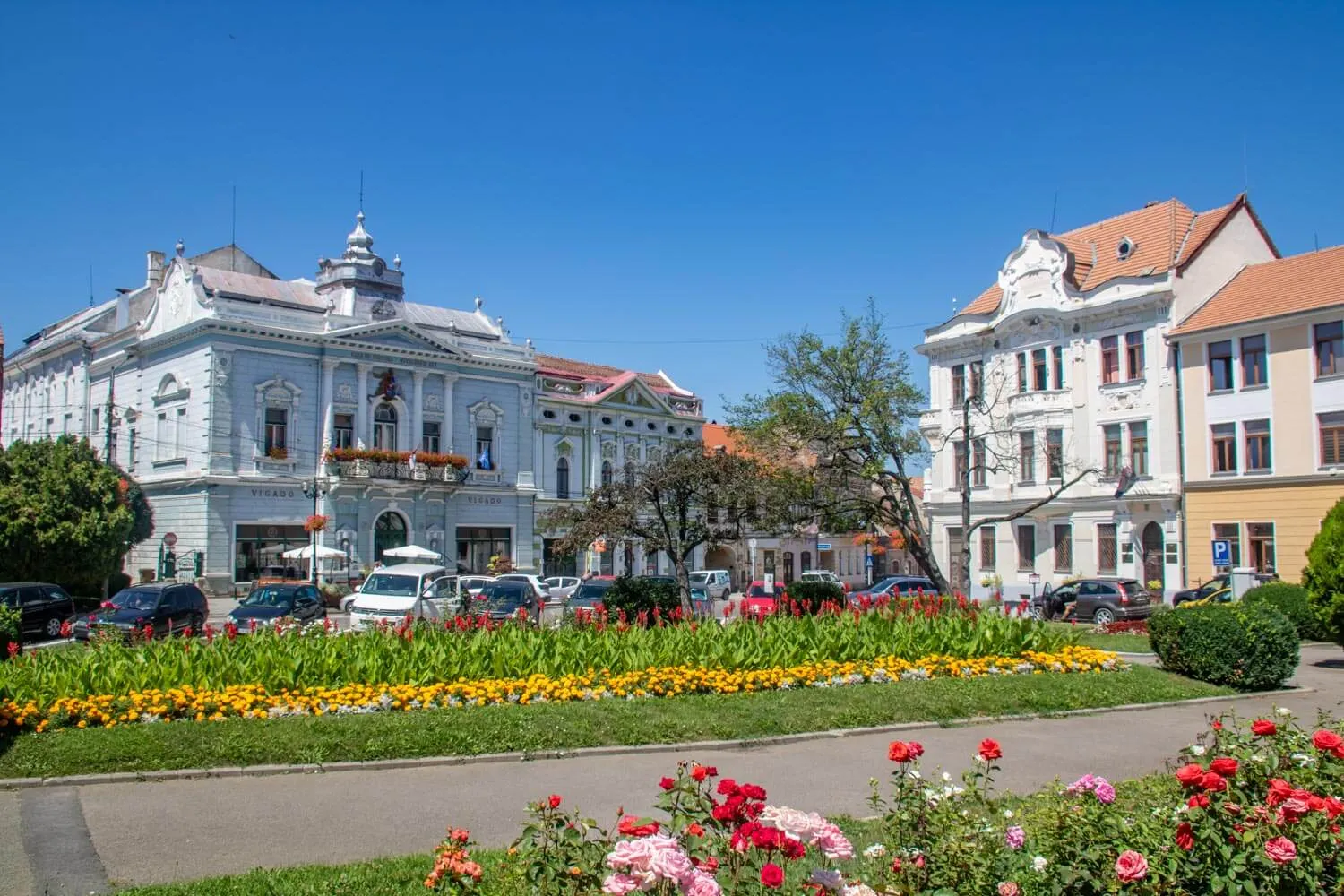
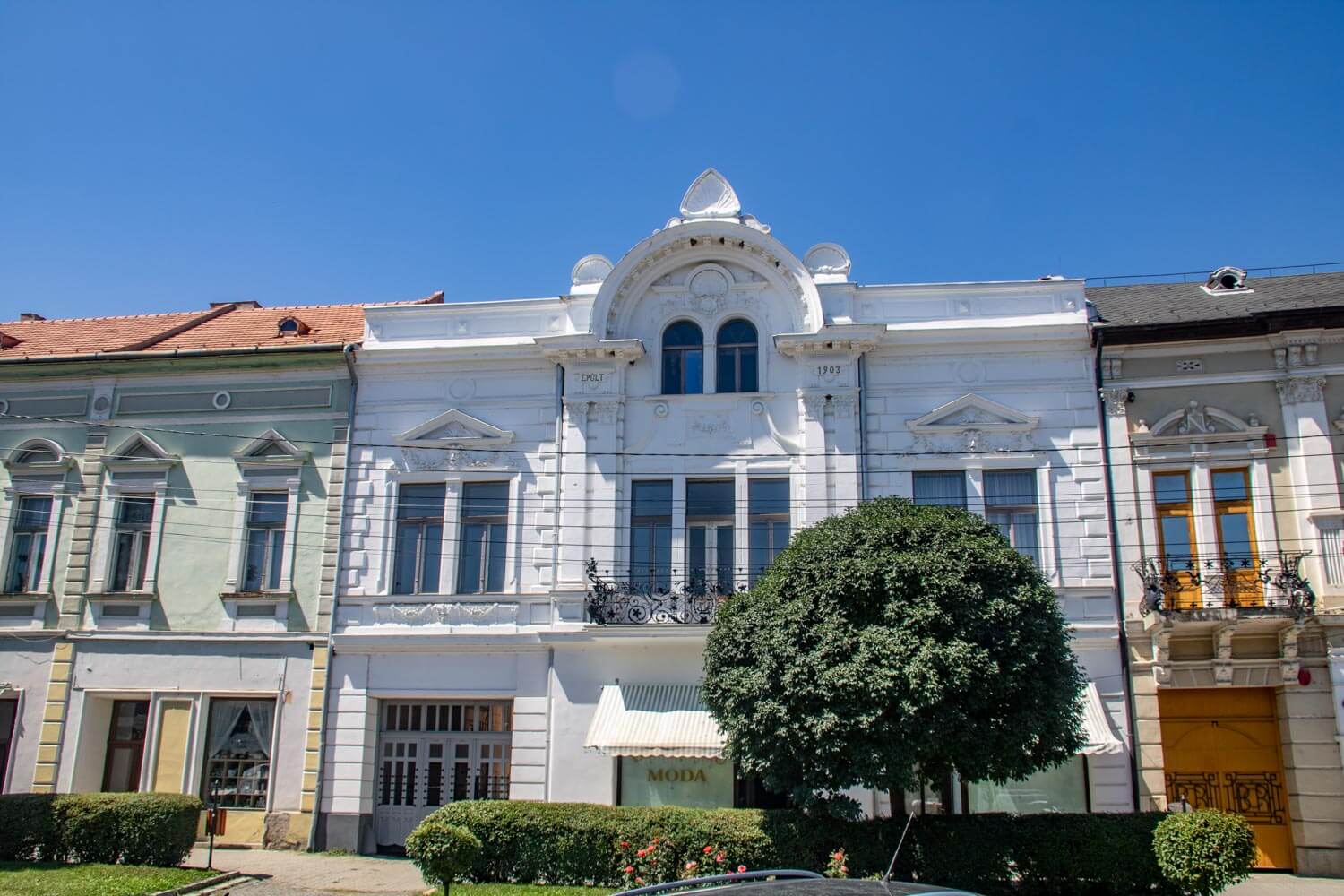
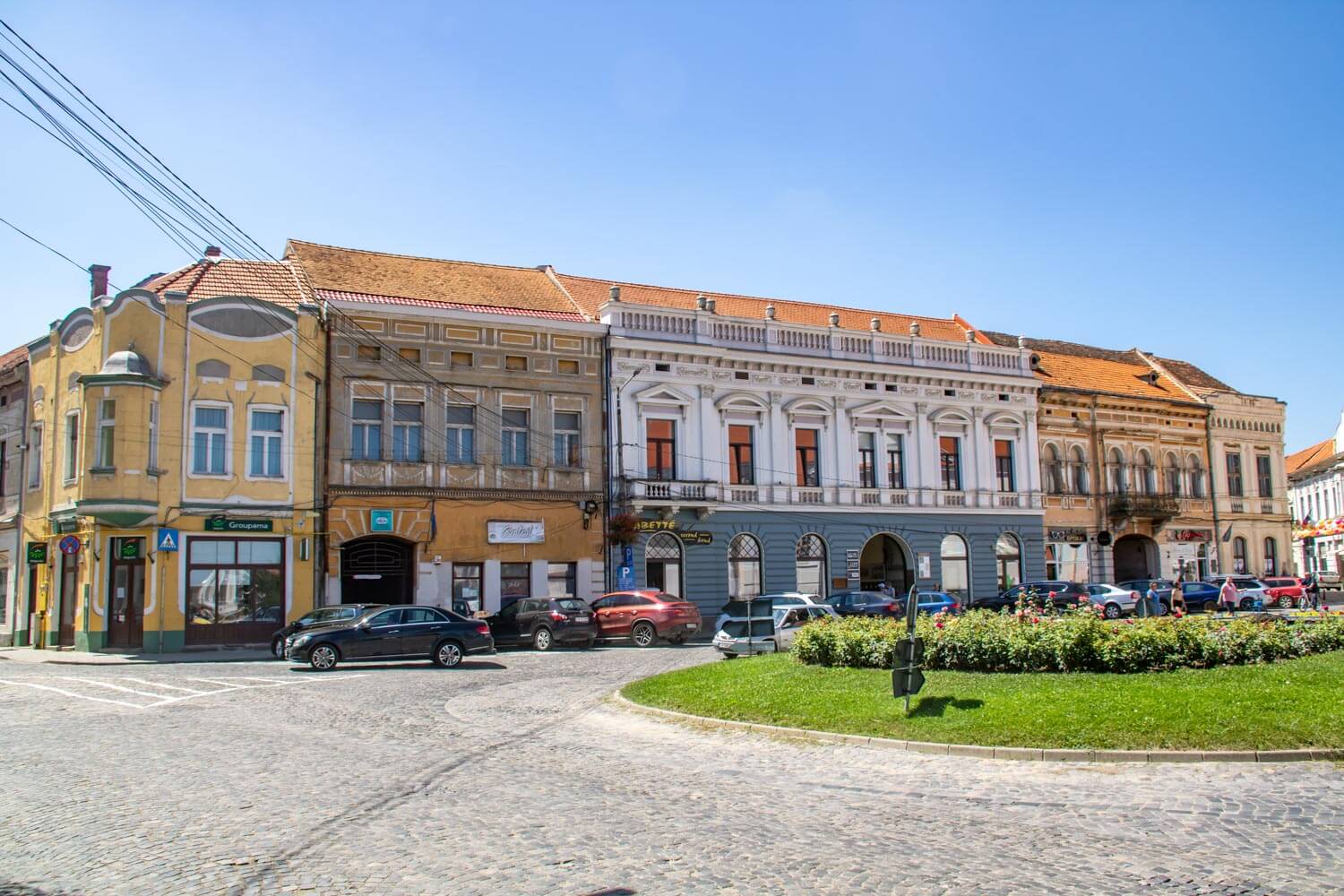
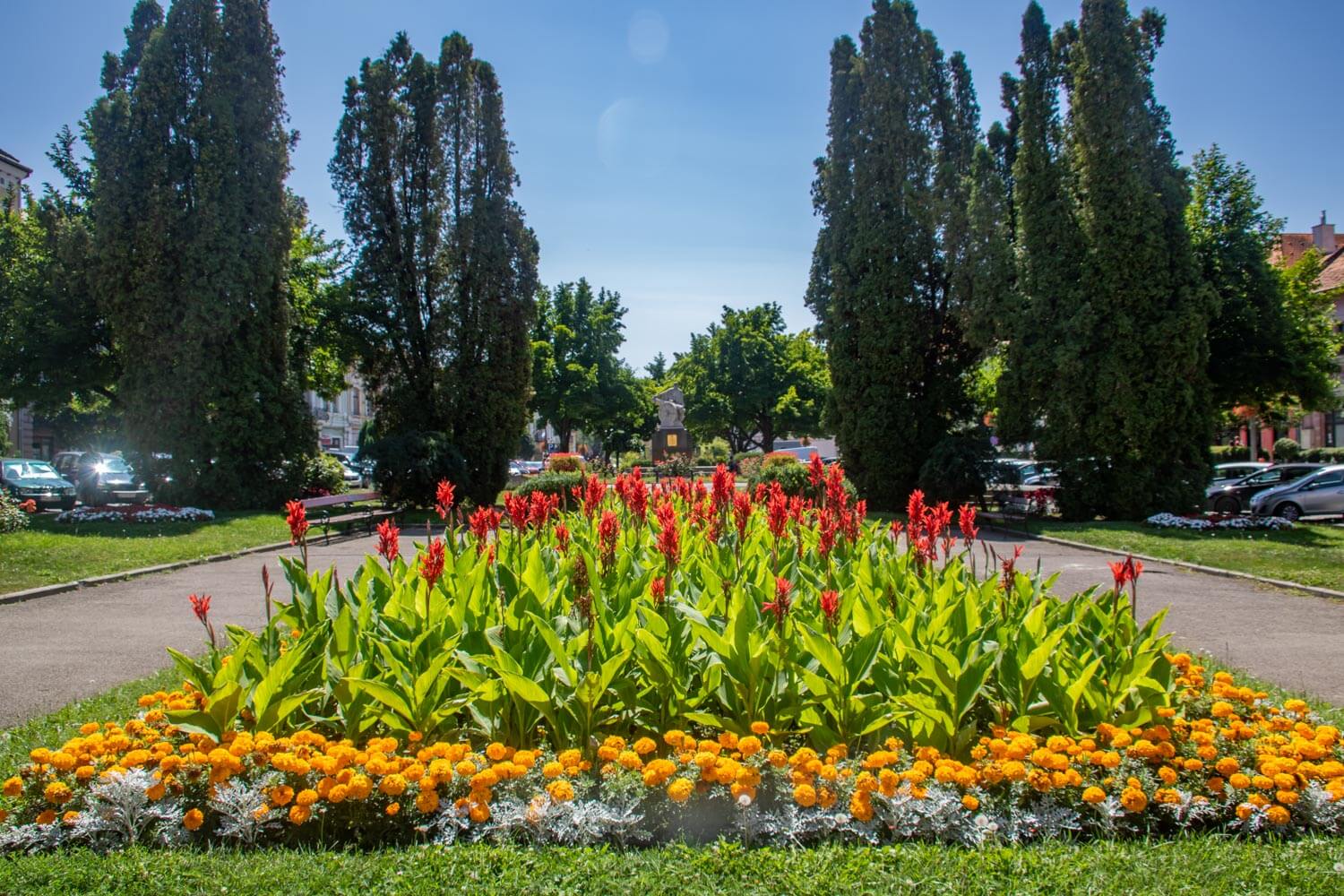

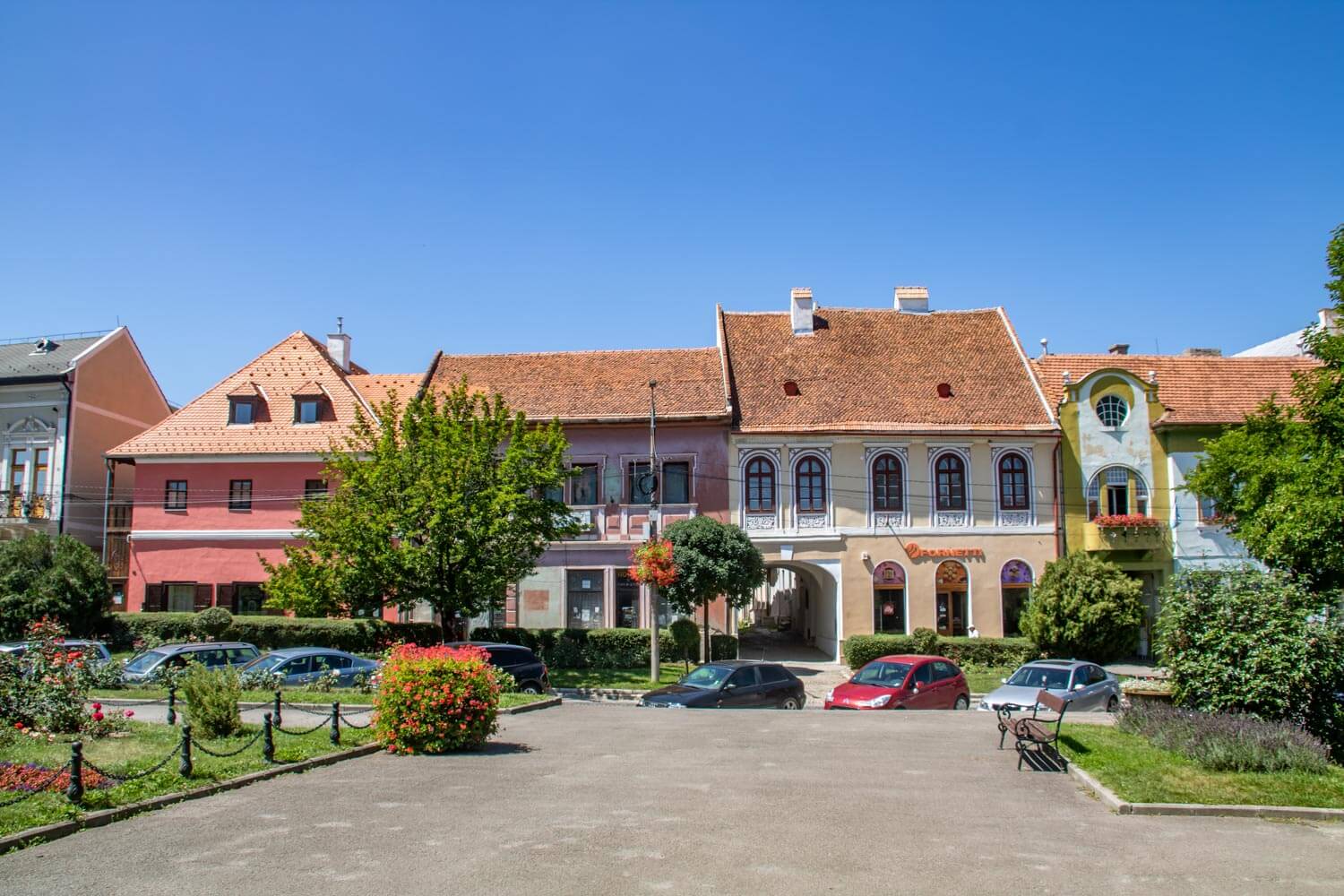
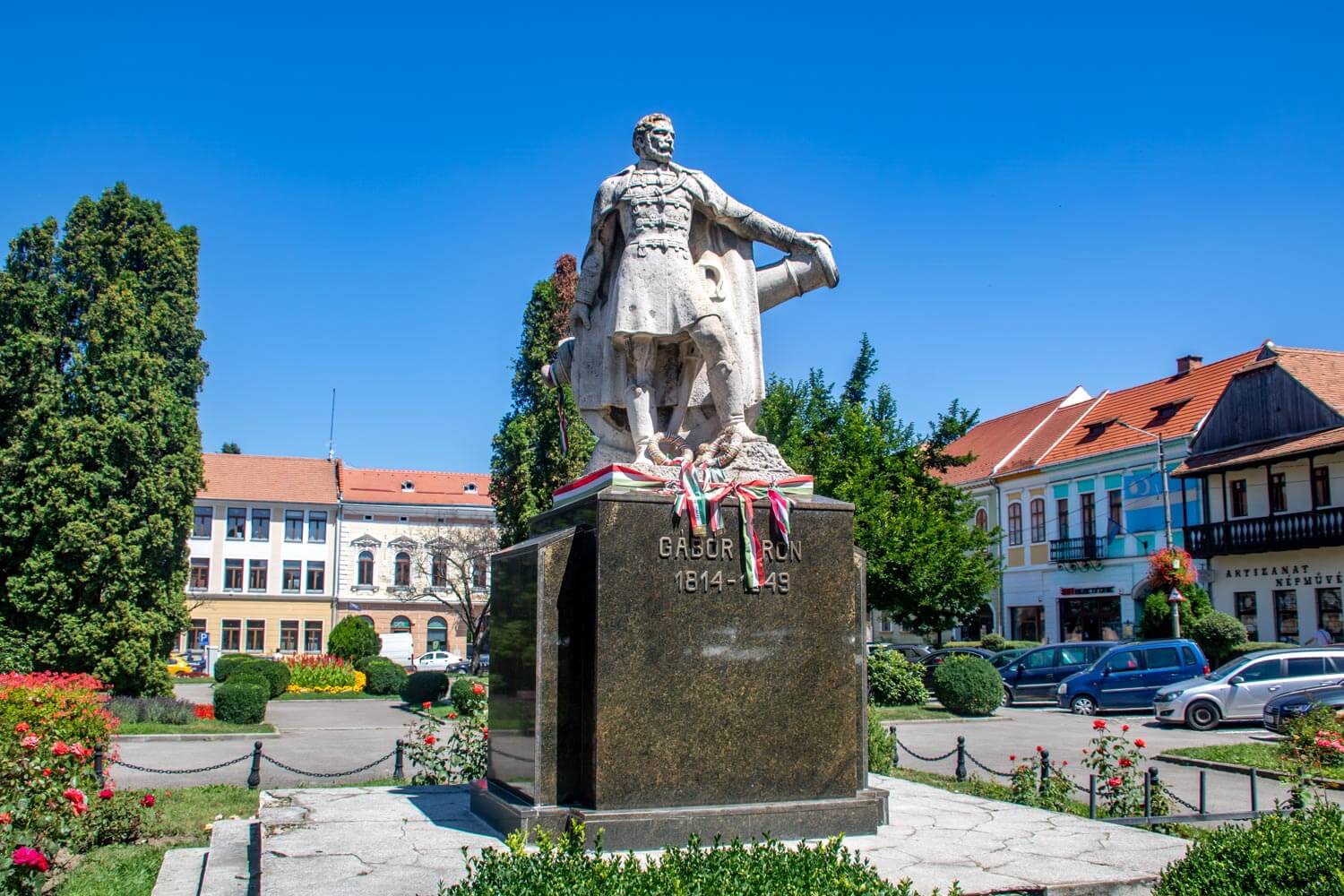
Áron Gábor Square (Piața Gábor Áron) is the historic main square of Târgu Secuiesc, surrounded by 19th- and early 20th-century buildings and a distinctive network of narrow courtyard passages. Originally the town’s marketplace, the elongated, roughly trapezoidal square developed into its commercial and administrative center. Its central area is now landscaped as a small park with walking paths, flowerbeds, and the statue of Székely artillery officer Áron Gábor.
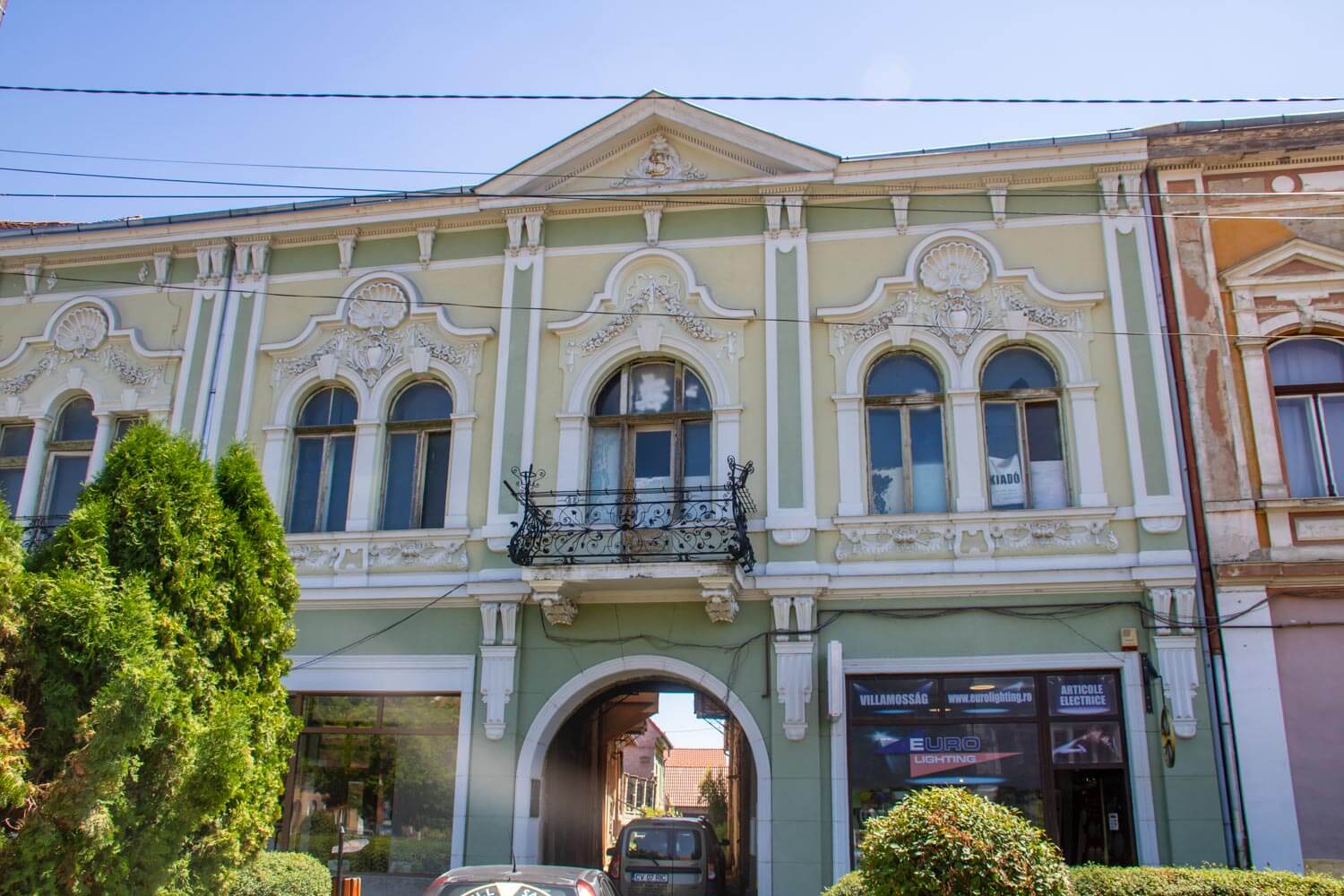
Târgu Secuiesc developed around the marketplace, where merchants and craftsmen sold their goods directly in front of their houses and workshops. The original plots were long and narrow, extending backward from the square toward the surrounding fields. As families grew, additional houses and workshops were built along these plots, gradually forming narrow passages known in Hungarian as udvarterek. Many of these passages survive today, extending between the buildings around the square and forming an unusual network of small residential courtyards. Originally named after the families who lived there, they were gradually numbered during the second half of the 19th century.
A devastating fire in 1834 destroyed most of the buildings around the marketplace, which were largely constructed of wood. The square was subsequently rebuilt, particularly during the late 19th and early 20th centuries, when prosperous merchants and local institutions erected larger stone and brick buildings. Their façades incorporate elements of Baroque, Neoclassical, eclectic, and Art Nouveau architecture, while many retain decorative wrought-iron gates and balconies. The historic center escaped large-scale redevelopment during the communist period, preserving its characteristic arrangement of buildings and courtyards.
Among the prominent buildings surrounding the square are the Reformed Church, the Vigadó Cultural Center, the Art Nouveau City Hall, originally built as a savings bank, and the former Town Hall, which housed the Incze László Guilds History Museum. The central park contains the Áron Gábor Statue, installed in 1971 to commemorate the artillery officer who organized cannon production in Târgu Secuiesc during the Hungarian Revolution of 1848-1849. The streets around the square also contain shops, cafés, and entrances to the historic courtyards, several of which can be explored on foot.