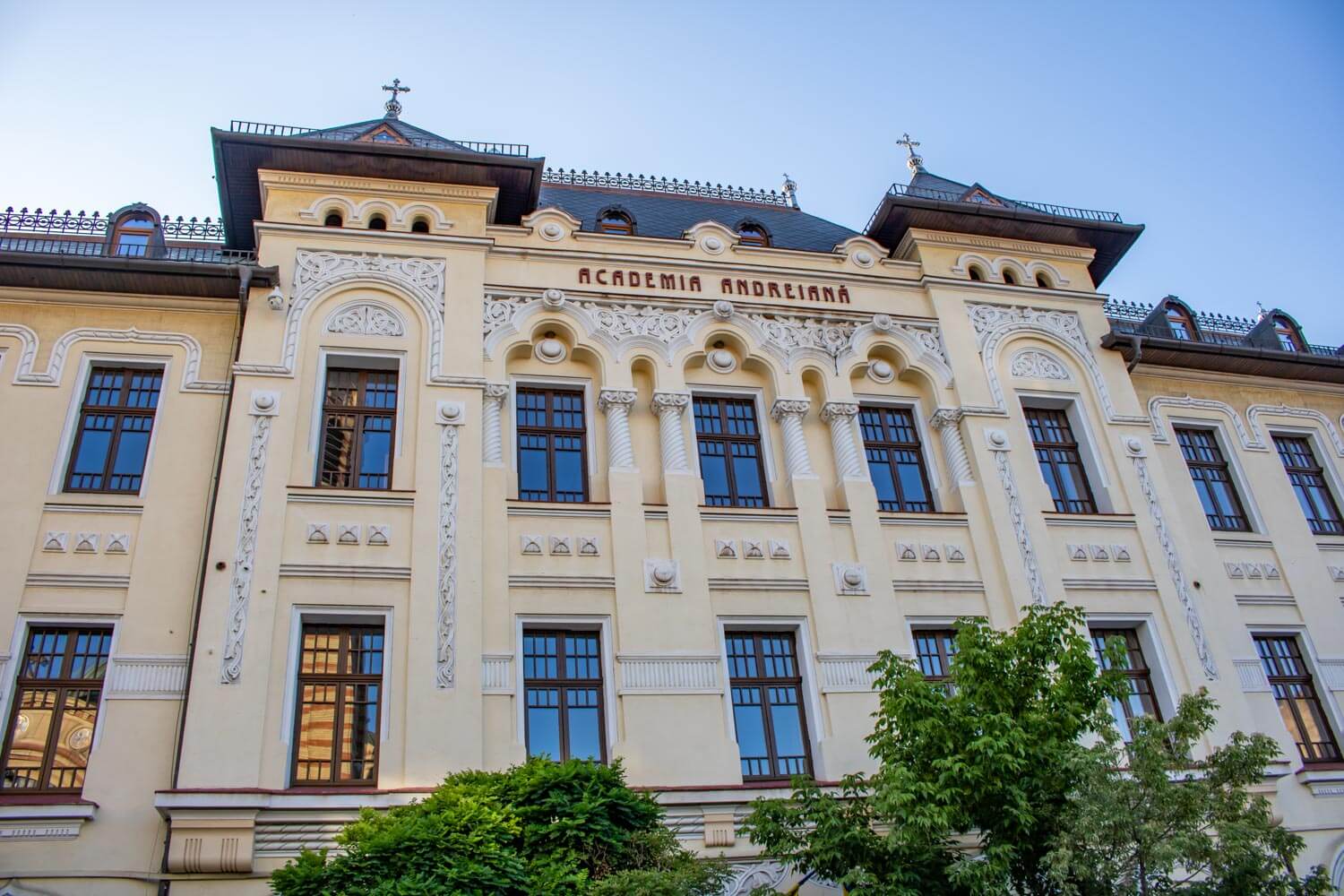
The Holy Trinity Cathedral (Catedrala Mitropolitană Sfânta Treime) is the principal Orthodox cathedral in Sibiu and the seat of the Metropolitanate of Transylvania, standing on Strada Mitropoliei opposite the historic Metropolitanate and Faculty of Theology.
The idea of giving Sibiu’s Orthodox community a cathedral worthy of its growing institutional importance was first pushed forward by Andrei Șaguna in 1857. After obtaining imperial approval from Franz Joseph I, Șaguna launched a fundraising campaign across the diocese, contributing himself alongside clergy, parishioners and other donors. The project took decades to realize, however, and construction did not begin until the beginning of the 20th century under Metropolitan Ioan Mețianu. The new cathedral was planned for the site of an older Greek Orthodox church that had stood here since the late 18th century.
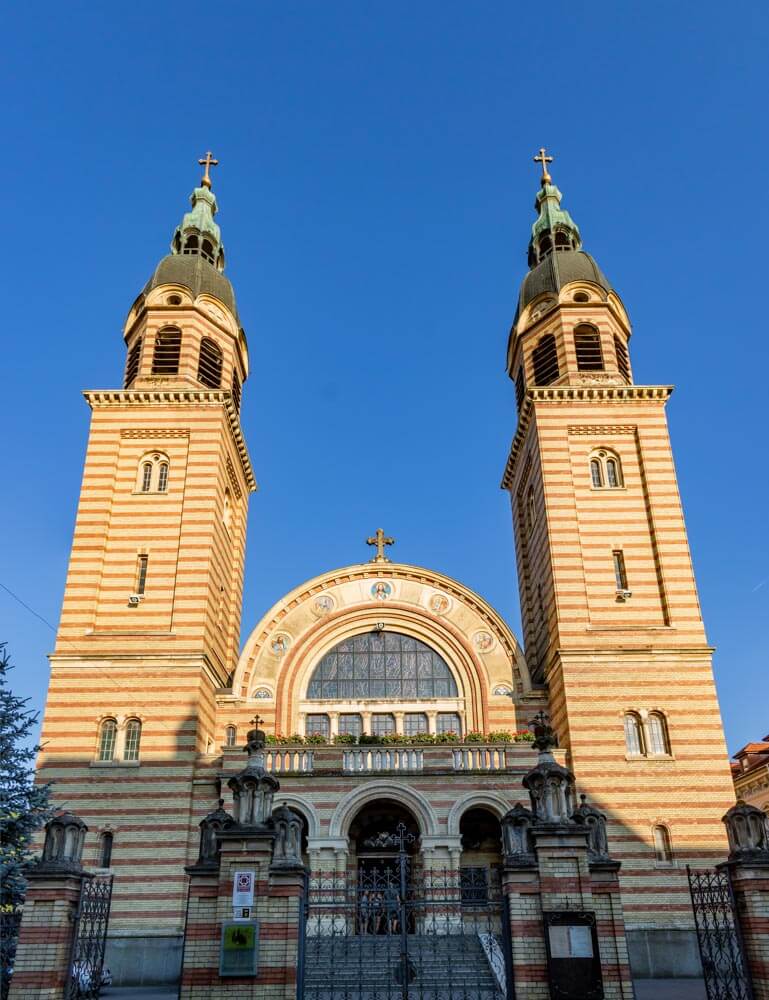
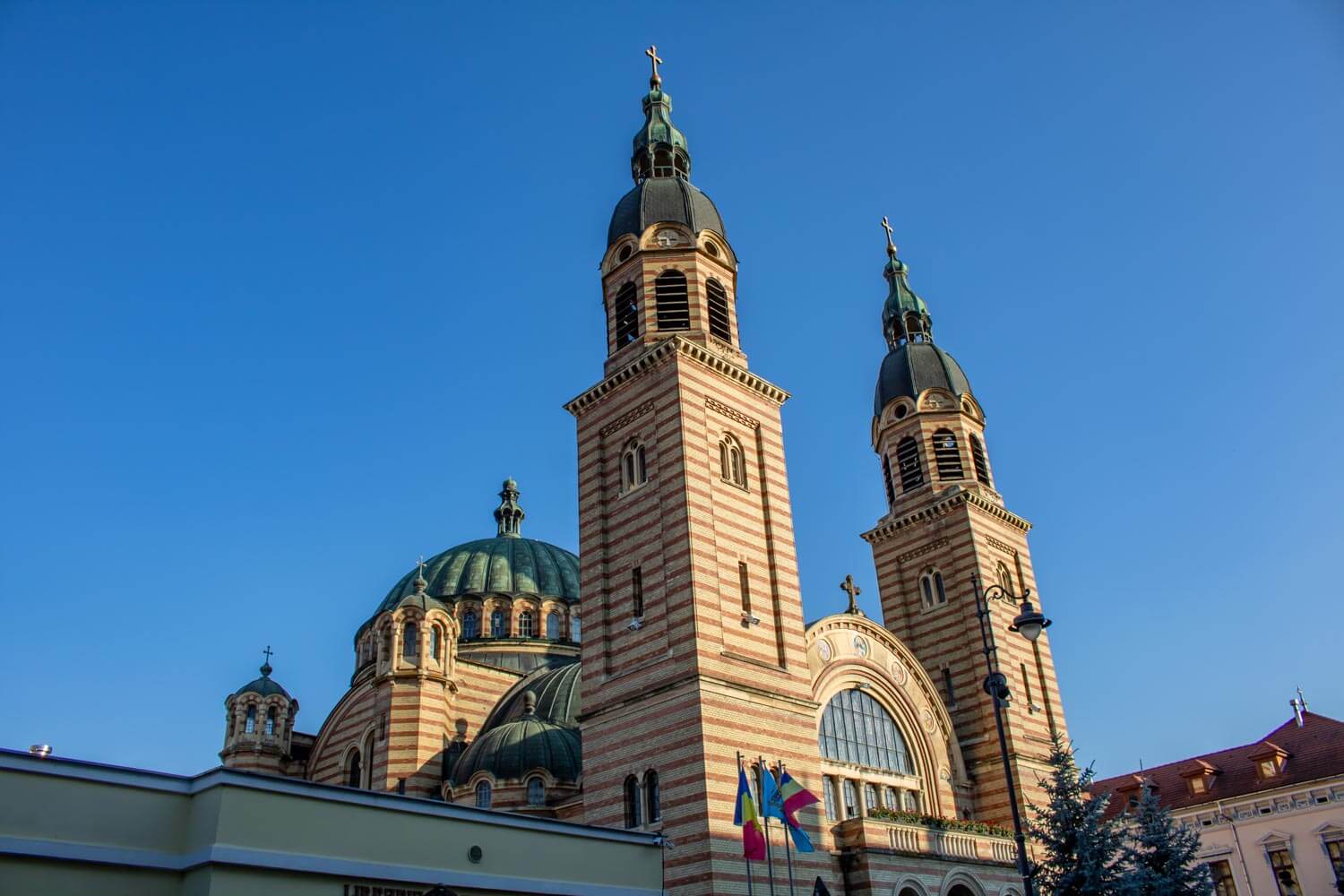
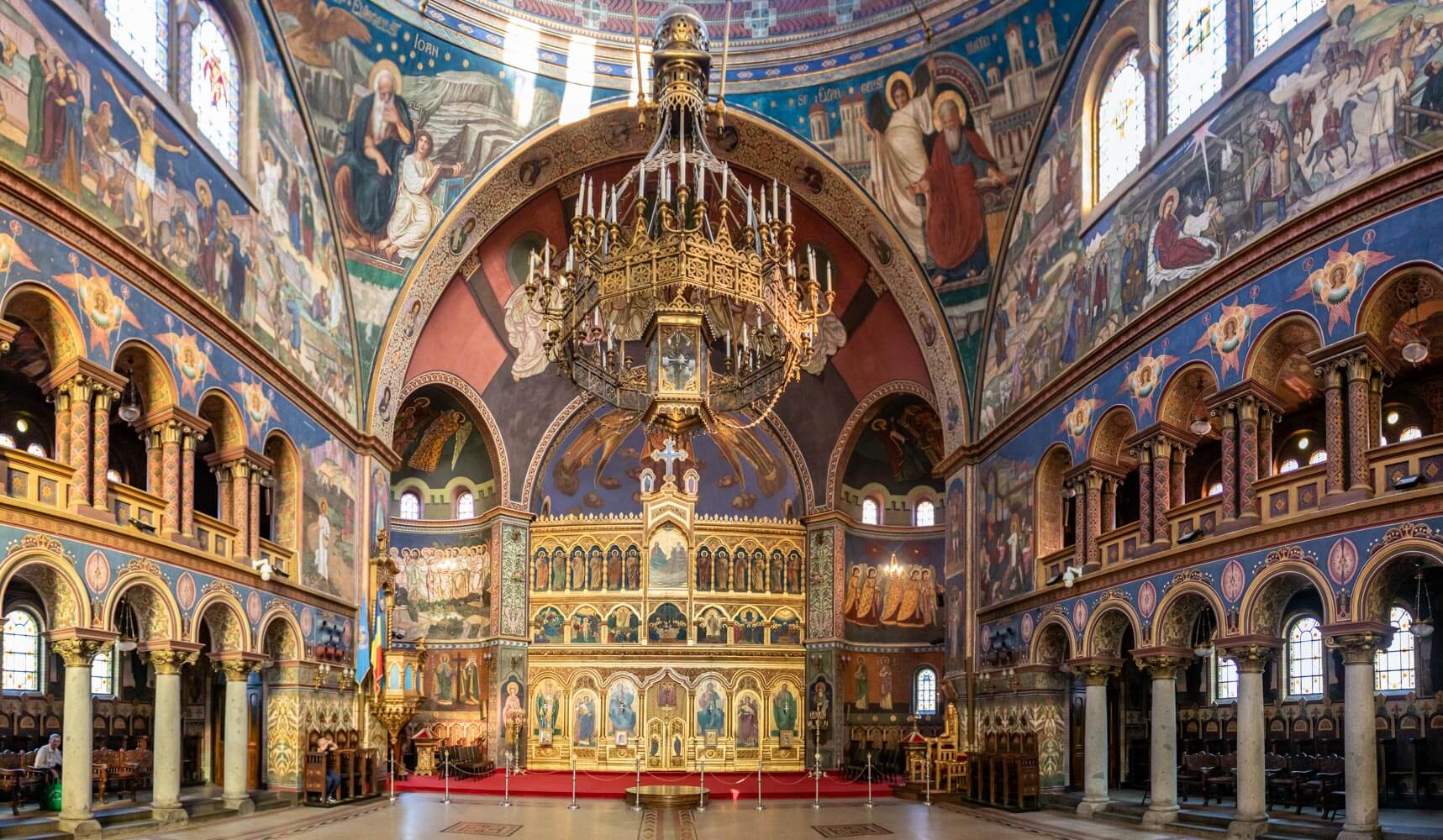
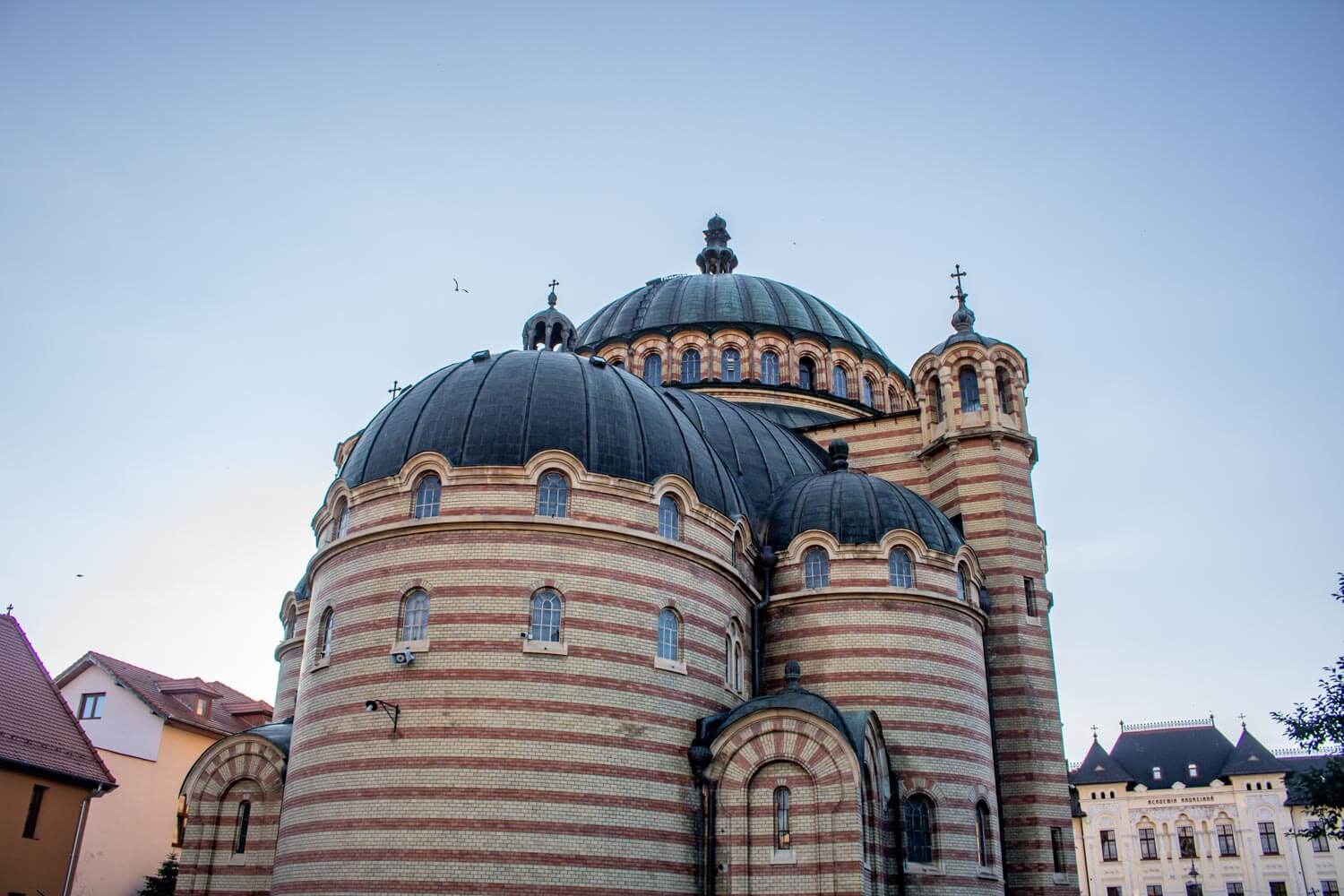
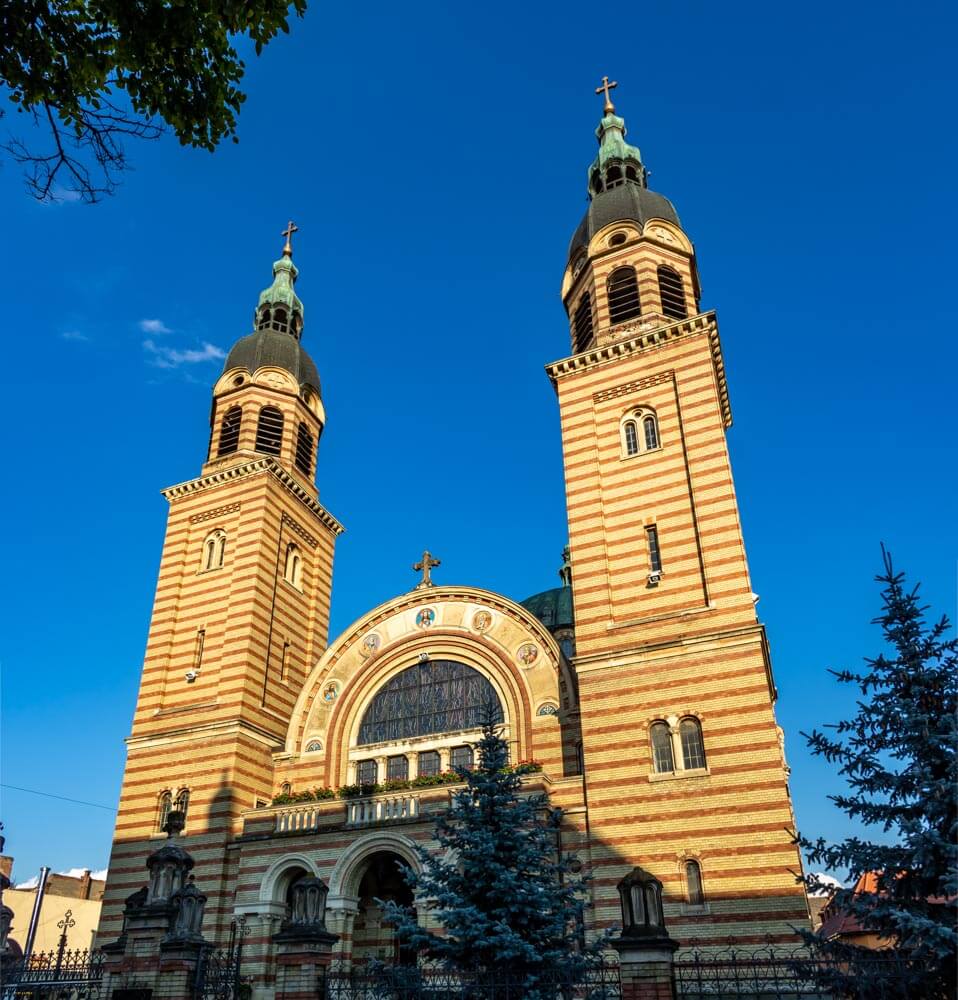
Before work could begin, a competition attracted 31 architectural proposals, from which the design by Virgil Nagy and Iosif Kamner of Budapest was selected. Their scheme drew heavily on Byzantine models, especially the Hagia Sophia in Constantinople, with a broad central dome and a compact, centrally organized interior. Two tall bell towers were placed on the entrance façade, creating the monumental front that now dominates this stretch of Strada Mitropoliei.
Construction began in 1902 under the local supervision of Sibiu architect Iosif Schussnig. By 1904 the main structure had been completed and covered with its copper roof, while the bells had also been installed in the towers. Work then continued on the iconostasis, episcopal throne, paintings and other interior furnishings before the cathedral was consecrated by Metropolitan Ioan Mețianu on April 30, 1906, almost half a century after Șaguna had first called for its construction.
The finished cathedral measures just over 53 meters in length, with a central dome around 15 meters in diameter and towers rising to approximately 45 meters including their crosses. The broad dome dominates both the exterior and the interior, giving the building a profile very different from Sibiu’s medieval churches nearby and making it one of the city’s most distinctive early-20th-century religious buildings.
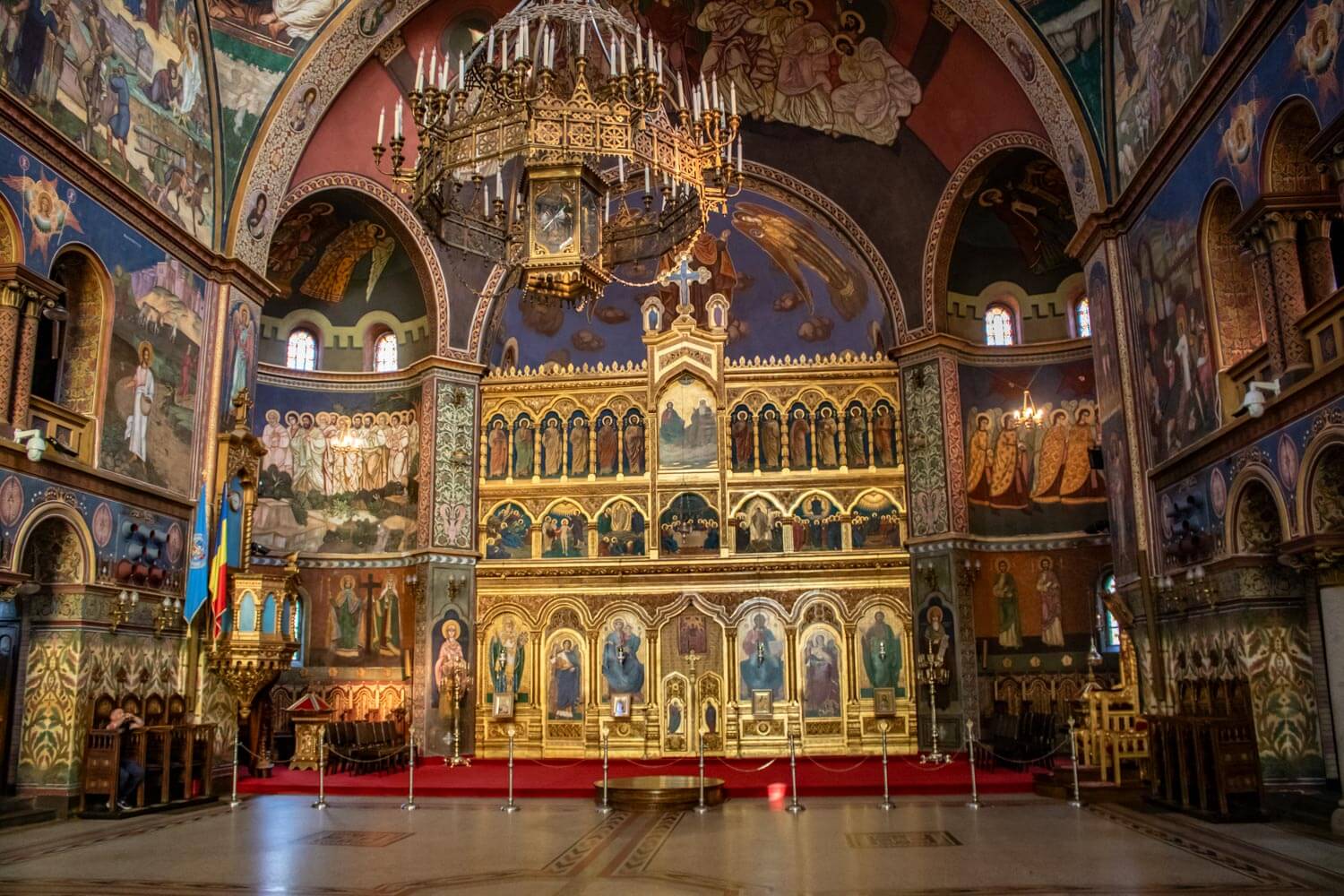
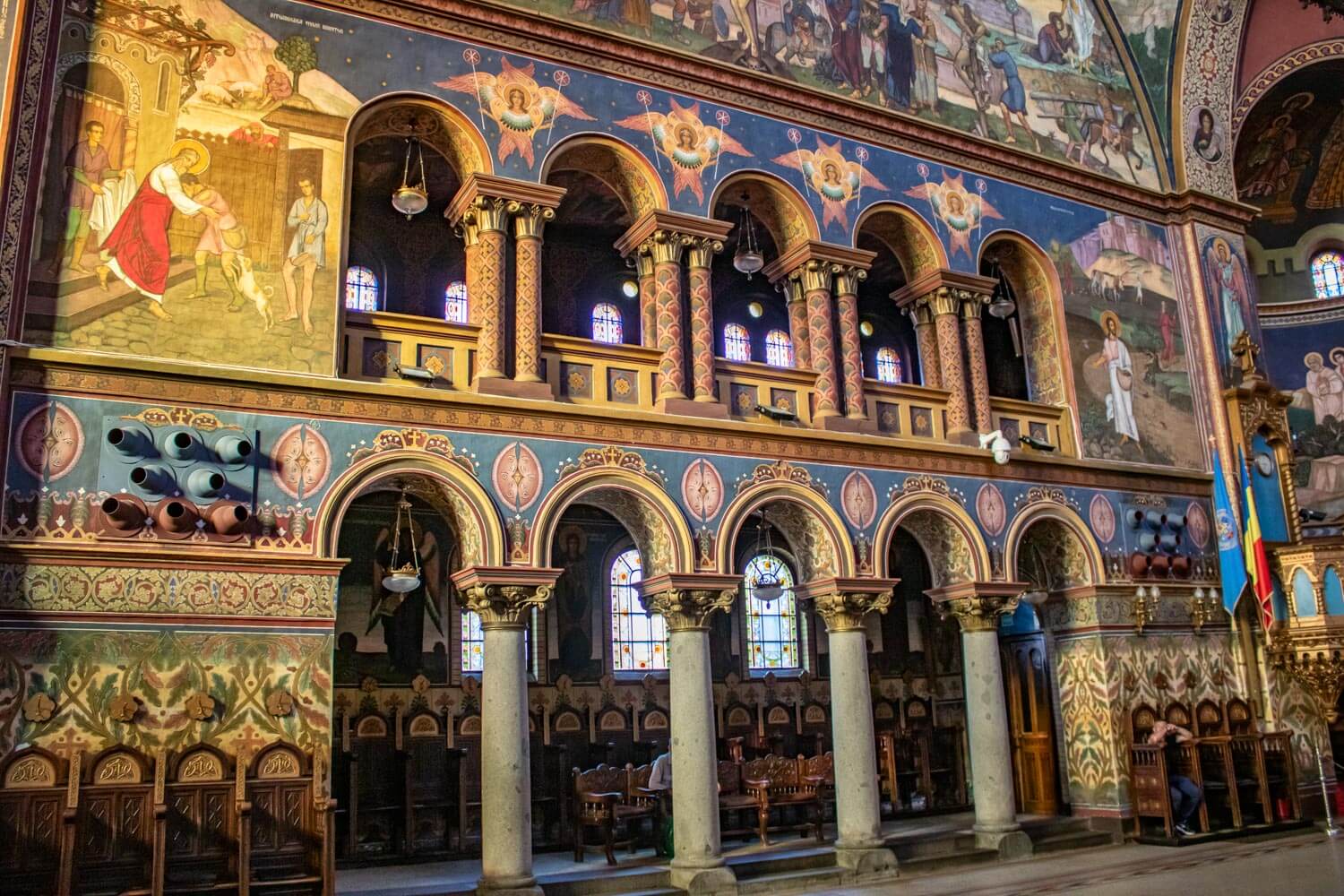
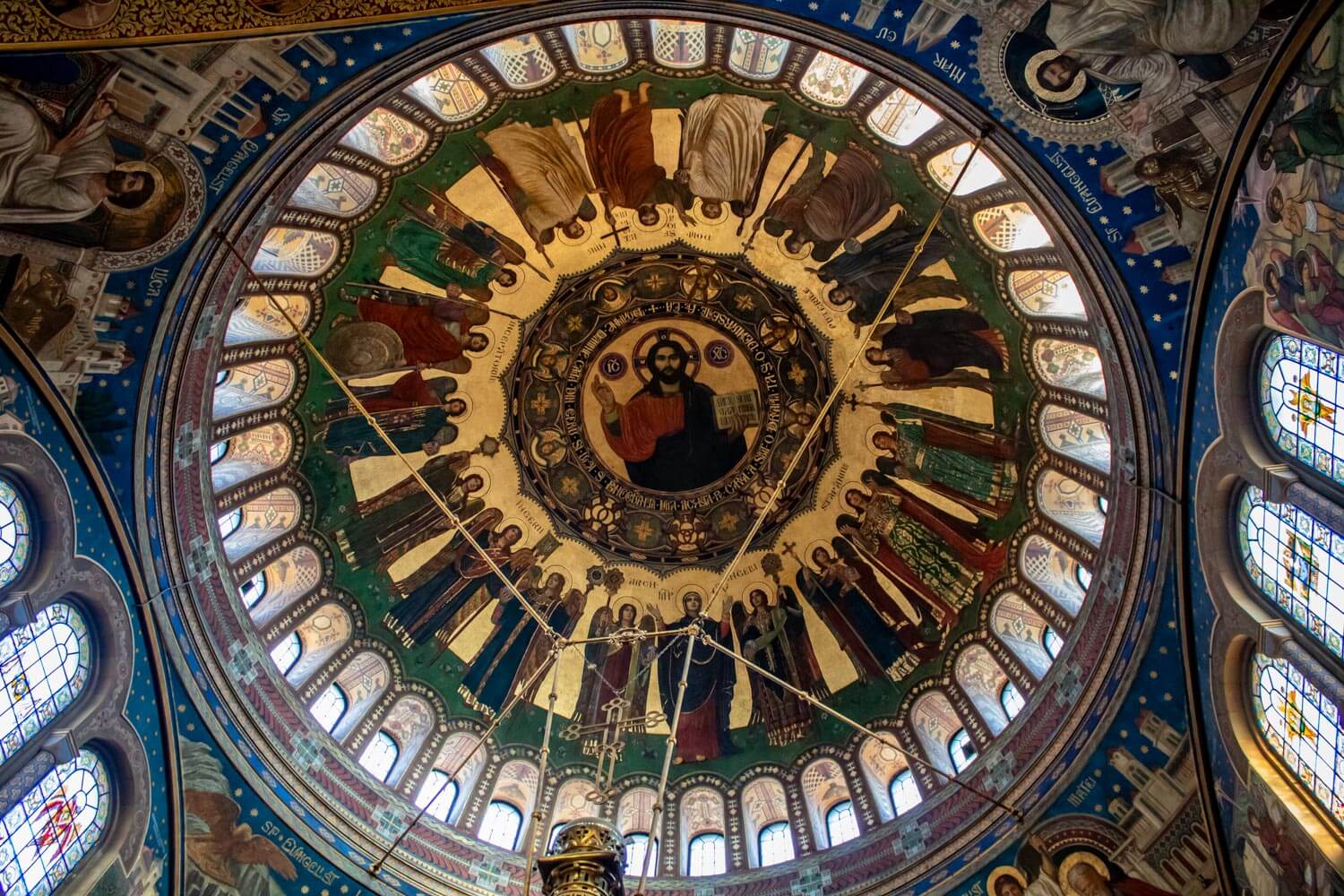
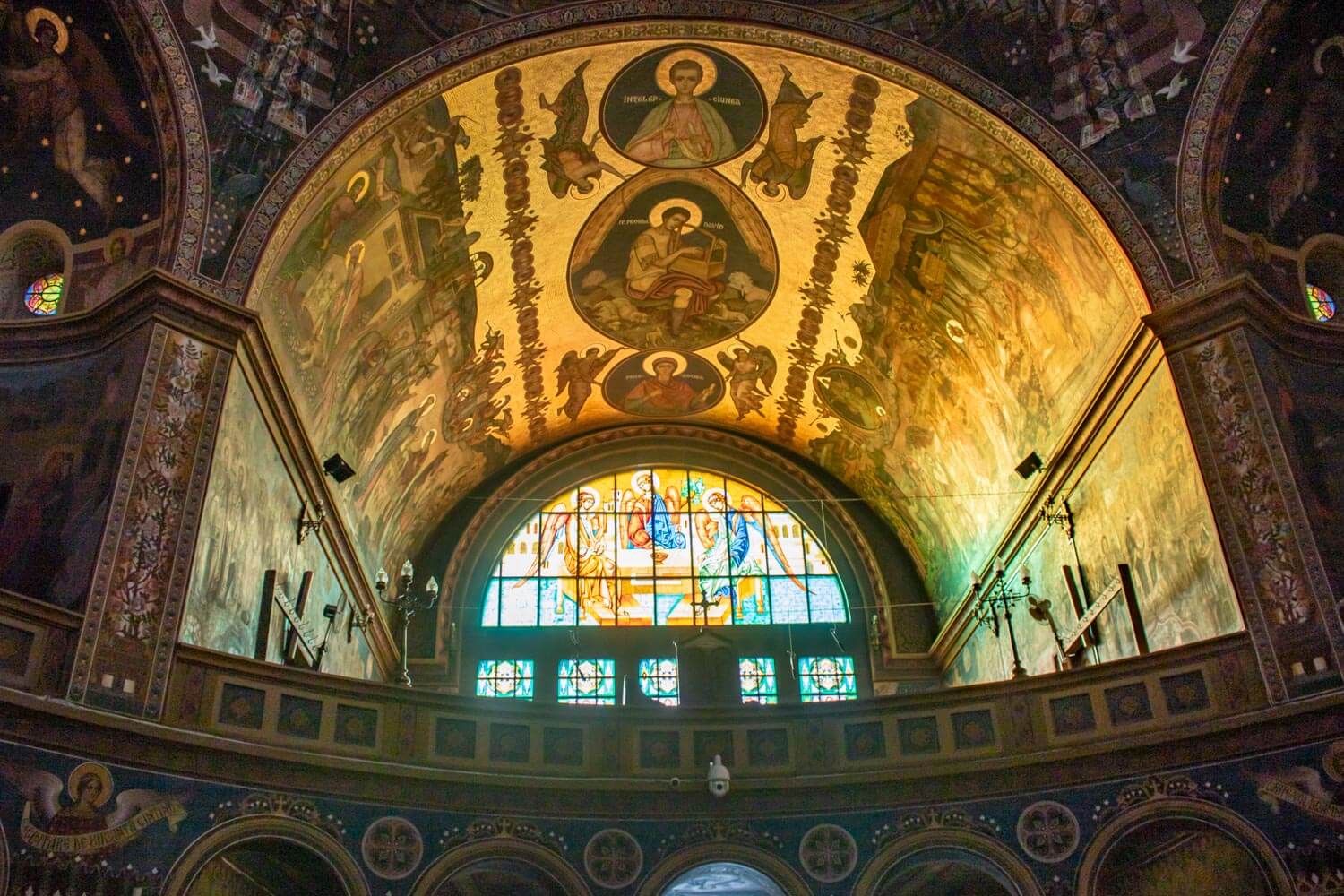
Much of the richness of the interior comes from the work of Octavian Smigelschi, who painted Christ Pantocrator inside the dome, the four Evangelists on the pendentives and parts of the gilded wooden iconostasis. His decoration developed a Neo-Byzantine style that combined Byzantine forms with elements drawn from Romanian decorative traditions. The iconostasis and episcopal throne were produced in Bucharest from carved and gilded linden wood, while a miniature representation of the cathedral in gilded metal stands on the altar table.
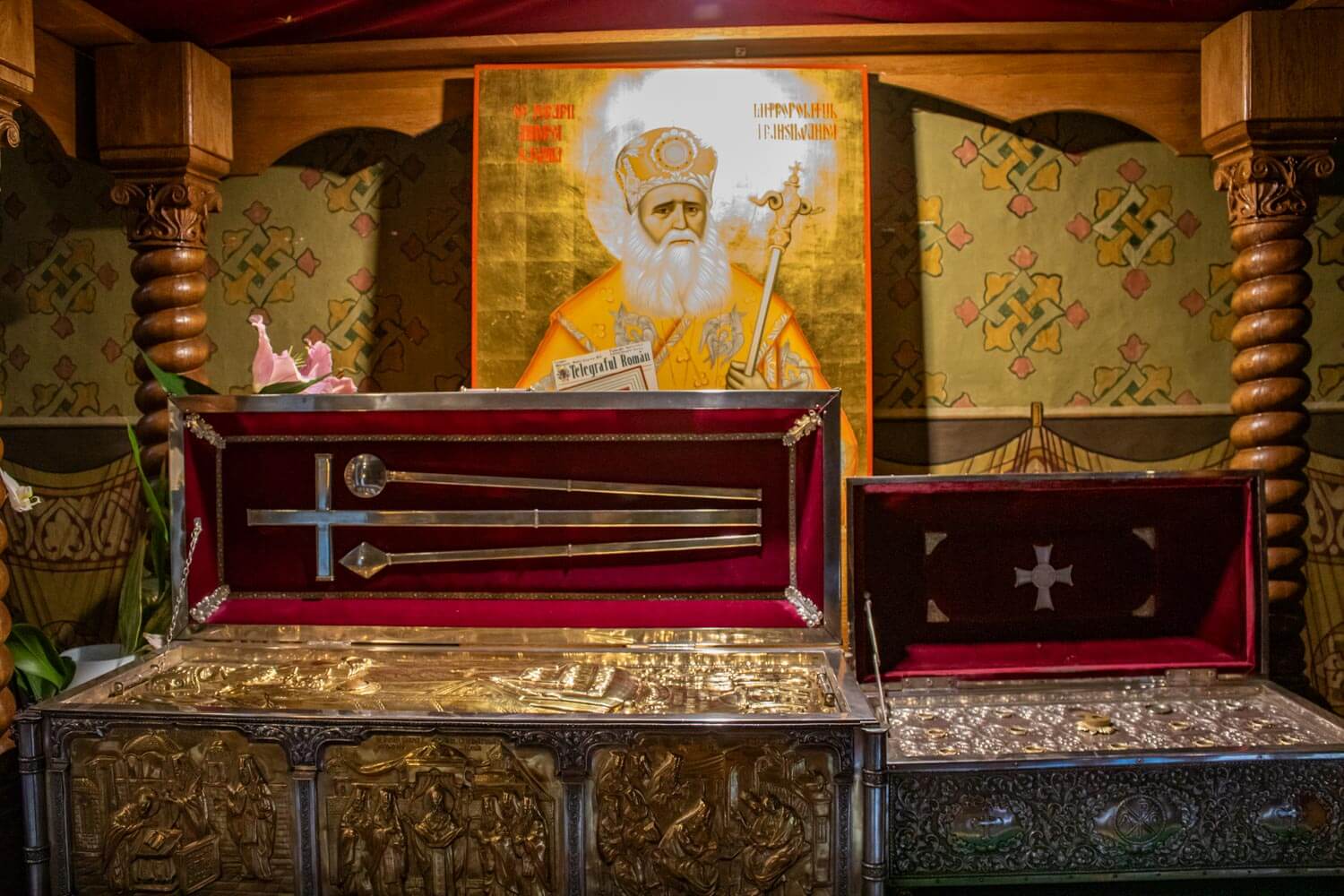
The cathedral also preserves the relics of Saint Andrei Șaguna, whose campaign had made its construction possible even though he died decades before the building was completed. His presence here gives the cathedral a direct connection with the wider Orthodox institutions across Strada Mitropoliei, where the Metropolitanate residence and the theological school he helped develop remain in use today. The cathedral continues to serve as an active center of Orthodox worship and the ceremonial heart of the Metropolitanate of Transylvania.