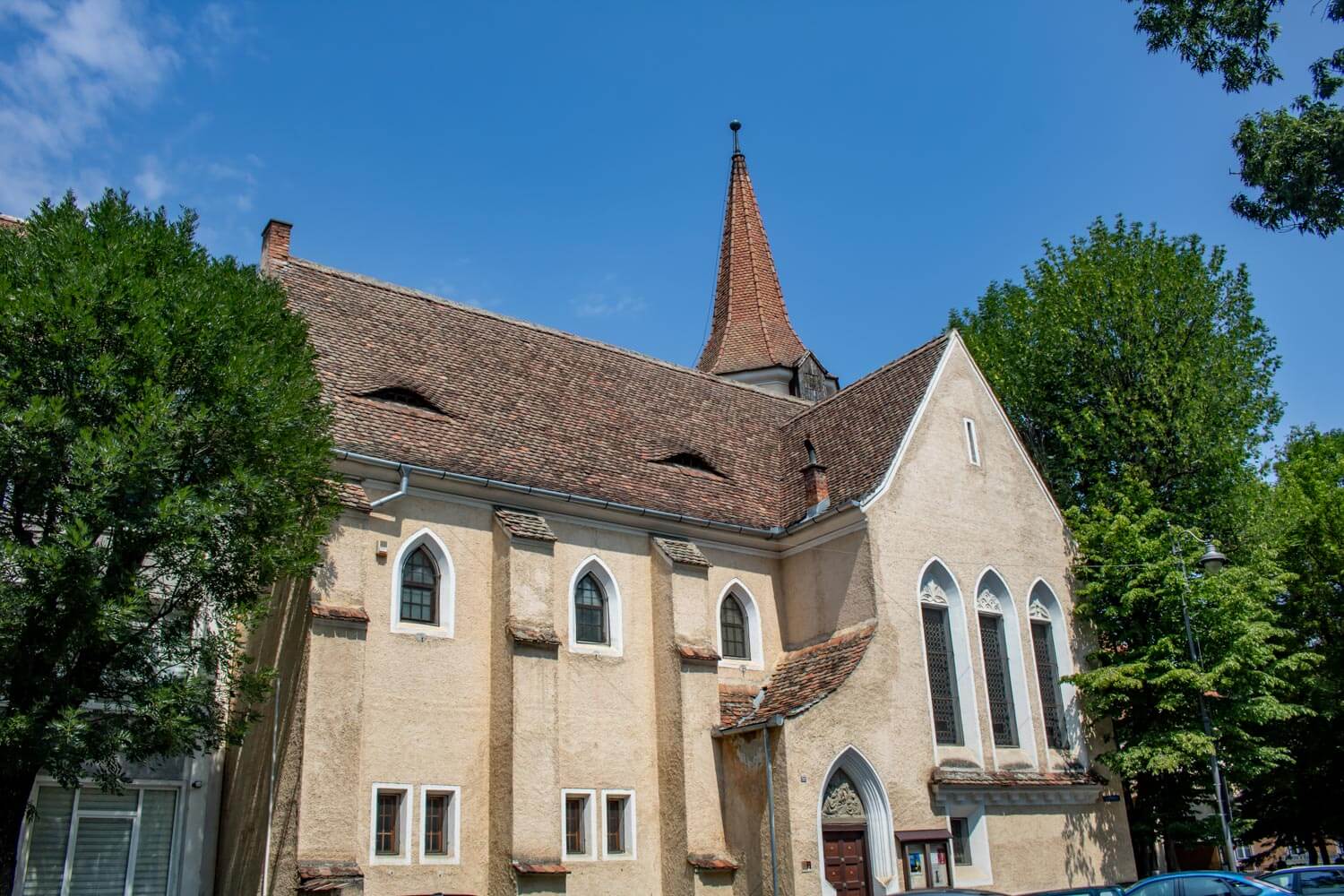
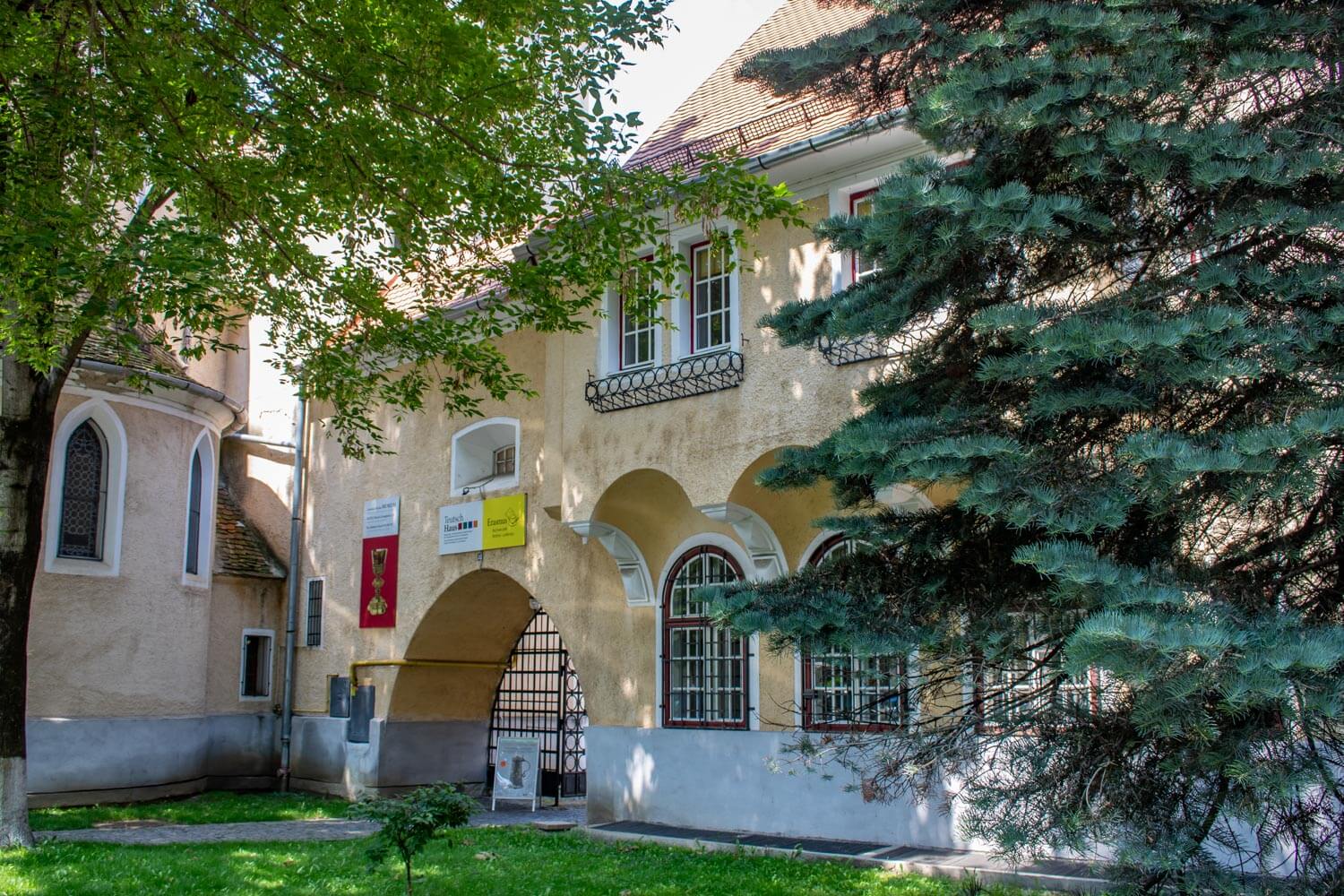
The Saint John Lutheran Church (Biserica Evanghelică Sfântul Ioan) is a small Neo-Gothic Lutheran church facing the Astra Park in Sibiu, forming part of the present Friedrich Teutsch House cultural and church complex.
The church grew out of a 19th-century Lutheran charitable foundation for the Iosefin district. In 1827, priest Johann Engelleiter left money for a church and pastor’s residence, and a larger complex was eventually built between 1881 and 1883. It included an orphanage, day care for schoolchildren, an Evangelical school and the first Saint John Church, completed in the year marking the 400th anniversary of Martin Luther’s birth.
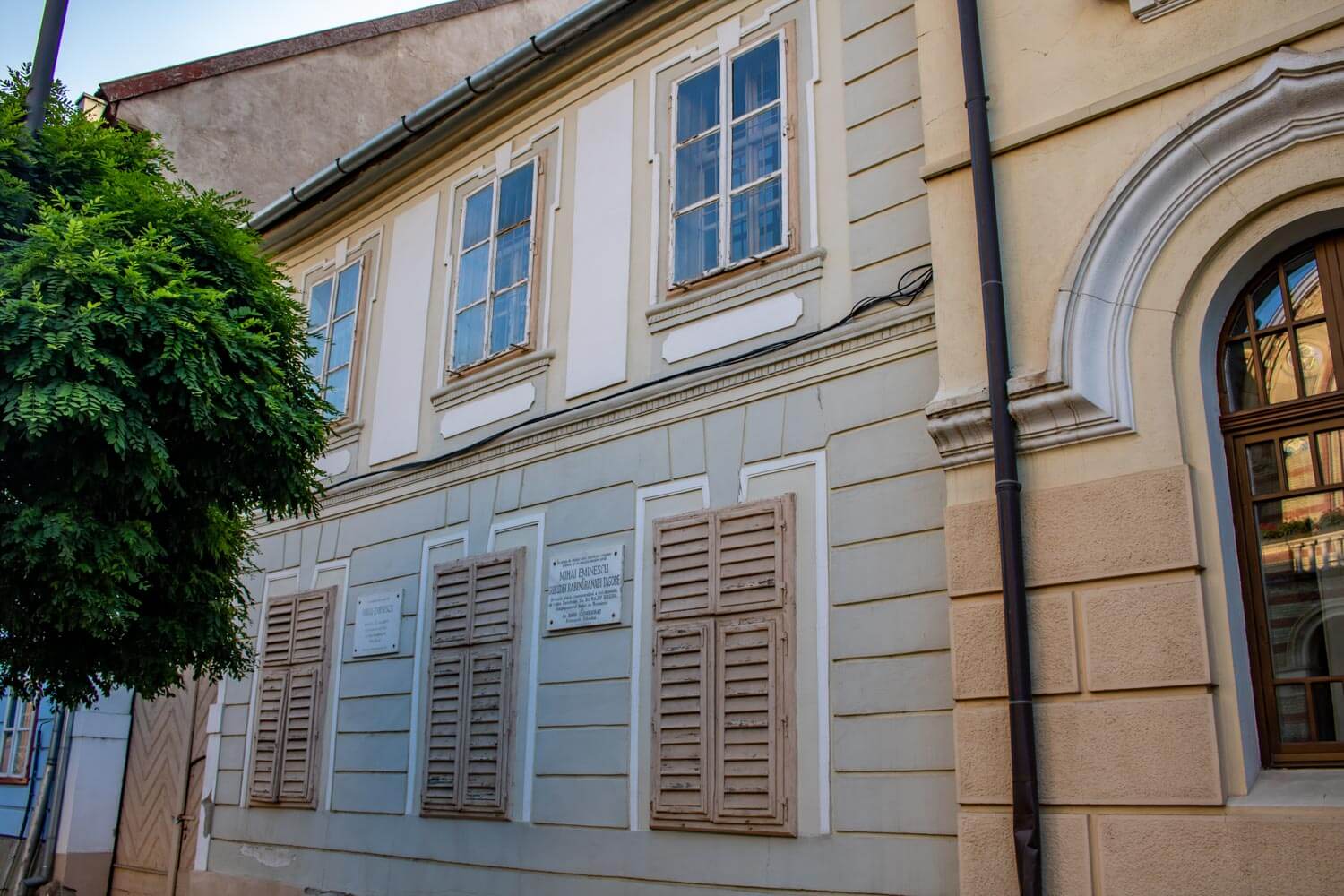
Structural problems forced the original church and neighboring residence to close in 1910, and both were demolished. The present church was completed in 1912 to designs by J. Bedeus von Scharberg, who rebuilt the complex in the form largely seen today. A covered passage above the gateway links the church with the former pastor’s residence, now the Friedrich Teutsch Center for Culture and Dialogue.
The compact church has a cruciform plan and an octagonal tower, while its brick exterior and pointed openings preserve the Neo-Gothic character of the earlier complex. Inside are two much older medieval polyptych altarpieces brought from Saxon churches elsewhere in Transylvania. The eastern altar came from Fișer and contains scenes from the life of Saint Martin, while the western altar from Roadeș includes sculptures of Saint John the Baptist and Saint John the Evangelist attributed to the workshop of Veit Stoss. A relief of Jesus with children above the entrance dates from the original 1883 church and was commissioned in Vienna.
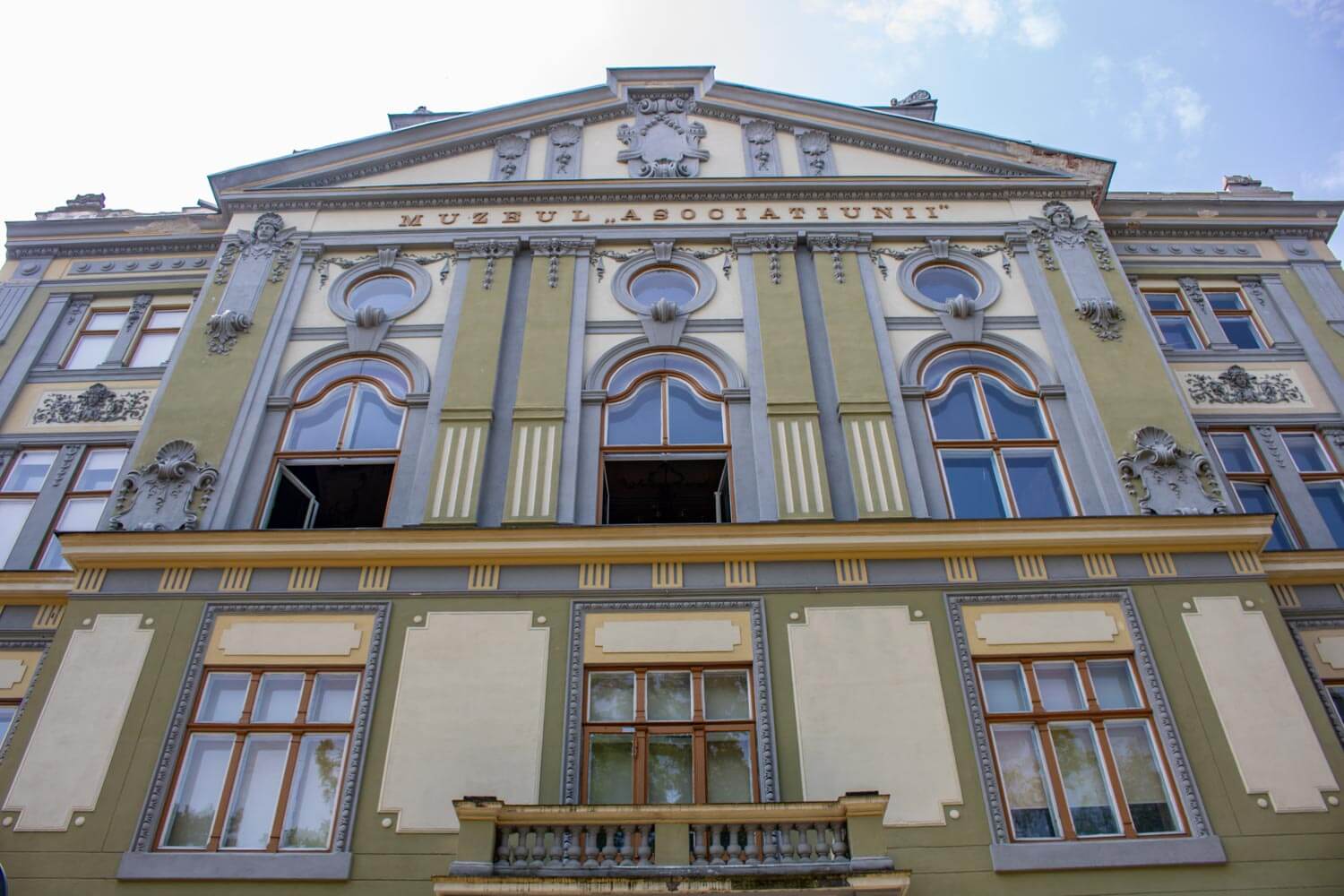
The surrounding Teutsch House complex now brings together several institutions of the Evangelical Church of the Augsburg Confession in Romania, including its church museum, central archive, cultural center and a German-language bookshop and café. Saint John Church remains in religious use and is also opened to visitors during parts of the year.