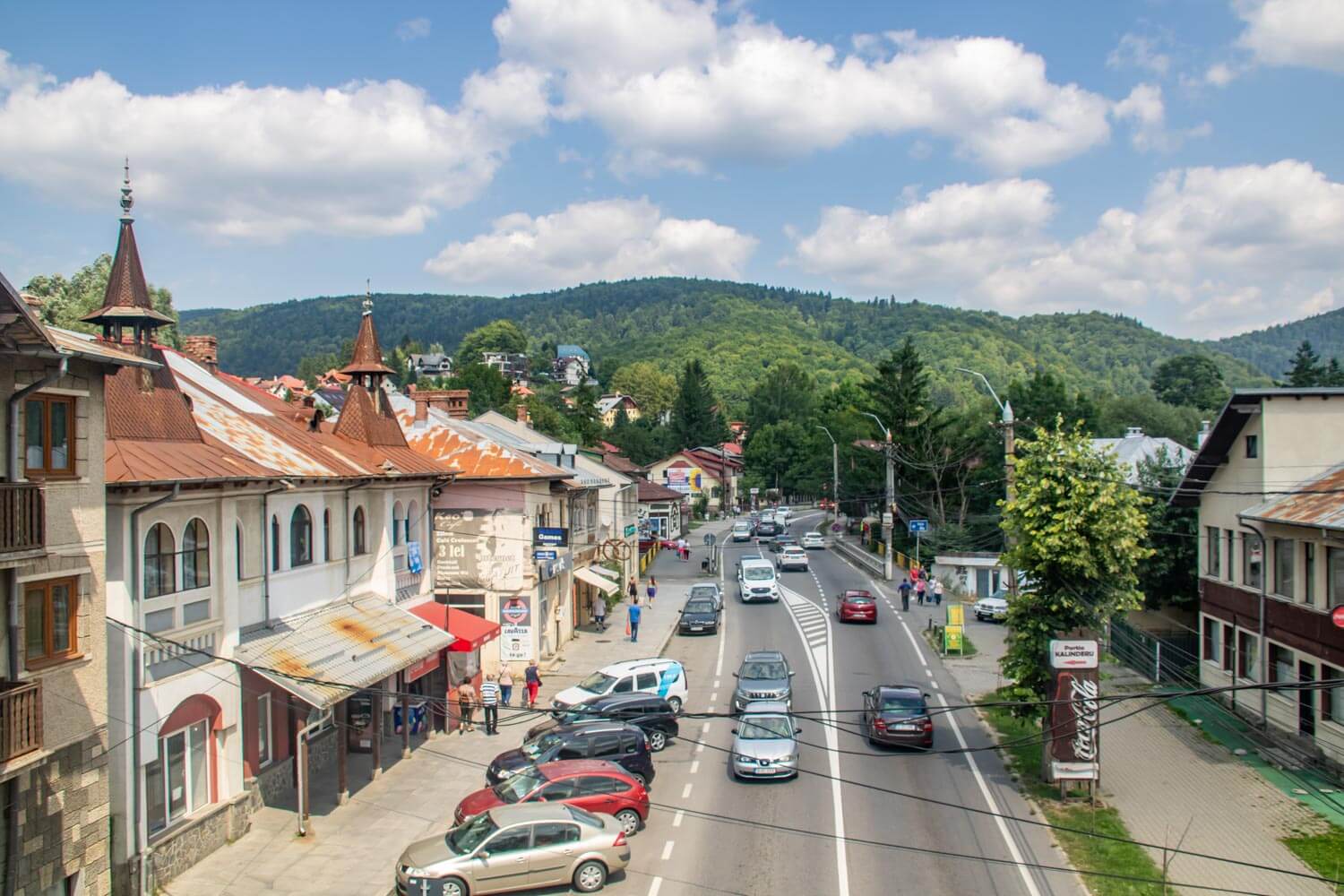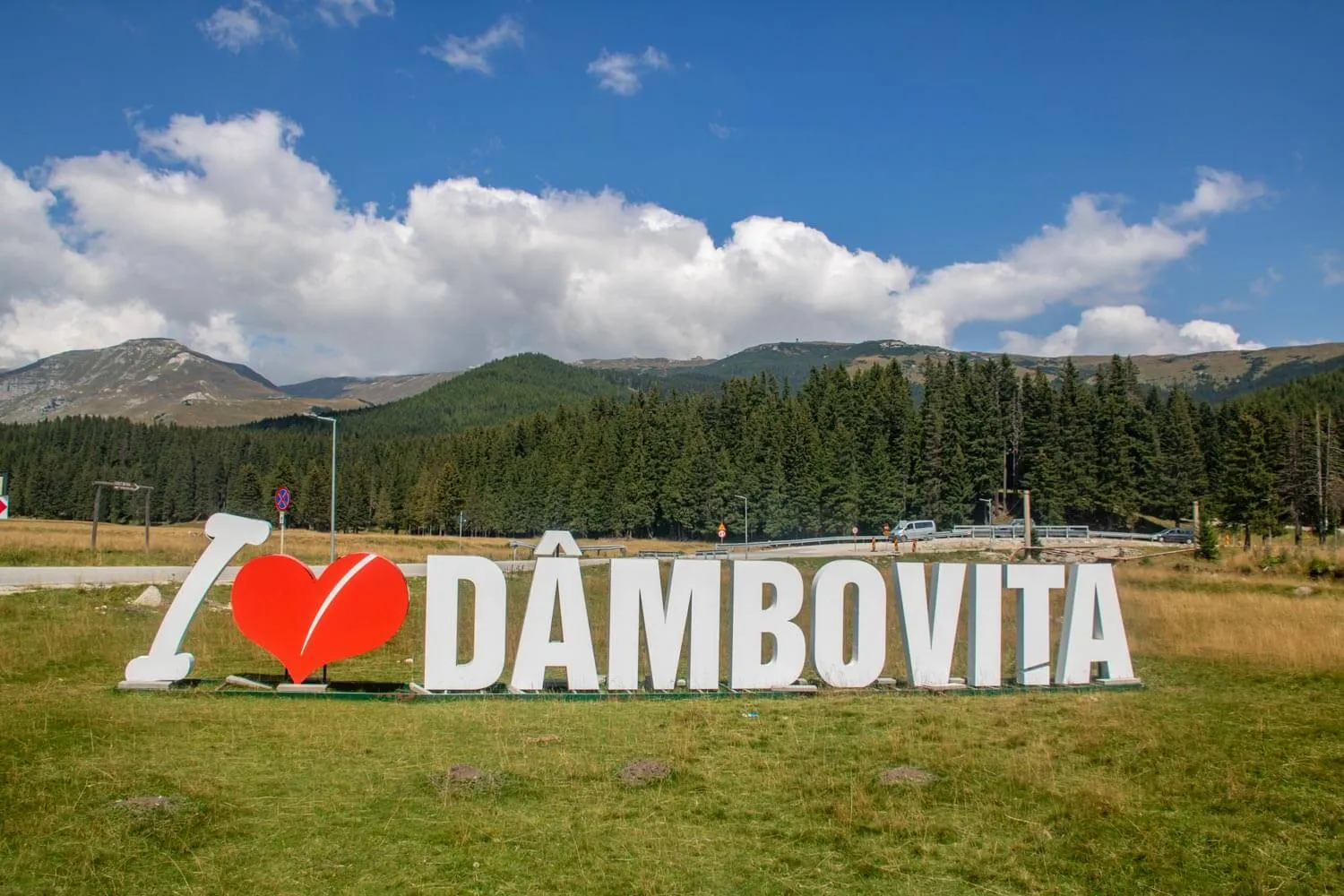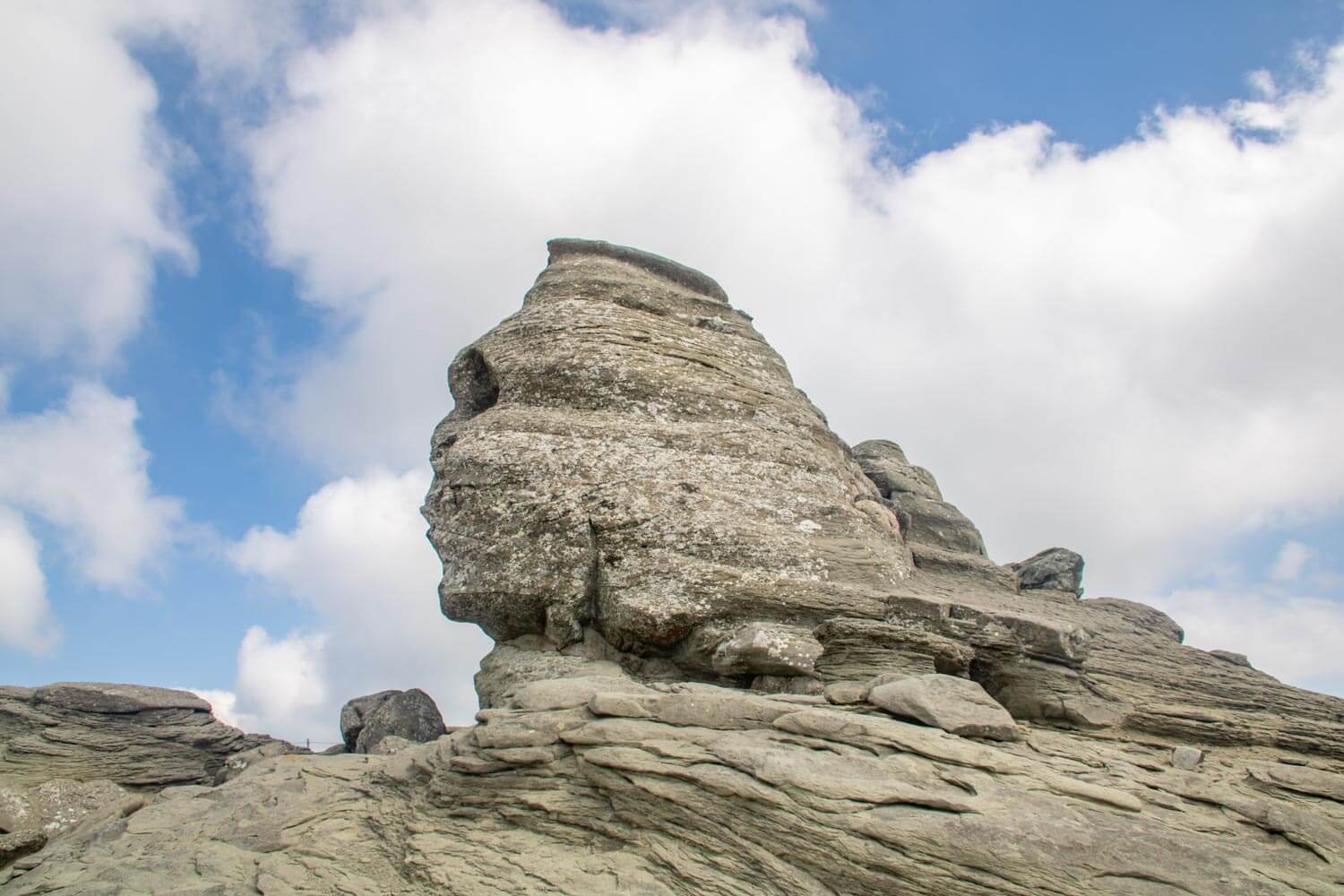
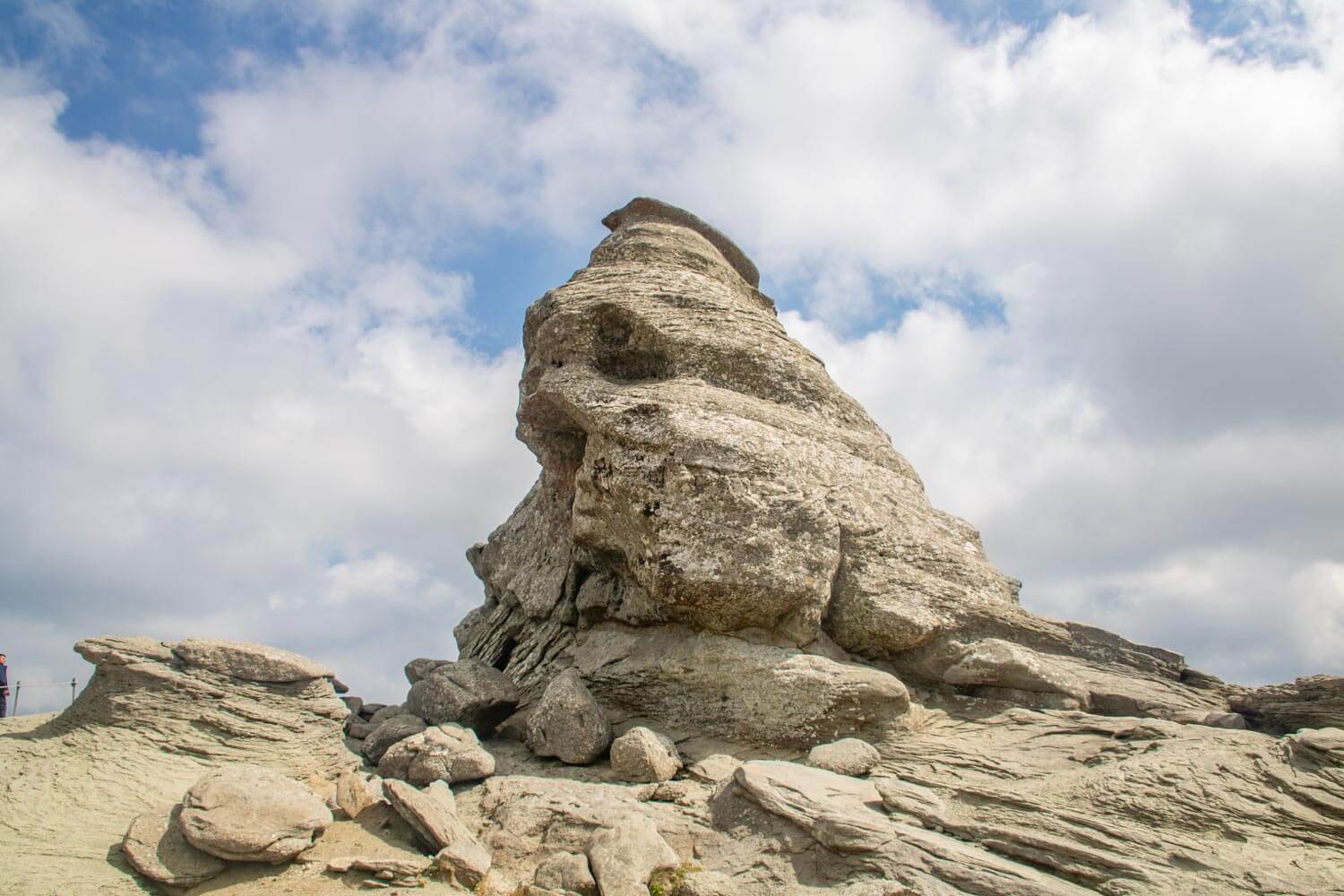
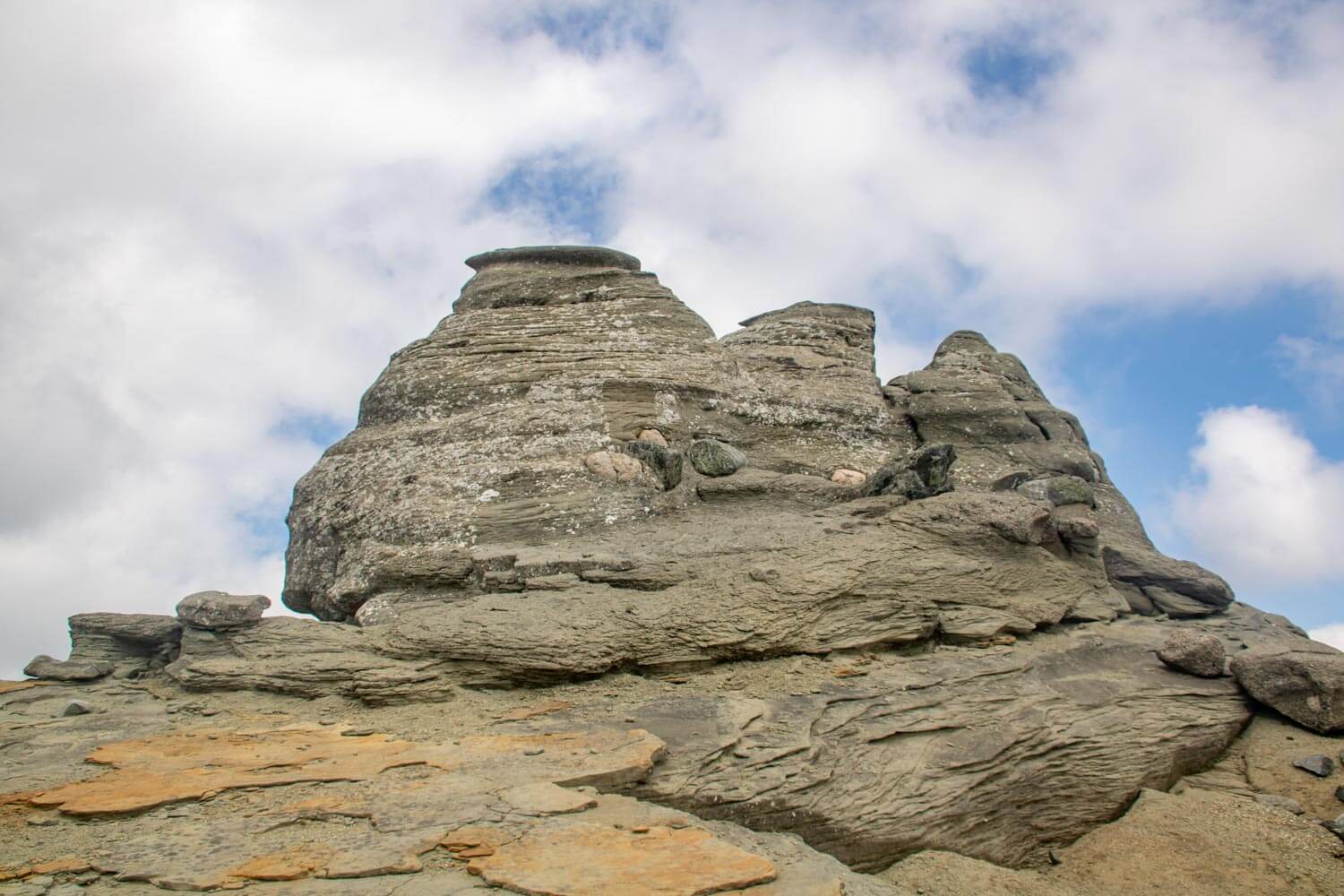
The Sphinx of Bucegi (Sfinxul din Bucegi) is one of the best-known natural landmarks of the Bucegi Mountains, standing on the high plateau near Babele at around 2,200 meters above sea level. Although most visitors approach from Bușteni (Prahova County) by cable car, the formation itself lies in Dâmbovița County, within the territory of the Moroeni commune.
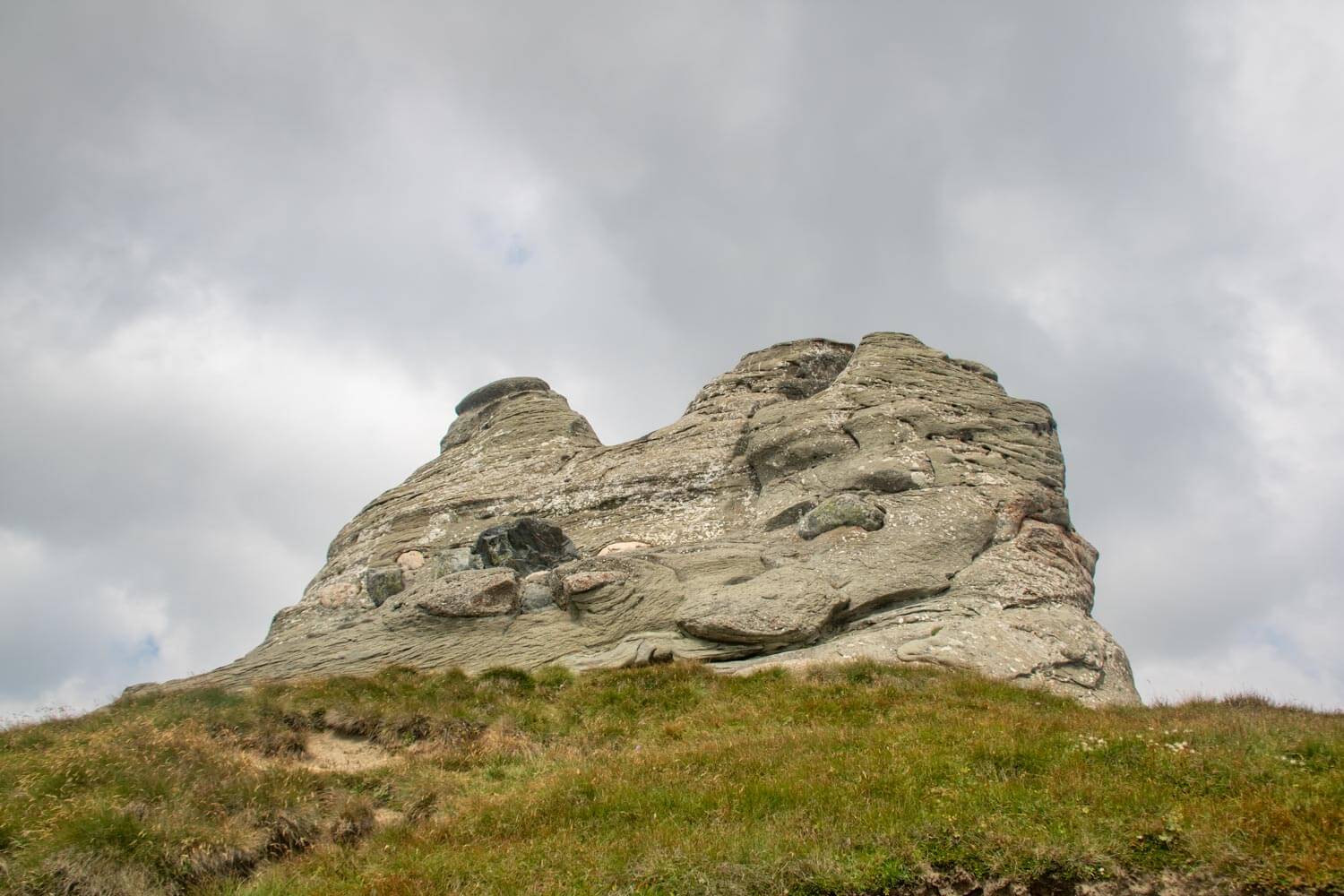
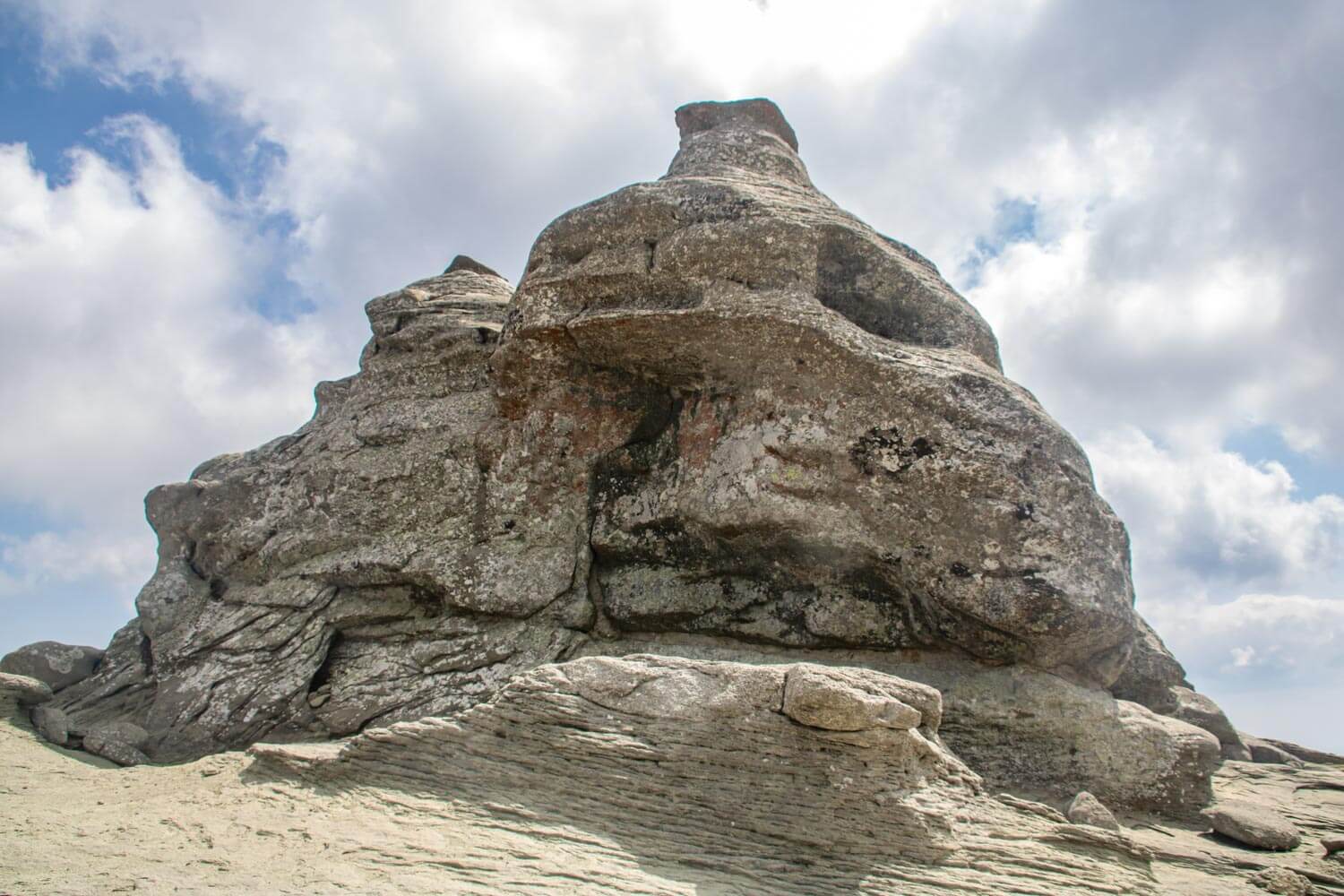
The rock takes its name from the human profile that appears when it is viewed from a particular angle, with a broad forehead, nose and lips emerging from the weathered stone. From other directions, the resemblance is much less obvious, which is part of what makes the formation so striking when the familiar silhouette suddenly appears.
Like the nearby Babele formations, the Sphinx was shaped naturally from the conglomerate and sandstone of the Bucegi Plateau. Over long periods of time, wind, frost, rain and repeated temperature changes wore away the softer material while harder layers resisted erosion, gradually producing the unusual form seen today.
The rock was already known and photographed before the name Sphinx became established. Early images from around the beginning of the 20th century show it simply as part of the wider Babele landscape, while the comparison with the Great Sphinx of Giza became popular during the interwar period. By the 1930s, the human profile had become the defining view of the formation and the name Sfinxul din Bucegi entered common use.
Its unusual appearance later encouraged a wide range of legends and speculative interpretations. Some connect the Sphinx with Dacian religion, Zalmoxis, ancient sacred sites or even human intervention, while others attribute unusual energies or symbolic meaning to the location. These stories have become part of the modern folklore surrounding the Bucegi Mountains, but the formation itself is understood geologically as the result of natural erosion.
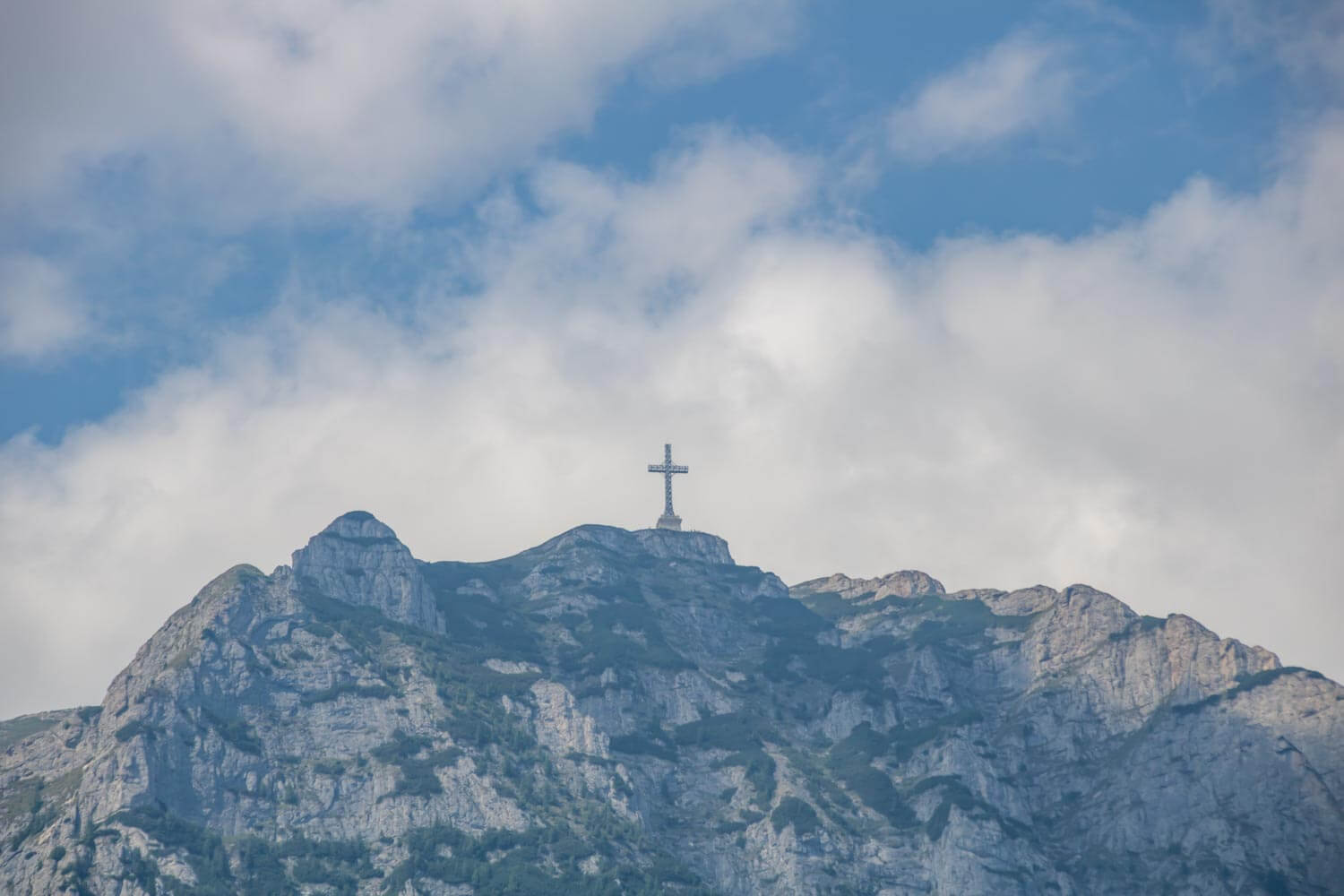
The setting adds as much to the visit as the rock itself, as the Sphinx stands on an open mountain plateau with broad views across the Bucegi landscape, where ridges, valleys, and distant peaks stretch out in several directions. On clear days, the elevated position makes the area a natural viewpoint as well as an attraction, while cloud, wind and rapidly changing weather can give the same landscape a completely different character within a short time.
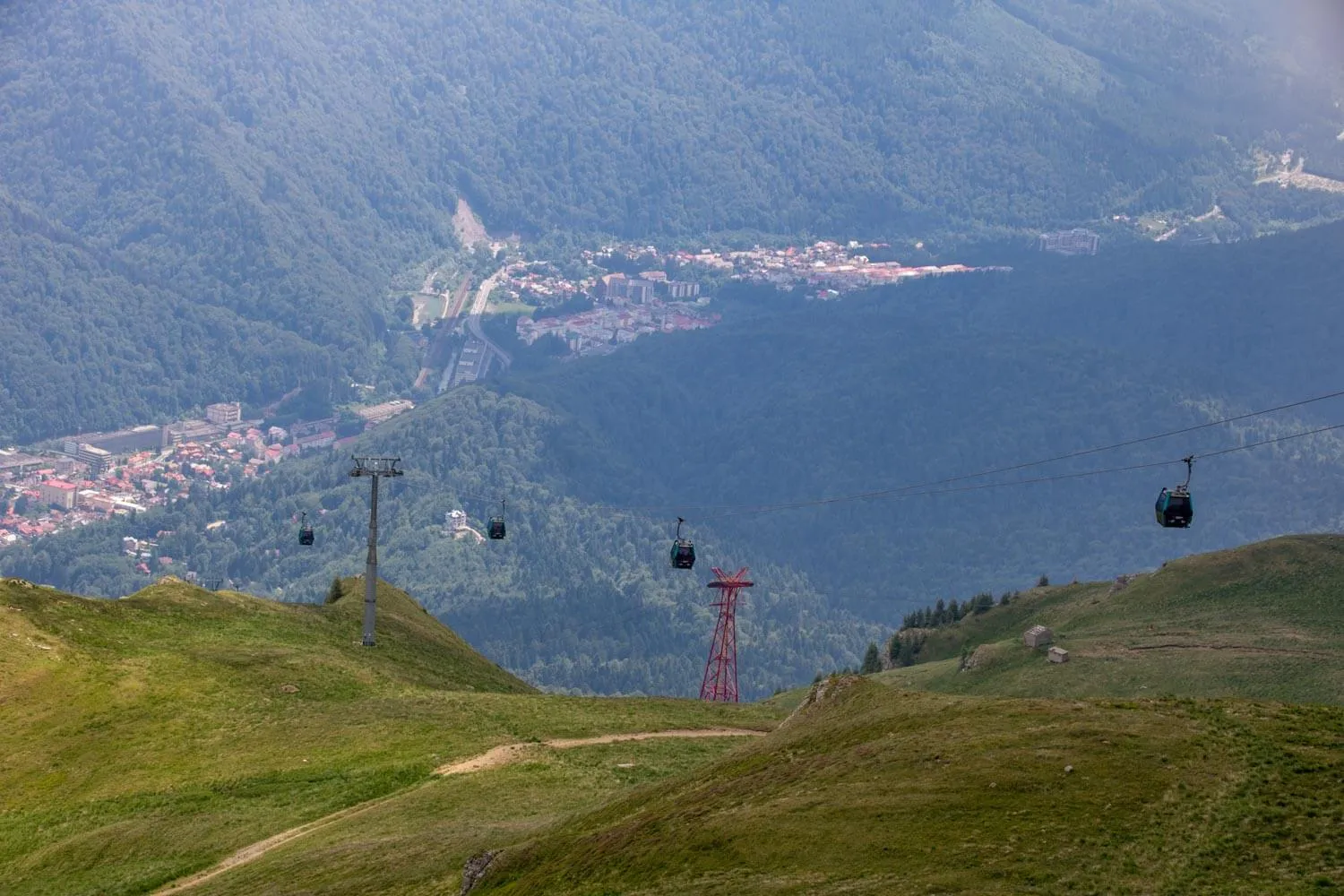
While several hiking routes through Bucegi Natural Park reach the rock formations, the easiest and most popular way to visit both the Sphinx and Babele is by taking the Bușteni-Babele-Peștera cable car. Both formations are only a few minutes’ walk from the Babele cable-car station.