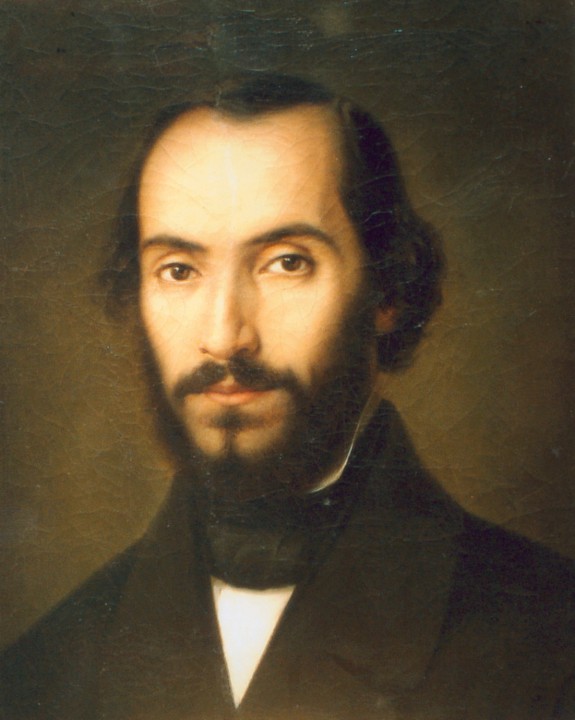
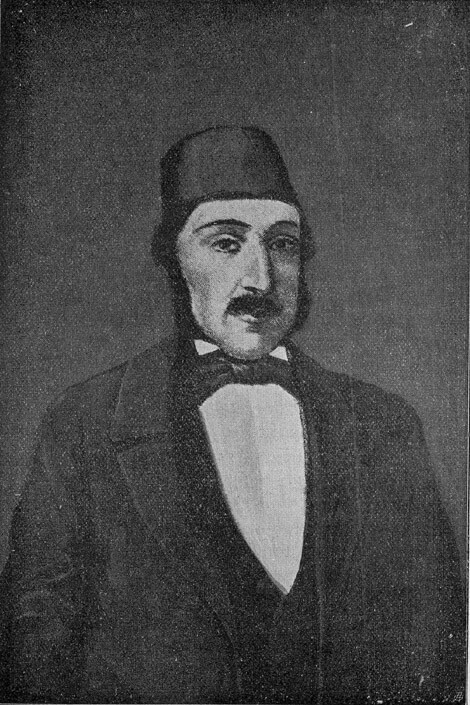
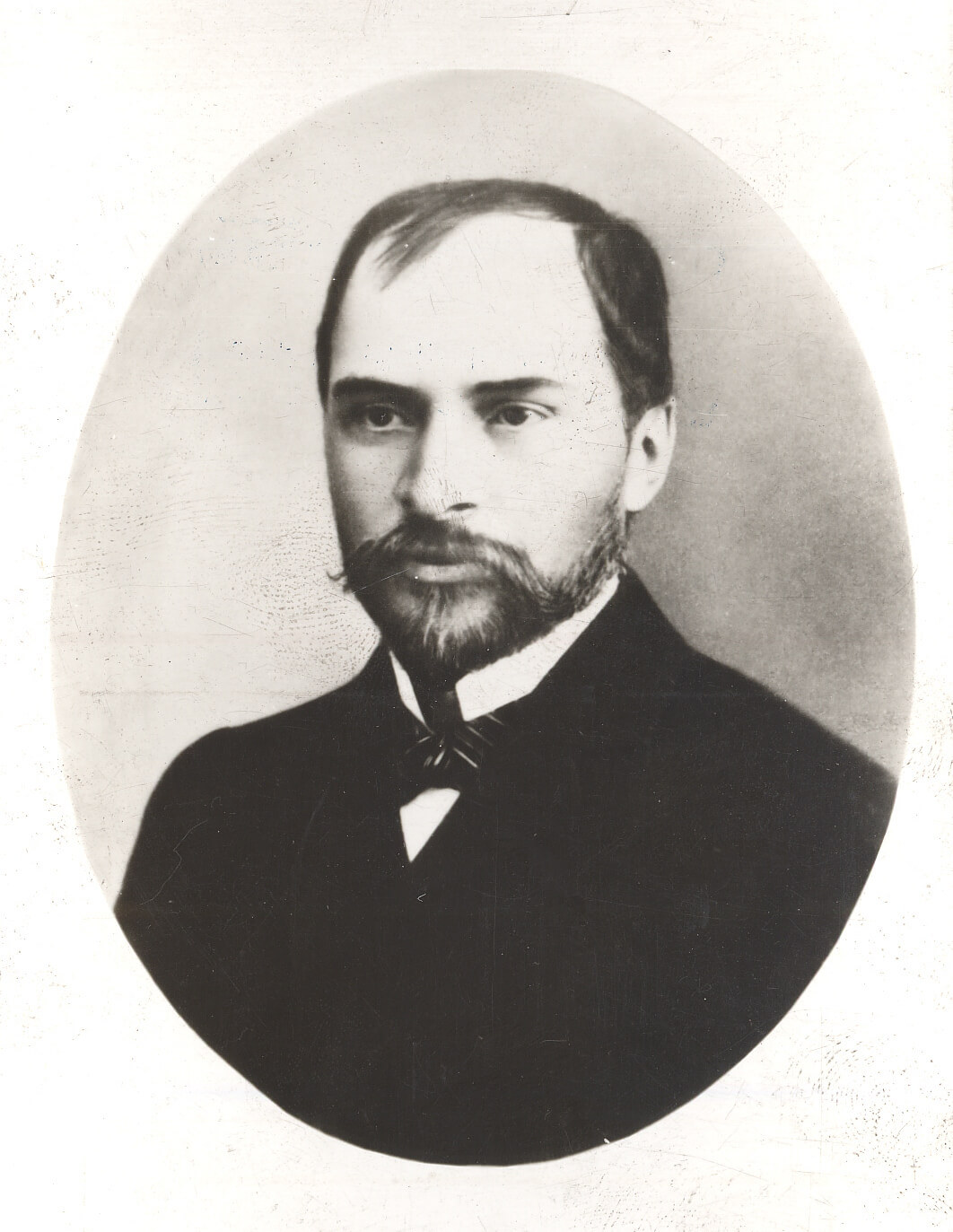
Nicolae Bălcescu (1819-1852) was a Romanian historian, writer, and revolutionary who became one of the leading figures of the 1848 movement in Wallachia. He argued for political reform, peasant emancipation, land redistribution, and closer unity between the Romanian principalities, while his historical writing helped shape the nineteenth-century image of Michael the Brave as an early symbol of Romanian unity.
Bălcescu was born in Bucharest into a family of minor boyar background and studied at Saint Sava College, where he developed an early interest in history and political reform. At nineteen he joined the army as a cadet and taught basic subjects and history to soldiers, but his political ideas soon brought him into conflict with the authorities. In 1840 he took part in a movement that called for a republic, the emancipation of peasants, and redistribution of land. The conspiracy was uncovered, and Bălcescu spent almost two years in prison before being released in 1842. The harsh conditions permanently damaged his already fragile health.
Soon after his release, he joined Ion Ghica and Christian Tell in founding the secret society Frăția, which became one of the main organizations behind the Wallachian Revolution of 1848. At the same time, Bălcescu increasingly devoted himself to historical research. Together with August Treboniu Laurian, he founded Magazin istoric pentru Dacia, publishing chronicles and historical documents while studying the political and military history of the Romanian principalities.
His historical work was never separate from his political thinking. Bălcescu believed that understanding the past could help explain the problems of his own society, especially the weakness of the peasantry and the fragmented political position of the Romanian lands. While working in libraries and archives in Paris and Italy, he gathered material on the reign of Michael the Brave, whose brief control over Wallachia, Transylvania, and Moldavia became central to his later writing.
When revolution spread across Europe in 1848, Bălcescu returned to Wallachia and became one of the leaders of the revolutionary movement. He helped prepare the program that became the Proclamation of Islaz, which called for political rights, administrative reform, the abolition of feudal obligations, and land for the peasants. Bălcescu pushed particularly hard for the agrarian question, arguing that political reform would mean little if the rural population remained economically dependent on large landowners.
After the revolution succeeded temporarily in Bucharest, Bălcescu became secretary of the provisional government. The new authorities abolished several old privileges and tried to introduce a broader program of reform, but the question of land redistribution quickly exposed divisions among the revolutionaries themselves. Bălcescu belonged to the more radical wing and wanted the promises made to the peasants to be carried out immediately rather than postponed.
The revolutionary government survived only a few months. Ottoman troops entered Bucharest in September 1848, followed shortly afterward by Russian forces, and the movement collapsed. Bălcescu was arrested with other revolutionary leaders and eventually forced into exile.
He did not abandon politics after leaving Wallachia. In 1849 he became involved in negotiations between Avram Iancu and Hungarian revolutionary leader Lajos Kossuth, trying to find a compromise between the Romanian and Hungarian revolutionary movements in Transylvania. The agreement came too late to change the outcome of the conflict, but the episode reflected Bălcescu’s wider belief that national and social questions had to be resolved together rather than treated separately.
His final years were spent largely in exile, especially in Paris and Italy, while tuberculosis steadily weakened him. He continued writing and working on his major historical study of Michael the Brave. Published after his death as Românii supt Mihai-Voievod Viteazul, the book did more than recount a sixteenth-century reign. It presented Michael’s temporary rule over the three principalities as part of a larger historical story of Romanian unity, helping shape the way Michael the Brave would later be remembered in national history.
Bălcescu died in Palermo in 1852 at only thirty-three years old. He did not live to see the union of Wallachia and Moldavia in 1859 or the later land reforms that addressed some of the questions he had fought over in 1848, but many of the issues that defined his short career remained central to Romanian politics for decades afterward.
His memory is preserved particularly strongly at the Nicolae Bălcescu Memorial in Vâlcea County. The manor belonged to his family and was begun by his mother Zinca and his brother Iancu in the late 1820s. Bălcescu lived there during part of his life, and the estate later became a museum devoted to his family, revolutionary activity, and historical work.
Bălcescu’s importance comes from the unusual combination of political activism and historical thought in such a short life. He was not simply a participant in the Revolution of 1848, but one of the people trying to define what that revolution should achieve: political freedom, land reform, social change, and a stronger sense of common Romanian identity. His writings carried those ideas beyond the failed revolution and helped influence the way later generations understood both 1848 and the earlier history of the Romanian principalities.