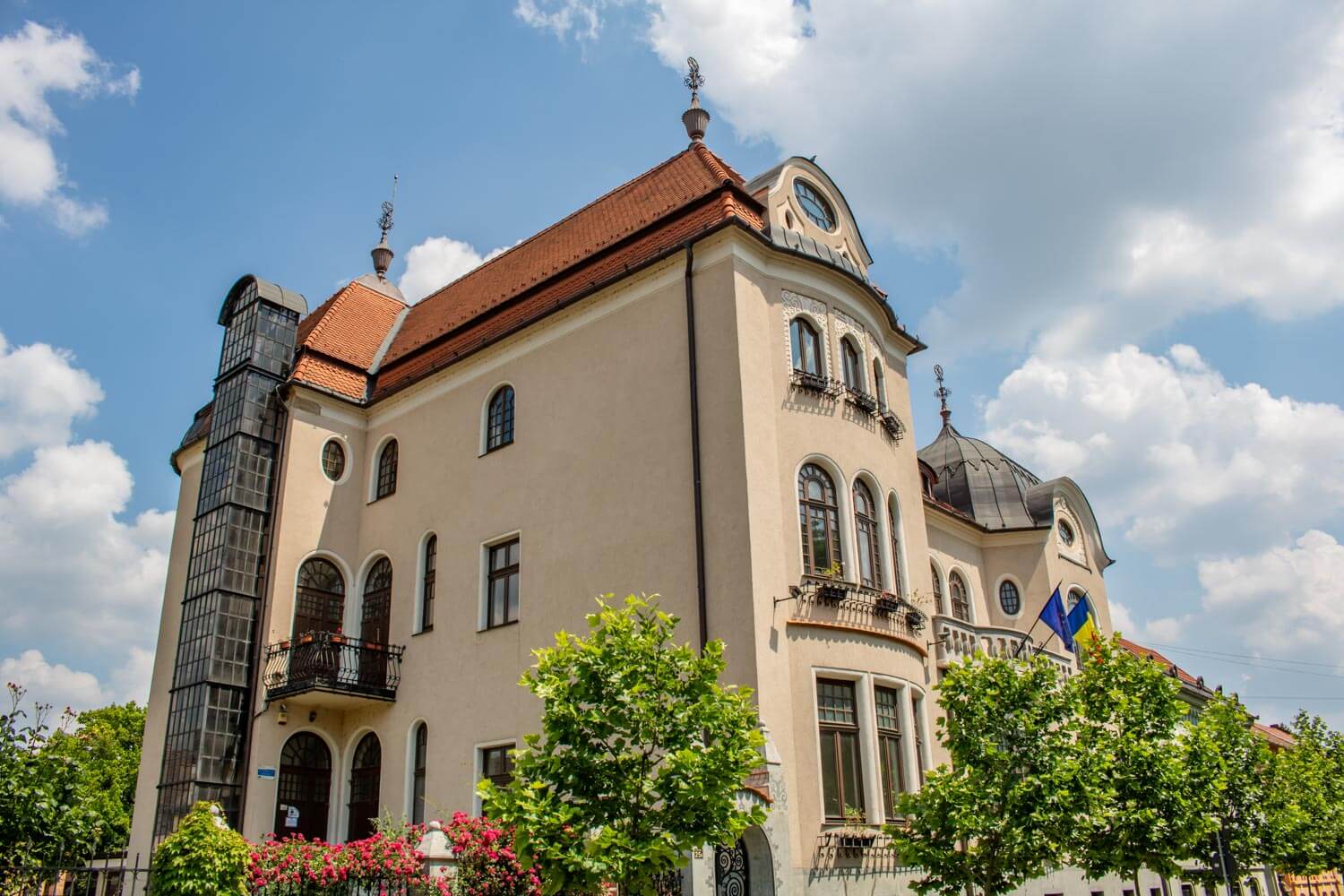
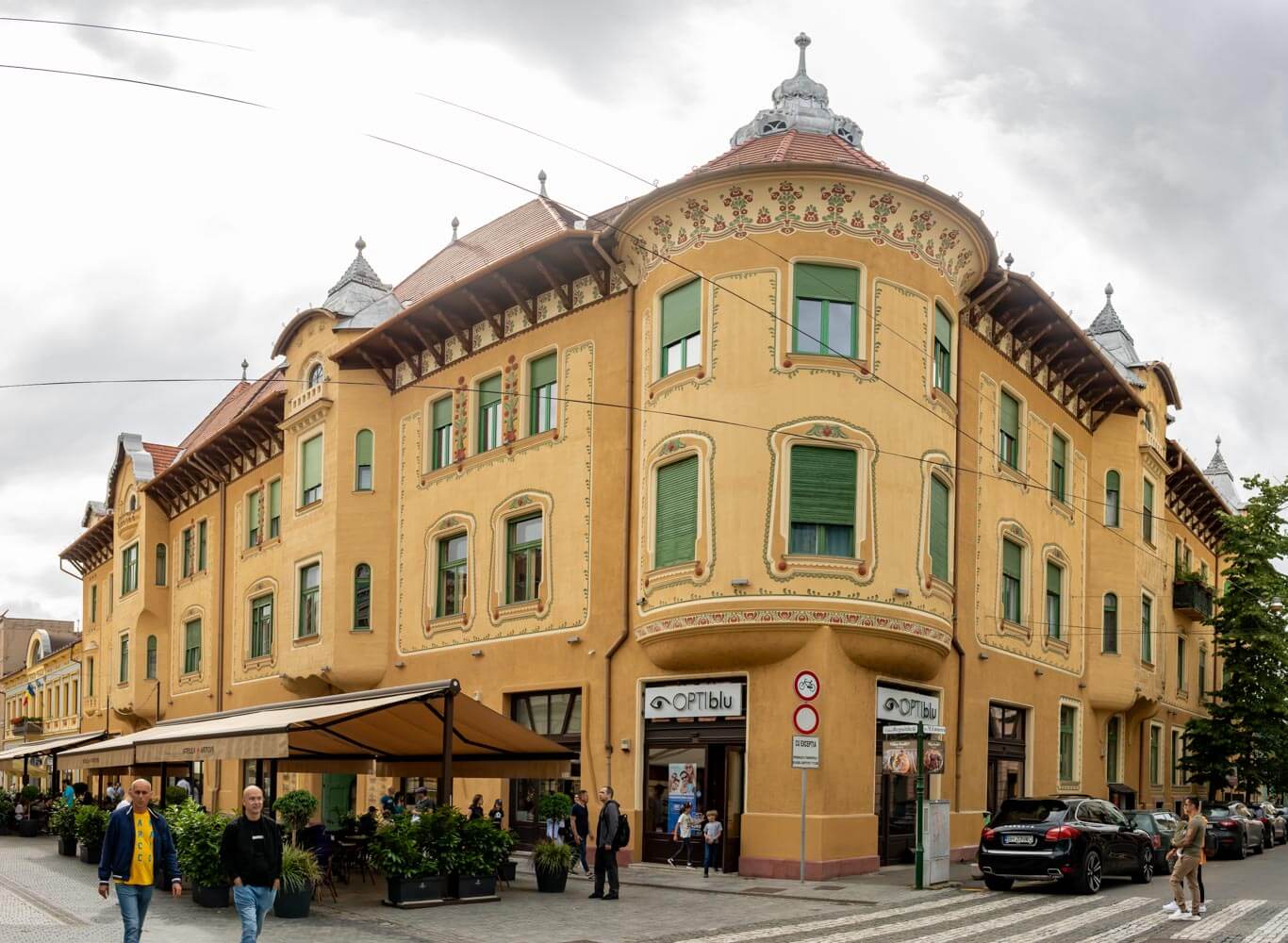
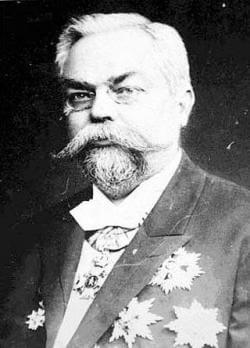
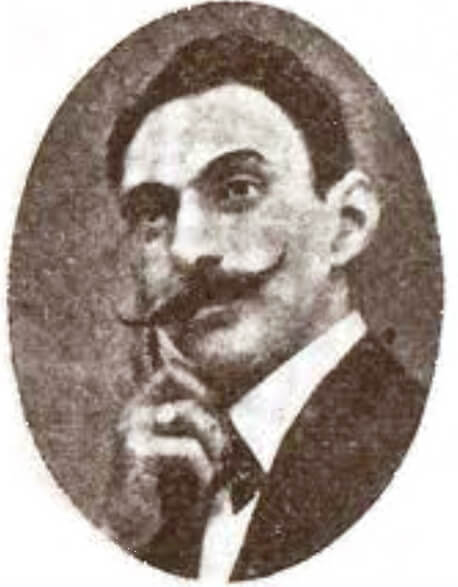
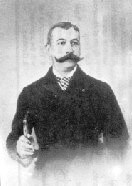
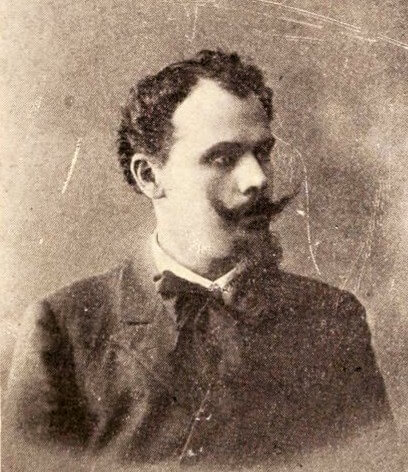
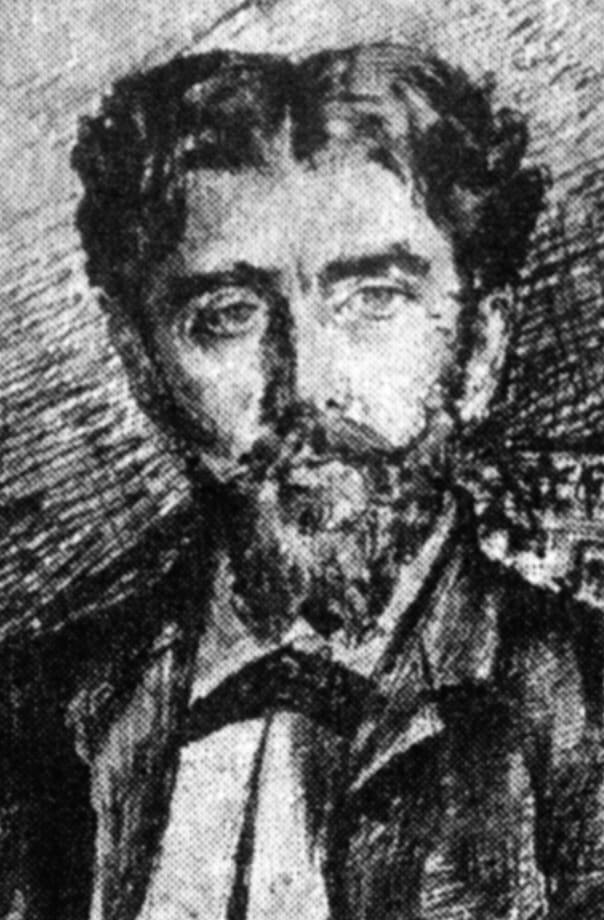
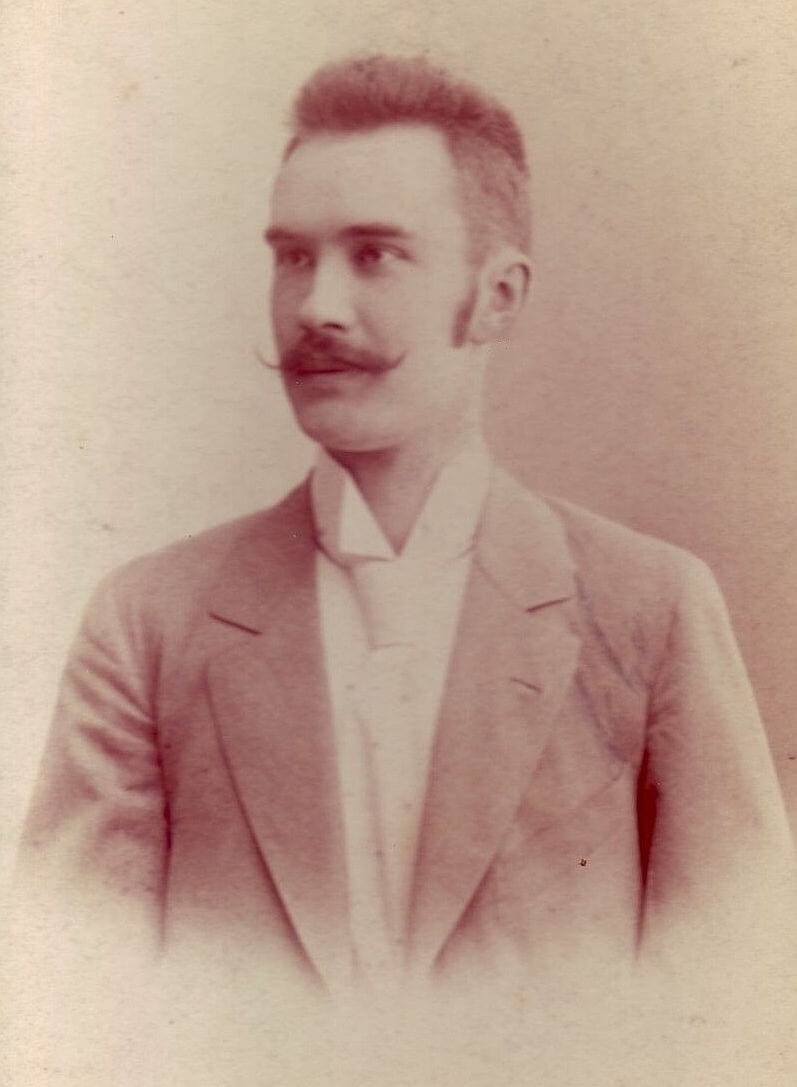
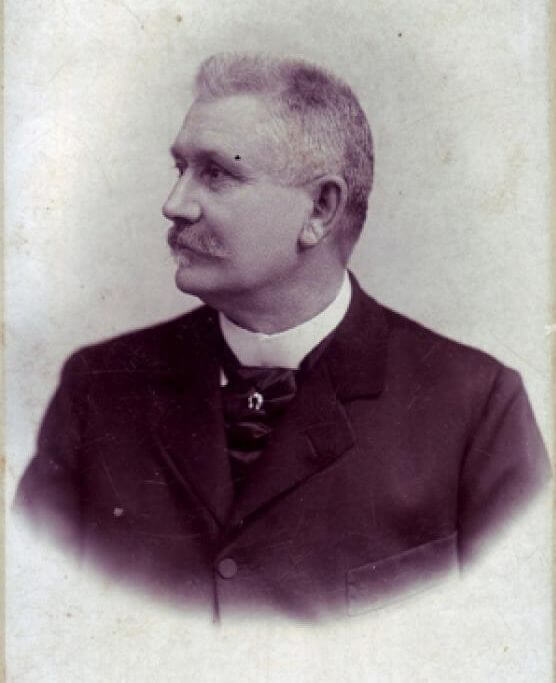
Dezső Jakab (1864-1932) was a Hungarian architect who, together with Marcell Komor, became one of the leading designers of Hungarian Secession architecture in the decades around 1900. Their partnership produced some of the most distinctive civic and commercial buildings in Transylvania and the wider Austro-Hungarian world, including the Black Eagle Palace in Oradea, the City Hall and Palace of Culture in Târgu Mureș, and a series of apartment houses and public buildings characterized by flowing forms, colorful decoration, and influences from Hungarian folk art.
Jakab was born in Vadu Crișului in Bihor County and studied architecture in Budapest, where he came under the influence of Ödön Lechner, the architect who pioneered a distinctly Hungarian form of Art Nouveau. Lechner’s combination of modern construction with highly decorative façades, ceramics, and motifs inspired by Hungarian and eastern traditions had a lasting effect on Jakab’s work and provided much of the stylistic foundation for his later partnership with Komor.
That partnership formally began in 1897 and lasted until the end of the First World War. Working from a shared architectural office, Jakab and Komor entered competitions and received commissions across the Hungarian half of the Austro-Hungarian Empire, often designing buildings in rapidly modernizing provincial cities where new town halls, cultural institutions, banks, hotels, and apartment houses were reshaping the urban landscape.
Oradea became one of the clearest showcases of their work. Their first buildings in the city were the Adorján Houses, followed by projects such as the Stern Palace and the Chamber of Commerce and Industry. These early commissions already showed the influence of Lechner in the treatment of the façade as a richly decorated surface rather than a simple reflection of the structure behind it.
The partnership reached a much more ambitious scale with the Black Eagle Palace. Jakab and Komor won the 1905 design competition with their project “Champagne,” and after the site passed into private ownership their scheme became the basis for the enormous multifunctional complex completed in 1908. The glazed passage, asymmetrical façades, floral ornament, stained glass, hotel, shops, restaurant, and entertainment spaces made it one of the defining buildings of Oradea’s Secession period.
Their work in Târgu Mureș was equally important. Under the modernization program of mayor György Bernády, Jakab and Komor designed both the City Hall and the Palace of Culture, creating a coordinated architectural ensemble around the central square. The richly decorated Palace of Culture, completed in 1913, became one of the most elaborate expressions of Hungarian Secession architecture and one of the partnership’s best-known works.
Jakab and Komor also worked elsewhere in the region, including Timișoara, Deva, and Budapest, but the First World War brought their long collaboration to an end in 1918. Jakab continued working independently afterward and remained active as an architect during the interwar years until his death in Budapest in 1932.
His individual career is difficult to separate completely from Komor’s because so many of their most important buildings were conceived together. That partnership was precisely what made Jakab significant: over more than two decades, the two architects helped spread the ideas of Hungarian Secession far beyond Budapest and gave cities such as Oradea and Târgu Mureș some of their most recognizable architecture.