
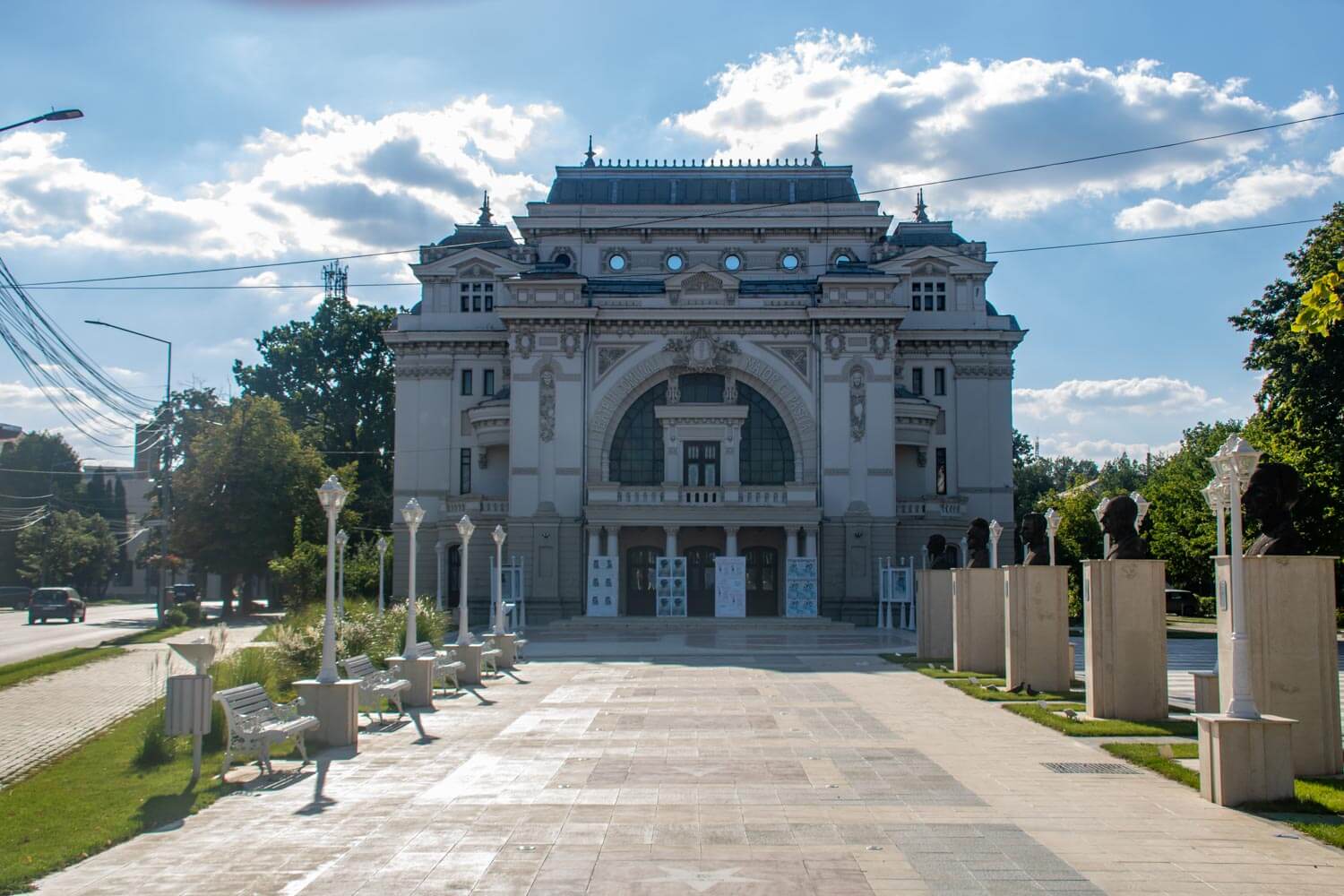
The Gheorghe Pastia Municipal Theater (Teatrul Municipal „Maior Gheorghe Pastia”) is a historic theater in central Focșani, built between 1909 and 1913 through the donations of local philanthropist Gheorghe Pastia. Its richly decorated auditorium and early 20th-century architecture make it one of the city’s notable cultural buildings, while the theater hosts regular performances by its resident company and visiting artists.
The history of theatrical performances in Focșani dates back to at least 1851, when the company of actor Matei Millo performed in the town. A permanent theater building was established in 1871 through the efforts of actor Ioan Lupescu, but after its demolition in 1906, performances had to be held in temporary venues. In 1908, retired army major Gheorghe Pastia offered to finance a modern theater, eventually donating 570,000 lei toward its construction and interior decoration. His principal condition was that the building would permanently bear his name. The municipality provided the land, and a design competition was organized under a committee that included architect Ion Mincu and actor Constantin Nottara. Construction began in 1909, and the theater was inaugurated in November 1913 with a performance of Vasile Alecsandri‘s play Fântâna Blanduziei by the National Theater of Iași, then directed by Mihail Sadoveanu.
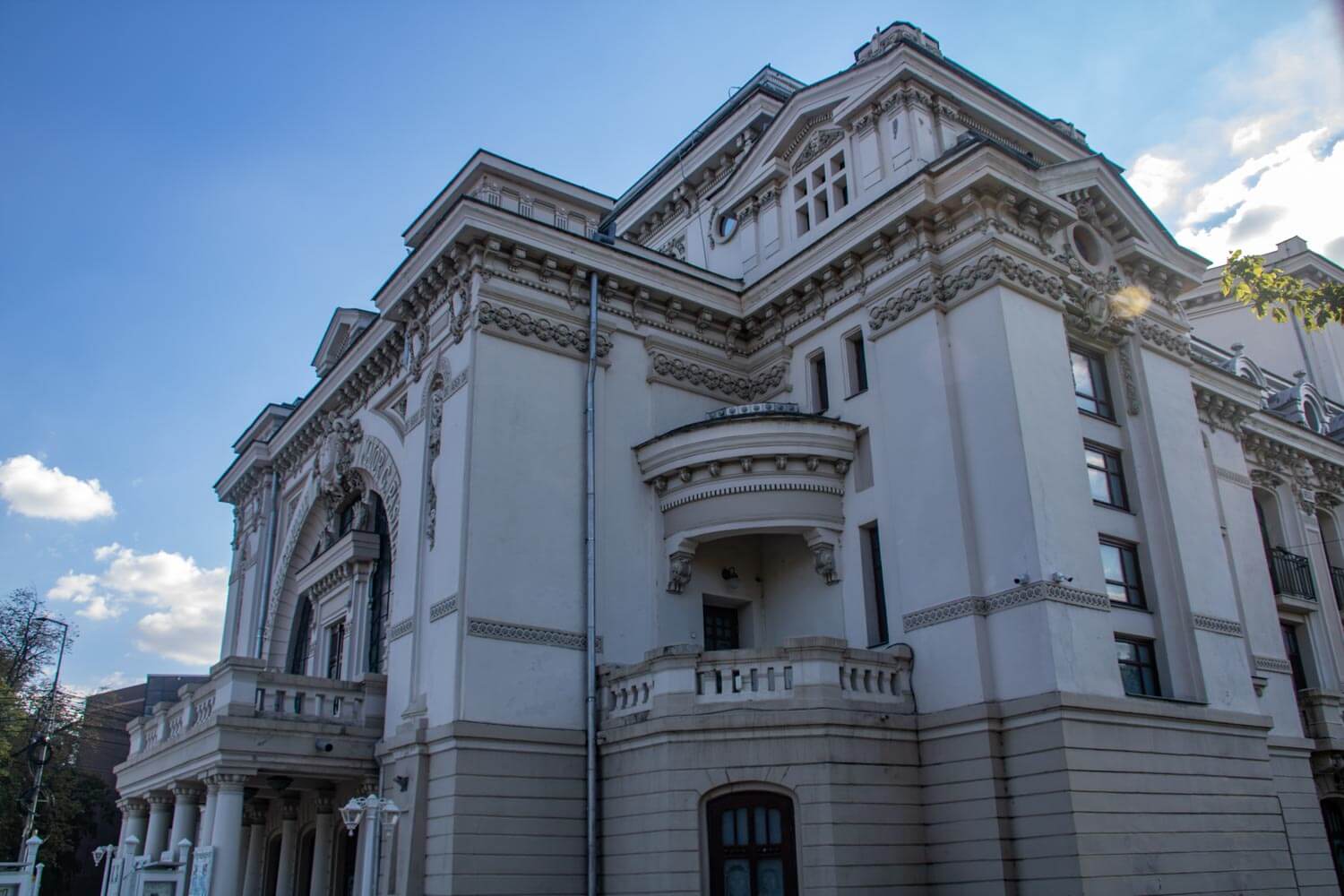
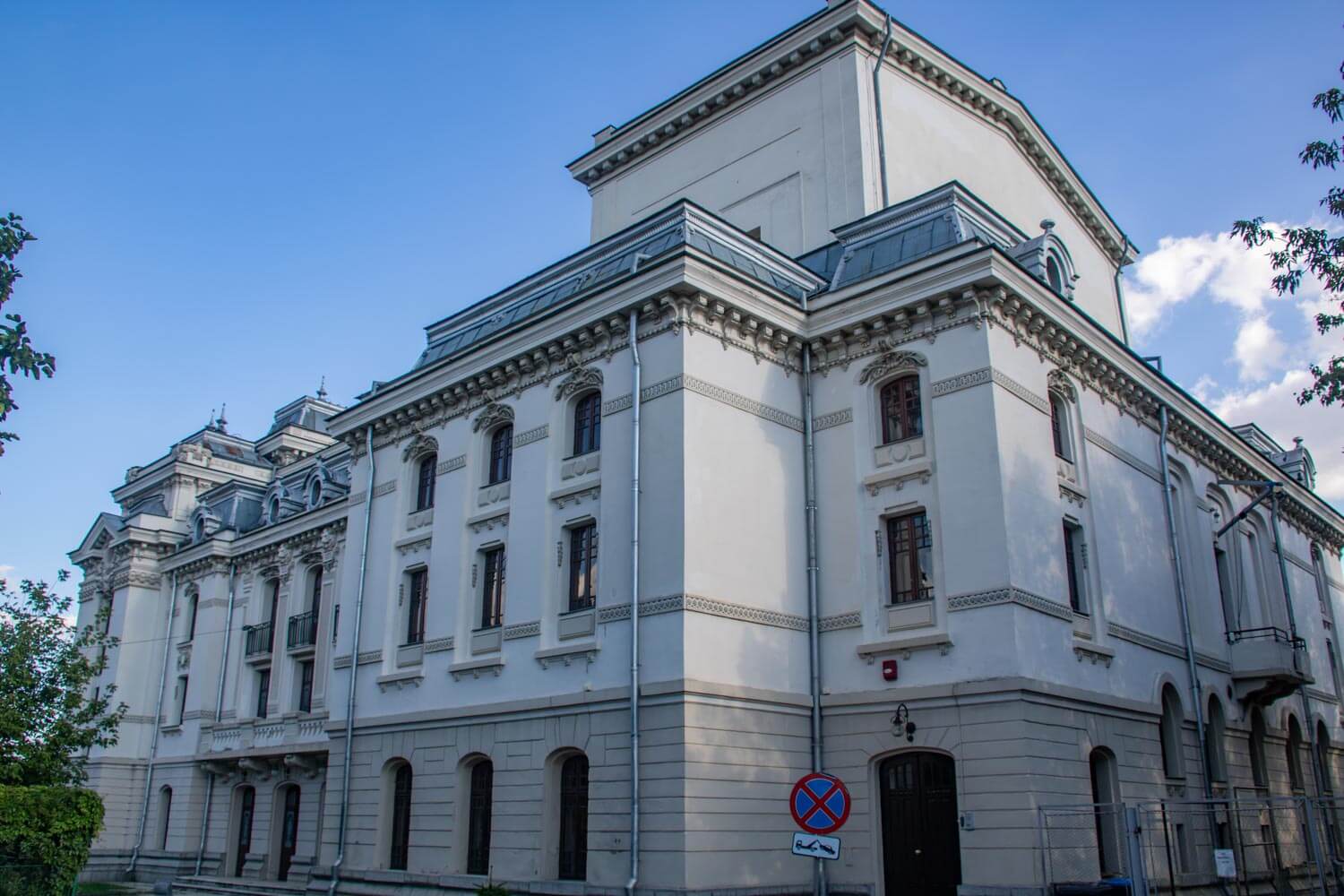
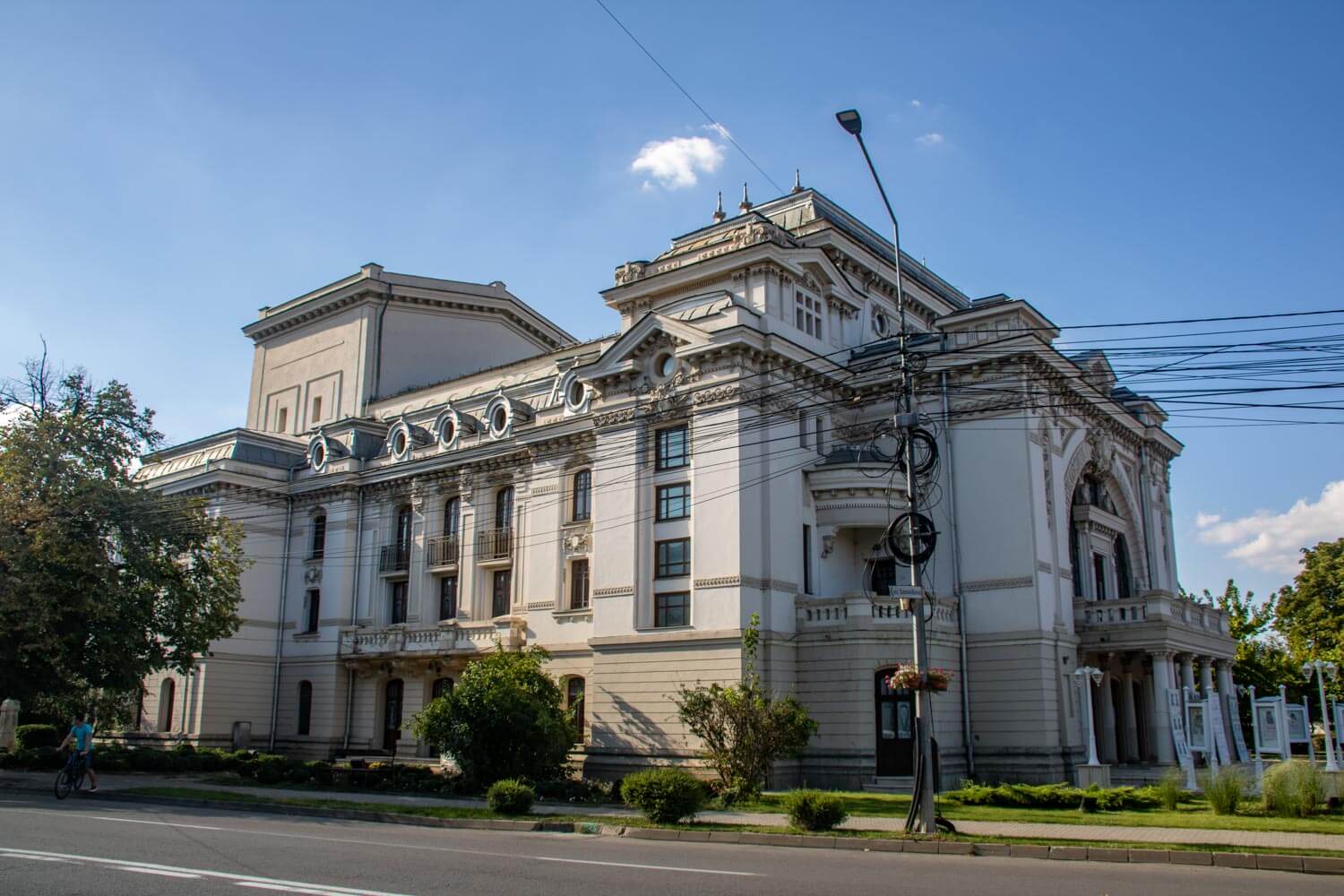
Designed in the Beaux-Arts style, the theater has a symmetrical facade with a prominent central entrance, classical columns, arched windows, and elaborate decorative plasterwork. The auditorium was modeled on European theaters, with seating arranged across the stalls, boxes, and balcony surrounding the stage. Its interior combines Baroque and Renaissance decorative elements, including gilded stucco ornaments, painted ceilings, and an elaborately decorated auditorium dome. The interior painting was completed in 1913 by N. N. Romano, while the stage equipment and furnishings drew on contemporary theater designs from Berlin, Vienna, Paris, and Brussels.
The theater hosted performances by companies from Bucharest, Iași, Brăila, and Galați, as well as concerts by prominent musicians, including George Enescu and Ion Voicu. Gheorghe Pastia also established a fund from his estate to support the theater’s maintenance and financed the construction of the People’s Atheneum, whose revenues were intended to contribute to the theater’s expenses. Earthquake damage eventually forced the building to close in 1987, although theatrical activities in Focșani continued elsewhere. A professional municipal theater company was established in 1994 and initially performed at the Atheneum until the historic theater was restored and reopened on January 24, 2004.
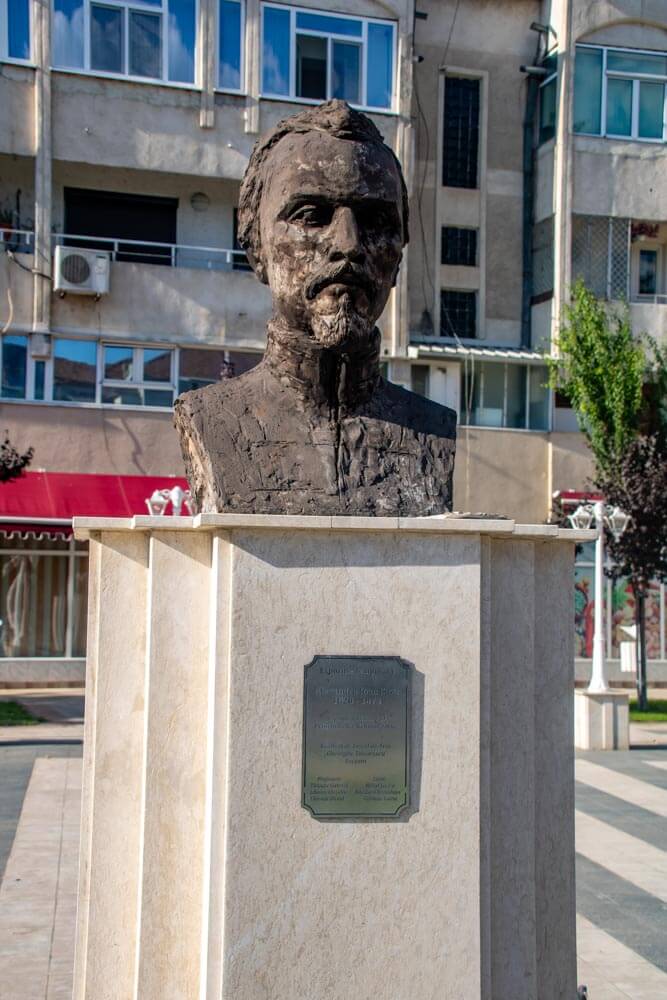
Today, the theater stages plays for adults and children, comedy productions, and performances by visiting companies. In the small square in front of the entrance stands a bronze bust of Gheorghe Pastia by sculptor Gabriel Tăicuțu, commemorating the man whose donations made the theater possible.


