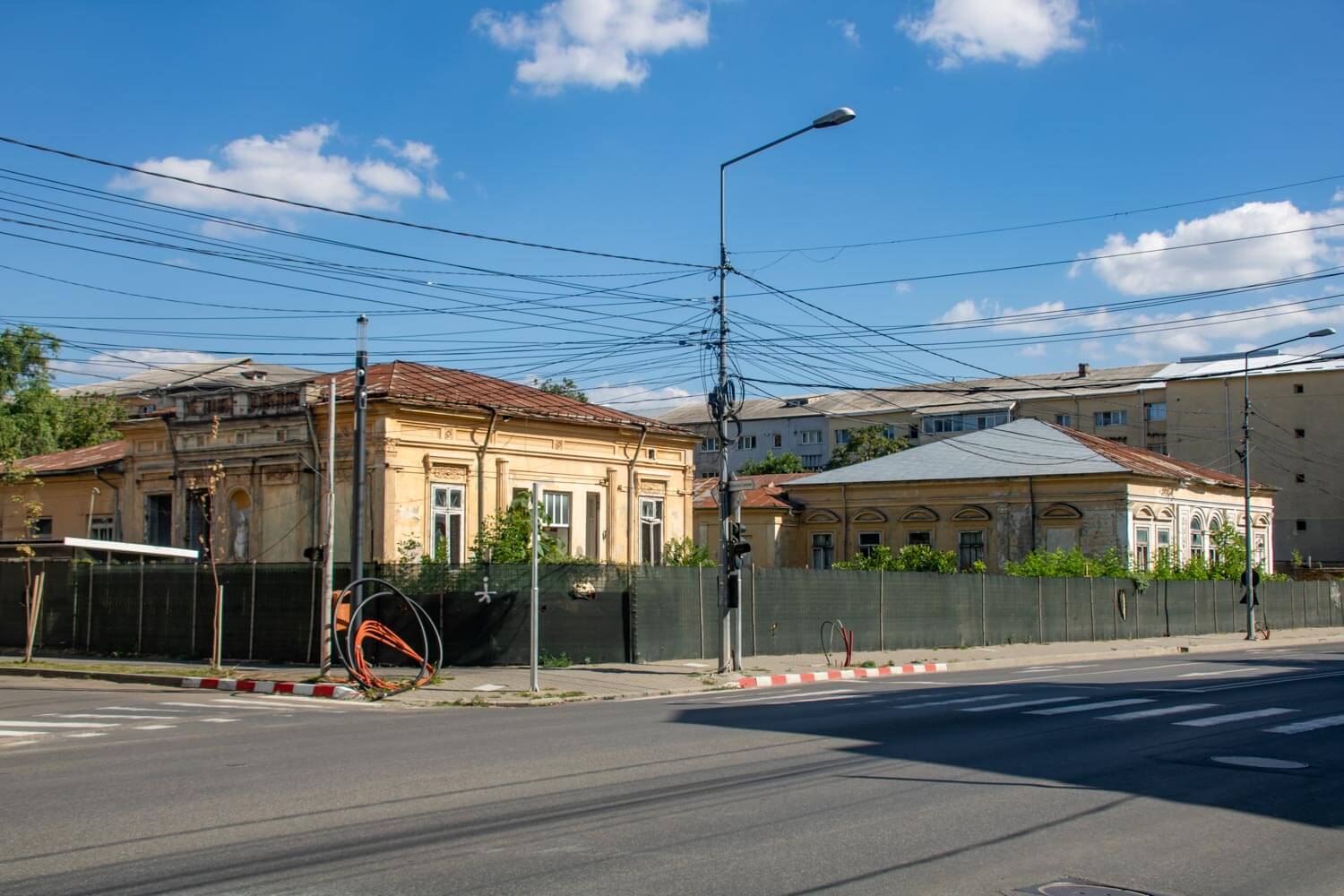
The Focșani Union Museum (Muzeul Unirii Focșani) is a history museum in Focșani dedicated to the union of Moldavia and Wallachia in 1859 and the city’s role in the formation of modern Romania. Part of the Vrancea Museum (Muzeul Vrancei), it is housed in the historic Old Post Office (Poșta Veche) on Strada Republicii, close to the former border between the two principalities.
The building dates to the second half of the 18th century, when it served as an inn near a border checkpoint separating Moldavian Focșani from Wallachian Focșani. Its location on the main route between the two principalities also made it useful for customs and postal services. By the middle of the 19th century, it was operating as Hotel Cimbru, which accommodated members of the Central Commission established following the election of Alexandru Ioan Cuza as ruler of both principalities in January 1859. Meeting in Focșani between 1859 and 1862, the commission worked to harmonize legislation and prepare the administrative unification of Moldavia and Wallachia, which had previously maintained separate governments and institutions.
Following the union, the building served various purposes, including as premises for the local officers’ corps and later the postal service, from which it acquired the name Old Post Office. In 1931, historian Nicolae Iorga participated in the unveiling of a commemorative marker recalling the former border between the principalities. After the museum’s collections had been displayed at several other locations in Focșani, the historic building underwent restoration and opened as the Union Museum on January 24, 2008.
The permanent exhibition documents the political developments surrounding the union, beginning with the Revolution of 1848 and the elections to the Ad Hoc Divans in 1857. Original documents, publications, photographs, portraits, and personal belongings of Alexandru Ioan Cuza and his family illustrate the movement toward unification and the changes that followed. Particular attention is given to Focșani’s position on the former border and its role as the seat of the Central Commission.
Other exhibition rooms recreate aspects of 19th-century domestic and cultural life through period furniture, clothing, paintings, and decorative objects from prominent families of the region. Among the exhibits are furnishings and personal possessions of the writer and diplomat Duiliu Zamfirescu, portraits of the Mincu and Zamfirescu families, and objects belonging to the jurist Ștefan Longinescu and politician Gheorghe Apostoleanu. These collections provide a broader picture of the social and cultural world in which the union took place.