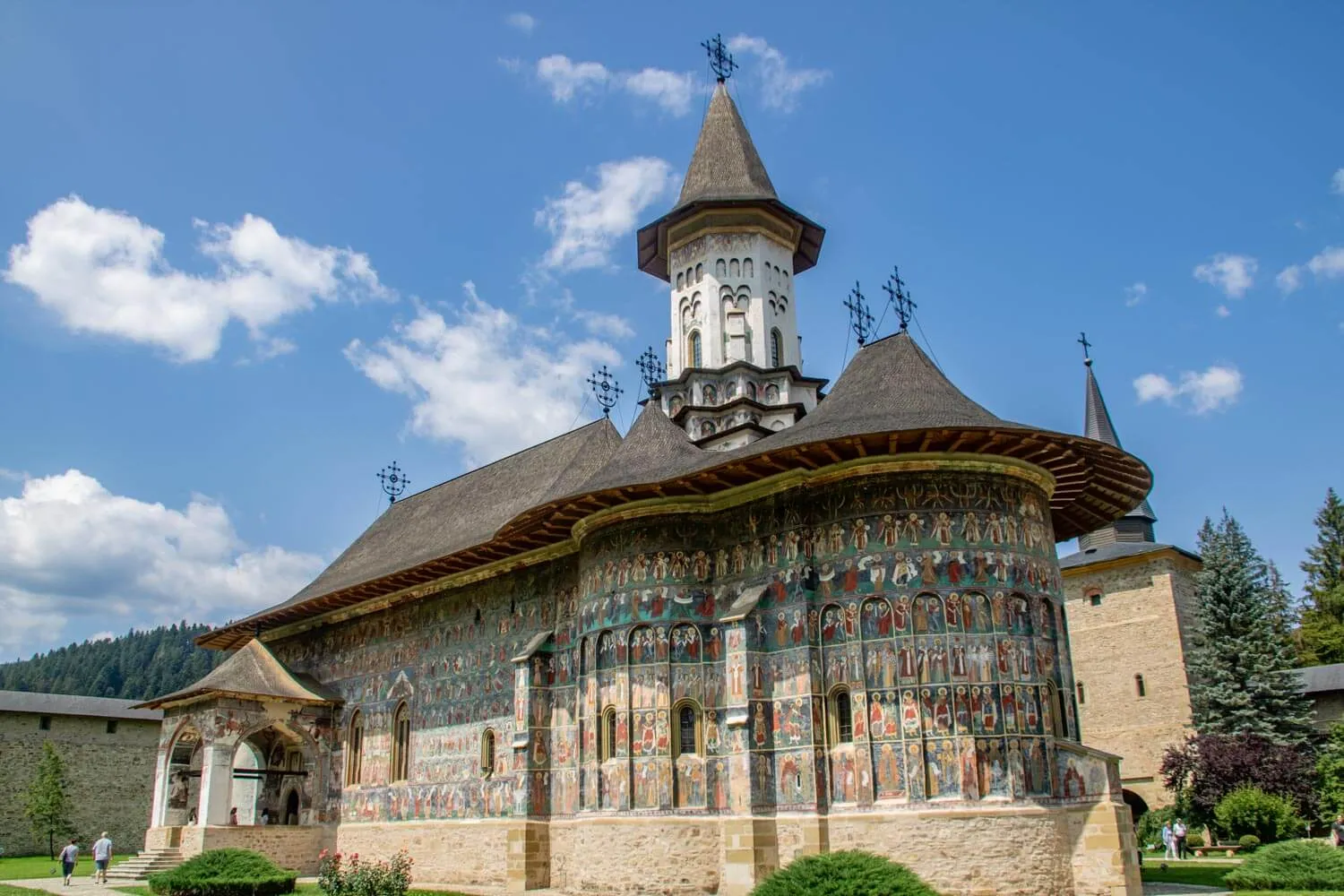
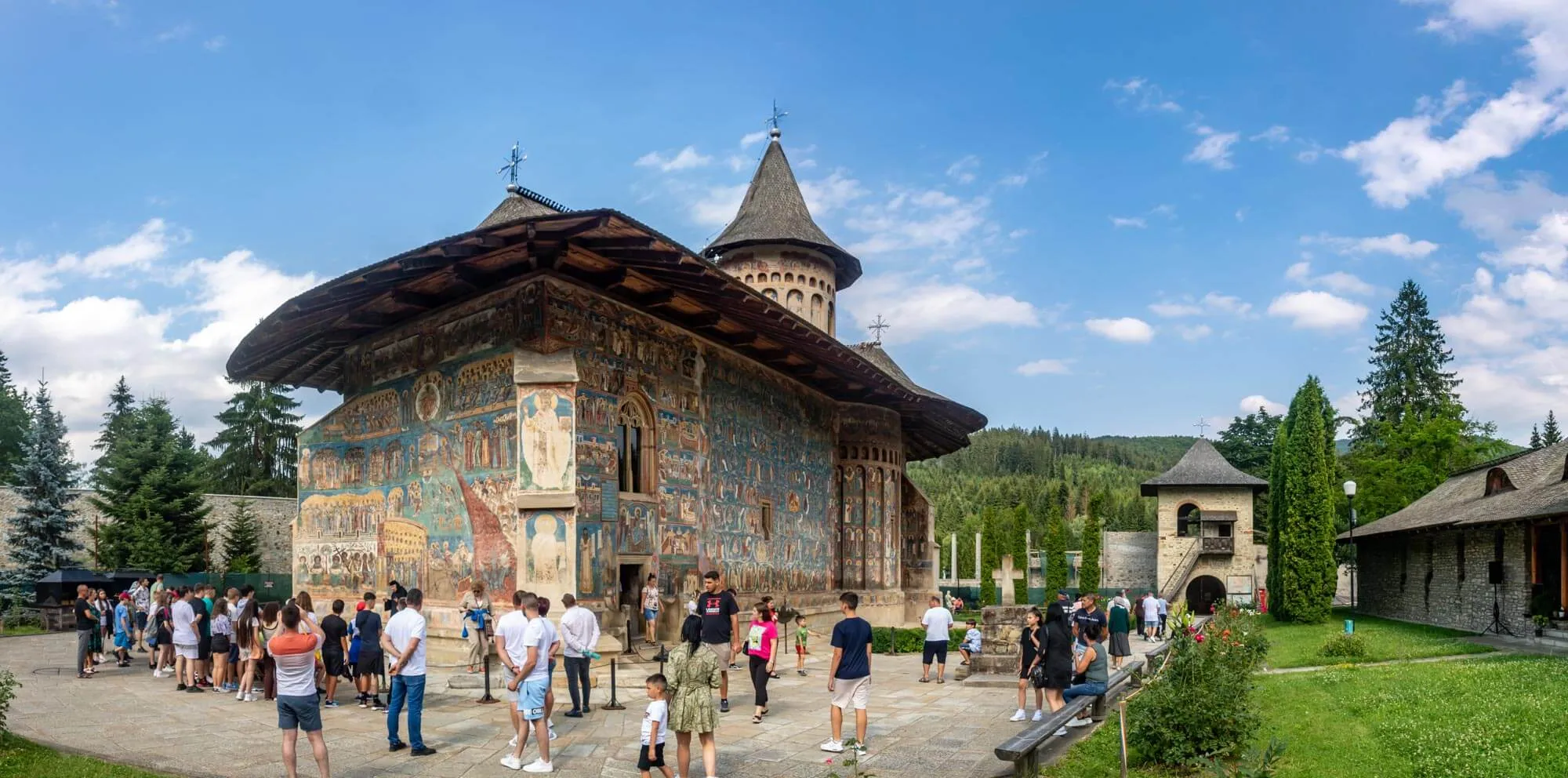
The Pătrăuți Monastery (Mănăstirea Pătrăuți) is a Romanian Orthodox monastery in Pătrăuți, Suceava County. The monastery church is dedicated to the Holy Cross and is known for its fresco paintings which are typical for the historical Bucovina region and it is one of the 8 churches and monasteries that make up the Churches of Moldavia UNESCO World Heritage Site.
History Pătrăuți Monastery
The painted church of Pătrăuți was founded by Stephen the Great (Ștefan cel Mare), Prince of Moldavia, in 1487 and is considered the oldest preserved church founded by the ruler. The church was initially a monastery and the only nunnery in the region, which was probably intended for the care of the wounded from the battles fought around the Fortress of Suceava.
The monastery was eventually abandoned and raided by the Cossacks, Tatars, and Poles. Some of the damage caused is still visible inside the entrance portal and on the plastering in the altar and pronaos. Bishop Calistru took care of restoration works at the beginning of the 18th century and re-established the nunnery in 1711. In 1725, a wooden belfry was placed to the west of the church, which still exists today.
In 1775, the Bucovina region became part of the catholic Habsburg Empire. Under the new reign of Emperor Joseph II, the nunnery was abolished, the monastery dissolved, and the church was transformed into a parish church.
The Church of the Holy Cross in Pătrăuți is considered a monument of great historic importance and in 1993 UNESCO included the church and its belfry on the list of World Heritage Sites as part of the ensemble of Churches of Moldavia. Between 2003 and 2010, extensive renovation works were carried which brought to light some original fresco works on the inside of the church.
In 2021, the Pătrăuți Monastery has been reinstated as a nunnery so the Church of the Holy Cross is now a monastery church again.
Description Of Pătrăuți Monastery
The Church of the Holy Cross has a triconic plan and is built of raw stone with layers of bricks at the pronaos. The interior is divided into three spaces: a pronaos, a nave, and an altar apse. The roof is made of shingels and has a spire resting on a square base above the nave. The church has nine small rectangular windows and Gothic profiles on its frames and portals.
Unlike most of the other painted churches in Bucovina, the church in Pătrăuți only has external fresco paintings around its entrance on the western wall. The painting, which represents the Last Judgement, is dated to the 15th century, making it the oldest exterior church painting in Moldavia.
The interior paintings are date from the time of Stephen the Great when the church was built, but over time some of them got damaged or covered by smoke from candles and some have been retouched as well. The restoration of 2003-2010 helped discover and restore paintings that had disappeard under layers of black smoke. The internal frescos, which depict biblical scenes, are attributed to a Greek painter hired by Stephen the Great.
Several people have been buried in the church between the 16th and 17th century, but only three tombstones are left today. The church also keeps several old manuscripts and a bible from the 18th century, weighing 5 kilograms.
In the church yard you can also find a round stone table surrounded by several stone chairs, an ensemble which is dated to the reign of Stephen the Great. It is thought that this has served as a source of inspiration for the Table of Silence, which is part of the sculptural ensamble in Târgu Jiu, created by Constantin Brâncuși.
The bell tower to the west of the church is a one-story construction made of wood, with some architectural influences from Maramureș. It has three bells from the 19th century, which are believed to drive away the clouds with their high-pitched sounds. Inside the bell tower there is also a collections of tombstones and wooden crosses.
How To Get To Pătrăuți Monastery
The Church of the Holy Cross is located in the commune of Pătrăuți, about 12 kilometers, or a 20-minute drive north of Suceava. Due to its remote location, you would need your own transportation, rent a car, or book a guided tour.
To get there by car you simply follow the DN2 and turn right on the DJ208V towards Pătrăuți and you’ll see the church on your right hand side after you pass through the village. Free parking is available at the entrance of the church.