The Olt County Museum (Muzeul Județean Olt) is a history, archaeology, and art museum housed in the former Olt County Administrative Palace in central Slatina. Established in 1952, the museum documents the history and cultural heritage of the Lower Olt Valley, from prehistoric settlements and Roman civilization to the development of Slatina and the artistic traditions of the region.
The museum originated from efforts by local historians, teachers, and collectors to preserve archaeological finds, historical documents, and traditional objects from Olt County. An organizing committee was formed in 1930, although the institution did not officially open until May 1, 1952. Its collections were initially displayed in a private house and later transferred to the historic Deleanu House on Ionașcu Street. As the museum expanded, it required larger premises, eventually moving into the former Administrative Palace in 1997.
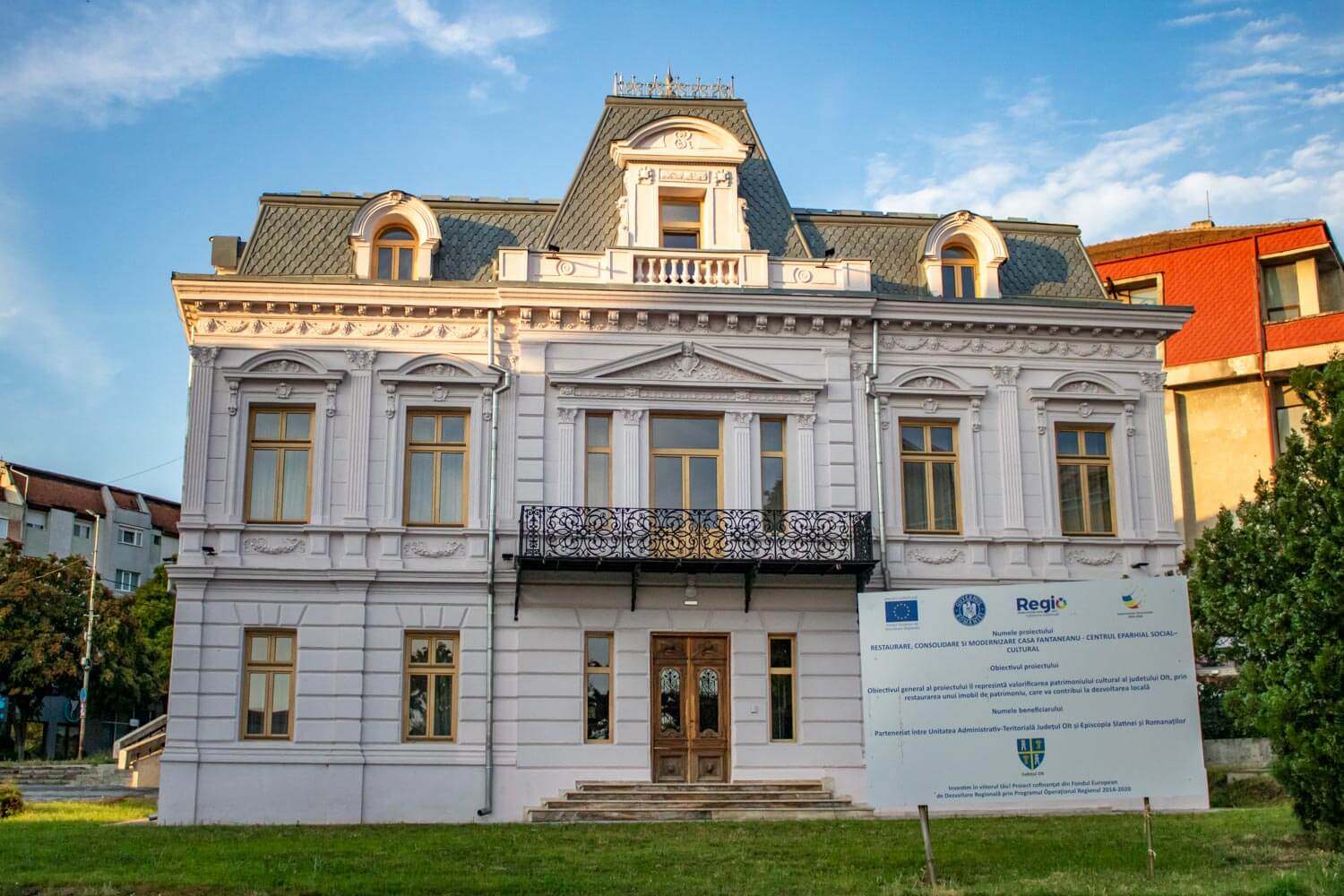
Built in 1887, the palace originally accommodated the county administration alongside other public institutions, including the tribunal and educational authorities. Its prominent position in the historic town center was emphasized by the creation of a public garden in front of the building during the 1890s. A clock installed in its tower in 1897 became a familiar feature of Slatina’s skyline, marking the hours with a bell until it fell silent toward the end of the communist period. The historic mechanism was restored to working order in 2012.
The museum’s archaeological collections cover several important prehistoric cultures of the Lower Olt region, including Vădastra and Sălcuța, with pottery, tools, and figurines recovered from local settlements. Finds from the Geto-Dacian period and Roman sites such as Romula illustrate the region’s development under Roman rule, while medieval documents, coins, weapons, and religious objects trace its later history. Exhibitions on Slatina include historic photographs, maps, documents, and reconstructions of shops and domestic interiors from the old town.
The art collections include paintings and sculptures by Romanian artists, with a particular focus on artists from Olt County. The permanent contemporary art exhibition bears the name of painter Ion Popescu-Negreni, while temporary exhibitions introduce additional works from the museum’s holdings. Its ethnographic collections preserve traditional costumes, textiles, ceramics, and household objects from Olt and Romanați, including the distinctive pottery of Oboga and the sheepskin coats of Vădastra. The museum also administers several smaller collections and memorial sites elsewhere in the county.