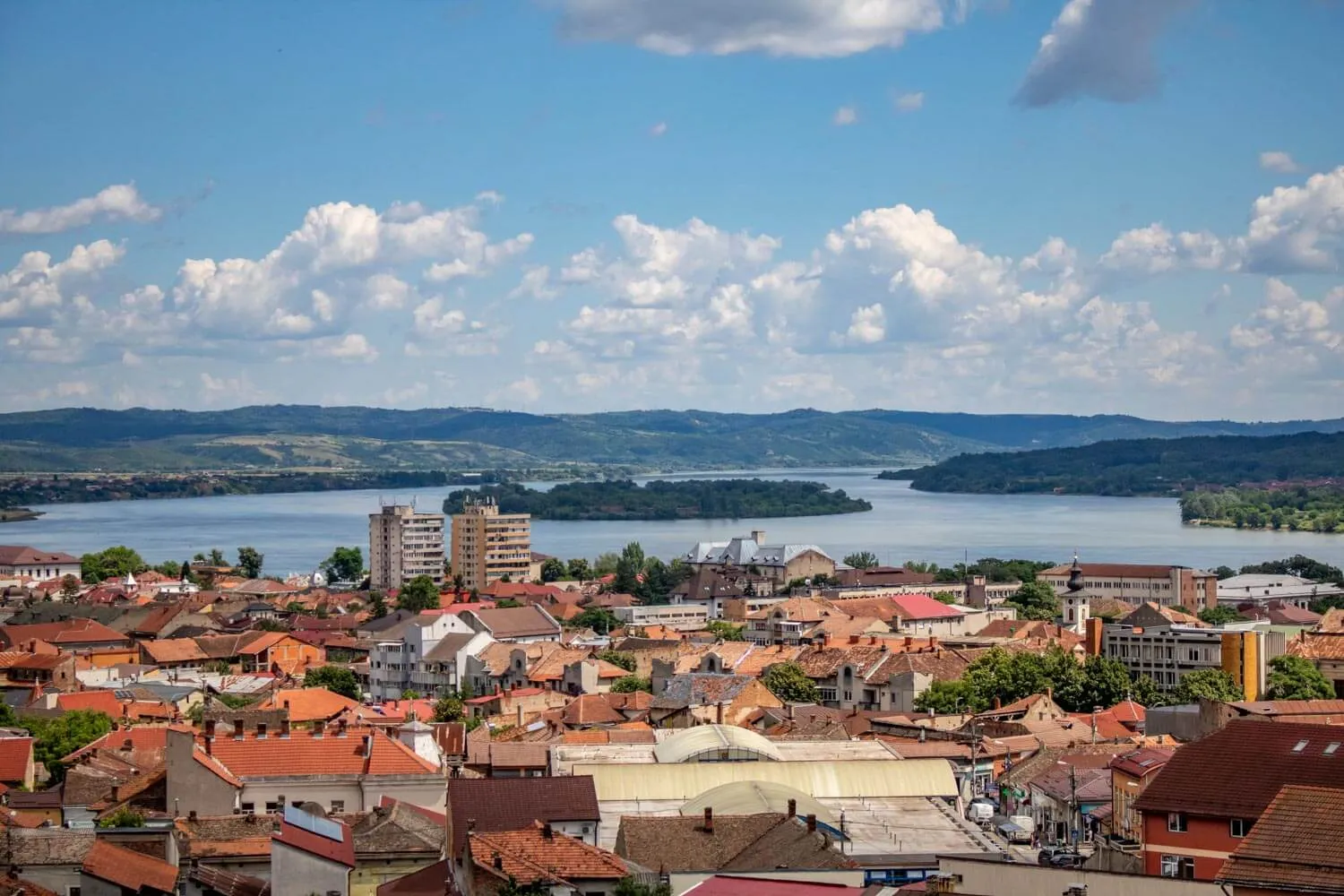
Severin Fortress (Cetatea Severinului) is a medieval fortification overlooking the Danube River in Drobeta-Turnu Severin. Built in the 13th century and expanded during the following centuries, it served as a strategic stronghold on the southern frontier of the Kingdom of Hungary, controlling an important stretch of the Danube and the surrounding territory.
The fortress developed following the establishment of the Banate of Severin by the Hungarian Kingdom in the 1230s. The Knights Hospitaller were involved in the early fortification of the area, while the first stone enclosure was constructed during the second half of the 13th century. Severin subsequently became a contested frontier stronghold between Hungary and Wallachia, changing hands several times during the 14th century. The fortress also formed part of a medieval settlement with both Catholic and Orthodox religious institutions, reflecting its position between the two kingdoms and their religious traditions.
As the Ottoman Empire advanced into the Balkans, Severin gained further military importance. The fortress returned to Hungarian control in 1419 under King Sigismund of Luxembourg, and its defenses were strengthened during the 15th century with an additional outer enclosure and artillery bastions. Despite these improvements, repeated attacks damaged the fortification, which was finally captured and destroyed by Ottoman forces in 1524. The fortress was abandoned, and its surviving walls gradually deteriorated over the following centuries.
The fortress was built on an elevated terrace above the Danube, with a roughly rectangular inner enclosure measuring approximately 90 by 45 meters. Its stone walls were protected by defensive towers and later surrounded by a second line of fortifications. The most prominent surviving structure is the tall rectangular tower, commonly known as Sever’s Tower (Turnul lui Sever). Archaeological excavations also uncovered the foundations of a medieval church within the inner courtyard, along with traces of other buildings and structures.
After archaeological investigations and several phases of conservation, the fortress underwent extensive restoration and reopened to visitors in 2015. Reconstructed sections of the defensive walls now define its original layout, while paths and walkways provide access to the courtyards, towers, and excavated foundations. The complex also includes displays of medieval artifacts and historical reconstructions. From the elevated terraces, visitors can look across the Danube toward the Serbian bank and the surrounding river valley.