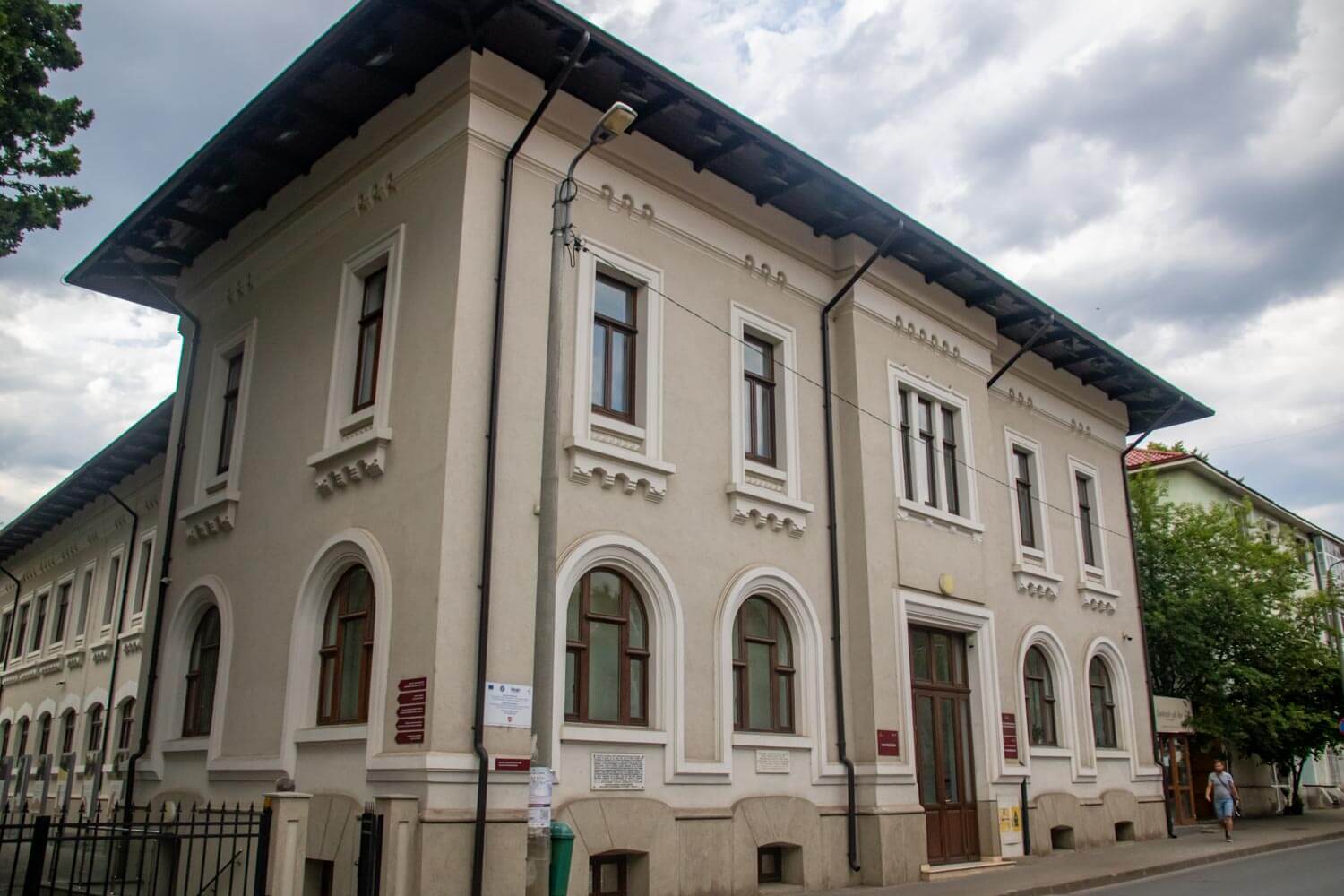
The Iași Institute of Anatomy (Institutul de Anatomie din Iași) is a historic medical teaching building of the Grigore T. Popa University of Medicine and Pharmacy, standing near the university’s main complex in central Iași. Built between 1894 and 1900 to provide the Faculty of Medicine with a purpose-designed center for anatomy, it is one of the most distinctive academic buildings in the city.
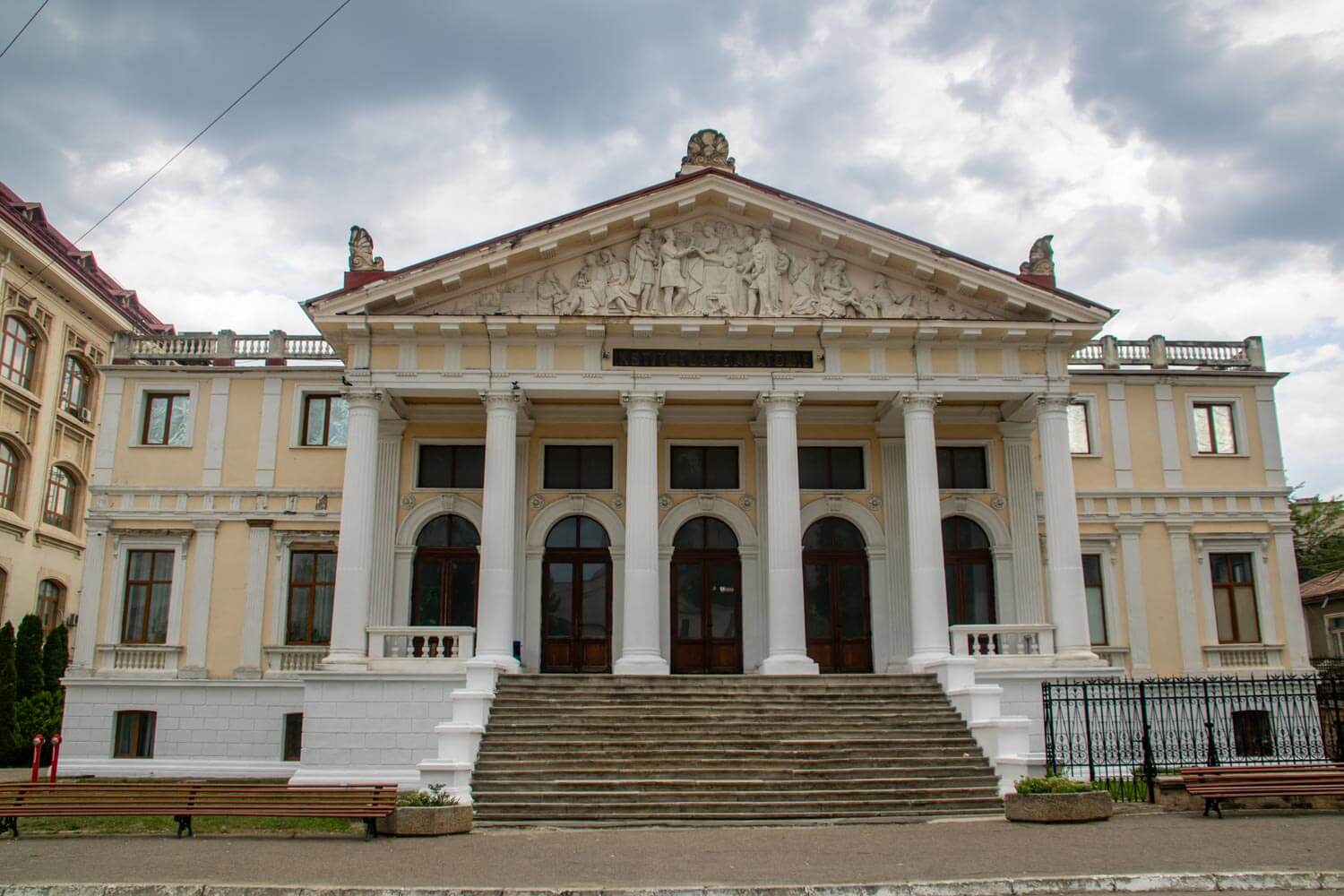
The institute was designed by architect Ștefan Emilian at a time when medical education in Iași was expanding rapidly. Its Neoclassical design deliberately recalls a Greek temple, with a monumental portico of six Doric columns supporting a triangular pediment. When the building opened, its teaching and technical installations were considered exceptionally modern for an anatomy institute, reflecting the Faculty of Medicine’s ambition to create a specialized center for both instruction and research.
The pediment is the building’s most unusual feature. Sculpted by Wladimir Hegel, the relief known as The Anatomy Lesson depicts a dissection surrounded by figures modeled on prominent contemporaries, including politician Take Ionescu, university rector Neculai Culianu, physician Aristide Peride, architect Ștefan Emilian, and Hegel himself. The composition turns the façade into a direct expression of the building’s purpose rather than treating the classical architecture as decoration alone.
Anatomy teaching and research have continued here through successive generations of the Iași medical school. Among the institute’s important former directors was Grigore T. Popa, the anatomist and researcher after whom the medical university is now named. The building also houses the university’s anatomical collections, including the well-known anatomical écorché created by Constantin Brâncuși. These collections form the Museum of Anatomy, although public access is generally occasional rather than that of a regularly open museum.