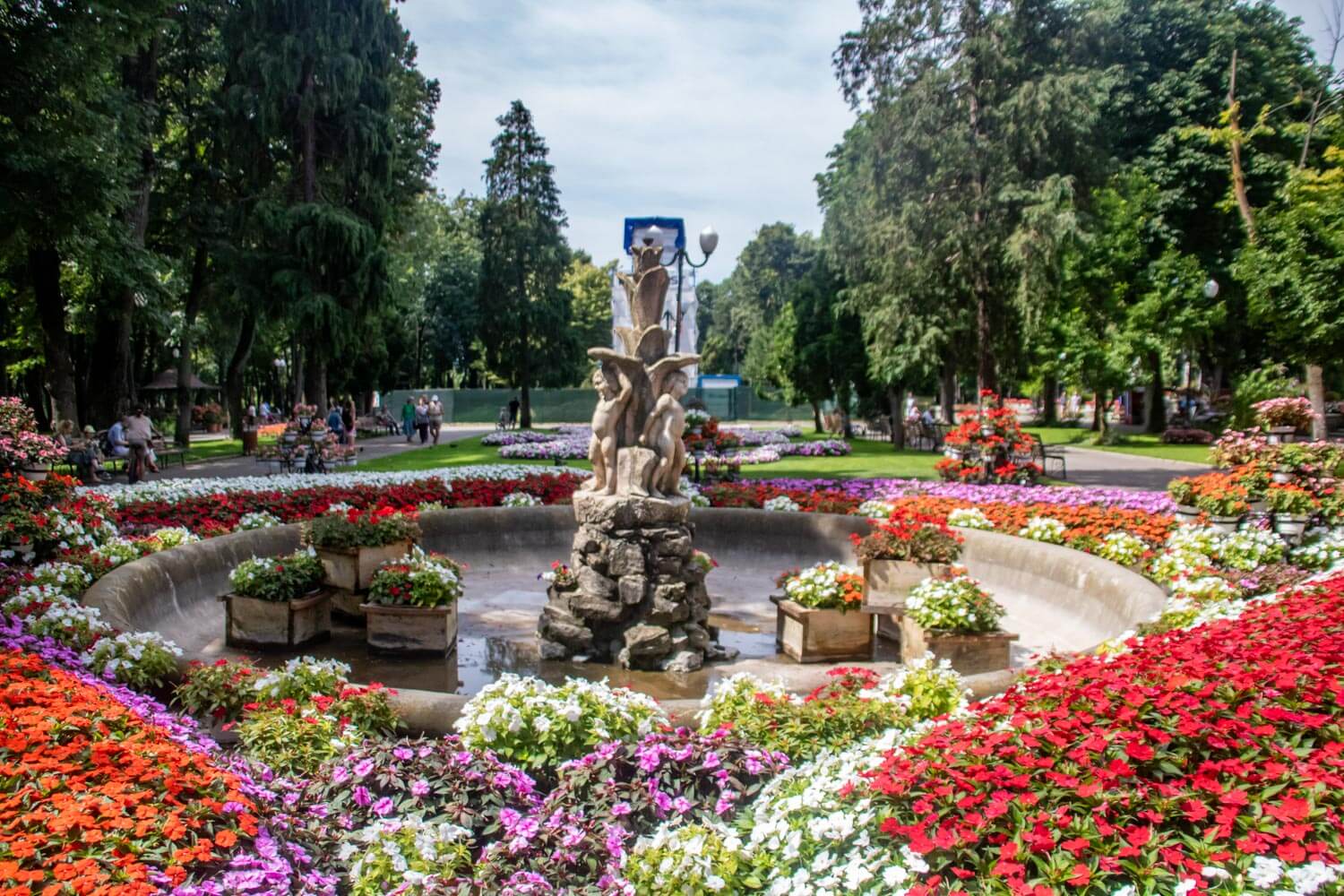
The Anastasie Fătu Botanical Garden (Grădina Botanică Anastasie Fătu) is the botanical garden of the Alexandru Ioan Cuza University, covering almost 88 hectares on Copou hill in Iași. Founded in 1856, it is Romania’s oldest university botanical garden and today contains thousands of plant taxa arranged across ten major sections, extensive wooded areas, themed gardens, and a large greenhouse complex.
Physician and naturalist Anastasie Fătu created the original garden on land he purchased near Râpa Galbenă, where by 1870 he had assembled around 2,500 plant species for botanical study and public education. That first garden disappeared after his death in 1886, and several later botanical gardens were established elsewhere in Iași before the university developed the present site. Work on Copou hill began in 1963, gradually creating a much larger garden that combined scientific collections with areas representing different habitats and geographical regions.
The present garden is organized by both plant type and origin. The Systematic Section follows the classification and evolution of plants, while the Phytogeographic Section groups species from different continents and biogeographical regions. Other large areas recreate the flora and vegetation of Romania and the Moldavian forest-steppe, while the Dendrarium concentrates on native and exotic trees and shrubs. Useful Plants brings together food and medicinal species, the Ornamental Section focuses on cultivated flowers and decorative plants, and the Rosarium contains around 800 species, varieties, and hybrids of roses. A section designed for visitors with visual disabilities uses aromatic plants and Braille labels to make the collection accessible through touch and scent.
Tropical, subtropical, and Mediterranean plants are kept in a greenhouse complex of 20 interconnected structures covering about 5,000 square meters. Across the outdoor gardens and greenhouses, the displays change considerably through the year, with collections of azaleas, camellias, orchids, cacti, bonsai, tulips, irises, roses, and dahlias appearing in different seasons. The long-running Autumn Flowers exhibition adds chrysanthemums, fruits, seeds, vegetables, and decorative gourds during the fall, making the garden as much a changing horticultural display as a permanent scientific collection.