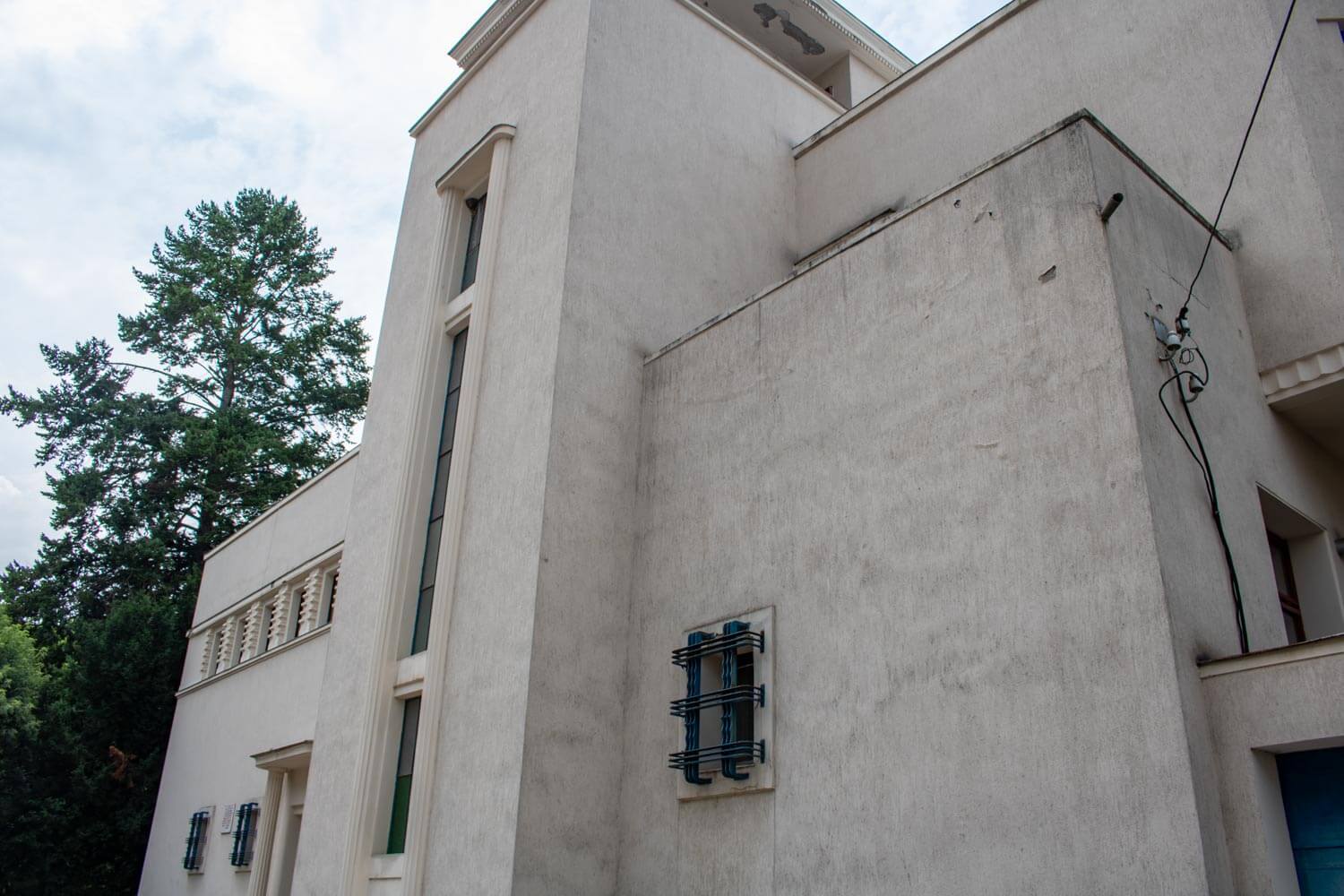
The Petru Groza House (Casa Petru Groza) is a modernist villa in Deva, built in 1930 as the private residence of Petru Groza (1884-1958), a Romanian lawyer, businessman, and politician who later served as prime minister of Romania from 1945 to 1952. Designed by architect Horia Creangă, the house is an important example of interwar modernist architecture in Romania.
The villa was designed between 1927 and 1929, when Groza was already an influential political figure and prominent landowner in Transylvania. Horia Creangă, who subsequently became one of Romania’s leading modernist architects, created a strikingly modern residence that contrasted with the historicist architecture popular at the time. The building consists of simple geometric volumes, flat roof terraces, and broad windows, with almost no decorative ornamentation. Its asymmetrical composition and projecting sections reflect the functionalist principles that were beginning to influence Romanian architecture during the interwar period.
Groza used the house as a family residence and a meeting place for prominent political and cultural figures, including historian Nicolae Iorga and writers Liviu Rebreanu, Octavian Goga, and Ion Minulescu. His political career reached its height after the Second World War, when he became prime minister in March 1945 and headed the government during Romania’s transition to communist rule. The residence also contained an extensive private collection of paintings, books, historical documents, and valuable furnishings.
After Groza’s death in 1958, the house remained in the possession of his family, with his wife Ana and later his daughter Maria living there. The exterior underwent restoration in 2006-2007, and in 2008 the building briefly opened to the public for an exhibition commemorating the 50th anniversary of Groza’s death, although it is otherwise a private residence and not accessible to visitors.