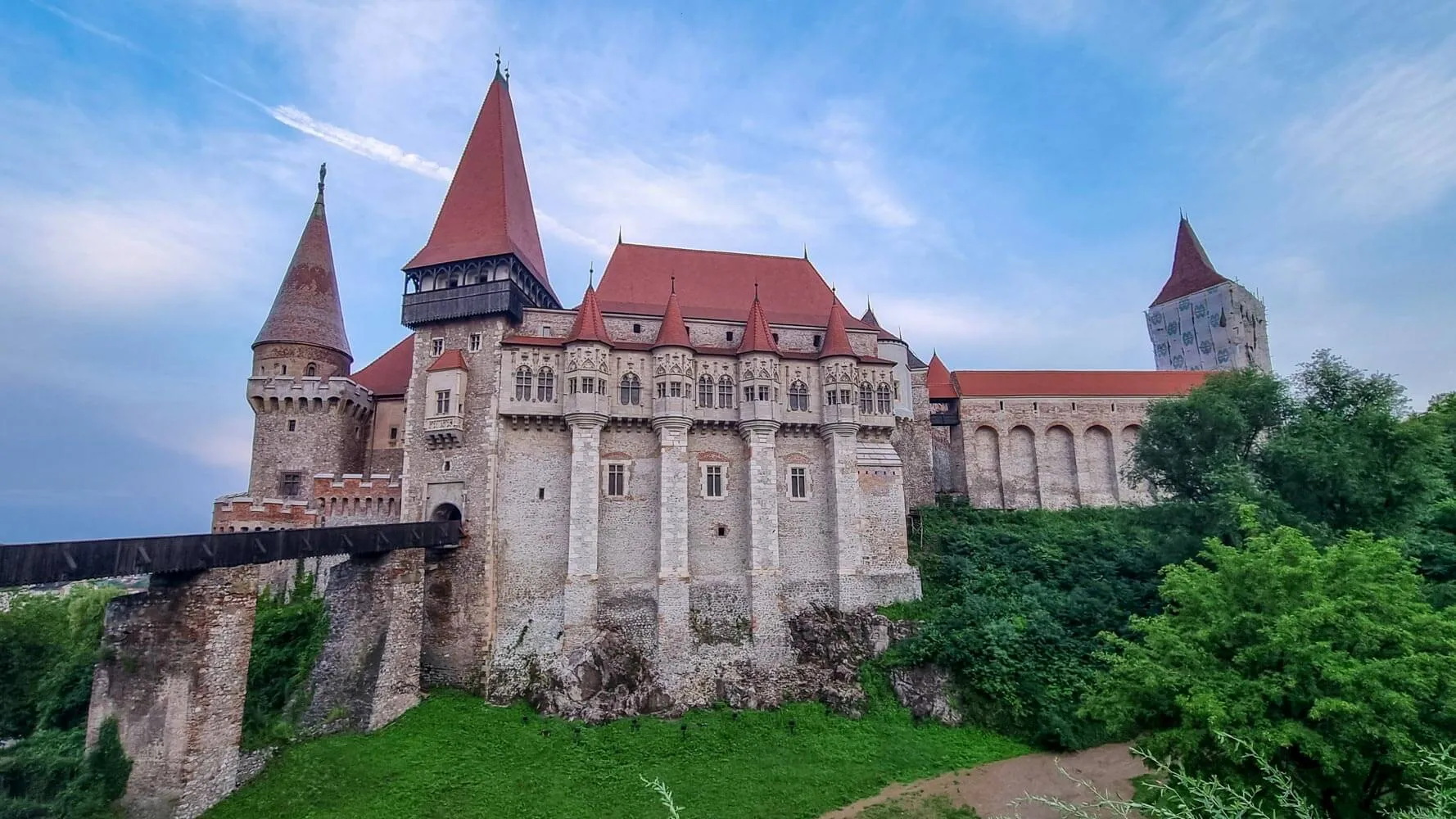
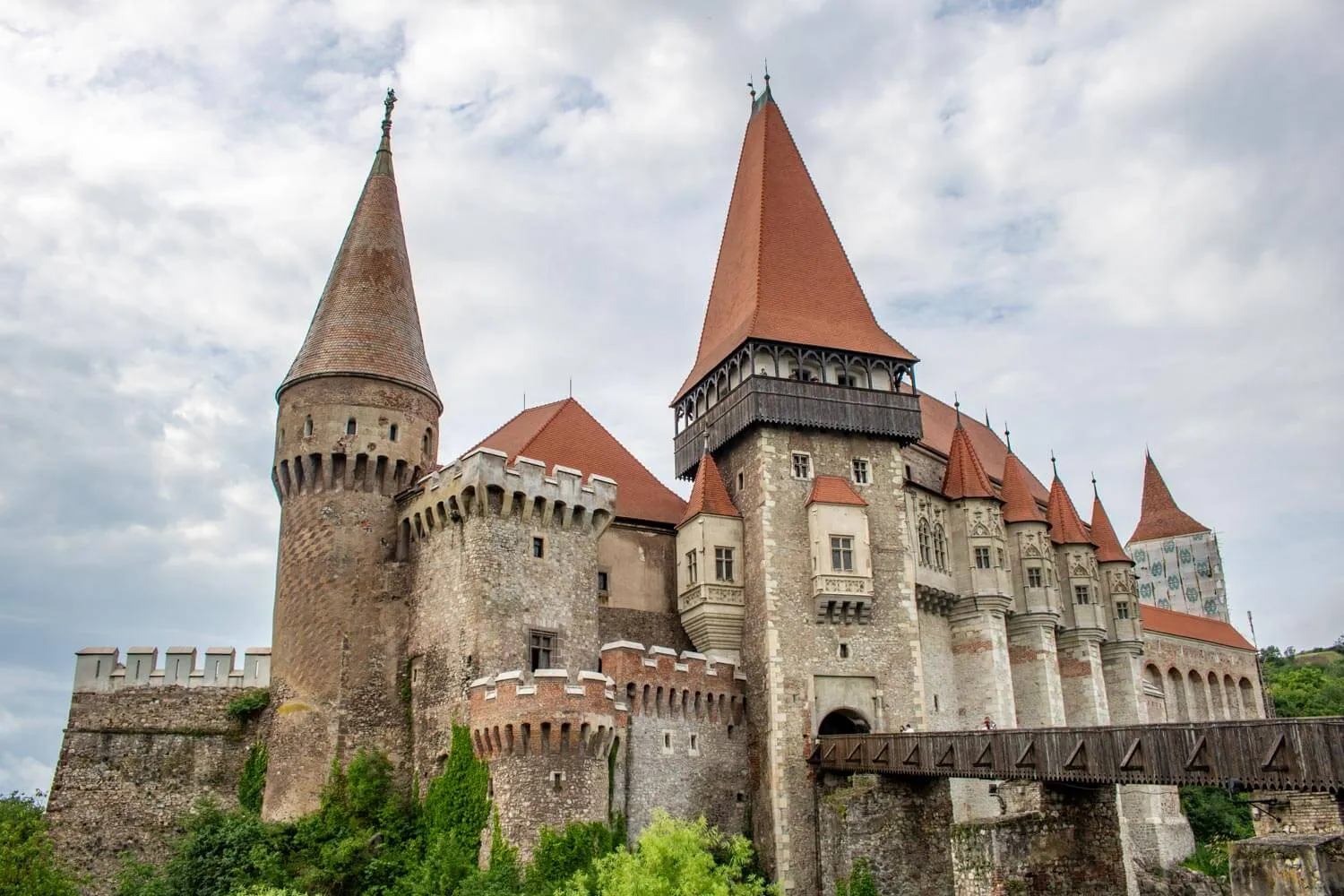
Deva Fortress (Cetatea Devei) is a medieval hilltop fortress overlooking the city of Deva and the Mureș Valley in Transylvania. Built in the 13th century on a volcanic hill rising 378 meters above sea level, it served as a royal stronghold, noble residence, and strategic defensive position for several centuries. Its surviving walls, towers, and courtyards form one of the most prominent medieval fortifications in western Romania, with panoramic views across the city and surrounding countryside.
History
The fortress was built during the reign of King Béla IV of Hungary, most likely following the Mongol invasion of 1241, when the kingdom began strengthening its defenses with stone fortifications. It was first documented in 1269, although records of fighting beneath its walls indicate that it already existed several years earlier. Its position above the Mureș Valley allowed the garrison to control an important route through Transylvania, while the castle also served as a residence for the region’s voivodes. During the 15th century, the fortress passed into the possession of John Hunyadi and his family, who expanded its defenses and added a second fortified enclosure.
Following the division of the medieval Kingdom of Hungary in the 16th century, Deva Fortress became an important stronghold of the Principality of Transylvania. Its owners and residents included several Transylvanian princes and members of their families, while the fortress also functioned as a prison. One of its most notable prisoners was Francis Dávid, the founder of the Transylvanian Unitarian Church, who died here in 1579 after being imprisoned for his religious beliefs.
Under Habsburg rule, the fortress underwent further military improvements, including the construction of additional defenses during the early 18th century. However, advances in artillery gradually reduced its strategic importance, and by the beginning of the 19th century it had fallen into disrepair. Emperor Francis I ordered its restoration after visiting Deva in 1817, but the renewed fortress was severely damaged on August 13, 1849, when its gunpowder magazine exploded during the final days of the Hungarian Revolution. The destruction left the complex largely in ruins, and the fortress was never fully rebuilt.
During the late 19th century, the hill and its ruins became a popular destination for walks and excursions. Paths were constructed through the surrounding forest, and conservation work during the 20th century helped preserve the surviving walls. A much larger restoration program began in the 2010s, with the outer fortifications restored first and the upper enclosure reopening in May 2024 after extensive archaeological and conservation work.
Exploring The Fortress
Deva Fortress consists of three fortified enclosures built at different stages of its history. The lower sections contain defensive walls, gates, and bastions, while the oldest and highest enclosure preserves the remains of the medieval Princely Palace, former military buildings, and two inner courtyards. Stone passages, stairways, and wooden walkways provide access between the different levels, offering changing views of the fortifications and the landscape below.
The restored upper enclosure includes several historical displays that illustrate life inside the fortress. The former garrison cellar contains a reconstruction of everyday military life, while a smaller cellar houses a memorial to Francis Dávid. Other spaces display historical stonework, weapons, and objects related to the fortress’s military and prison functions. A multimedia room presents aspects of its history, and the large courtyard provides a setting for cultural events.
Several viewing terraces offer extensive panoramas of Deva, the Mureș Valley, and the surrounding hills and mountains. The eastern viewpoint looks across the historic center and the valley, while the southern platform provides views over the modern city.
The fortress can be reached by several marked walking trails through the forest, an inclined elevator (Telecabina Cetății Deva) running up the eastern side of the hill, or an electric minibus to the first gate. The walking routes include steep sections, while exploring the fortifications involves stairs and uneven surfaces, particularly around the upper ruins.