The Gorj County Museum Alexander Ștefulescu (Muzeul Județean Gorj „Alexandru Ștefulescu”) is a history and archaeology museum in central Târgu Jiu, housed in the former Administrative Palace, a historic building dating from 1875. Founded in 1894, it is one of Romania’s older regional museums, with collections documenting the history of Gorj County from prehistoric times through the medieval and modern periods.
History Of The Building And Museum
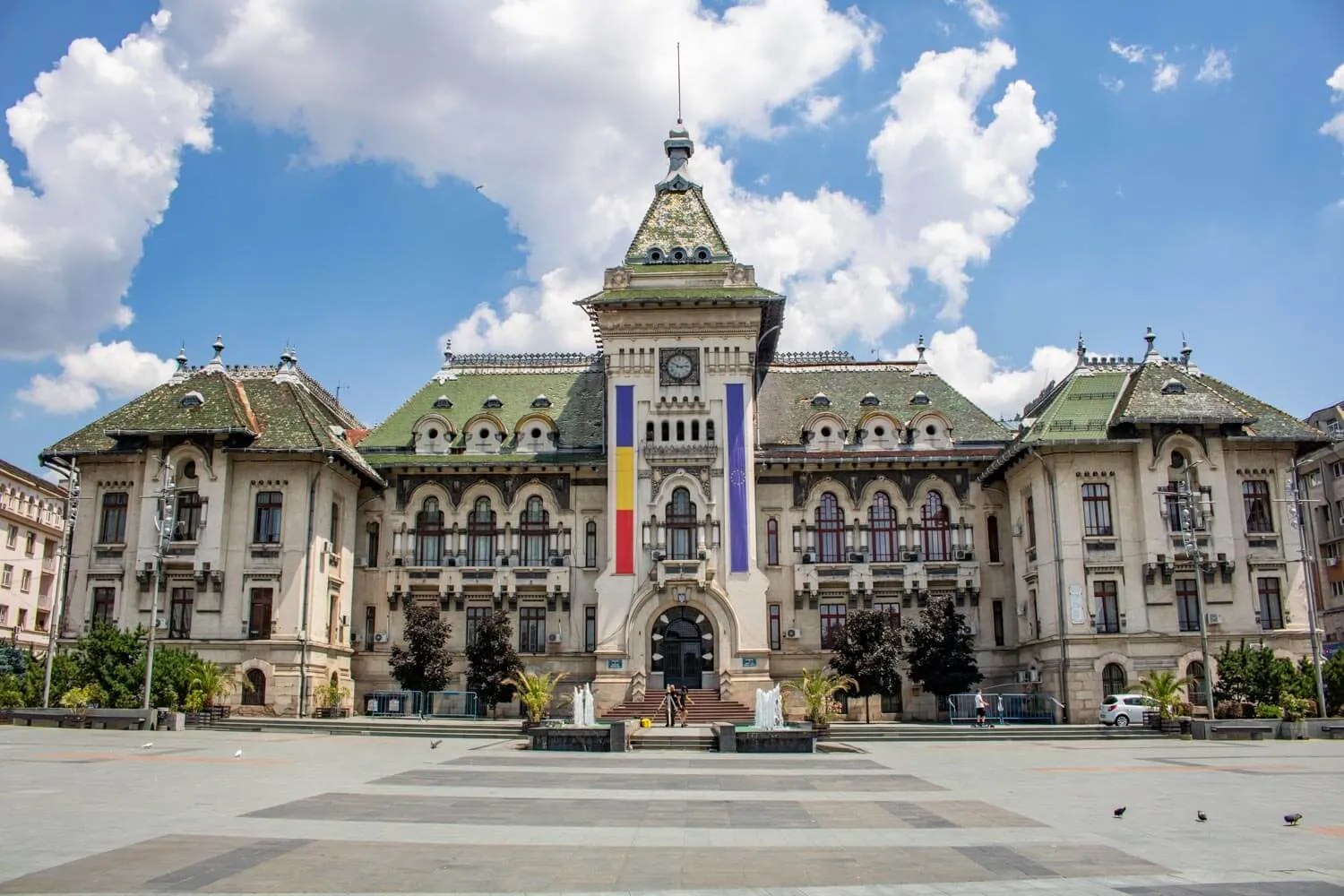
The museum building was constructed between 1870 and 1875 as the Administrative Palace (Palatul Administrativ), accommodating the Gorj County Prefecture and other public offices. Later used as a courthouse, the building is an example of 19th-century civic architecture, with an imposing symmetrical façade, classical decorative details, and a prominent central entrance.
The museum originated in 1893, when teacher and historian Alexandru Ștefulescu (1856-1910) established a small collection of historical and archaeological objects at the boys’ primary school where he worked. Together with professor Iuliu Moisil, engineer Aurel Diaconovici, and artist Vitold Rolla Piekarski, he founded the Gorj Museum on July 16, 1894. The new institution initially presented its collections in two rooms on the ground floor of the Administrative Palace, bringing together archaeological discoveries, historical documents, ethnographic objects, and natural history specimens.
As the collections expanded, the museum moved into the town’s gymnasium in 1896 and subsequently into the new building of the school that became the Tudor Vladimirescu National College. After Ștefulescu’s death in 1910, the institution faced financial and organizational difficulties, while the First World War caused losses to its collections. The National League of Gorj Women, led by Arethia Tătărescu, subsequently supported the construction of a dedicated museum building in the Public Garden. Designed by architect Iulius Doppelreiter and completed in 1926, this building is now known as the Jiu Embankment Tower.
The museum operated there until 1952, when it moved to other premises in Târgu Jiu. In 1974, it returned to the former Administrative Palace, the building where its first exhibition had opened eighty years earlier. The permanent history and archaeology exhibition was reorganized from 1975, while restoration work on the historic building followed in 1977-1978. As the county museum developed, its art and ethnographic collections were transferred to specialized branches, including the Târgu Jiu Art Museum and the Gorj Museum of Folk Architecture in Curtișoara.
In 1996, the history and archaeology museum received the name of its founder, Alexandru Ștefulescu. The wider county museum institution subsequently adopted the same name and now administers a network of museums and memorial houses throughout Gorj County.
Collections And Exhibitions
The museum’s archaeological collections trace human settlement in Gorj from prehistoric times through the Dacian and Roman periods. Stone tools, pottery, weapons, ornaments, and other finds illustrate the development of early communities, while artifacts from the Bronze and Iron Ages provide evidence of changing settlement patterns and craftsmanship. The Roman collection includes coins, ceramics, and objects recovered from archaeological sites in the county, reflecting the region’s place within Roman Dacia.
The medieval exhibitions explore the development of Wallachia and the history of Gorj’s towns, villages, and religious institutions. Among the museum’s important holdings is the Alexandru Ștefulescu document collection, containing manuscripts and historical records dating from the 15th to the 19th centuries. Old printed books, icons, and religious objects illustrate the cultural and ecclesiastical life of the region, while the numismatic collection includes Roman and later coinage.
The modern history collections cover major political and social developments, including the Wallachian uprising of 1821 led by Tudor Vladimirescu, the formation of modern Romania, and the First World War. Historical documents, photographs, weapons, uniforms, and personal objects illustrate the experiences of people from Gorj during these periods. The museum also presents temporary exhibitions drawn from its wider collections and archaeological research.