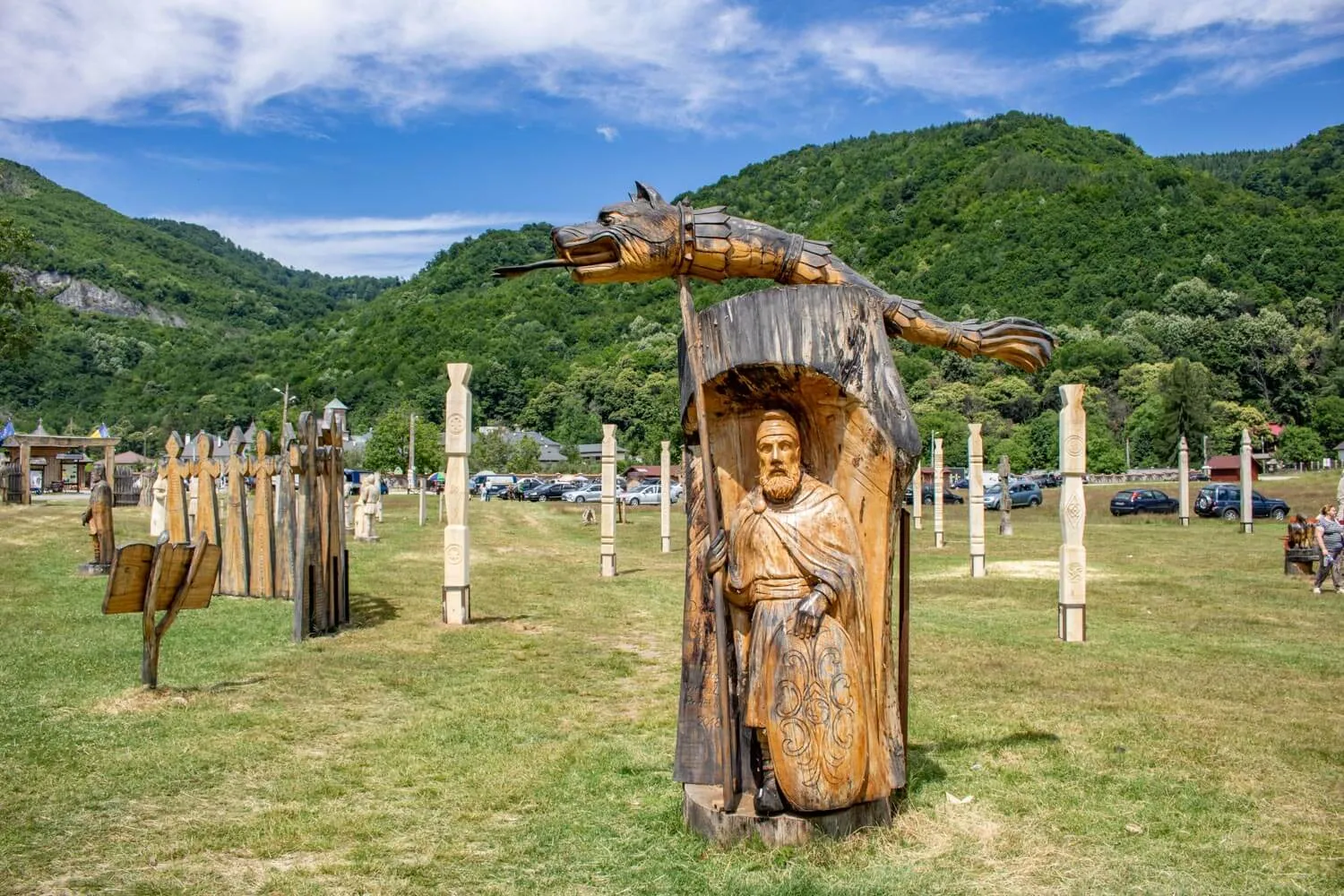
The Polovragi Sculpture Camp (Tabăra de Sculptură Polovragi) is an open-air exhibition of wooden sculptures in Polovragi, Gorj County, situated on a broad meadow in front of the Polovragi Monastery. Established in 2018, the project brings together Romanian woodcarvers to create monumental sculptures inspired by Dacian history, mythology, and traditional Romanian craftsmanship.
The sculpture camp was initiated by the Gorj County Center for the Preservation and Promotion of Traditional Culture in cooperation with the local authorities. Its first edition took place in July 2018, when artists from different regions of Romania gathered to carve large wooden sculptures inspired by ancient Dacian symbols. The following year, the project adopted the name Vatra Dacică (Dacian Hearth), reflecting its ambition to recreate elements of Dacian life and culture through contemporary woodcarving.
Each summer, participating sculptors work outdoors for approximately ten days, transforming large oak trunks into figures and decorative compositions using chisels, carving tools, and chainsaws. The artworks explore themes drawn from Dacian mythology and everyday life, including warriors, religious figures, families, and symbolic motifs. The project has also produced carved wooden gateways and reconstructions inspired by ancient Dacian buildings.
The completed sculptures form an expanding open-air exhibition on the grassy plateau outside the monastery. Large standing figures, carved faces, wooden columns, and groups of human figures can be seen against the surrounding mountain slopes. Among the works are representations of Dacian warriors and the deity Zamolxis, reflecting the ancient history and legends of the Polovragi area.
The exhibition can be explored while visiting Polovragi Monastery, with the sculptures standing in the open meadow beside the road toward the Olteț Gorge and the Polovragi Cave. During the annual sculpture camp, the site becomes a working outdoor studio, offering an opportunity to watch the artists carving new pieces before they are added to the exhibition.