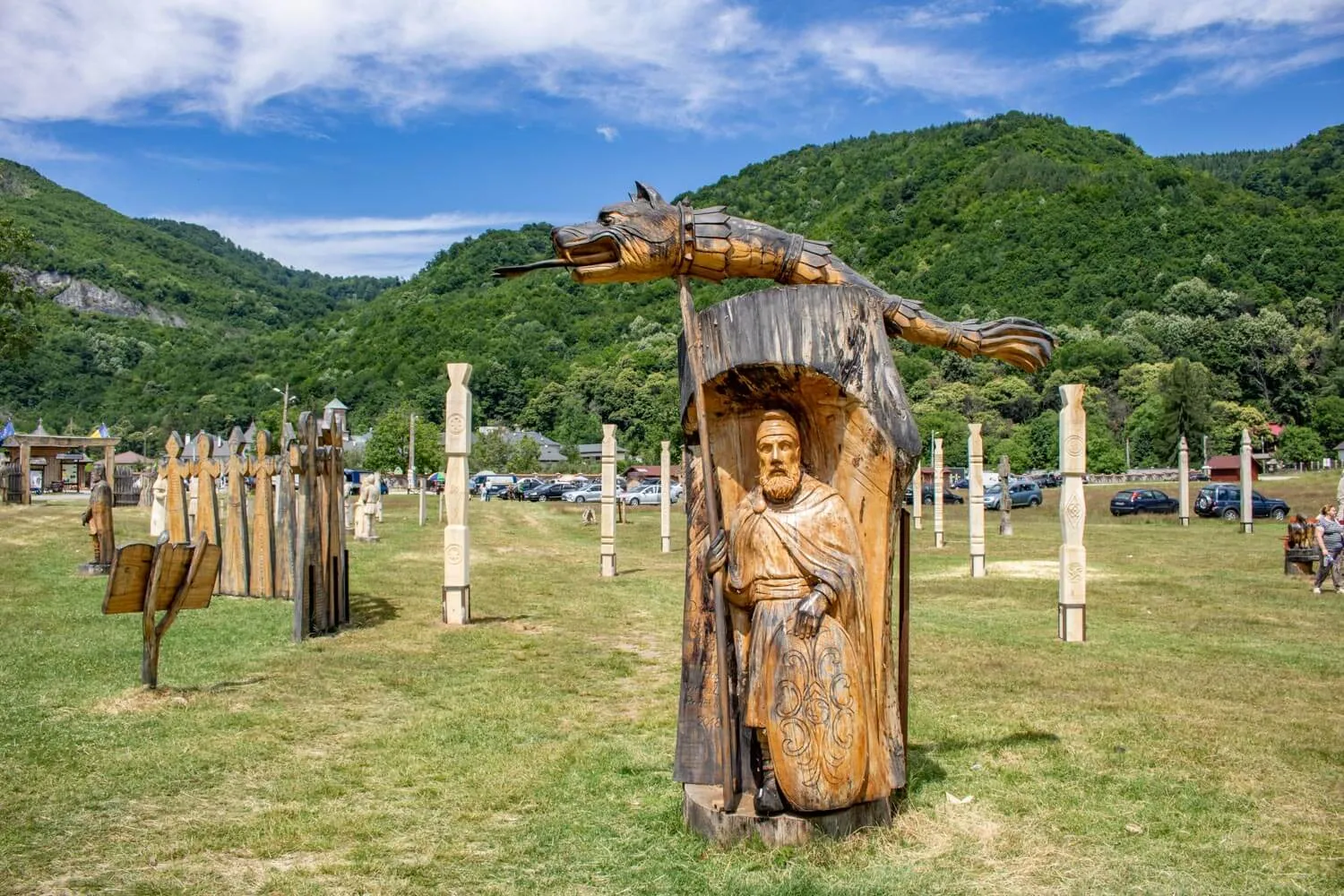
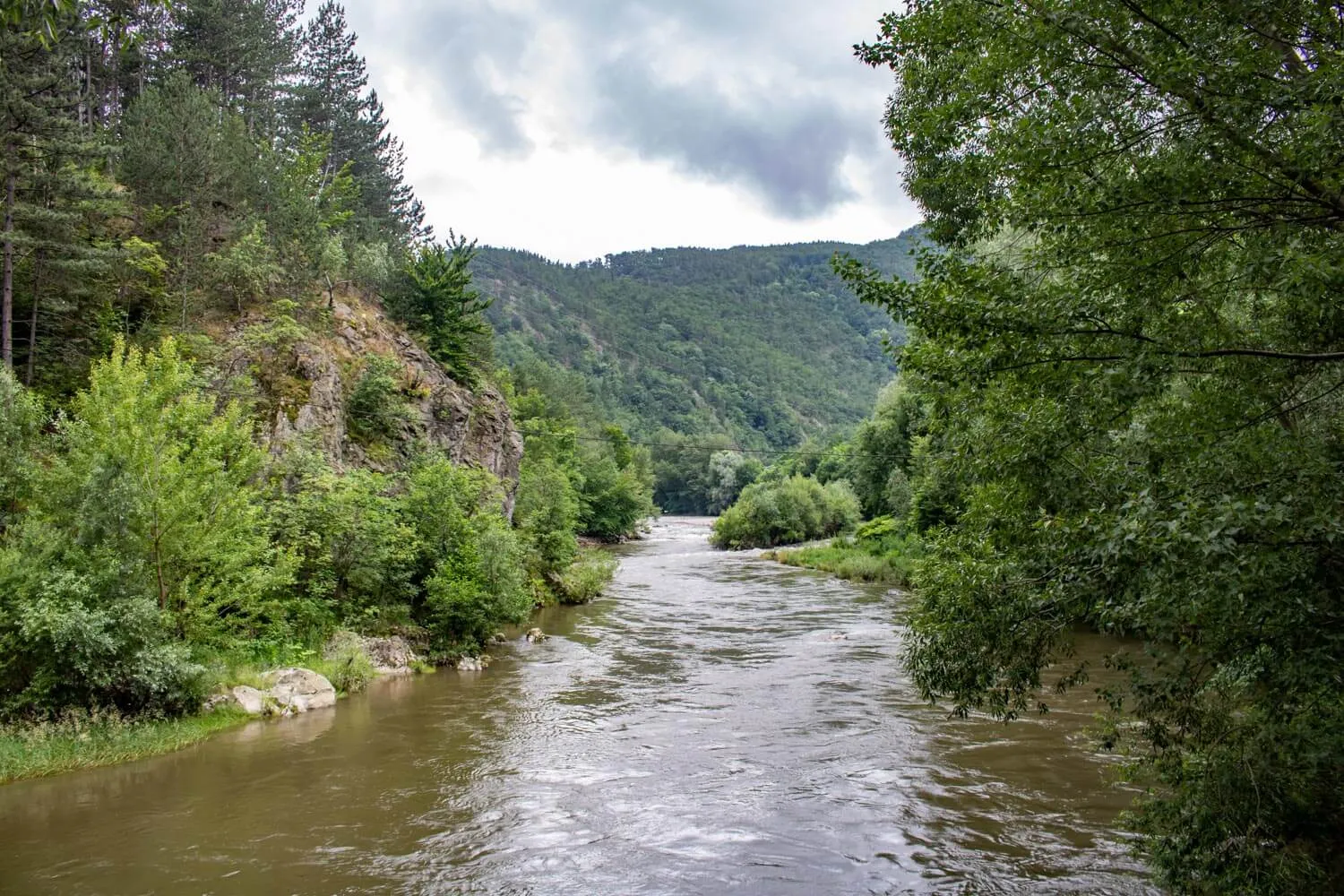
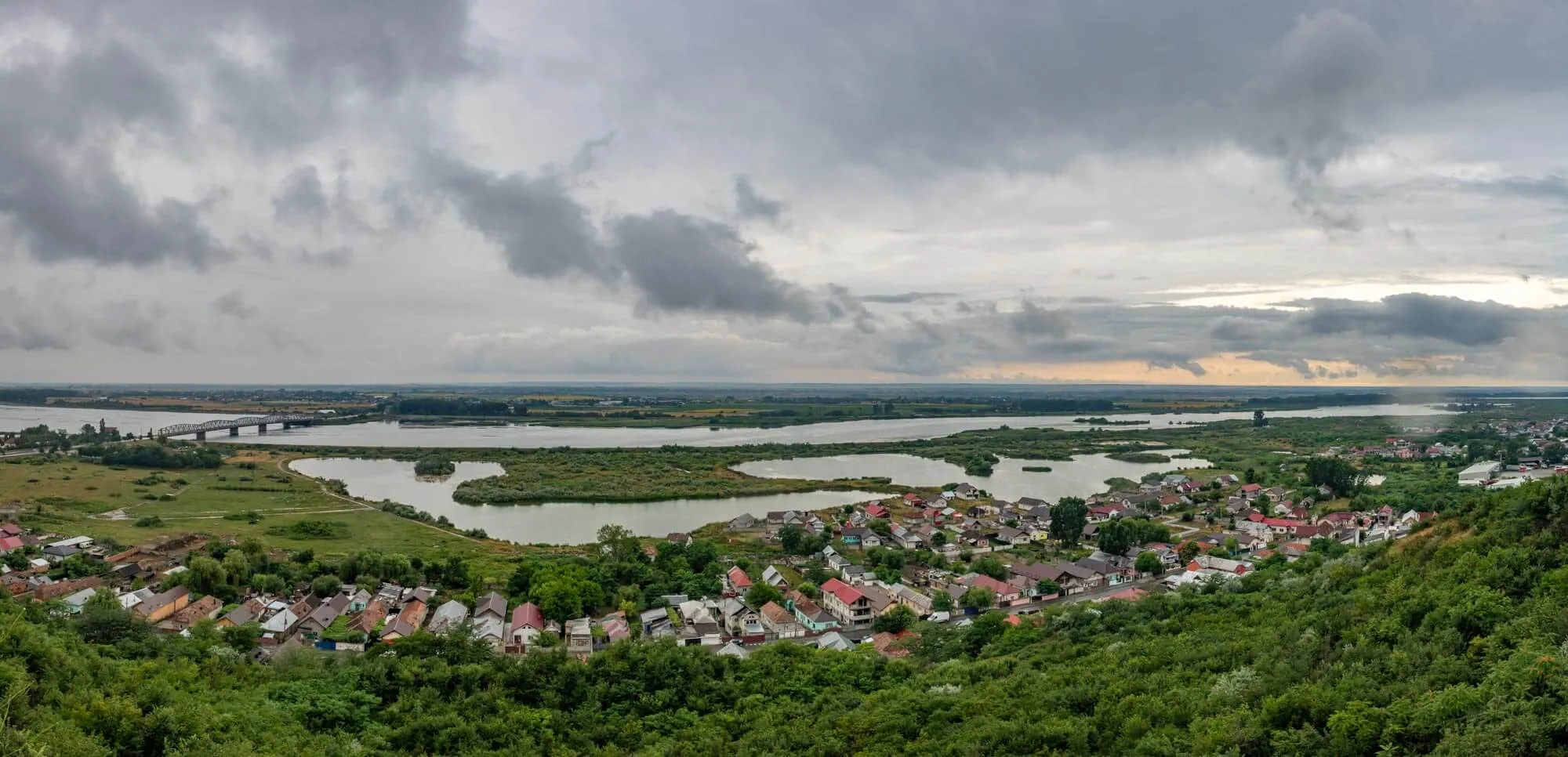
Vișina Monastery (Mănăstirea Vișina) is a Romanian Orthodox monastery near Bumbești-Jiu, at the southern entrance to the Jiu Gorge in Gorj County. Dedicated to the Holy Trinity, it preserves the ruins of a medieval stone church beside a modern wooden church and monastic buildings, with the Jiu River flowing through the valley below.
The monastery’s origins date to the late 14th or early 15th century, during the reign of Mircea the Elder, who is credited with its foundation. Its existence is documented in records issued by Prince Neagoe Basarab in 1513 and 1514, the latter mentioning Abbot Grigorie and confirming property boundaries established during Mircea’s reign. A further document from 1519 granted the monastery rights over land near the entrance to the Jiu Valley, indicating that it had developed into an established religious community.
Over the following centuries, the monastery gradually declined and was eventually abandoned. Its buildings deteriorated, while erosion by the Jiu River damaged the eastern side of the original enclosure. The residential buildings and defensive walls disappeared, leaving the ruins of the principal church as the most substantial surviving structure. Built from irregular blocks of river and mountain stone, the ruined walls preserve part of the medieval church’s original layout, including sections of the altar and nave.
Archaeological investigations have provided further evidence of the monastery’s earlier development. Excavations in 2015 uncovered foundations of former monastic cells, including several rooms, a hearth, and remains of a stove. Some of the masonry incorporated reused Roman bricks from the nearby military sites at Bumbești-Jiu, illustrating the use of older construction materials in the medieval buildings.
The monastery was formally reestablished on October 19, 1994, restoring religious life to the historic site after a lengthy interruption. A new wooden church dedicated to the Holy Trinity was subsequently constructed beside the ruins, along with residential buildings for the monks. The church has timber walls, a steep shingled roof, a small bell tower, and a covered entrance porch, drawing on traditional Romanian wooden church architecture.
The monastery grounds include the surviving medieval church ruins, the wooden church, monastic residences, and a small bell tower, surrounded by grass and trees at the foot of the mountains. Access is from the DN66 road through the Jiu Valley, crossing the river by a narrow bridge before reaching the monastery.