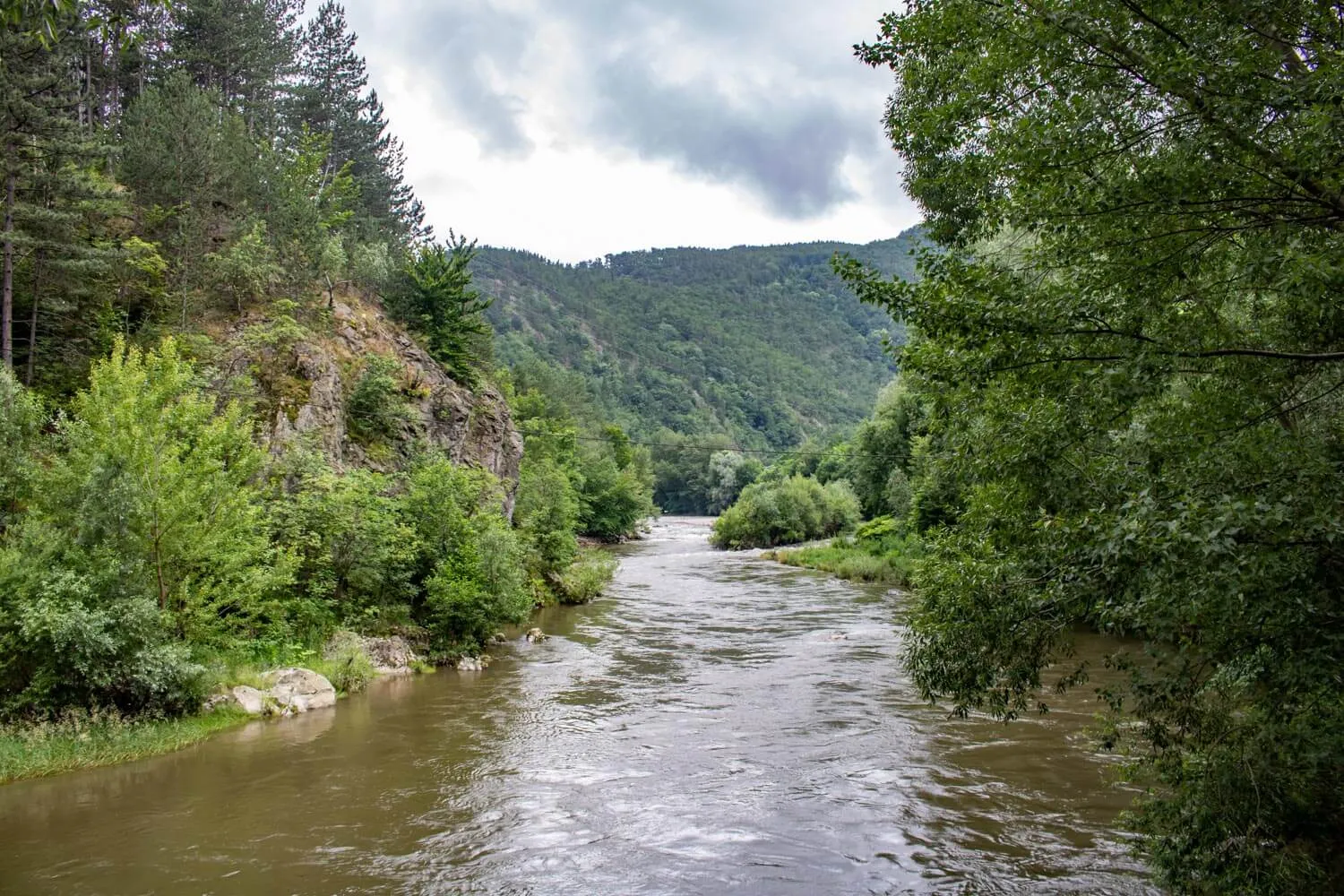
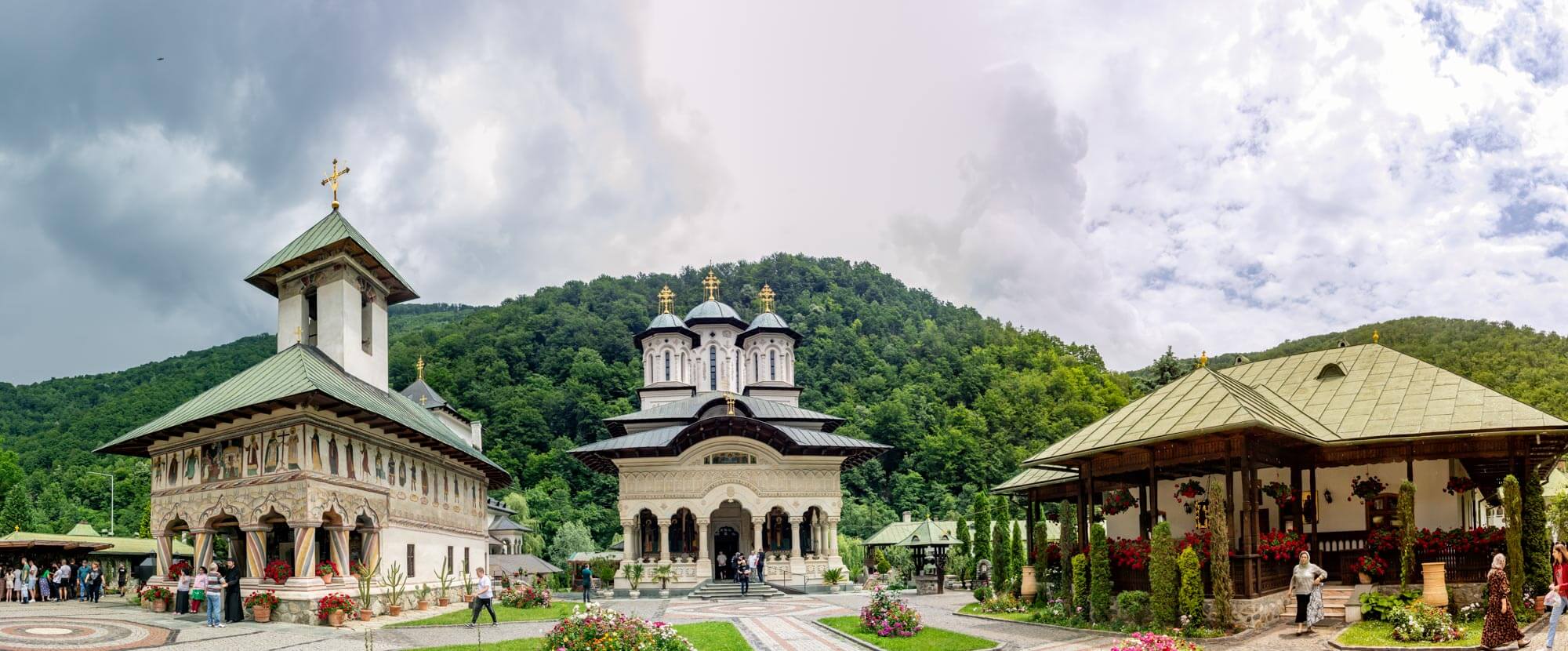
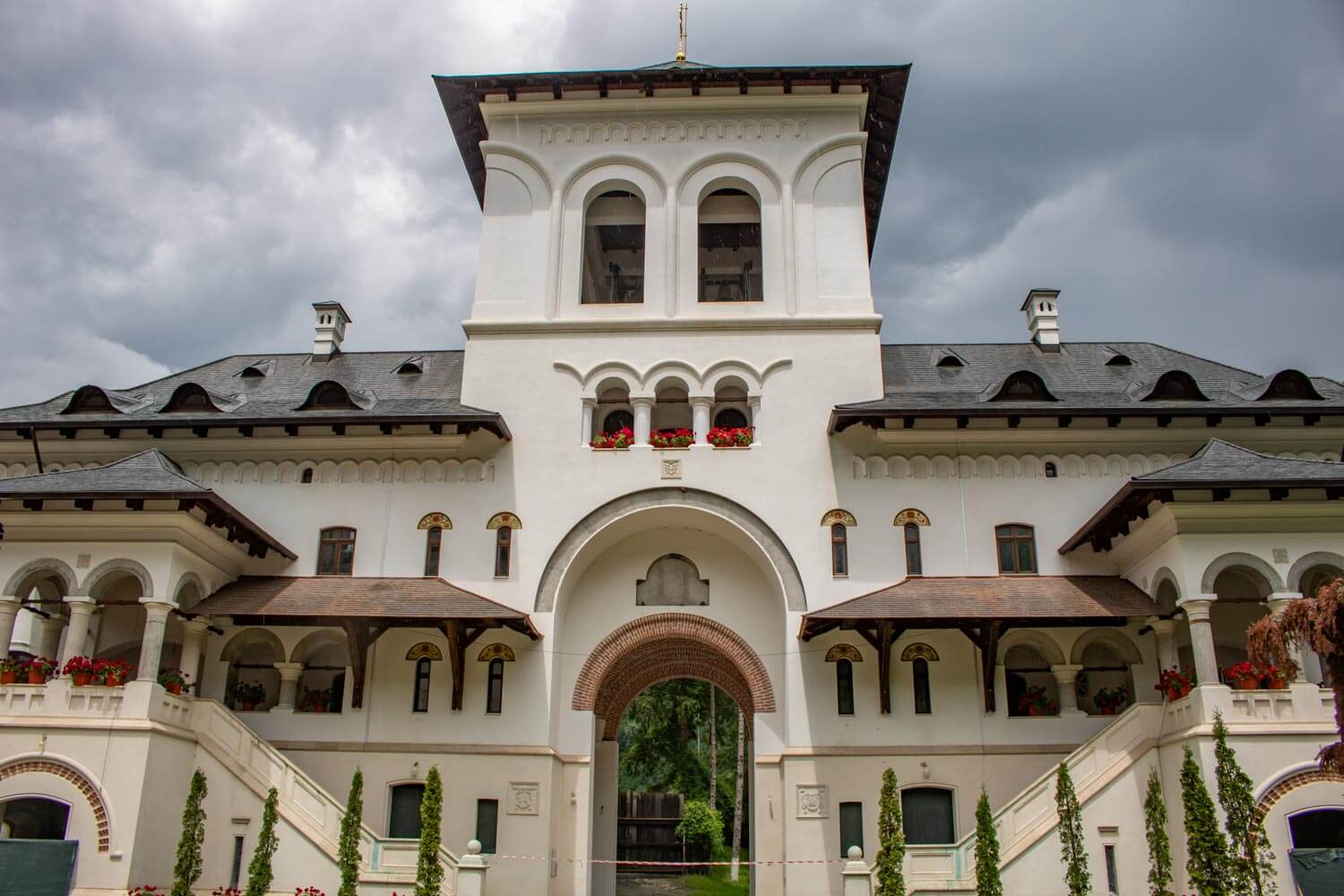
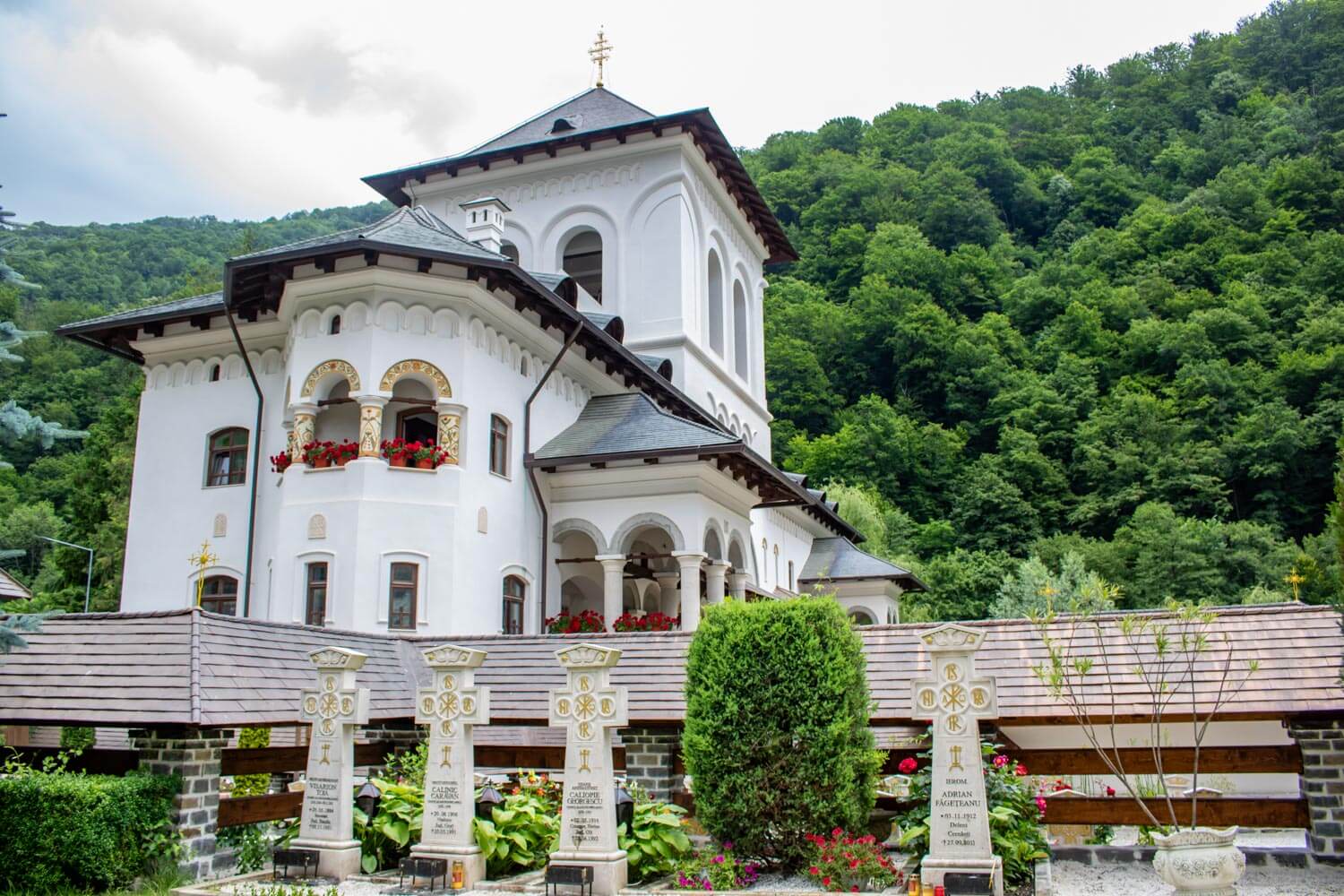
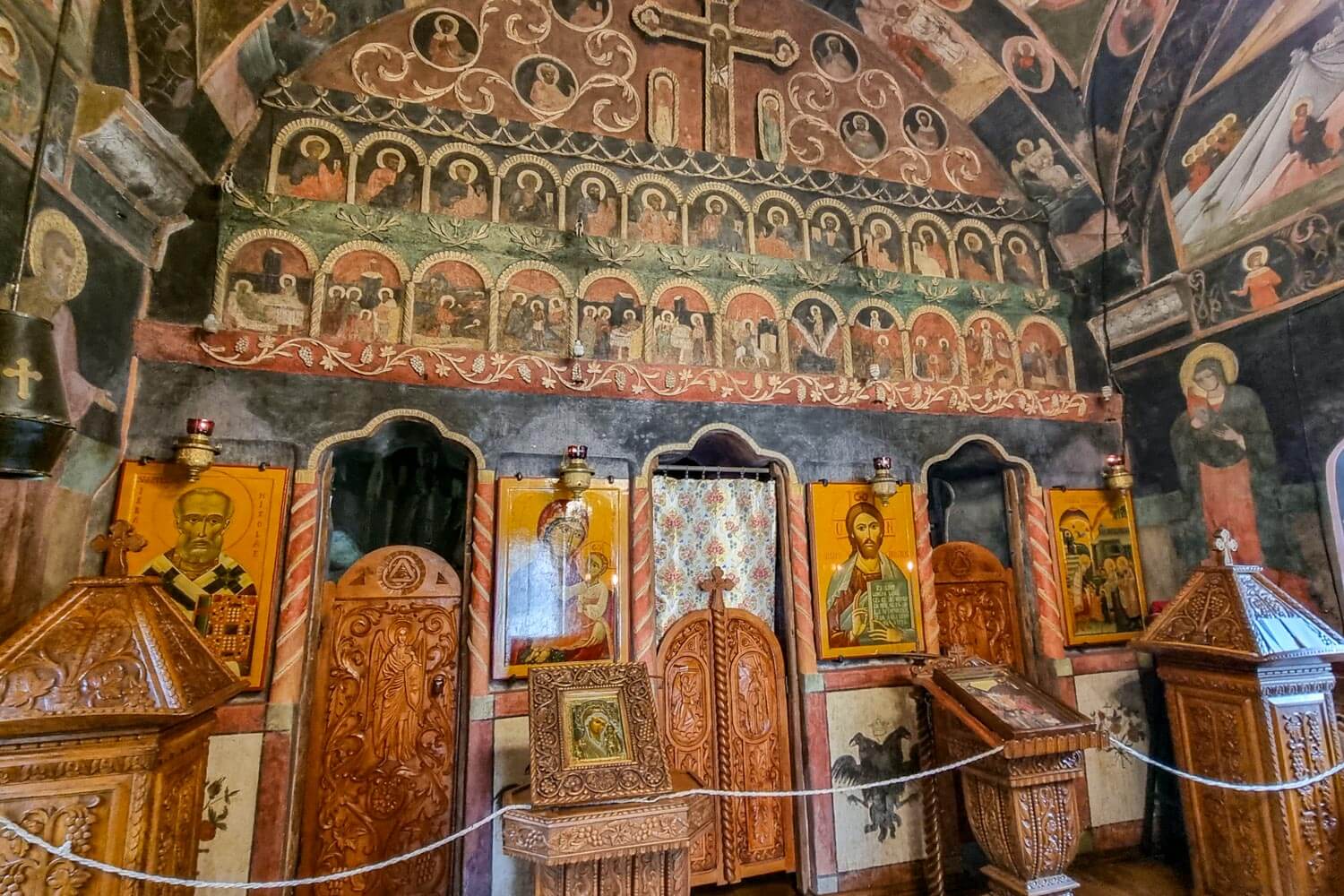
The Lainici Monastery (Mănăstirea Lainici) is a Romanian Orthodox monastery in the Jiu Gorge, near Bumbești-Jiu in Gorj County. Situated between the steep forested slopes of the Vâlcan and Parâng Mountains, it is one of the region’s important monastic centers, with a historic 19th-century church and a much larger modern church built on two levels.
History
The origins of Lainici Monastery are uncertain, although its foundation has been attributed to Saint Nicodemus of Tismana, who established several monasteries in Wallachia during the 14th century. An earlier wooden hermitage is believed to have stood on the site, while documentary references establish the presence of a monastic community by the 18th century. The monk Atanasie, who came from Tismana Monastery, played an important role in the development of the community during this period.
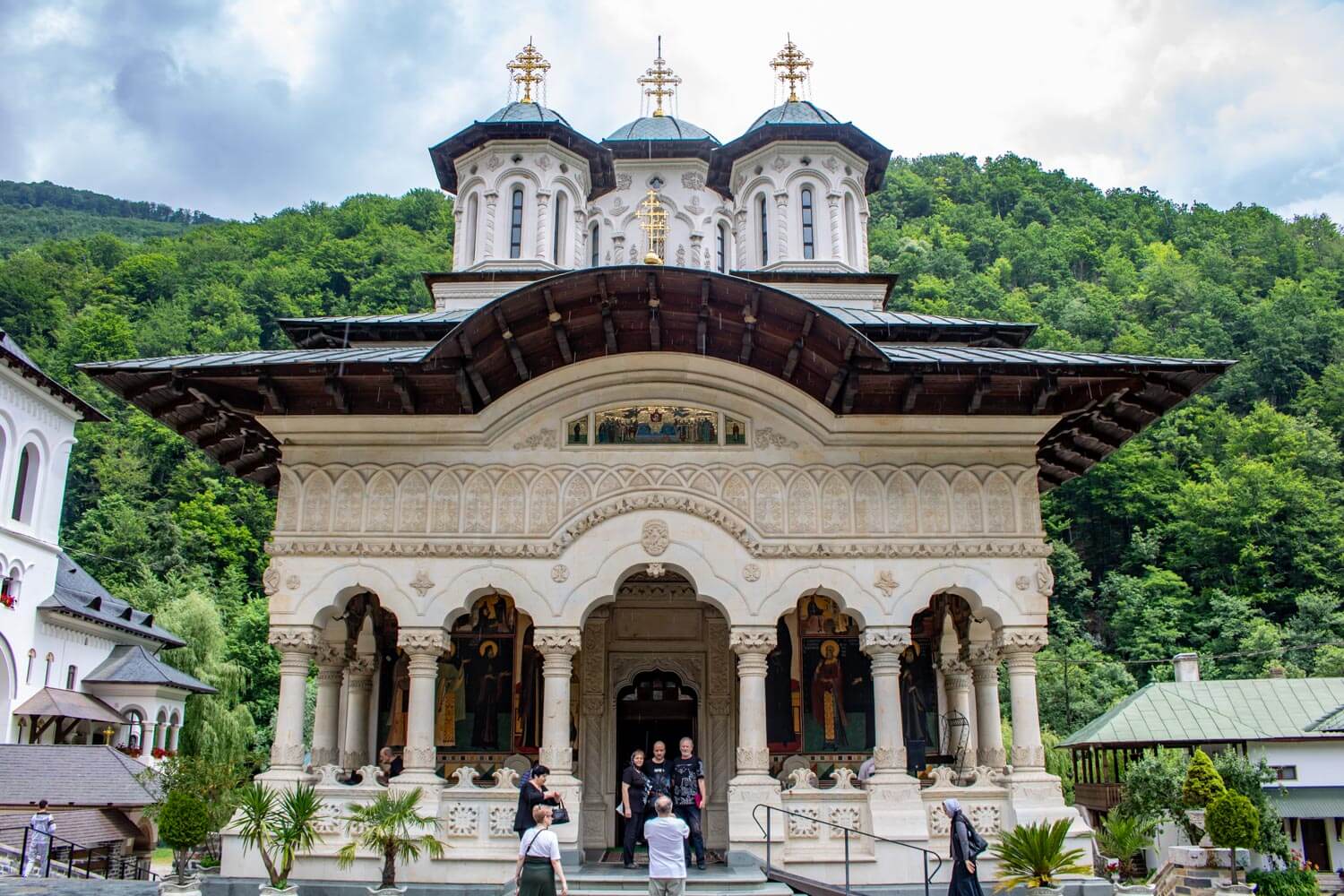
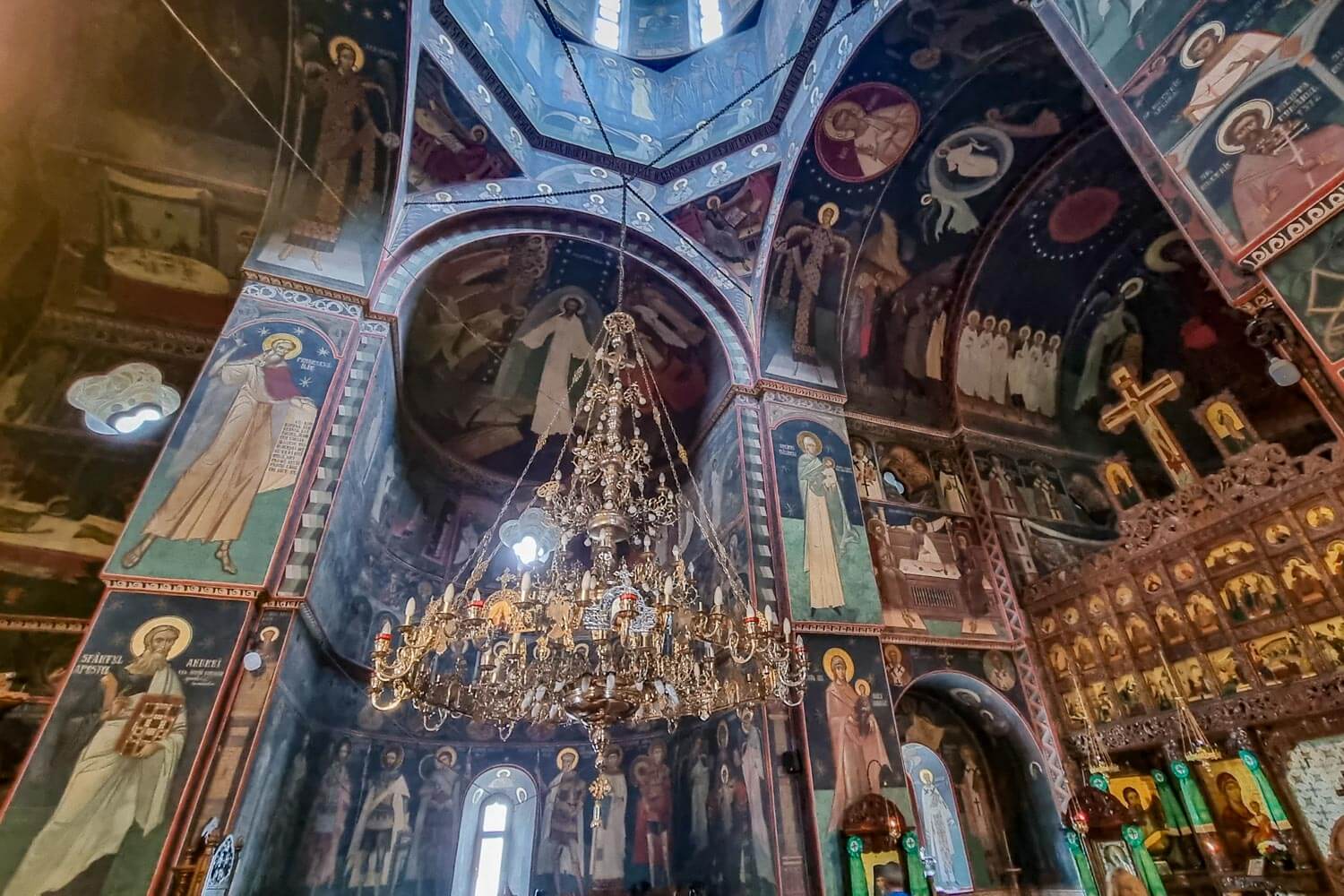
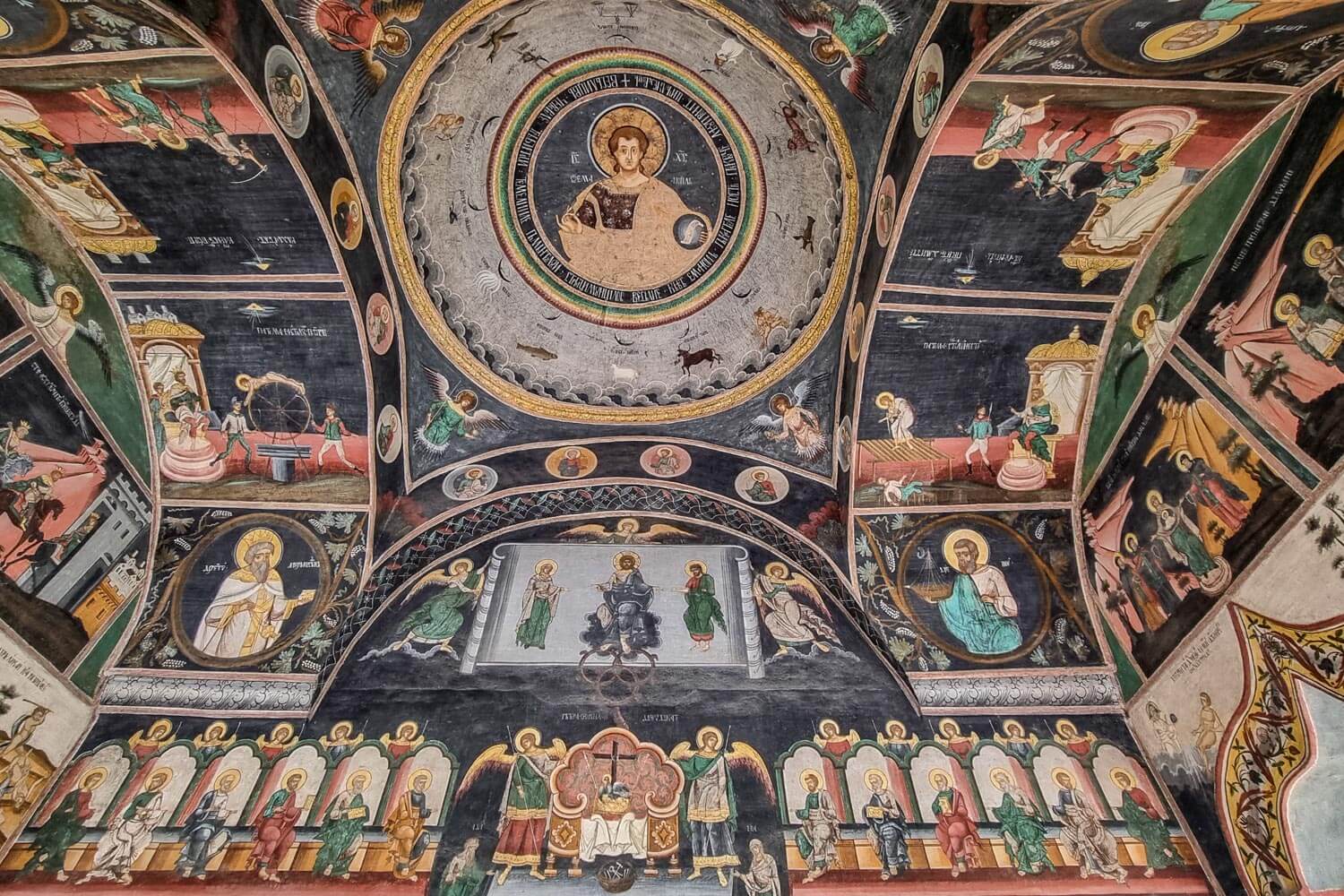
Between 1812 and 1817, local Wallachian noble families financed the construction of a new masonry church dedicated to the Presentation of the Virgin Mary, replacing an older religious building. Among its benefactors were Răducan Sărdănescu and Nicolae Brăiloiu, whose contributions are commemorated in the foundation inscription. The church was decorated with frescoes by painters from the Târgu Jiu school, while the monastery developed additional cells and supporting buildings.
Lainici also played a role in the political upheavals of the early 19th century. Tudor Vladimirescu, who led the Wallachian uprising of 1821, is said to have sought refuge at the monastery while avoiding Ottoman forces. The community subsequently suffered reprisals, including damage to its buildings and the expulsion of monks.
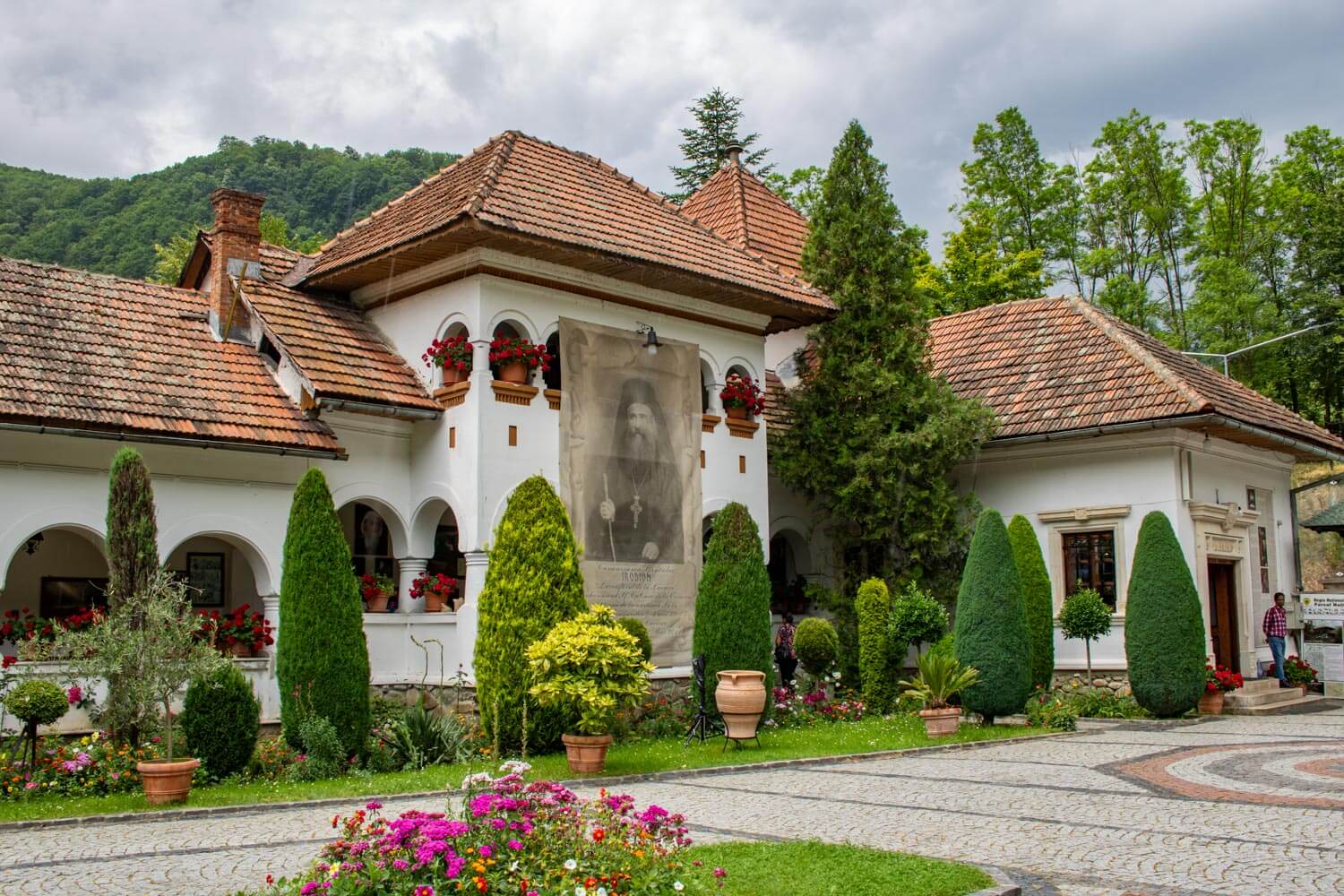
The monastery experienced an important period of spiritual development under Abbot Irodion Ionescu, who led the community for much of the period between 1854 and 1900. A disciple of Saint Calinic of Cernica, Irodion became his spiritual confessor and earned recognition for his ascetic life. He was later canonized by the Romanian Orthodox Church in 2011 as Saint Irodion of Lainici.
During the First World War, German troops occupied and severely damaged the monastery. Religious objects and bells were stolen, the archives were burned, and the cemetery was devastated. The church was also desecrated, with inscriptions scratched into the altar walls by soldiers. Restoration began in 1929, when monks from Frăsinei Monastery arrived under Abbot Visarion Toia, rebuilding the residential quarters and reestablishing communal monastic life.
The community faced further restrictions during the communist period. Construction of the Bumbești-Livezeni railway and improvements to the road through the Jiu Gorge affected the monastery’s grounds, while buildings were occupied for other purposes. In 1961, Lainici lost its status as an independent monastery and was designated a rest home for priests. Religious life gradually revived after 1975 under Abbot Caliopie Georgescu, with the restoration of communal monastic practices.
Following the Romanian Revolution of 1989, the growing number of pilgrims created a need for a larger church. Construction began in 1990 under Metropolitan Nestor of Oltenia, with the initial architectural and structural work coordinated by Ioan Selejan. The new church was designed with two superimposed worship spaces, symbolizing the division of Christian history before and after the Edict of Milan in 313. Additional monastic buildings, a large refectory, and new enclosure walls were constructed as the complex expanded.
Churches And Monastery Grounds
The historic church is a modest masonry building with a narrow rectangular plan, an entrance porch, and richly painted interior walls. Dedicated to the Presentation of the Virgin Mary, it preserves religious frescoes and portraits of its founders, reflecting the artistic traditions of early 19th-century Wallachia. Restoration work in 2007-2008 also revealed evidence of earlier construction phases and burials beneath the porch.
The newer church is considerably larger than its 19th-century predecessor, with tall towers, decorative brickwork, and a broad entrance reached by steps. Its unusual design incorporates two separate worship spaces on different floors, taking advantage of the sloping terrain. The lower church is dedicated to the early Christian period before the Edict of Milan in 313, while the upper church represents the subsequent history of Christianity through its paintings of saints and religious events.
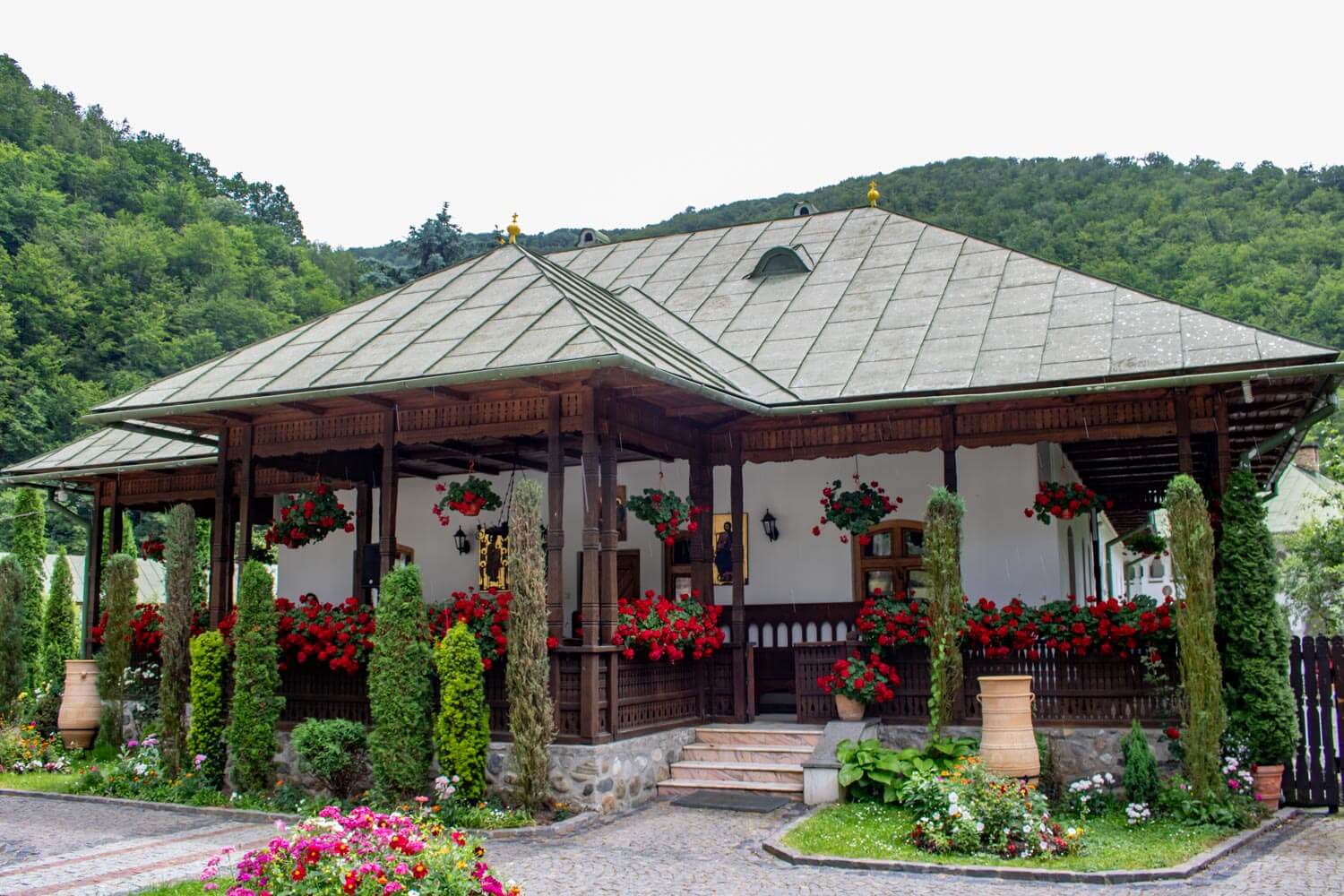
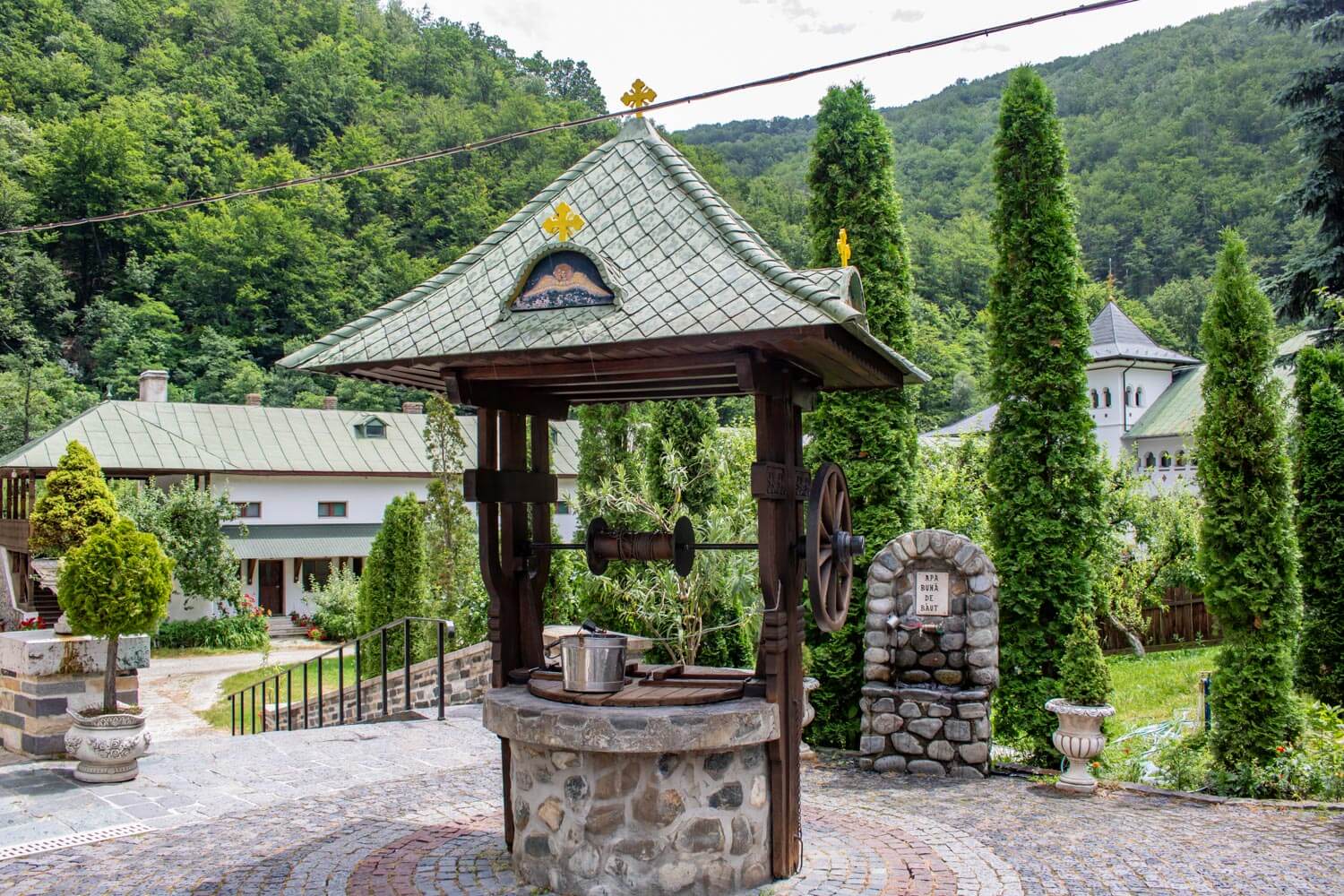
The monastery also preserves the relics of Saint Irodion of Lainici and a revered copy of the icon of the Virgin Mary known as the Quick to Hear (Grabnic Ascultătoarea), brought from Docheiariou Monastery on Mount Athos in 2006. The churches stand among residential buildings, gardens, and paved courtyards enclosed by stone walls, with the surrounding mountains rising steeply above the Jiu Gorge.