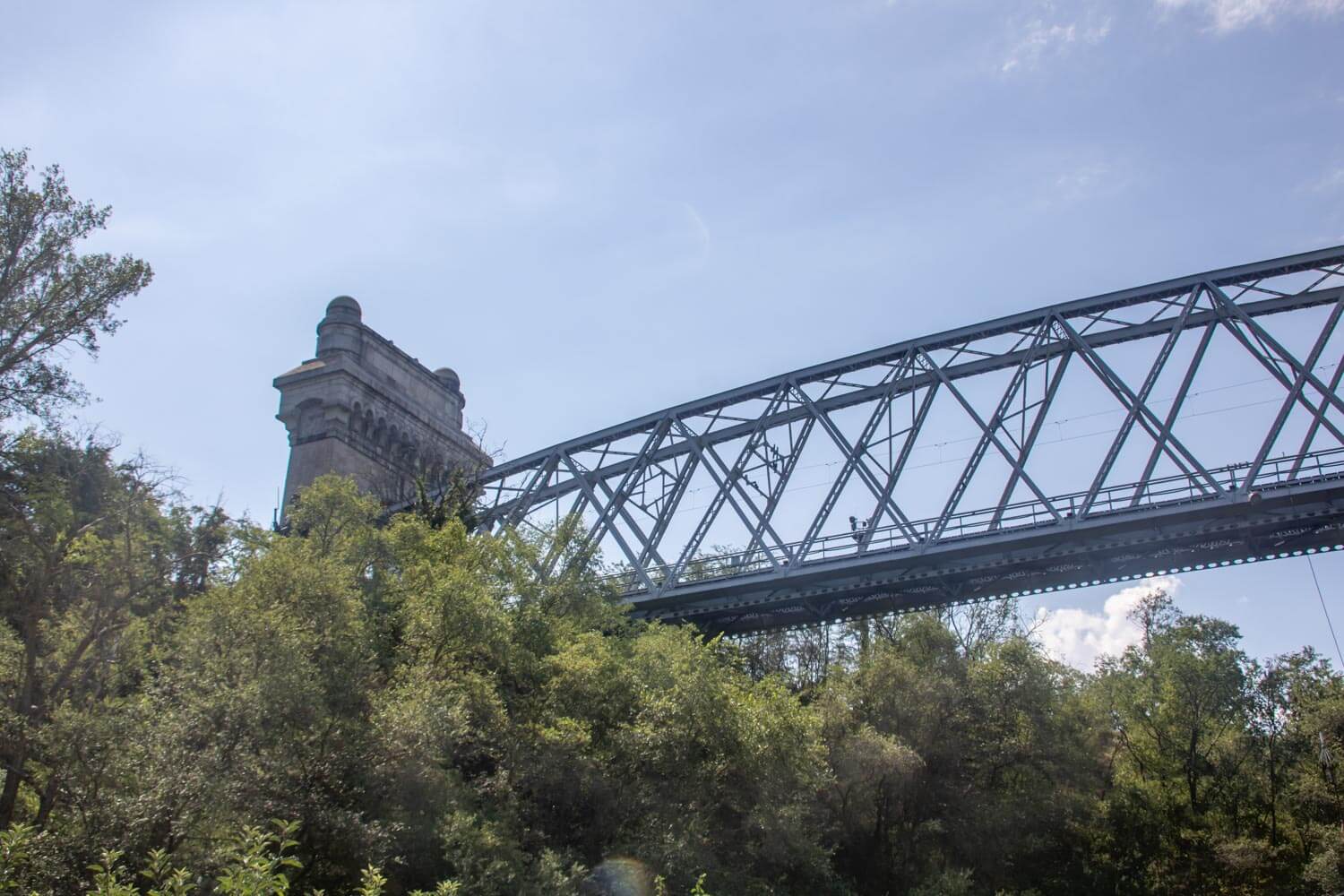
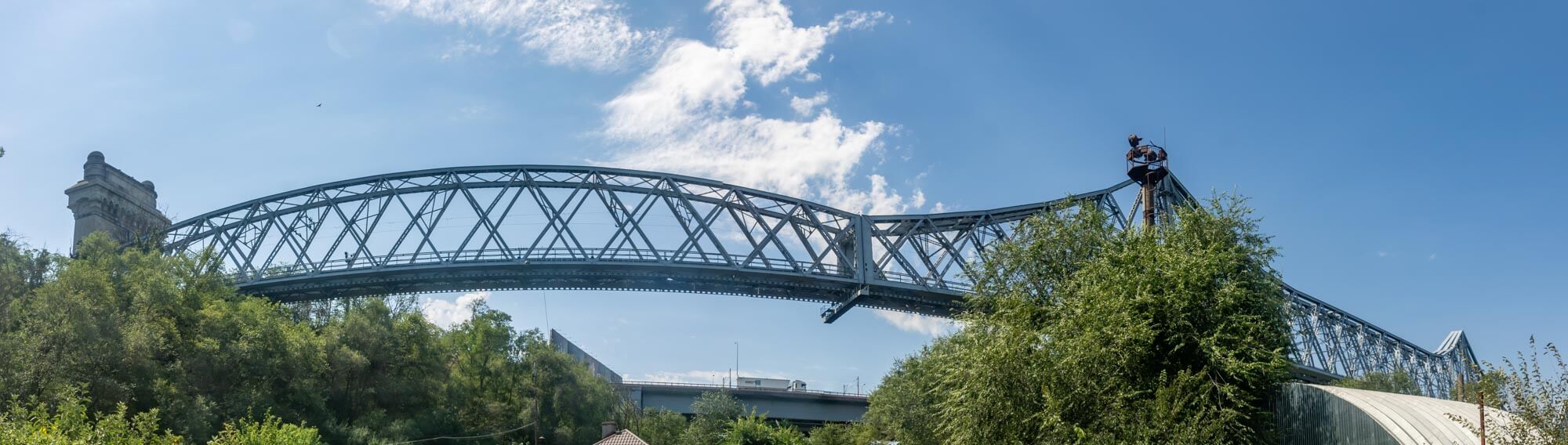
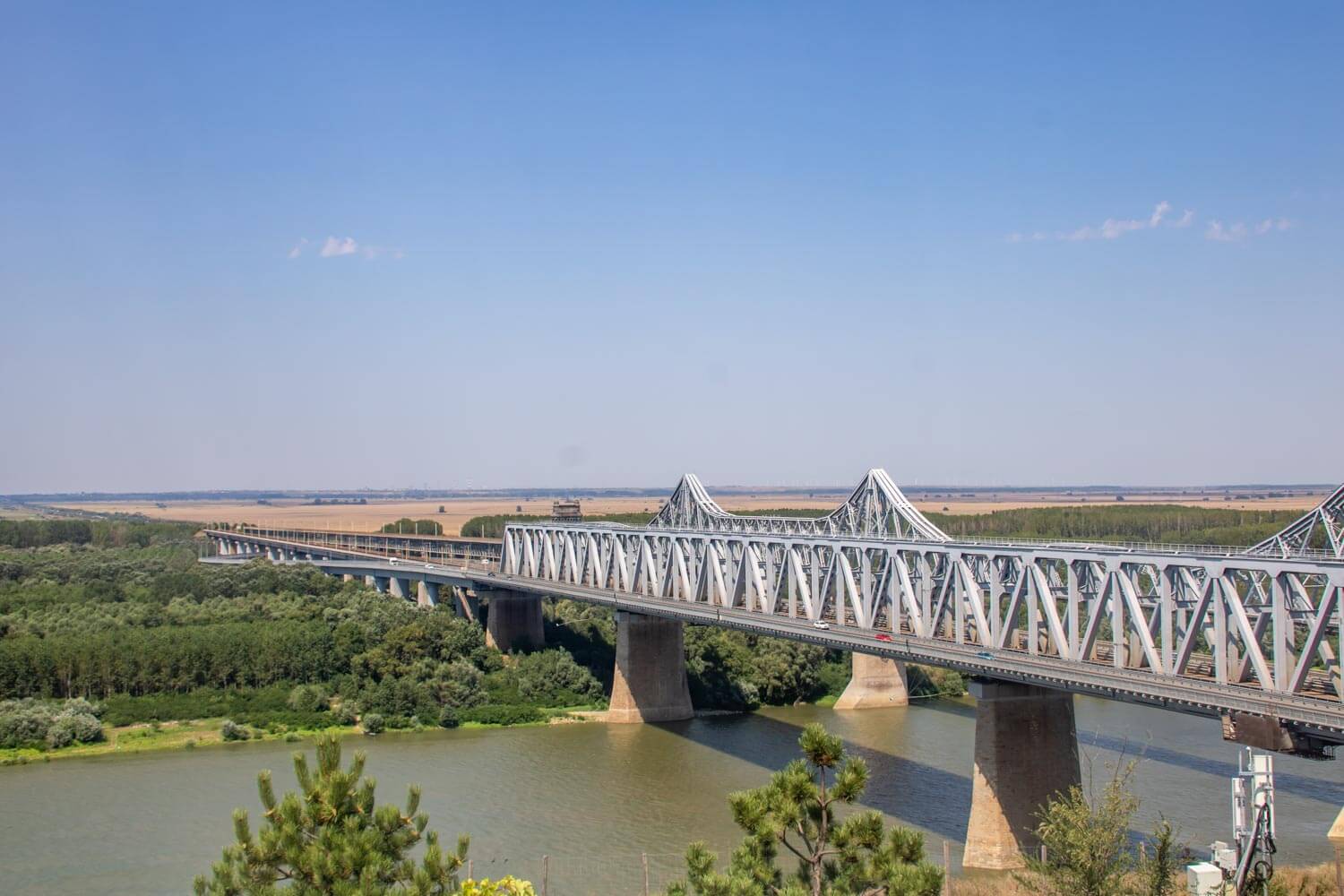
The King Carol I Bridge (Podul Regele Carol I) is a historic railway bridge across the Danube at Cernavodă, designed by Romanian engineer Anghel Saligny and completed in 1895. Its high steel structure and monumental stone entrance still dominate this part of the river, where it stands immediately beside the later road and railway crossing.
The bridge was built as the final link in a railway connection that had developed from opposite sides of the Danube. A railway between Cernavodă and Constanța had already opened in 1860, while the Romanian network was gradually extended eastward from Bucharest to Fetești after Dobrogea became part of Romania. Joining the two required railway bridges across both the Borcea branch and the main course of the Danube, turning what had been separate lines into a direct rail route between Bucharest and Constanța.
Construction began in 1890 under Saligny, who directed a much larger crossing than the single bridge visible from Cernavodă. The complete system included a bridge across the Borcea branch, a long viaduct across the floodplain between the river channels, and the King Carol I Bridge across the main Danube. Together these structures stretched for about 4,088 meters and ranked among the longest bridge complexes in the world when they opened. At Cernavodă, the main steel structure crossed the river in five large spans, including a central span of 190 meters, while the deck stood around 30 meters above high water so ships could continue to pass beneath it.
The new crossing was inaugurated in September 1895 in the presence of King Carol I, who had also attended the beginning of the works five years earlier. The king drove the final rivet into the structure before the bridge was subjected to a load test involving a convoy of locomotives, followed by the ceremonial train carrying invited guests. Saligny watched the test from a boat beneath the bridge together with members of the construction team.
The Cernavodă entrance was given an architectural treatment that makes it much more than a purely industrial structure. Massive masonry towers frame the railway line, while two large bronze dorobanți, Romanian infantrymen in the uniform of the War of Independence, stand beside the entrance in memory of those who died in the conflict. The soldiers and accompanying coats of arms were created by French sculptor Léon Pilet.
The bridge remained a vital part of the Bucharest–Constanța railway for most of the 20th century, surviving both world wars. During the First World War, Romanian troops destroyed the separate bridge across the Borcea branch to slow the advance of the Central Powers, but the main Cernavodă bridge was spared. It was later damaged during Allied air raids in 1944, while another major change came in 1948, when the communist authorities removed its royal name and emblems and renamed it after Anghel Saligny.
The bridge continued carrying railway traffic until 1987, when a new road and rail crossing opened immediately alongside it. The historic structure remains one of the most distinctive features of the Cernavodă riverfront, with its monumental stone portal, bronze dorobanți, and long steel spans still forming a prominent part of the Danube crossing.