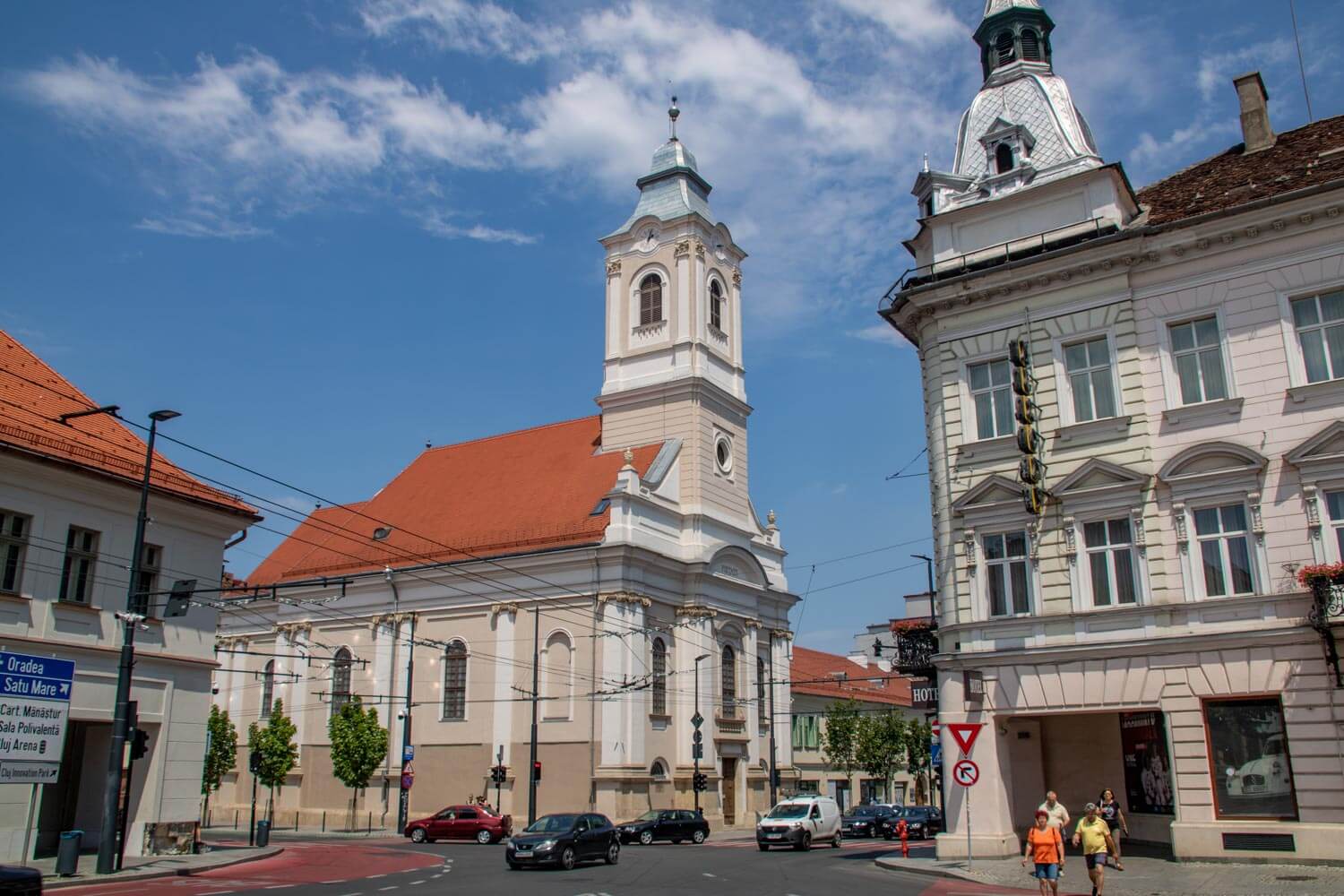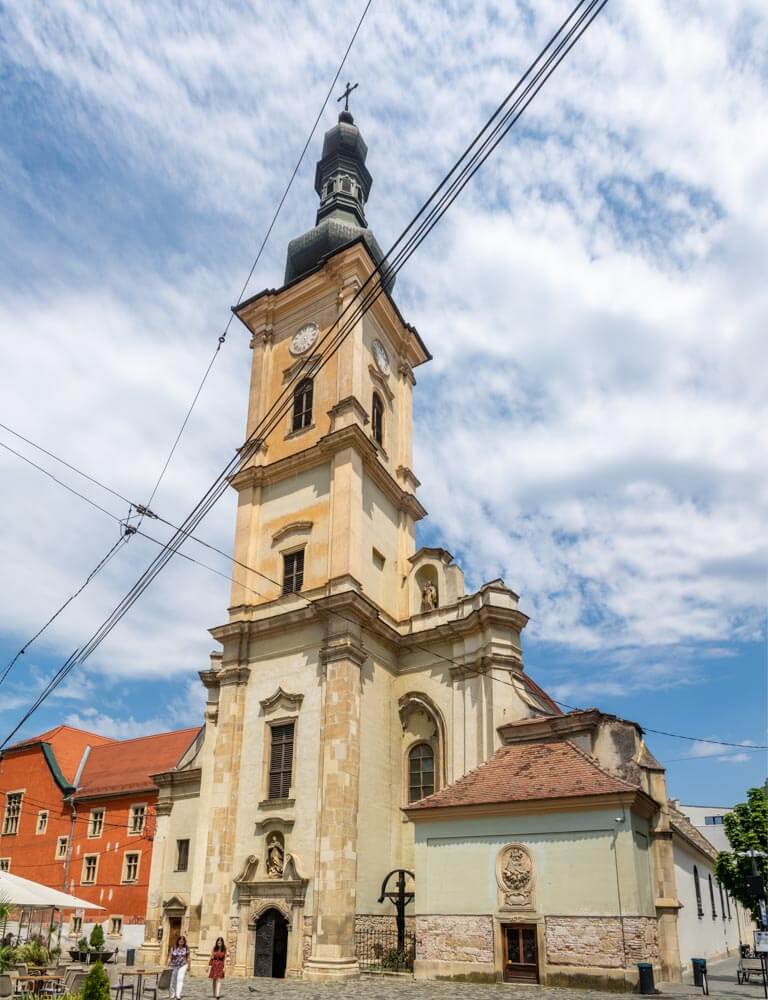
The Cluj-Napoca Franciscan Church (Biserica Franciscană din Cluj-Napoca) is one of the oldest and most significant churches in Cluj-Napoca. The church is located on Museum Square (Piața Muzeului) in the center of the city.
The church was built between 1260 and 1290 on the site of an older Roman Catholic church that was destroyed during the great Tatar invasion in 1241. It was designed in a late Romanesque style and it is assumed that it was initially just a small parish, which was later enlarged and extended in a Gothic style with a monastery by the Roman Catholic Dominican monks.
After the Protestant March in 1556 and the expulsion of the Catholic monks, the Hungarian queen Izabella lived in the building until 1557. In 1568 the building was transformed into a unitarian school. In 1693 the church and monastery were returned to the Roman Catholic Church and used by the Jesuits until 1725, when they had established their own church, the Cluj-Napoca Piarists’ Church.
This triggered the Franciscans to return to the city and restore the church in 1728. They also built the Baroque-style tower on the western façade facing the square. More restorations would follow which have given the church its current appearance.
After the communist authorities had dissolved the Franciscan order in Romania, the church became a parish church in 1949 and later even a music school. After the fall of the communist regime the church became a monastery church again in 1990.