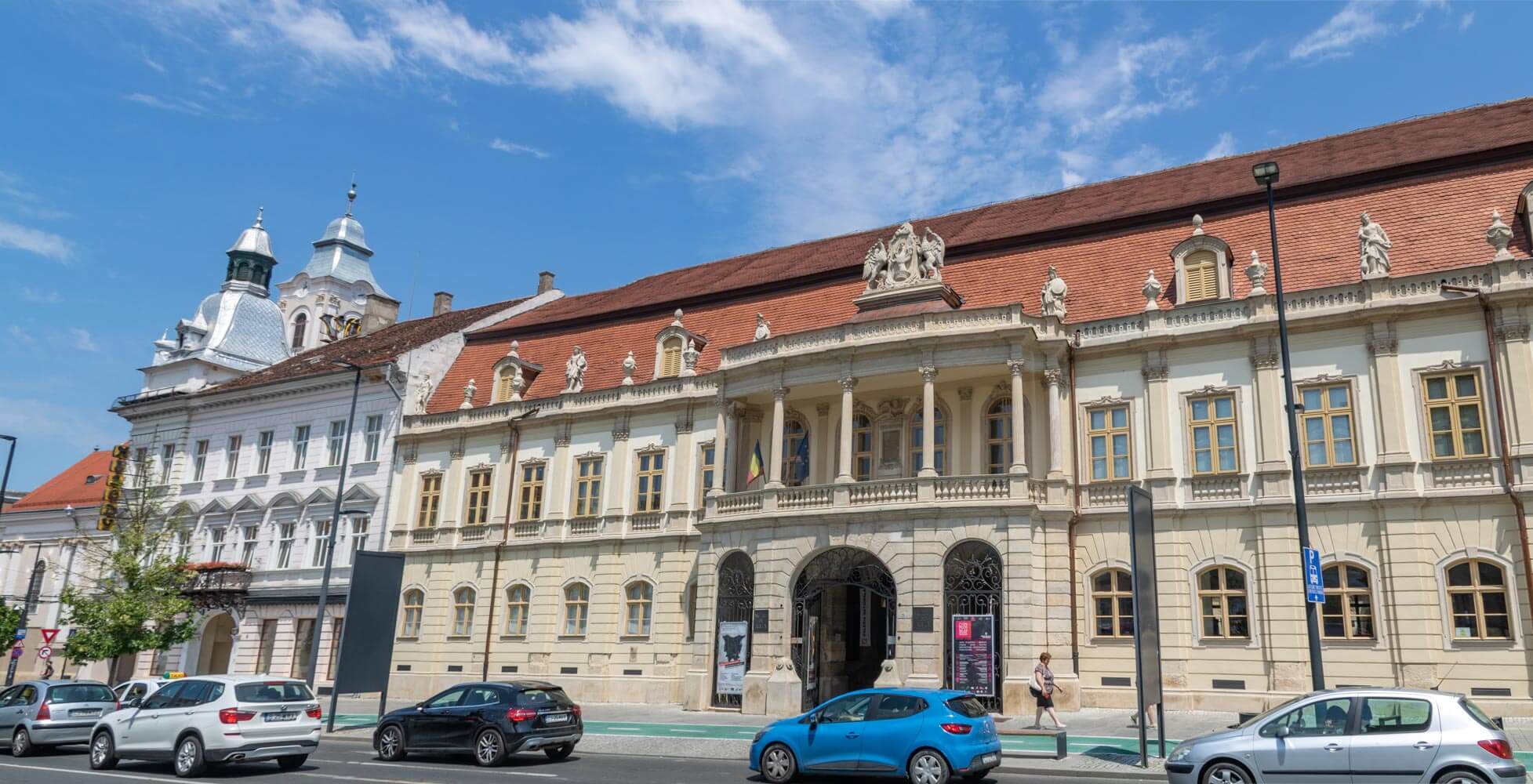
The Cluj-Napoca Art Museum (Muzeul de Artă Cluj-Napoca) is an art museum located in the historic Bánffy Palace on Union Square (Piața Unirii) in Cluj-Napoca.
History Of Bánffy Palace
Bánffy Palace (Palatul Bánffy) is an important Baroque building, which was designed by the German architect Johann Eberhard Blaumann and constructed between 1774 and 1785. Built on the sides of a rectangular courtyard by Count György Bánffy, governor of Transylvania, is considered the most representative Baroque building in Transylvania. On the rococo-style façade of the palace, you can see six statues of mythological characters: Hercules, Apollo, Mars, Minerva (Athena), Diana, and Perseus. The roof above the entrance shows the Bánffy family coat of arms.
In the past Bánffy Palace has hosted Eperors Francis I and Franz Josef as guest, but it has also been used as a commercial space, a casino and in 1925 even a cinema was built in the courtyard. In 1956 the palace was handed over to the Cluj-Napoca Art Museum and between 1960 and 1974 a significant renovation was carried out. The building is now considered a historic monument.
History Of The Cluj-Napoca Art Museum
The Cluj-Napoca Art Museum was founded in 1951 and incorporated some older collections, including a small part of the collection of curiosities, cutlery furniture and European fine art from the Transylvanian Museum. In 1956 the administration of Bánffy Palace was handed over to the museum and after moving in during the restoration of the building in 1962, the museum opened its doors in 1965, while further restorations continued.
Over the years the collection has grown through donations, purchases, and transfers. Between 1990 and 1996 the upper level which hosts the National Gallery was closed for a renovation and in 1997 the Cluj-Napoca Art Museum was nominated for the European Museum of the Year Award.
Visiting The The Cluj-Napoca Art Museum
Bánffy Palace and its interior decoration have been very well preserved, which on its own makes the museum already worth a visit. The collection of the museum includes Romanian and European art, including paintings, graphics, sculptures, and decorative art from the 15th to the 20th centuries. The permanent exhibition, called the National Gallery, is located on the first floor and consists of 15 halls. The museum also regularly hosts varying temporary exhibitions and events.