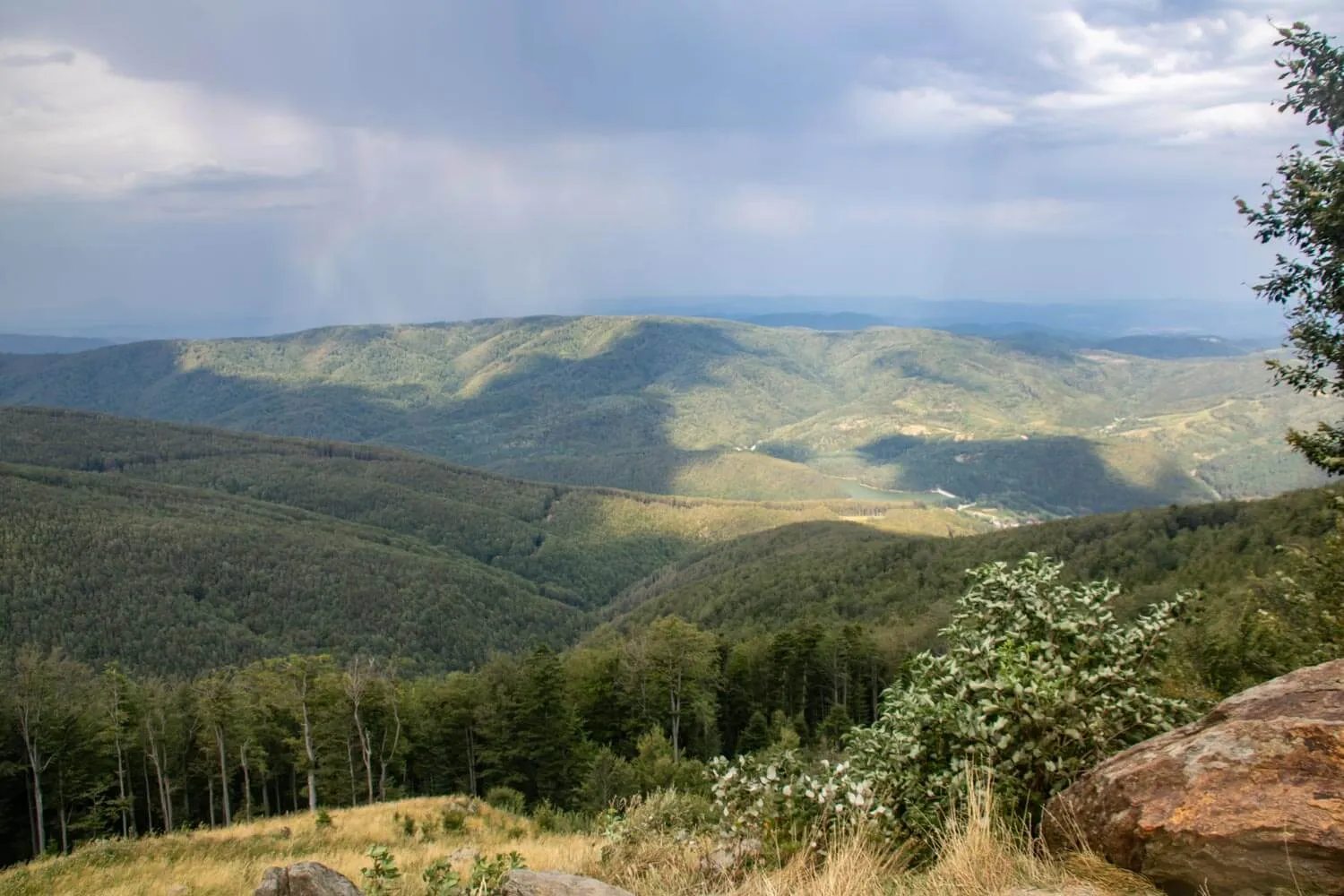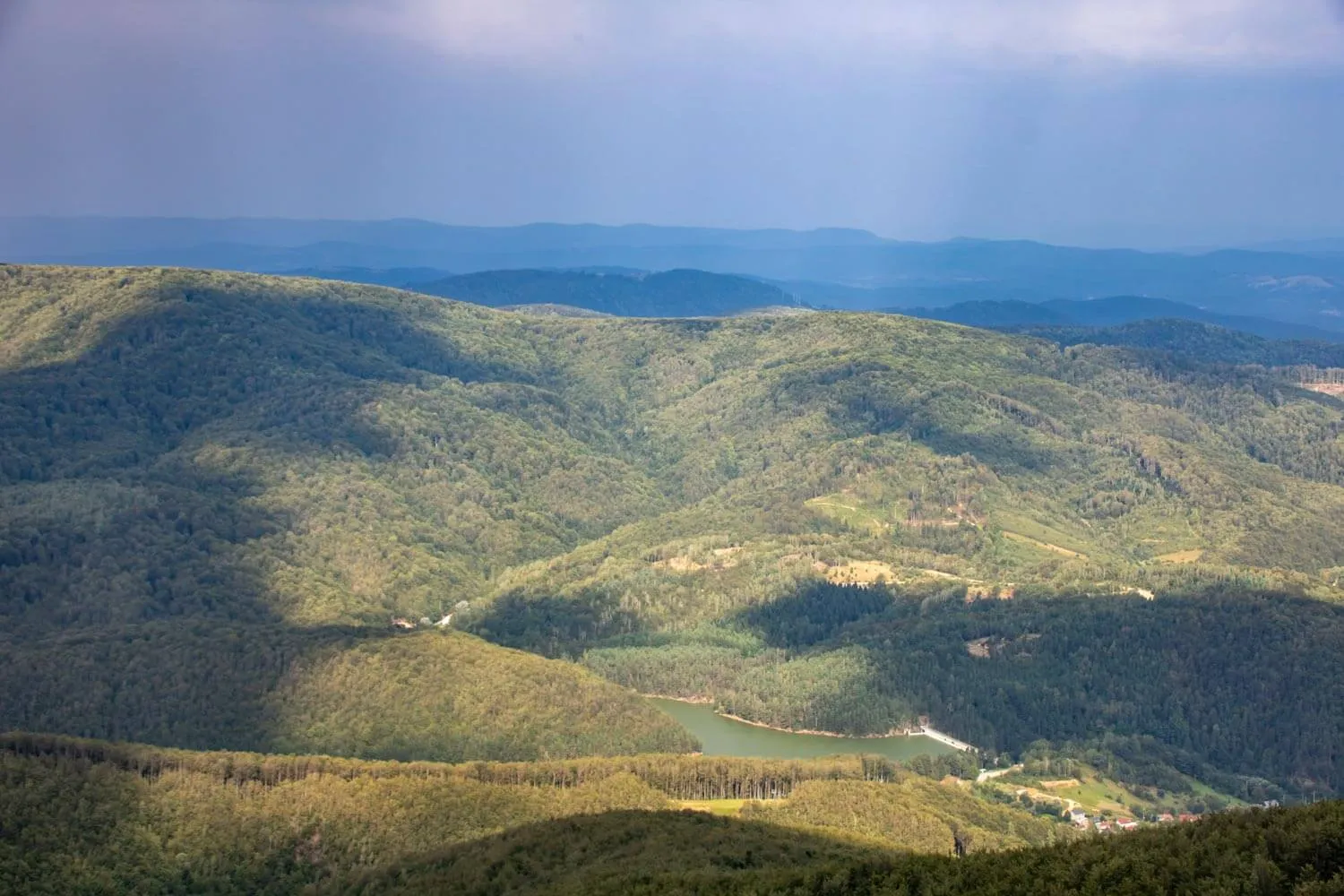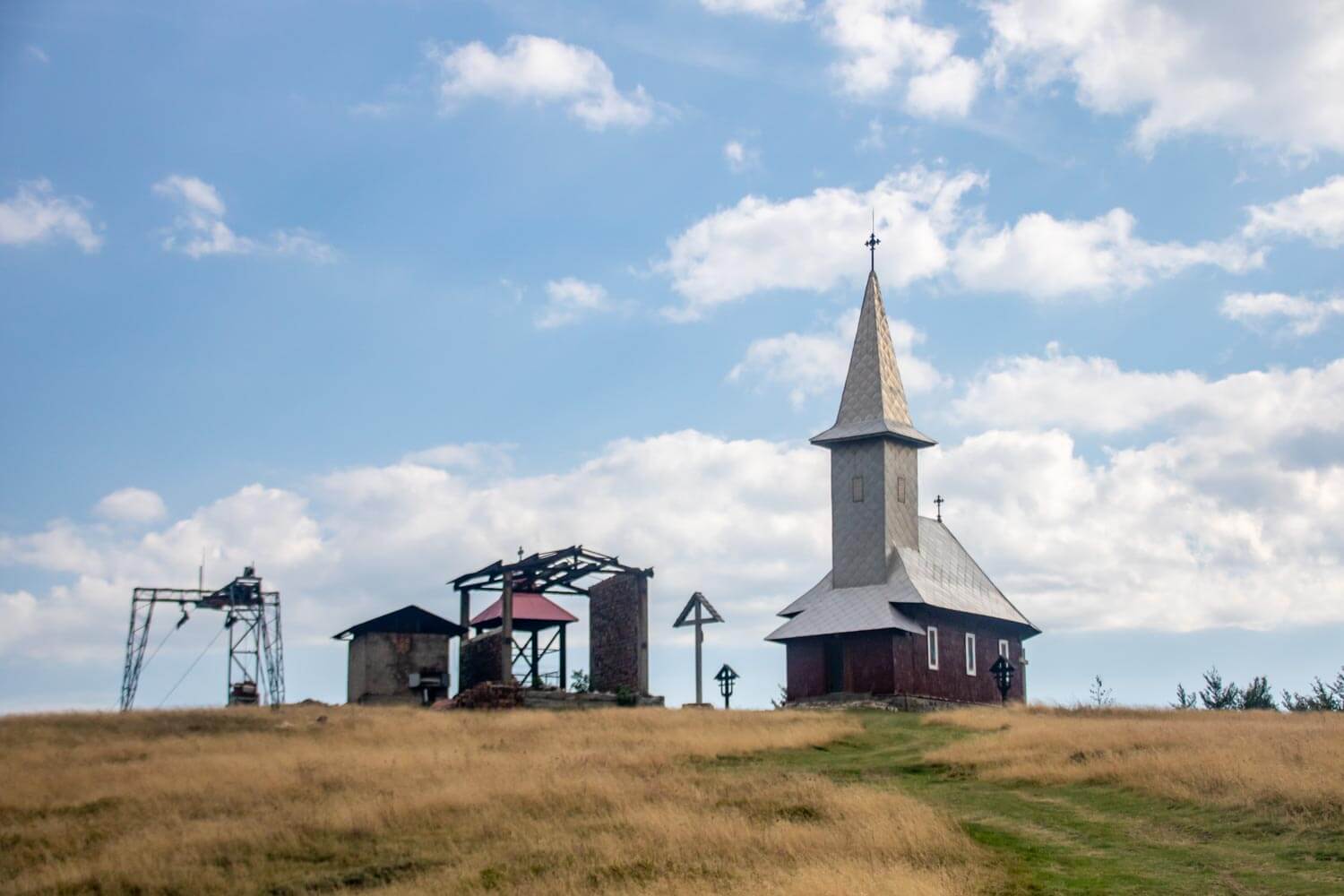
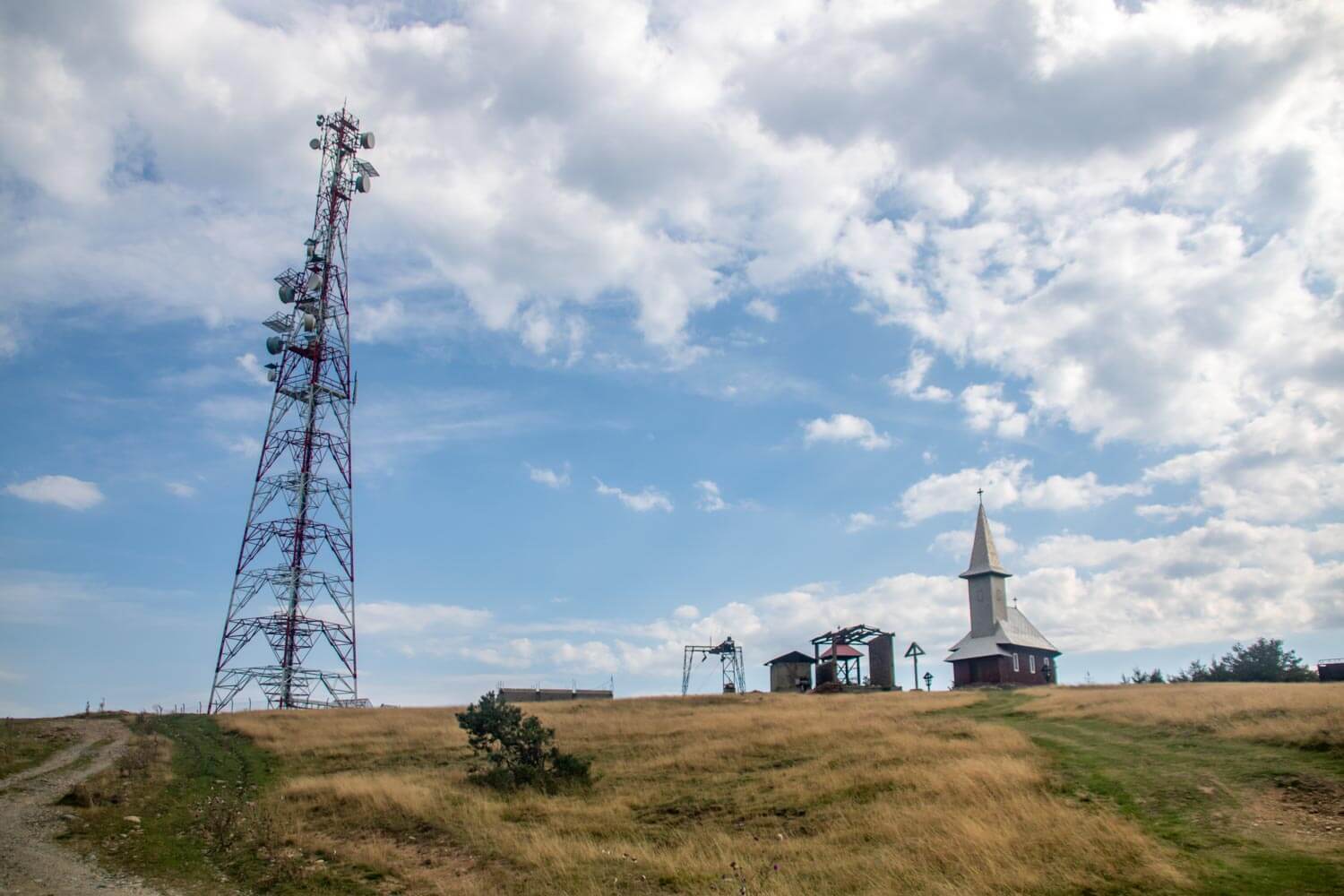
The Saint Elijah Hermitage (Schitul Sfântul Ilie) is a small Romanian Orthodox monastic settlement on the Semenic mountain plateau, near Văliug. Situated at approximately 1,400 meters above sea level, its wooden church stands among the open mountain grasslands, with panoramic views across the surrounding peaks, forests, and valleys.
The hermitage’s history goes back to a 19th-century place of worship near Vultures’ Bath (Scăldătoarea Vulturilor), a mountain spring where pilgrims gathered to celebrate the feast of Saint Elijah. A small hermitage existed in the area during the 19th century, while the present wooden church was designed in 1943 by architect Gheorghe Răureanu. Construction followed between 1945 and 1946, initiated by engineer Alexandru Papp, director of the Reșița Works and Estates company, with support from local believers. The church was consecrated on August 6, 1946, by Bishop Veniamin Nistor of Caransebeș.
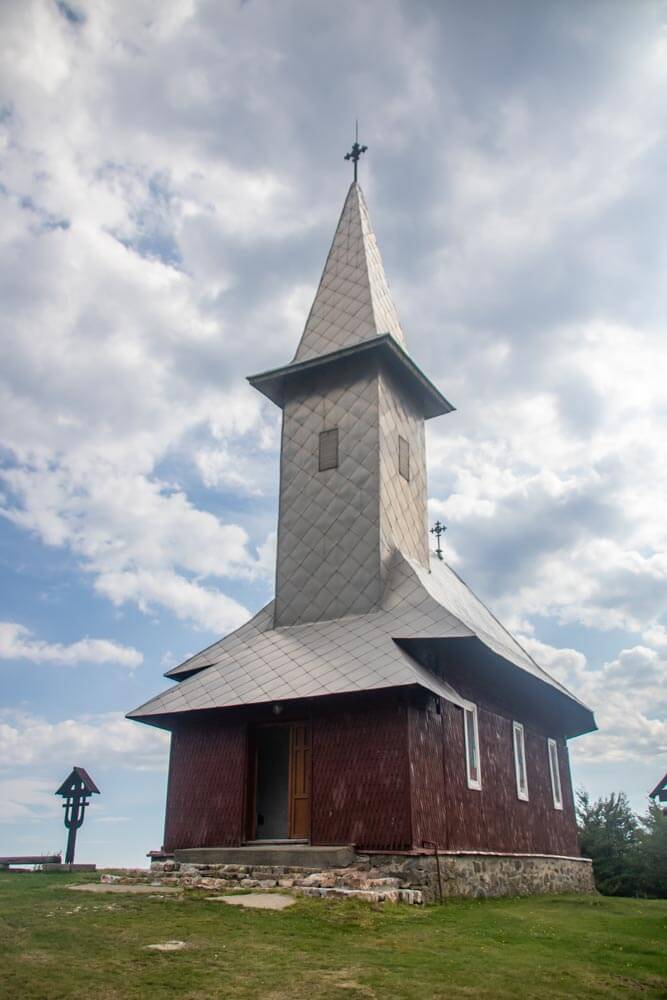
Inspired by the wooden churches of Maramureș, the building has a compact rectangular nave, a steep roof, and a slender bell tower reaching approximately 20 meters. The tower incorporates a metal framework designed to withstand the strong winds and heavy snowfalls of the exposed mountain plateau. Inside, the modest prayer space contains a wooden iconostasis and religious icons.
The communist authorities dissolved the hermitage in 1949, and the buildings subsequently deteriorated. Following the fall of communism in 1989, monastic life was reestablished under Hieromonk Porfirie Nica. New accommodation and communal facilities were constructed, and the restored church was reconsecrated on July 20, 1999. The hermitage is a pilgrimage destination for the feast of Saint Elijah on July 20, when religious services and processions also honor the area’s longstanding pilgrimage traditions.